
Stored
Sweetened condensed milk poured from an open steel can onto a wooden surface.
The sealed can is the universal retail form; showing the thick pour directly teaches its viscosity, color, and glossy texture.
Dairy & Eggs
Sweetened Condensed Milk
Thick, sticky sweetened milk concentrate used in desserts, coffee, and no-bake confections.
Sweetened condensed milk is cow's milk reduced and heavily sweetened with sugar into a thick, syrupy concentrate. It is the base for desserts like dulce de leche, tres leches, and fudge, and stirred into strong coffee. Its sugar content gives it a very long shelf life and a glossy, caramelizable quality.
Sweetened condensed milk is cow's milk that has been concentrated by removing approximately 60% of its water content, then sweetened with 40–45% sugar by weight. The result is a thick, viscous, intensely sweet liquid that pours slowly and blends smoothly into both wet and dry ingredients. This product was invented in 1856 by Gail Borden Jr., who patented a vacuum pan process to preserve milk before refrigeration—a breakthrough that transformed dairy economics and culinary possibility in the United States. The heavy sugar addition isn't merely for sweetness; it lowers water activity dramatically, creating the long shelf life and characteristic texture that make this ingredient so useful in the pantry and the kitchen.
The high sugar content changes how sweetened condensed milk behaves in recipes. It resists freezing into a hard block, blends into smooth no-bake mixtures without graininess, and caramelizes beautifully when heated—the foundation of dulce de leche. Unlike cream, it will not whip into aerated peaks regardless of how vigorously you beat it, and unlike evaporated milk, it cannot substitute directly in savory applications where the sweetness would clash. Understanding these constraints frees you to use it where it genuinely excels: in custards, confections, frozen desserts, and any recipe that benefits from its triple role as sweetener, liquid, and milk solids all in one.
In an opened can, sweetened condensed milk will keep refrigerated for about two weeks, though it thickens considerably and must be stirred well before use. Unopened cans remain stable at room temperature for up to two years, which makes this a practical shelf-stable staple for baking emergencies, camping, and quick desserts. The standard American can holds 14 fluid ounces (397 g); internationally it's typically sold in 400 g cans. Keep these measurements in mind when scaling recipes or substituting.
- Measured in
- ml
- Storage
- Pantry
Allergens
Types & varieties
Standard sweetened condensed milk; approximately 8–10% milk fat, 40–45% sugar, with protein and other milk solids.
Lower milk fat version; texture is slightly thinner but functions similarly in most applications.
Made from milk from cows not treated with synthetic hormones; same composition and use as regular.
Some brands offer vanilla-flavored versions, though plain remains the standard for most recipes.
Sweetened Condensed Milk vs. Evaporated Milk
These two canned milks are often confused, but they serve different purposes. Evaporated milk is milk with about 60% of the water removed, with no sugar added. It has a thinner, less viscous texture and tastes distinctly milky but unsweetened. You cannot substitute sweetened condensed milk for evaporated milk in savory dishes—the sweetness will overwhelm the dish. Conversely, if a recipe calls for sweetened condensed milk, using evaporated milk plus additional sugar is only a rough approximation, not an equal swap, because the texture and caramelization behavior differ significantly.
- Evaporated milk: unsweetened, thinner, ~240 calories per can
- Sweetened condensed milk: heavily sweetened, thick, ~980 calories per can
- Both are shelf-stable when unopened
Making Dulce de Leche at Home
One of the most useful techniques with sweetened condensed milk is transforming it into dulce de leche by heating the sealed can in boiling water for 2–3 hours. The sugar caramelizes under sustained indirect heat and pressure, deepening in color from ivory to rich amber and developing complex toffee notes. This method is far more reliable than trying to reduce sweetened condensed milk in an open saucepan, which scorches easily.
- Use a large pot with enough water to keep the can fully submerged
- Keep water at a steady boil throughout cooking
- Let the can cool completely before opening—contents are under pressure
- Open away from your face; the caramelized milk may foam
Common uses
Tips & pitfalls
- To make dulce de leche, simmer an unopened can of sweetened condensed milk in a pot of water for 2–3 hours — the sugar caramelizes under pressure and transforms the flavor and color
- When substituting in baking, remember it adds both sweetness and liquid; reduce other sugars in the recipe and adjust additional liquid accordingly
- Do not confuse with evaporated milk, which is unsweetened and has a thinner, less viscous texture — the swap is not equal in either direction
- Bring to room temperature before mixing for smoother incorporation into batters and fillings
- It scorches easily when heated directly on high heat due to the high sugar content — use a double boiler or indirect heat for sauces and caramels
- Stir well if sugar crystallization occurs at the bottom of an opened can; a few seconds in the microwave can help loosen the texture
- For a quick caramel flavor in no-bake desserts, add a pinch of baking soda — it accelerates browning through the Maillard reaction
- Store leftovers in an airtight container; it will keep 2 weeks refrigerated but hardens considerably at cold temperatures
- Common mistake: using it as a direct 1:1 substitute for cream in savory sauces — the sweetness overwhelms savory dishes and the texture is wrong
- It will not whip like cream regardless of how much you beat it; if you need whipped cream, use heavy cream instead
Nutrition
Energy
1343 kJ · per 100 g
Where the calories come from
Protein
7.9g
16% DV
Carbs
54.4g
20% DV
Fat
8.7g
11% DV
Fiber
0g
0% DV
Sugars
54.4g
of which
Sodium
127mg
6% DV
Source · USDA FoodData Central · approx. Milk, canned, condensed, sweetened
View on FDC →In the shops
Matched grocery products
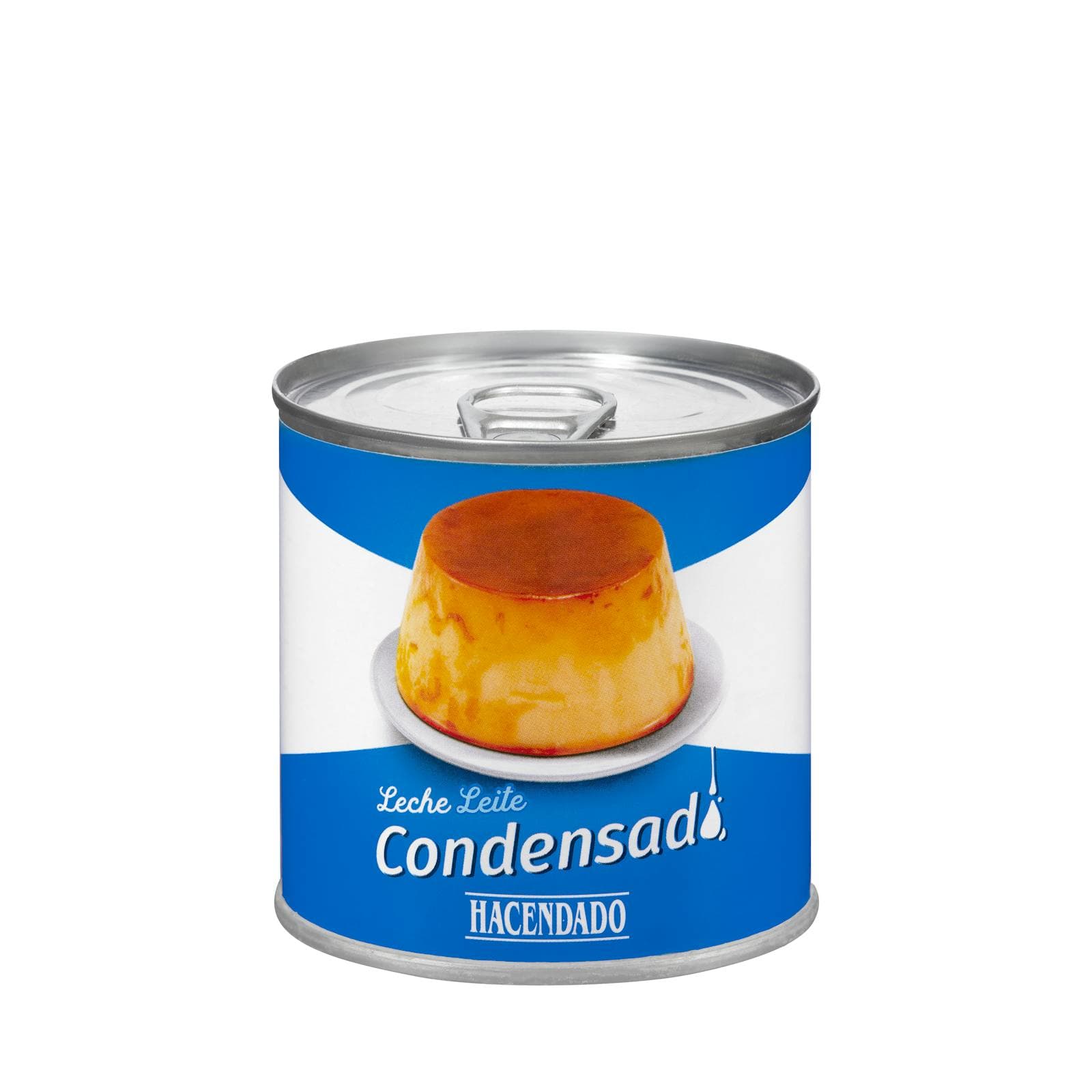 €2.20
€2.20Condensed Milk
Hacendado · 370 g · Mercadona
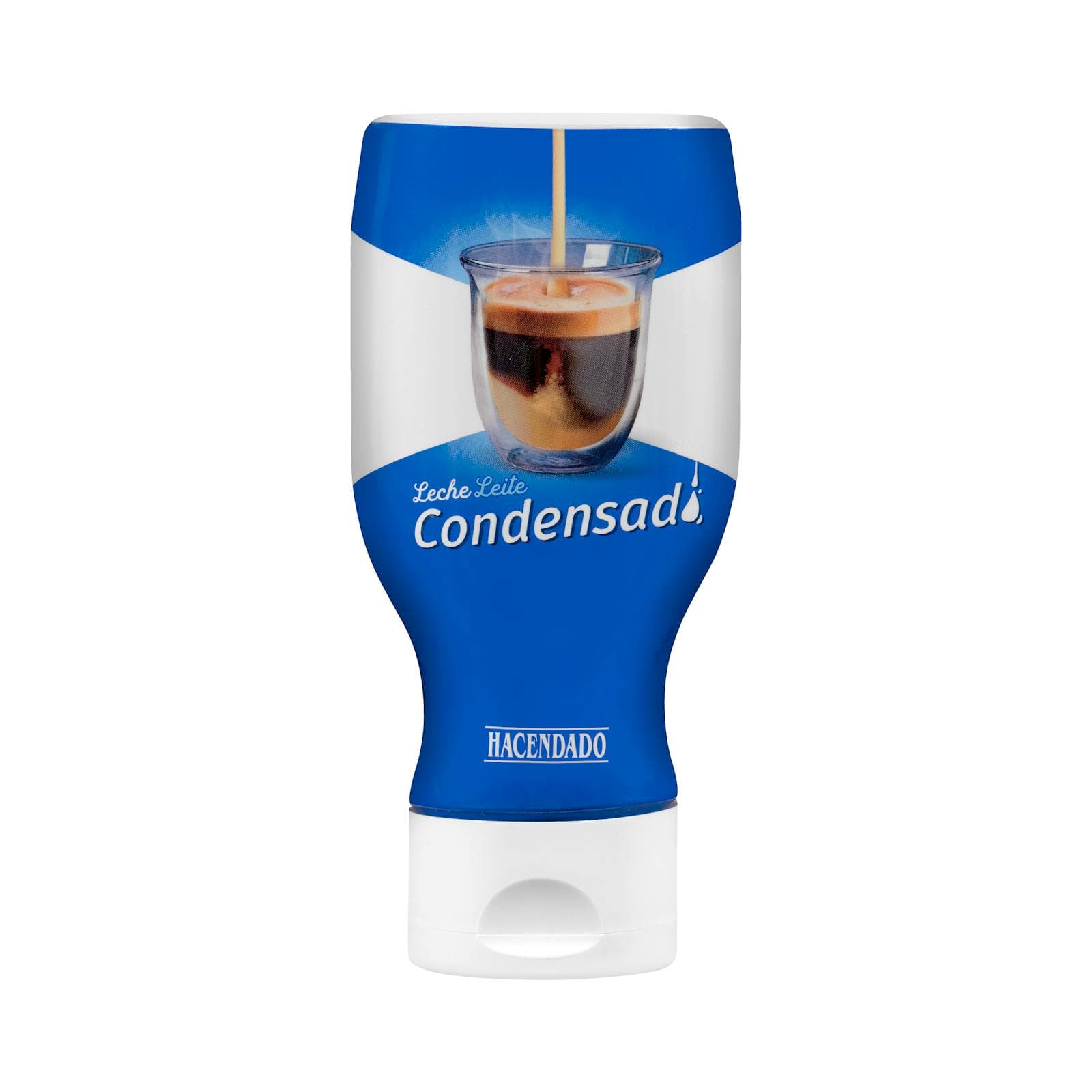 €2.55
€2.55Condensed Milk
Hacendado · 450 g · Mercadona
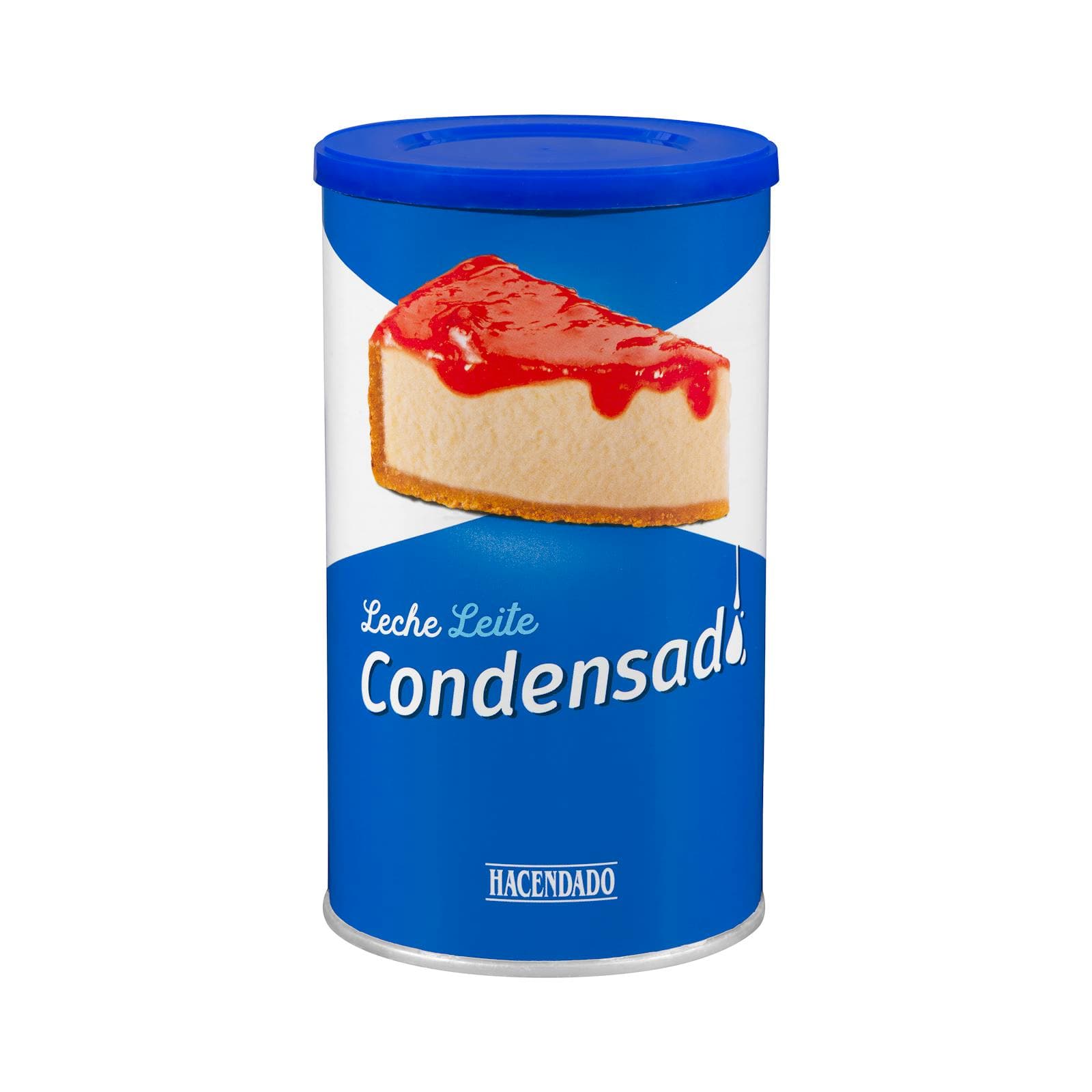 €3.60
€3.60Condensed Milk
Hacendado · 1 kg · Mercadona
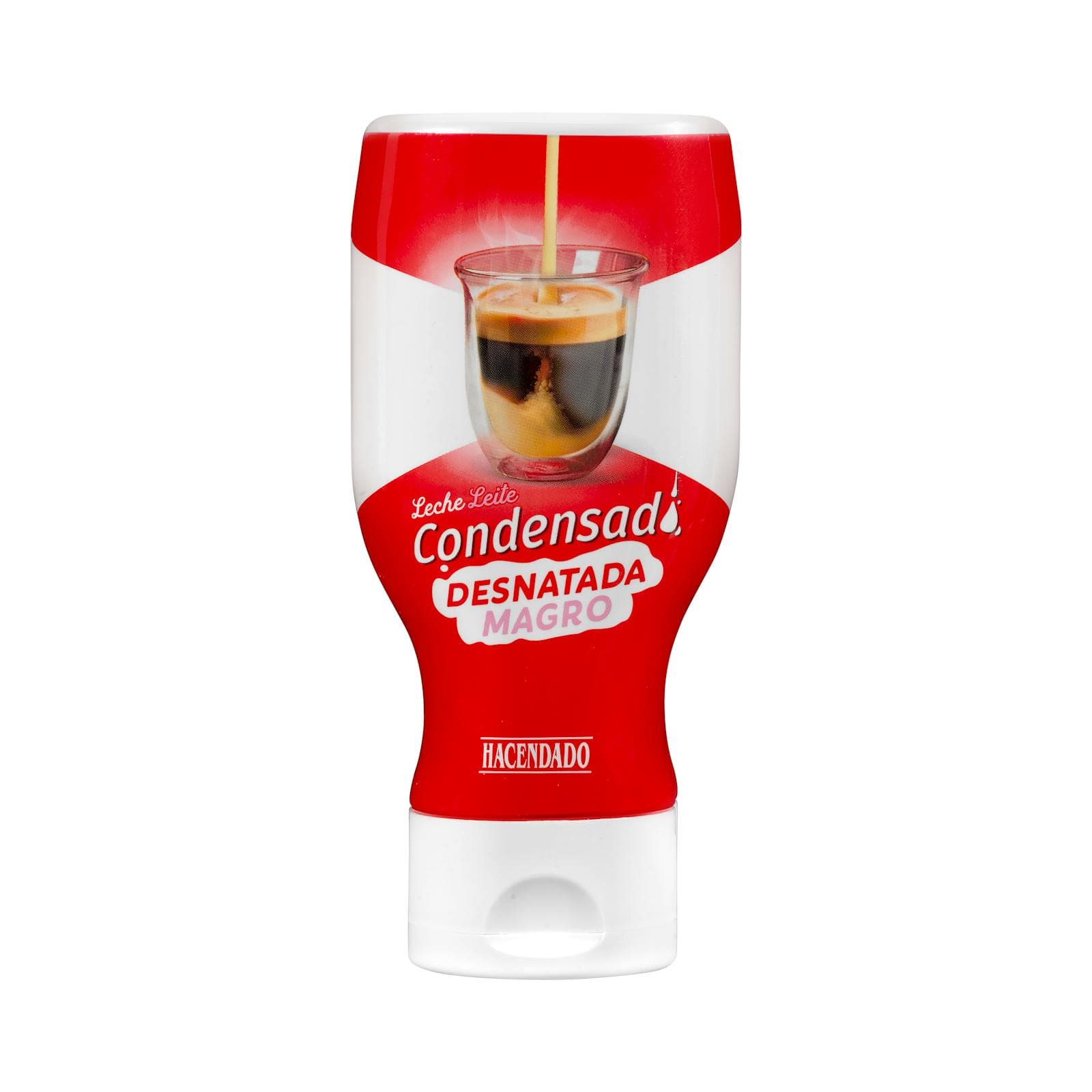 €2.55
€2.55Skim Condensed Milk
Hacendado · 450 g · Mercadona
 €3.45
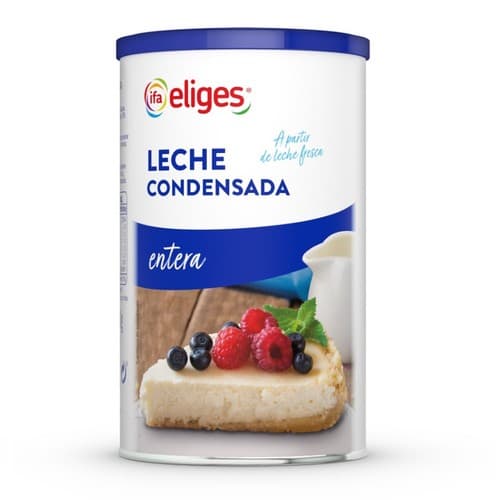
€3.45IFA Whole Condensed Milk
IFA · kg · Bonpreu
 €2.75
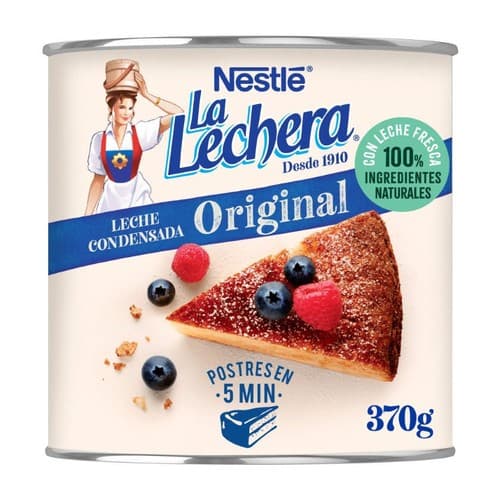
€2.75Condensed Milk Ideal for Recipes
LA LECHERA · kg · Bonpreu
Good to know
- Invented
- 1856 by Gail Borden Jr. in the United States
- Composition
- Cow's milk with ~60% water removed and ~40–45% sugar added by weight
- Shelf life
- 2 years unopened at room temperature; 2 weeks refrigerated after opening
- Standard can size
- 14 oz (397 g) in the US; 400 g internationally
- Caloric density
- ~320 calories per 100 g; high sugar content makes it very sweet
- First commercial brand
- Borden's Milk, with Gail Borden's patented vacuum pan process
- Milk fat content
- Approximately 8–10% in regular full-fat version
Substitutes
- Homemade approximation — Blend 1 cup dry milk powder + 1 cup sugar + 1/2 cup boiling water until smooth; yields approximately 1 cup. Texture is similar but slightly grainier.
- Evaporated milk + sugar — Add 1/2 cup sugar to one 12-oz can of evaporated milk; heat gently until sugar dissolves. Less viscous and not as sweet as commercial versions.
- Coconut condensed milk — Made from coconut milk; works in many desserts and is a common dairy-free alternative, particularly in Southeast Asian recipes. Flavor is mildly coconutty.
- Brown sugar syrup + cream — Combine 1/2 cup brown sugar dissolved in 1/4 cup hot water with 1/2 cup heavy cream; reduce and thicken slightly. Better for sauces than baked goods.
Pairs with
Also called
Sgushchyonka · Condensed Milk
Appears in these dishes



Related

Whole Milk
Rich, full-fat milk for drinking, coffee, sauces, and baking
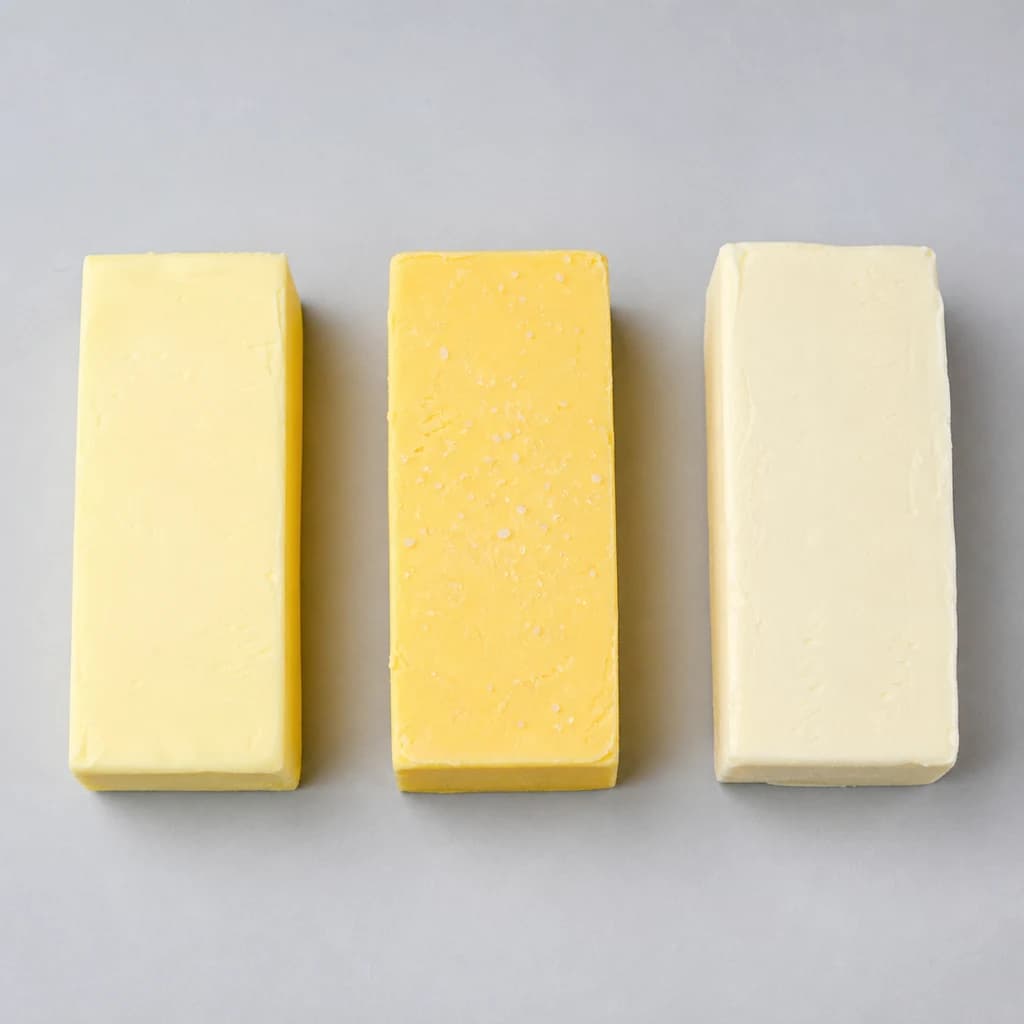
Butter
Golden fat for searing, baking, and finishing a sauce
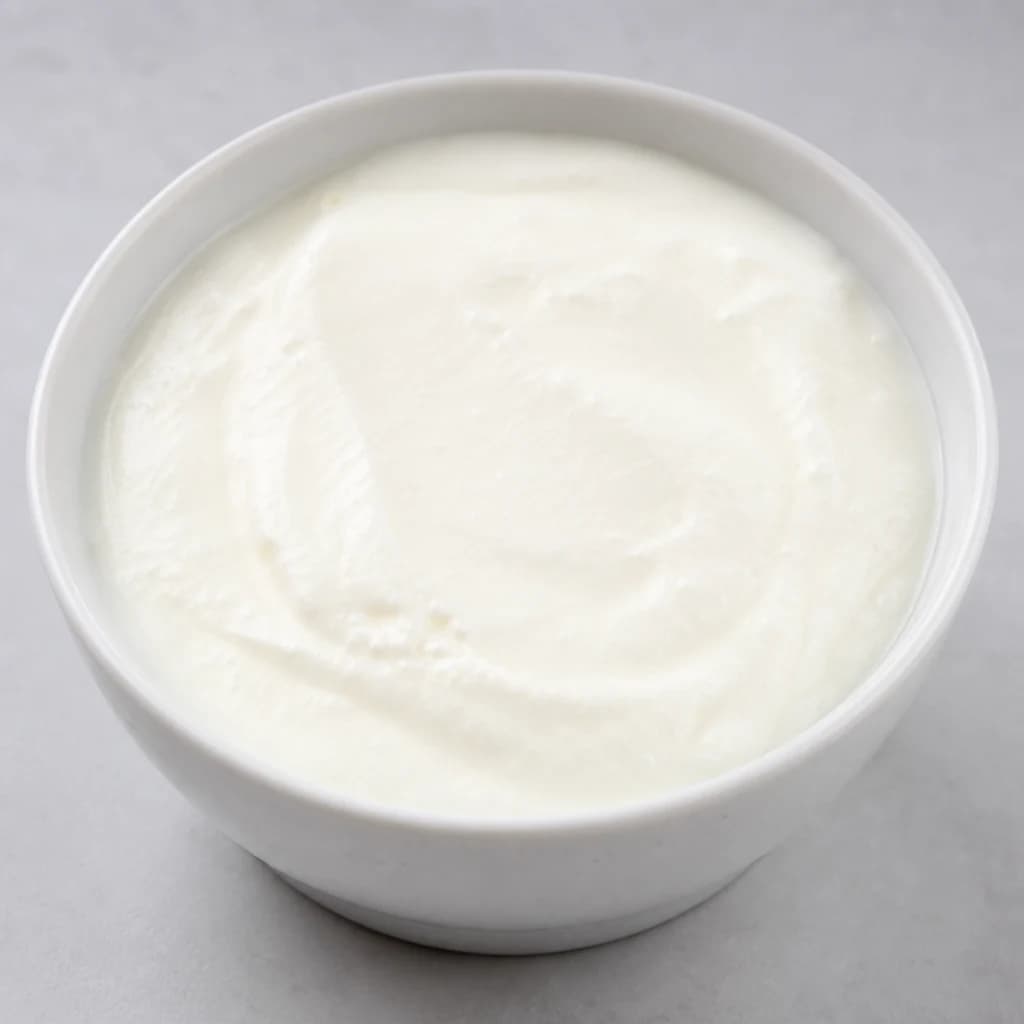
Yogurt
Tangy, creamy culture for breakfast, sauces, and marinades
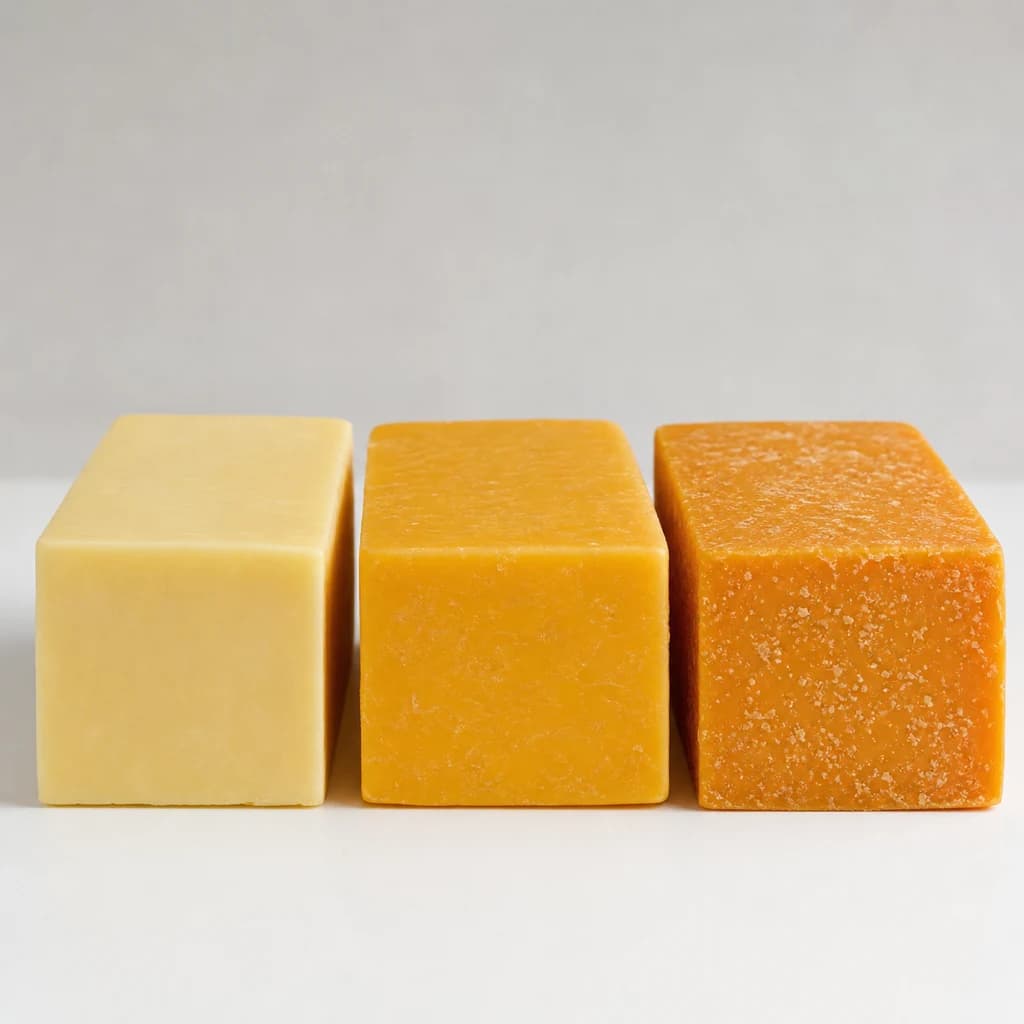
Cheddar Cheese
Sharp, melty cheese for sandwiches, gratins, and grating
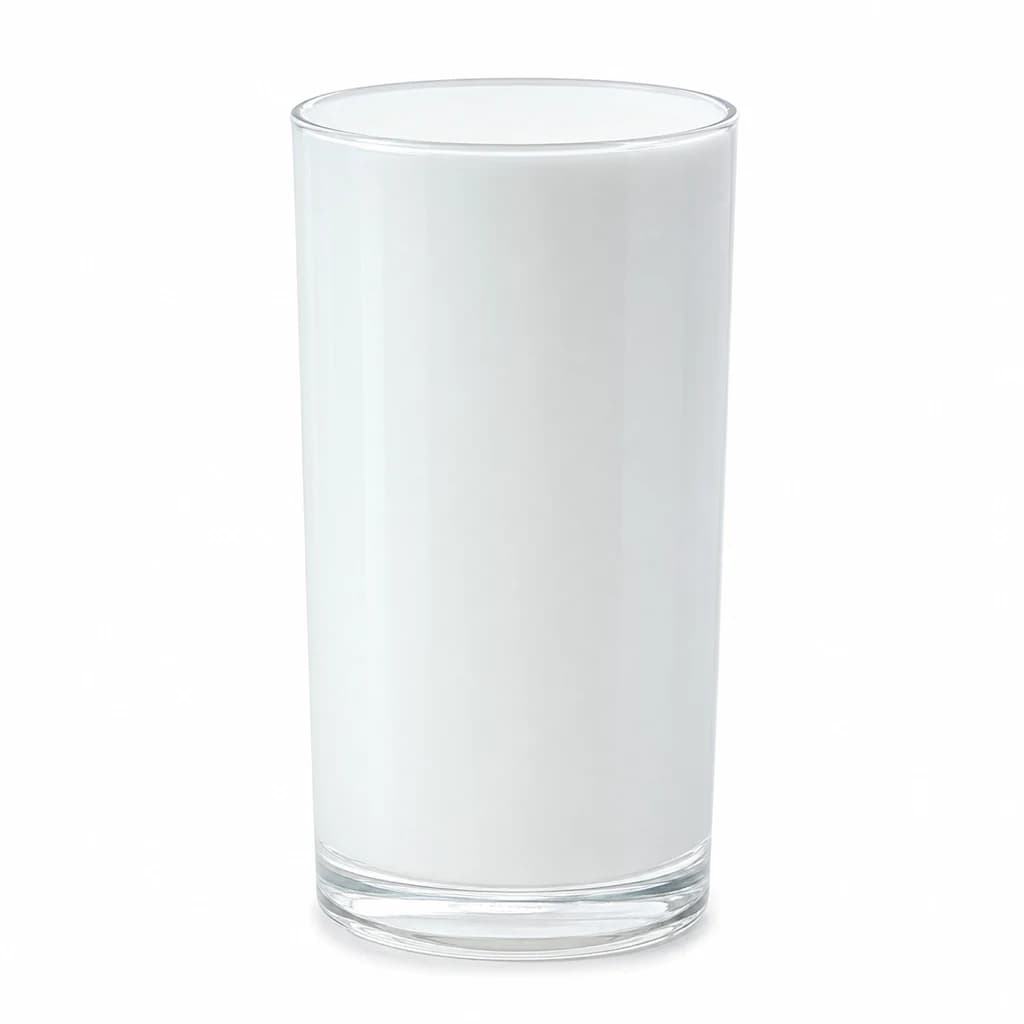
Skim Milk
Fat-free milk for lighter drinking, coffee, and cooking
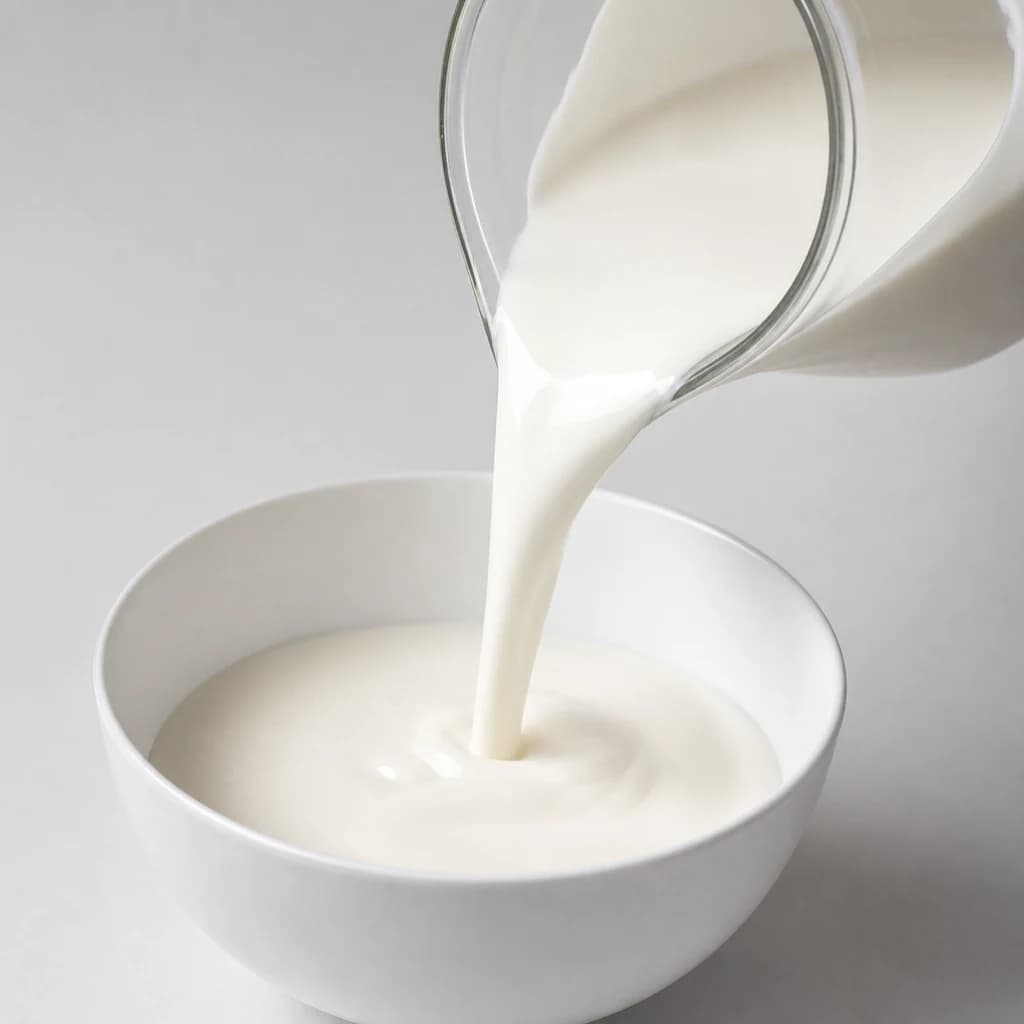
Heavy Cream
Rich cream that whips, enriches sauces, and sets ganache

Sour Cream
Tangy, thick cream for dolloping, baking, and dips
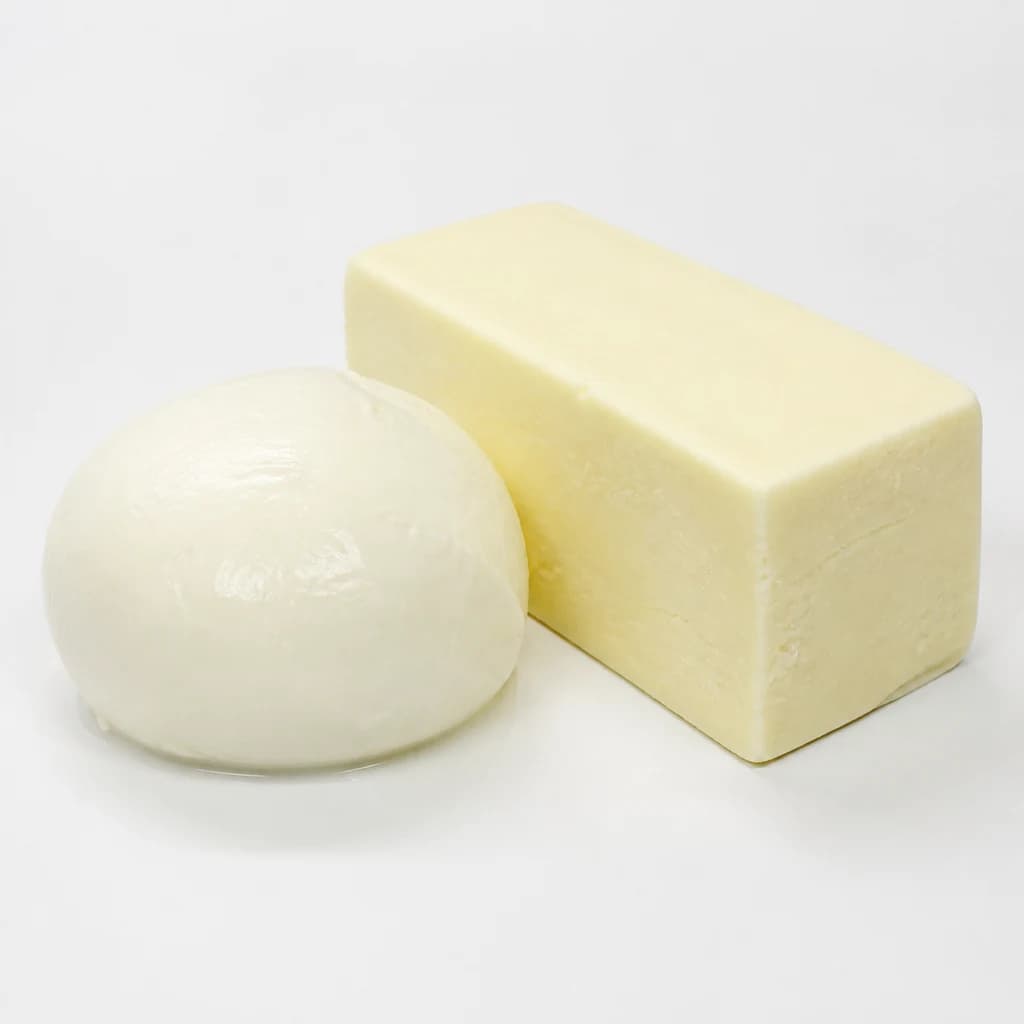
Mozzarella
Soft, milky cheese that melts into stretchy pizza pulls