Sauces & Pastes
Tamari
Wheat-free Japanese soy sauce, darker and rounder than regular soy with a richer umami; the gluten-free swap for dipping, glazes, and finishing where soy depth is wanted.
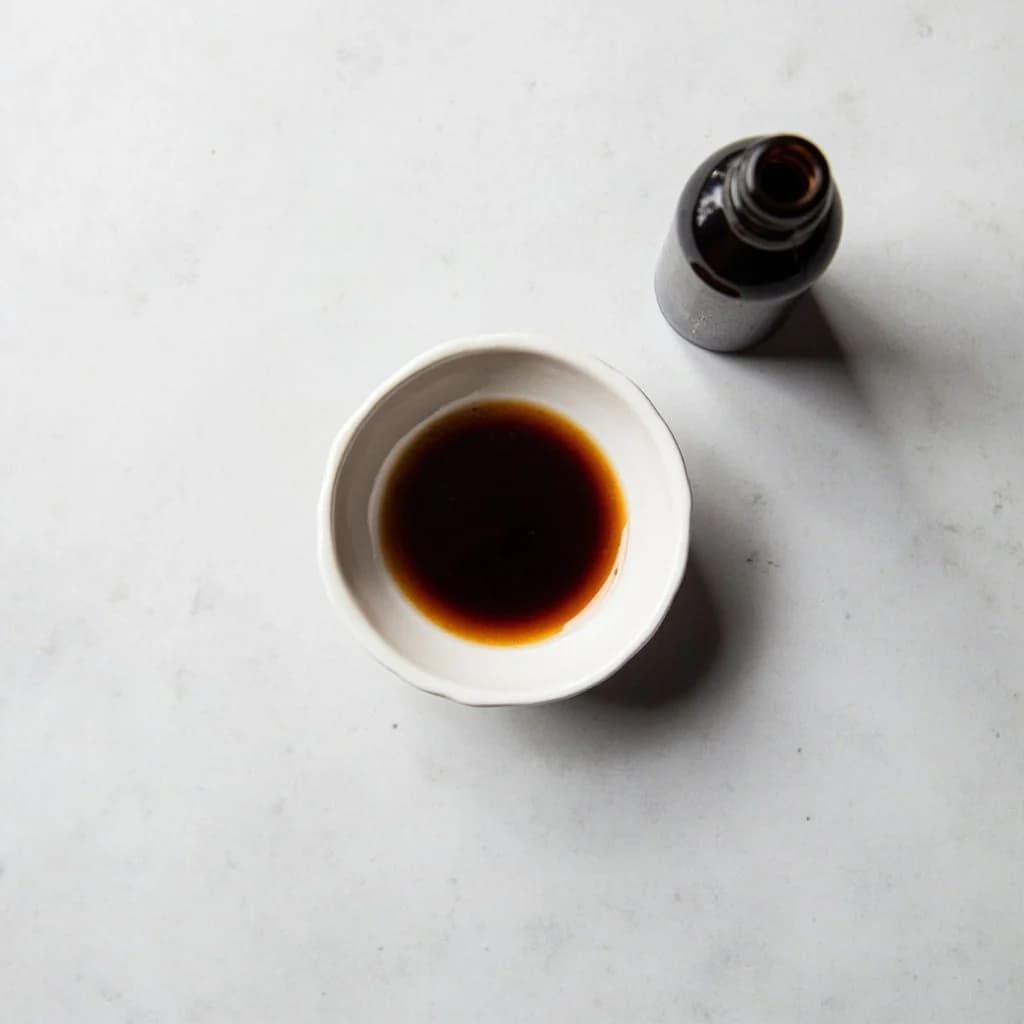
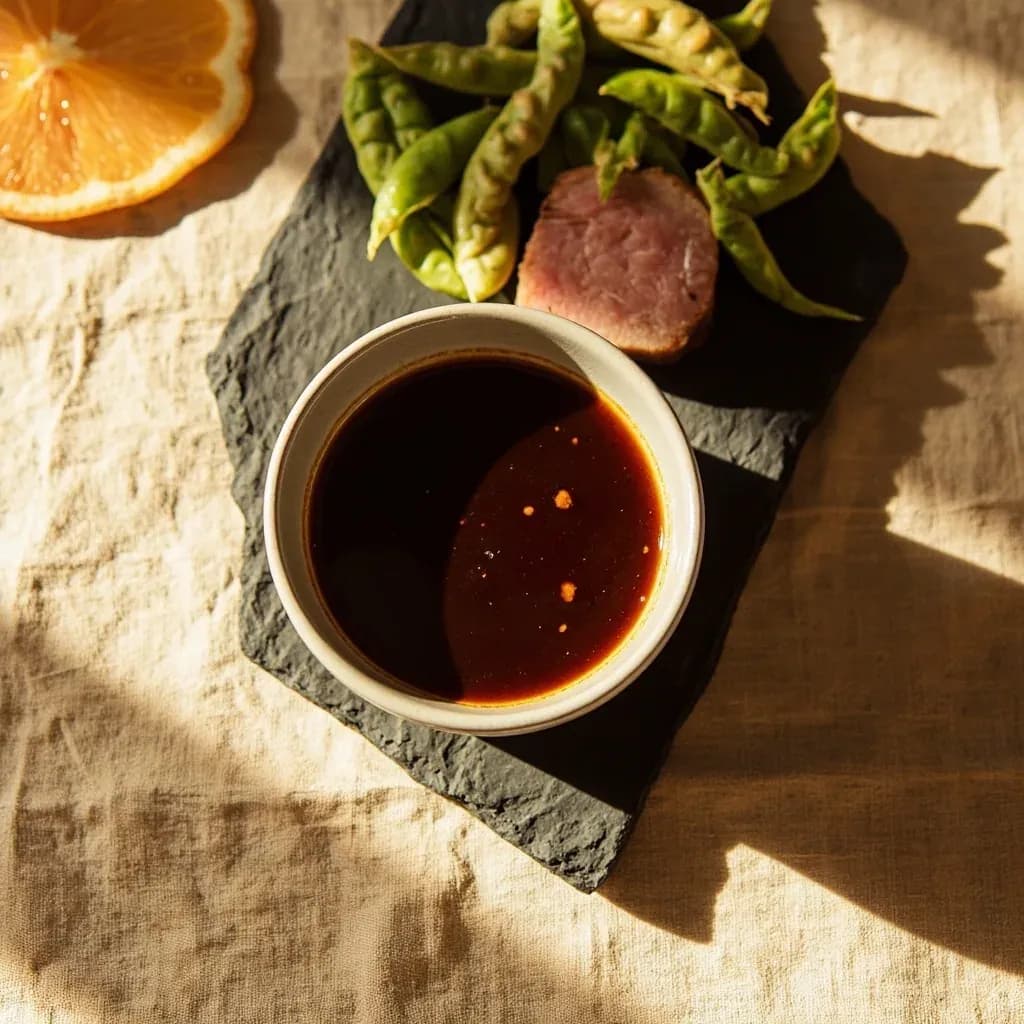
Tamari is the dark, rounded, all-soybean cousin of Japanese soy sauce — the liquid that historically pooled on top of aging miso and was skimmed off and sold as its own seasoning. Traditional hon-tamari is essentially that runoff: pressed soybeans and salt, fermented together for months or years, with no wheat in the recipe. Modern commercial "tamari" is often brewed as a sauce in its own right, but the characteristic flavor profile holds: deep brown-black color, a viscous almost meaty body, and an umami so rounded it reads as savory rather than salty.
What sets tamari apart from koikuchi shoyu (the everyday Japanese soy sauce most cooks know) is balance rather than intensity. Tamari delivers comparable sodium on a nutrition label, but the perception is softer — less of the sharp, briny bite and more of a long, mellow finish with subtle sweetness underneath. That roundness makes it forgiving in dressings, glazes, and finishing splashes, but it also means a smaller volume goes further: a cook who swaps tamari one-for-one for shoyu will almost always end up with an over-salted dish. Plan on roughly two-thirds to three-quarters the volume of regular soy sauce when substituting tamari in for shoyu, and the reverse (a bit more) when going the other way.
One practical note worth flagging up front: the word "tamari" alone does not guarantee a gluten-free product. In Japan, "tamari" is sometimes used loosely for any dark soy-style sauce, and many commercial bottlings contain a small percentage of wheat. For celiac cooks, look explicitly for "no wheat," "100% soy," or certified-gluten-free labeling rather than relying on the category name.
- Measured in
- ml
- Storage
- Pantry
Allergens
Find it in
Suits
Types & varieties
Traditional style; the liquid byproduct pressed out of aging miso, usually 100% soybean and wheat-free, with the deepest, roundest flavor.
Modern production brewed specifically as a sauce rather than collected as a miso byproduct; often from soybeans with little or no wheat.
Lower-salt versions, often cut with water and sometimes rounded out with added flavor enhancers; tastes thinner and less complex than full-strength.
A Western-inflected style finished with smoke; not traditional in Japan, useful for barbecue-style glazes.
Made from certified-organic soybeans and salt; the most reliable category to find certified gluten-free bottlings.
Tamari vs. Shoyu: A Quick Comparison
These two Japanese soy sauces get used interchangeably far more often than they should. The short version: tamari is darker, rounder, and more concentrated; shoyu is brighter, saltier on the palate, and lighter in color. Use the table below to decide which one a given dish actually wants.
- Color: Tamari is dark brown to near-black; koikuchi shoyu is reddish-brown and translucent.
- Salt perception: Tamari reads softer and rounder; shoyu has a sharper, more briny bite.
- Body: Tamari is slightly viscous and fuller; shoyu is thinner and more watery.
- Best uses: Tamari for glazes, dressings, finishing, and anywhere gluten matters; shoyu for sushi dipping, fried-rice seasoning, and dashi-based soups where you want brighter top notes.
- Substitution ratio: Tamari is more concentrated. To replace shoyu with tamari, use roughly two-thirds to three-quarters the volume; to replace tamari with shoyu, use about 1.3 to 1.5 times the volume.
Reading the Label: Wheat, Gluten, and What 'Tamari' Really Means
In Japan, the term tamari historically described a miso byproduct and implied a wheat-free product, but that meaning has loosened. Most bottles sold outside Japan are brewed tamari, and many include a small percentage of wheat to round out fermentation and color. This matters most for anyone cooking for celiac or gluten-intolerant guests.
- Look for the words 'no wheat,' '100% soy,' or a certified-gluten-free logo on the label — don't rely on the word 'tamari' alone.
- Organic tamari from a dedicated gluten-free producer is the safest default for households where cross-contamination is a concern.
- True hon-tamari from a Japanese miso maker is the most likely to be wheat-free but is not always labeled in English; verify with the importer when in doubt.
- For non-celiac cooks, the small amount of wheat in a brewed tamari is rarely a flavor issue and may actually deepen color and body — treat it as a feature, not a bug.
Common uses
Tips & pitfalls
- Use less than you would shoyu — tamari's concentration is the most common source of over-salted dishes.
- Add in the last one to two minutes of cooking. Boiling tamari dulls its aromatics and can turn the finished sauce bitter.
- For sushi dipping, dilute tamari roughly 1:1 with water or dashi if you want a lighter, less overwhelming dip.
- A few drops will rescue a flat-tasting dish faster than extra salt; tamari adds savor without sharpening the seasoning.
- Brighten heavy tamari dressings with a squeeze of citrus — yuzu, lemon, or lime — to keep them from feeling leaden.
- Make a quick ponzu-style sauce by combining tamari with citrus juice, a splash of rice vinegar, and a pinch of mirin.
- Stir tamari into melted butter for an instant steakhouse-style finishing sauce over grilled steak, vegetables, or corn.
- Avoid storing the bottle near the stove; heat and light degrade the color and aroma faster than the salt preserves them.
- In vegetarian cooking, layer tamari with a small amount of miso and a splash of mushroom soaking liquid for deep, meaty umami without any animal products.
Nutrition
Energy
322 kJ · per 100 g
Where the calories come from
Protein
0g
0% DV
Carbs
19.2g
7% DV
Fat
0g
0% DV
Fiber
0g
0% DV
Sugars
10g
of which
Sodium
1300mg
57% DV
Source · USDA FoodData Central · approx. Sauce, worcestershire
View on FDC →In the shops
Matched grocery products
No matched grocery products for Tamari yet.
Good to know
- Origin
- Japan, traditionally the Chūbu region (around Nagoya and Aichi prefecture)
- Etymology
- From Japanese tamaru (溜まる), meaning 'to pool' or 'to accumulate' — originally the liquid that pooled during miso fermentation
- Composition
- Soybeans, water, and salt; traditional styles contain no wheat, though many modern commercial versions include a small amount — read the label
- Flavor profile
- Deep umami, rounder and softer than shoyu, with subtle sweetness and a long mellow finish
- Color & body
- Dark brown to near-black; slightly viscous and fuller-bodied than koikuchi shoyu
- Sodium
- Roughly 900–1000 mg per tablespoon — comparable to shoyu but perceived as less saline
- Fermentation
- Brewed for several months to several years; the longest-aged styles mature two years or more
- Gluten status
- True 100% soybean tamari is naturally gluten-free; only products labeled 'no wheat' or 'gluten-free' are reliably safe for celiac use
- Storage
- Shelf-stable unopened; refrigerate after opening for best flavor retention (typically 6+ months)
Substitutes
- Shoyu (regular Japanese soy sauce) — Closest 1:1 swap; not suitable when gluten must be avoided.
- Coconut aminos — Gluten-free and soy-free; noticeably sweeter and about 70% less salty, so add salt back to taste.
- Liquid aminos (e.g., Bragg's) — Made from soybeans, similar umami, slightly milder, and gluten-free — works as a near-direct replacement.
- Dark Chinese soy sauce — Darker, sweeter, and less salty; good in cooked applications like braises and stir-fries, less ideal for dipping.
- Miso paste thinned with water — Not a direct swap — needs acid and additional salt — but carries similar fermented depth in soups and glazes.
- Fish sauce — Use sparingly in Southeast Asian or Italian-style dishes; very different flavor profile but delivers comparable savory intensity.
Pairs with
Also called
gluten-free soy sauce · wheat-free soy sauce