Dairy & Eggs
White Cheddar
Uncolored cheddar with the same sharp, tangy bite; melts smoothly into mac and cheese and gratins and crumbles cleanly over savory bakes.
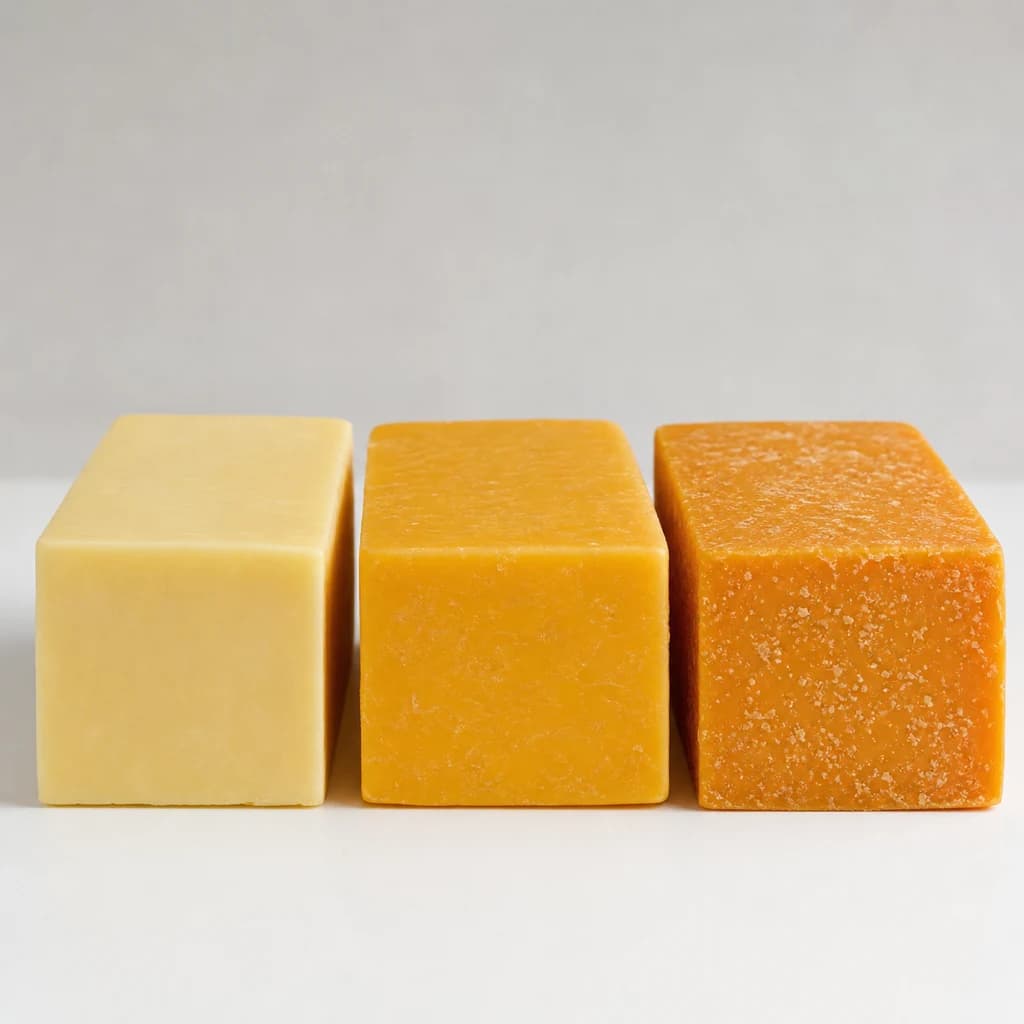
White cheddar is not a separate style of cheese — it is standard cheddar made without the annatto dye that became the visual default for orange wheels in the 19th and 20th centuries. The annatto tradition began partly to mask the natural color shift between winter and summer milk and was reinforced by American industrial production. Strip away the dye and you have the same firm, smooth, slightly tangy cow's-milk cheese, aged from a few months to several years, that sharpens and crumbles as it matures.
The practical difference is purely cosmetic. White cheddar is the cook's choice when a pale sauce, a clean melt, or a visually neutral topping matters — think a snow-white cheese sauce for mac and cheese, a delicate cauliflower gratin, or a béchamel that should read creamy rather than orange. Otherwise it behaves exactly like its dyed cousin, melting into a smooth sauce with moderate stretch and developing the same crystalline, brothy depth in long-aged wheels.
The single most important variable is age, not color. A two-month mild gives you a soft, mellow melt; a twelve-month sharp contributes real tang and complexity; a two-year vintage snaps with crunchy tyrosine crystals and deep savory flavor. Buy by the age printed on the label, and reach for the youngest wheels for creaminess and the oldest for finishing and boards.
- Measured in
- g
- Storage
- Wrapped & Refrigerated
Allergens
Find it in
Suits
Types & varieties
Aged roughly 2–3 months; creamy, buttery, very mellow; best for kid-friendly dishes and a soft mac and cheese.
Aged 3–6 months; balanced tang and creaminess; versatile for everyday cooking and sandwiches.
Aged 6–9 months; pronounced nutty tang; the standard for classic mac and cheese and quiches.
Aged 9–18 months; intense, complex, slightly crystalline; ideal for cheese boards and finishing.
Aged 1–3+ years; crumbly texture with crunchy tyrosine crystals and deep savory, brothy flavor.
Traditional farmhouse version from Somerset and neighboring counties; often uncolored, cloth-bound, and aged on wooden shelves.
Young, high-moisture cheddar sold before pressing; soft, friable texture, mild and tangy; traditional in British farm markets.
Farmhouse vs. block
Most supermarket white cheddar is block cheddar — vacuum-sealed, aged in plastic, and consistent from wheel to wheel. Farmhouse cheddar is made in smaller batches on the farm, traditionally cloth-bound, and aged on wooden shelves where it develops a natural rind. The texture is drier and more crumbly, the flavor more layered, and the aging often longer. Look for the word 'farmhouse' on the label, or a specific regional name (West Country, Cabot, Vermont Creamery, Irish farmhouse), when you want the traditional style. Block cheddar is the right choice when you need predictable melting and uniform flavor for everyday cooking.
Common uses
Tips & pitfalls
- Grate it yourself just before melting; pre-shredded cheese is dusted with starches and cellulose that prevent a smooth, glossy sauce.
- Bring the cheese to room temperature (30–60 minutes) before serving on a board — cold cheese mutes the aroma and flavor.
- For the smoothest cheese sauce, add cheese to warm (not boiling) milk and stir off the heat to avoid breaking and graininess.
- Avoid ultra-long-aged wedges for high-heat melting; they can turn gritty and oily. Use medium or sharp for mac and cheese, save extra sharp for folding in at the end.
- Wrap in cheese paper or parchment rather than plastic wrap so the cheese can breathe; if mold appears on a hard aged wheel, cut away at least 1 inch around and below the spot.
- If a recipe specifies white cheddar, the color is usually meant to keep the dish pale — orange cheddar tastes the same but will tint the sauce.
- For fondue, toss shredded cheese with a little cornstarch before adding to wine to stabilize the emulsion and prevent splitting.
- Pair sharp versions with bold accompaniments like whole grain mustard and pickled onion; pair mild versions with sweet fruit and soft bread.
Nutrition
Energy
1686 kJ · per 100 g
Where the calories come from
Protein
22.9g
46% DV
Carbs
3.4g
1% DV
Fat
33.3g
43% DV
Fiber
0g
0% DV
Sugars
0.5g
of which
Sodium
653mg
28% DV
Source · USDA FoodData Central · approx. Cheese, cheddar (Includes foods for USDA's Food Distribution Program)
View on FDC →In the shops
Matched grocery products
No matched grocery products for White Cheddar yet.
Good to know
- Origin
- Cheddar, Somerset, England; the name comes from the village and Cheddar Gorge where it was first made.
- Milk source
- Cow's milk; today produced worldwide, with farmhouse traditions strongest in the UK, Ireland, Vermont, and Wisconsin.
- Color difference
- Identical to orange cheddar except that no annatto (a natural vegetable dye) is added; the color is purely cosmetic.
- Aging range
- From 2–3 months (mild) up to several years for vintage wheels; flavor sharpens and complexity deepens with age.
- Texture
- Firm and smooth when young; crumbly and crystalline with long aging as tyrosine crystals form.
- Fat content
- Roughly 50% fat in dry matter, or about 33% by weight in standard block form.
- Melting quality
- Smooth, creamy melt with moderate stretch; sharper aged versions deliver stronger flavor when melted.
- Storage
- Wrap in cheese paper or parchment and keep in the warmest part of the fridge (vegetable drawer); bring to room temperature 30–60 minutes before serving.
- Shelf life
- Cut blocks keep 2–3 weeks refrigerated; aged wedges can last several weeks if wrapped properly and checked for mold.
Substitutes
- Orange Cheddar — Identical flavor profile; use it 1:1, but expect the dish to take on an orange tint.
- Gruyère — Excellent melter with a slightly nuttier, earthier flavor; works in gratins, fondue, and quiche.
- Comté — Aged Alpine cheese with deep, caramelized notes; superb for baked dishes and tartiflette-style recipes.
- Aged Gouda — Sweet, caramel-like aged version melts well and adds depth to mac and cheese and gratins.
- Cantal — French semi-hard cheese with tangy, nutty flavor; similar texture to mild cheddar.
- Monterey Jack — Milder and creamier; reduce quantity or blend with a sharper cheese for depth.
- Dubliner — Irish aged cheese with a firm texture and sharp, sweet flavor; a strong stand-in for extra sharp cheddar.
Pairs with
Also called
white cheddar cheese · natural cheddar