Other
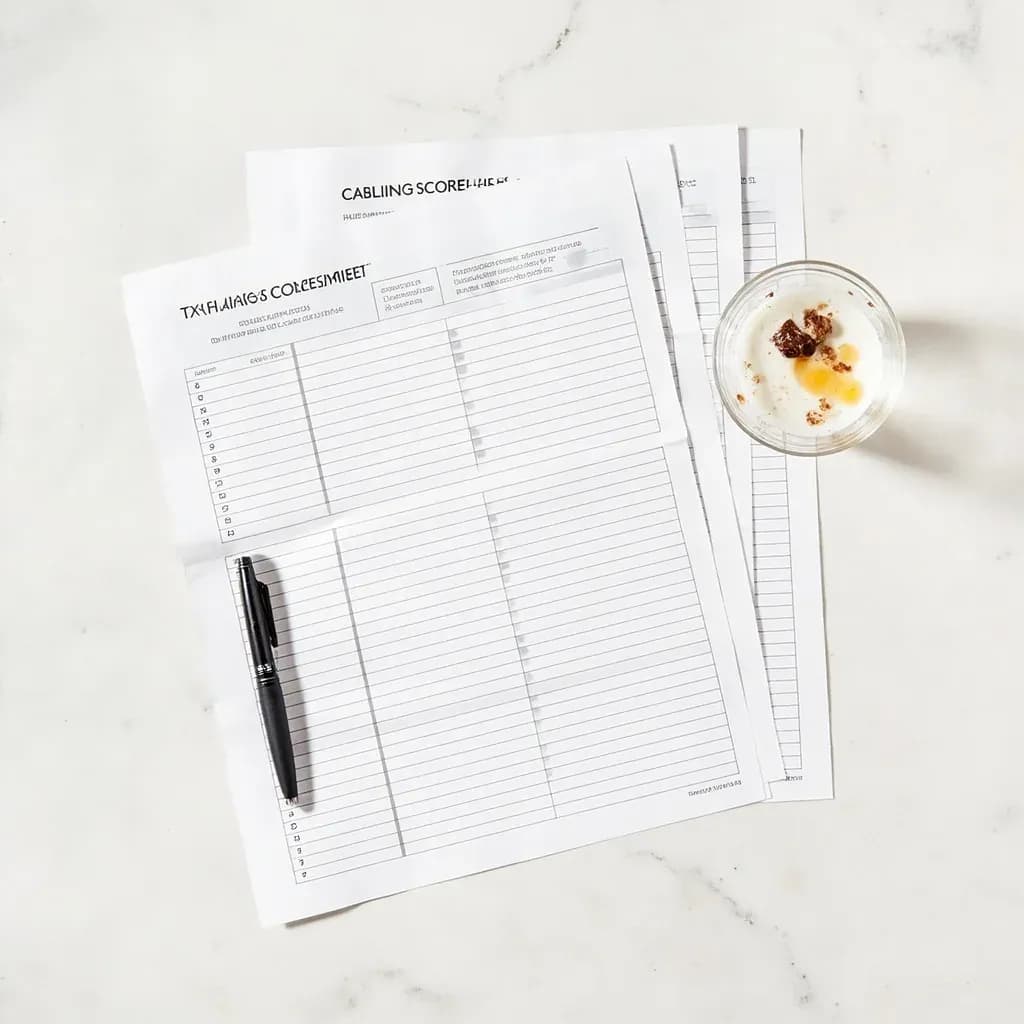
Tasting Score Sheet
Printed form for rating samples on aroma, flavor, and texture during a tasting.
A tasting score sheet is a printed form with scales and fields for rating samples on attributes like aroma, flavor, texture, and finish. Recipe developers, judges, and panels fill one per sample to capture structured, comparable feedback. Aggregating the sheets turns subjective impressions into scores that guide which version wins.
A tasting score sheet is the paperwork that turns a tasting from a pleasant impression into reproducible data. At its core it is a structured worksheet — a header for sample identification, rows for individual sensory attributes, a column for numeric scores, and a space for free-text notes. That simple architecture imposes discipline on what would otherwise be a fuzzy, memory-dependent experience, letting a cook compare Tuesday's chicken stock against Friday's on the same axes, or a competition judge defend a score with documented evidence rather than instinct.
The form matters because perception is unreliable without a framework. A palate fresh from a heavy lunch rates a wine very differently than one cleared with water and a plain cracker; a taster who has already decided a coffee is "artisanal" will unconsciously inflate its body and balance. Score sheets counteract these biases with blind coding, fixed attribute lists, defined scales, and required wait times between samples. They also create an archival record — a stack of dated, numbered sheets becomes the development history of a dish, a product, or a vintage, and the descriptive notes beside the numbers are often more valuable than the numbers themselves.
In practice, score sheets range from competition-grade forms built around decades of sensory science (the SCA cupping form, BJCP scoresheet, IOC olive oil sheet) to a humble half-page of notebook paper divided into four columns. Both work; the value lies less in the format than in the habit of writing things down before the impression fades. A cook who scores every iteration of a recipe, no matter how crude the form, will improve faster than one who tastes ten versions and remembers only the last.
Alternatives
Types & varieties
Specialty Coffee Association standard scoring fragrance/aroma, flavor, aftertaste, acidity, body, balance, sweetness, clean cup, uniformity, and defects on a 6–10 scale where 6 is the minimum acceptable score
Wine framework moving systematically through appearance, nose, palate, and conclusions, with a Level 1–5 quality band for systematic scoring
Beer Judge Certification Program form rating aroma, appearance, flavor, mouthfeel, and overall impression on a 0–50 scale with descriptive checklists
Competition form with weighted categories for flavor, body/texture, appearance, and overall impression on a 1–10 scale per category
International Olive Council panel sheet rating positive attributes (fruitiness, bitterness, pungency) and defects on a 0–10 cm line scale
General-purpose form with a 9-point hedonic scale (1 = dislike extremely, 9 = like extremely) used in consumer testing and home recipe development
Trained-panel form with intensity line scales (often 15 cm unstructured) anchored by reference standards for each attribute
Simplified cook's version rating aroma, flavor, texture, and presentation on a 1–5 scale with a notes column for next-iteration changes
Analytical vs. Hedonic Scales
Sensory science draws a sharp line between two kinds of measurement, and good score sheets respect the distinction. An analytical scale asks how strong an attribute is — "how bitter is this beer?" — and is anchored by reference standards at the high and low ends. A hedonic scale asks how much the taster likes what they perceive, with anchors like "dislike extremely" and "like extremely." Most standardized competition forms (SCA, BJCP, IOC) are analytical: they rate the sample against a defined ideal, not against personal preference. Most home recipe sheets are hedonic: they ask whether you, the cook, liked the result.
Blending the two is the most common error in home score sheets. A note that reads "7/10 — really lovely" mixes intensity and liking and is hard to act on. Better to score the dish analytically ("salt: balanced; acid: a touch low; texture: silky") and then record liking separately, so you can tell whether a recipe change worked because the balance improved or simply because you happen to like richer food this week.
- Analytical scales need reference standards — taste one excellent example and one flawed one before scoring
- Use analytical scoring to diagnose a recipe problem; use hedonic scoring to decide whether to serve it
- Many forms blend the two by accident; separate the columns if you want usable data
Setting Up a Proper Tasting
The score sheet only does its job if the room cooperates. Strong odors — perfume, cologne, scented lotion, fresh paint, brewing coffee in the next room — will contaminate every aromatic evaluation on the page. Light should be neutral and even, ideally daylight-balanced, so color judgments of beer, wine, oil, or broth are not skewed by warm bulbs or cool LEDs. Temperature of the room matters too: a cold room dulls sweetness and a warm one amplifies alcohol perception, both of which will ghost through every score you write.
- Use three-digit blind codes (e.g., 482) taped over brand labels; randomize the order in which you taste
- Provide room-temperature still water and plain unsalted crackers or bread; replace every few tasters
- Serve samples at their proper temperature: coffee hot but not scalding, wine cool, cheese at 65–70°F
- Provide a spit cup for wine, beer, coffee, and oil tastings of more than four samples
Writing Better Descriptive Notes
The numeric column is the easy part of a score sheet; the free-text column is where the real work happens. Numbers without language cannot tell next week's cook what to change. The discipline is to write concrete, sensory words — "grapefruit pith," "wet cardboard," "silken mouthfeel," "raw onion finish" — rather than abstract judgments like "good," "off," or "interesting." Aim for one or two concrete descriptors per attribute per sample. Over the course of a tasting flight, the accumulated vocabulary becomes a sensory fingerprint for that producer, that recipe, or that vintage, far more useful than any single total score.
- Name the specific reference: "tastes like tart cherry," not just "fruity"
- Note what is missing as well as what is present: "no finish," "acid drops off"
- Record temperature and time-of-tasting in the header; flavors shift as coffee cools and wine warms
- Date and number every sheet; a year of completed sheets is a development history
Common uses
Tips & pitfalls
- Always blind-label samples with three-digit codes so packaging shape, label, or price does not skew the score
- Cleanse the palate with room-temperature still water and plain unsalted crackers — flavored or sparkling water distorts taste bud response
- Smell before you sip: volatile aromatics register first and decay within seconds, so evaluate aroma as the very first step
- Score each attribute independently rather than circling an overall number first; one strong attribute (often sweetness or aroma) will otherwise skew the rest
- Wait the appropriate interval between samples — about 8–10 minutes for coffee cupping, 2–3 minutes for wine, 5 minutes for cheese — and rinse the glass between pours
- Avoid wearing perfume, cologne, or strongly scented hand lotion, and do not taste within 30 minutes of spicy food, coffee, or tobacco
- Taste in small sips or bites; large volumes fatigue the palate and dilute the retronasal aromatics that drive most of what we call flavor
- For competitions and group tastings, complete the sheet before discussing with other judges — group talk before scoring creates anchoring bias that is almost impossible to undo
Good to know
- Primary purpose
- Systematic, structured evaluation of food or drink samples against defined sensory attributes
- Common attributes scored
- Appearance, aroma/nose, flavor, texture/mouthfeel, aftertaste/finish, overall impression
- Typical scales
- 1–5, 1–10, 1–20, or 1–100 numeric scales; 9-point hedonic; 15 cm unstructured intensity lines
- Blind coding
- Three-digit randomized codes or labels to prevent packaging, brand, or price bias
- Format options
- Printed paper, laminated wet-erase reusable sheets, or digital tablet/phone forms
- Palate cleansers
- Room-temperature still water and plain unsalted crackers or bread; avoid flavored or sparkling water
- Setting conditions
- Quiet, odor-free, well-lit space at 68–72°F (20–22°C), neutral glassware
- Standardized forms exist for
- Coffee (SCA), wine (WSET SAT), beer (BJCP), cheese (ACS), olive oil (IOC), chocolate (ICA)
Also called
score sheet · tasting score sheet · tasting scorecard · evaluation sheet
Related
Dusting Flour / Bench Flour
Flour scattered on the work surface and dough to stop sticking while rolling and shaping.
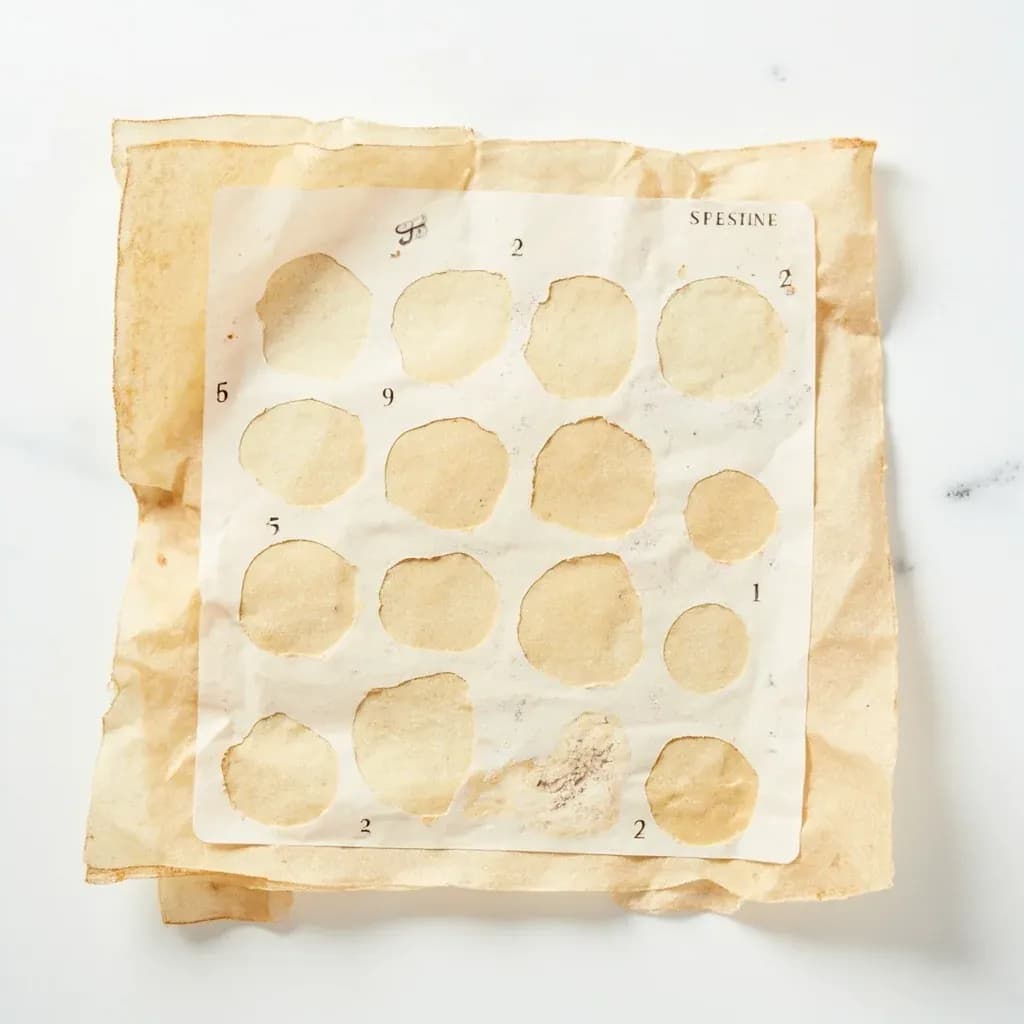
Tasting Placemat
Numbered mat that organizes samples in order during a tasting or evaluation.
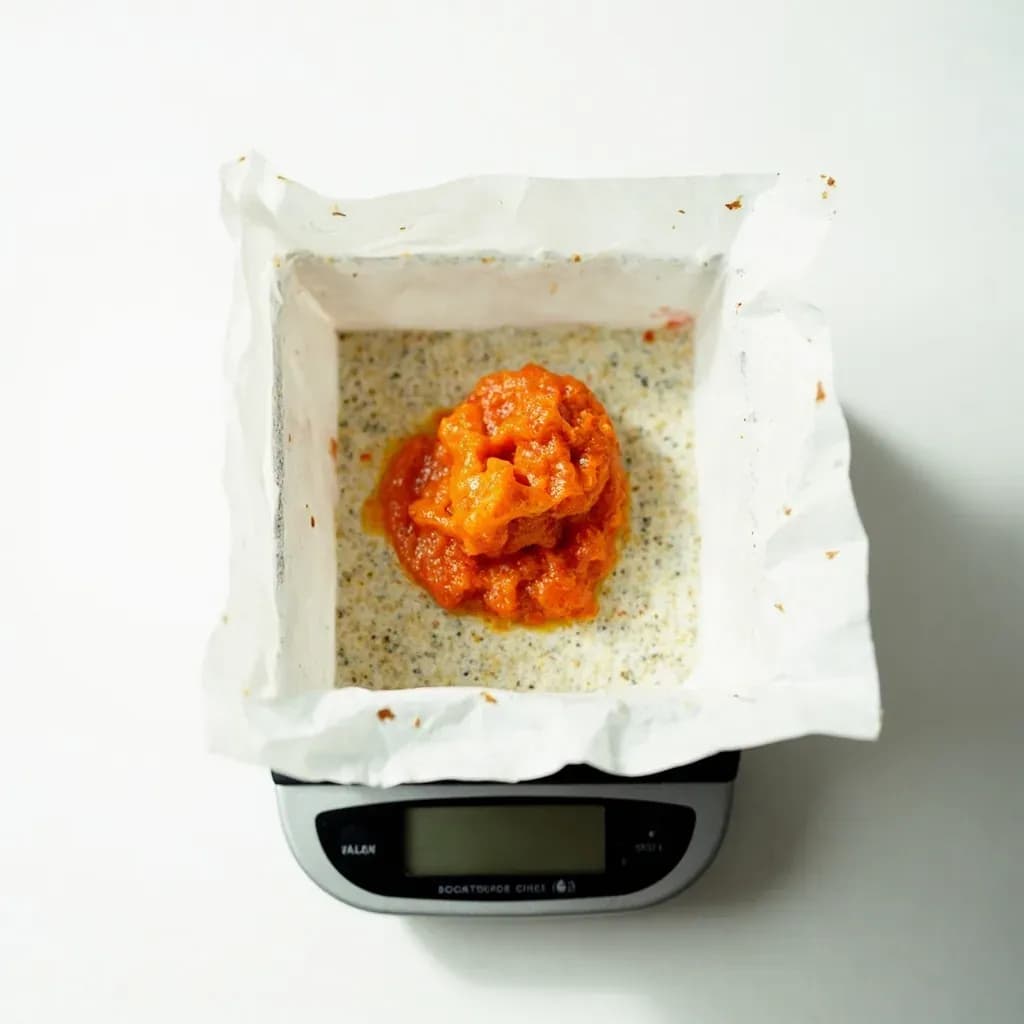
Weighing Boat / Weigh Paper
Disposable tray or paper for holding ingredients on a scale during precise weighing.
Wine Label / Tag
Stick-on or hanging tag for marking bottles with vintage, contents, or tasting notes.