Other
Tasting Placemat
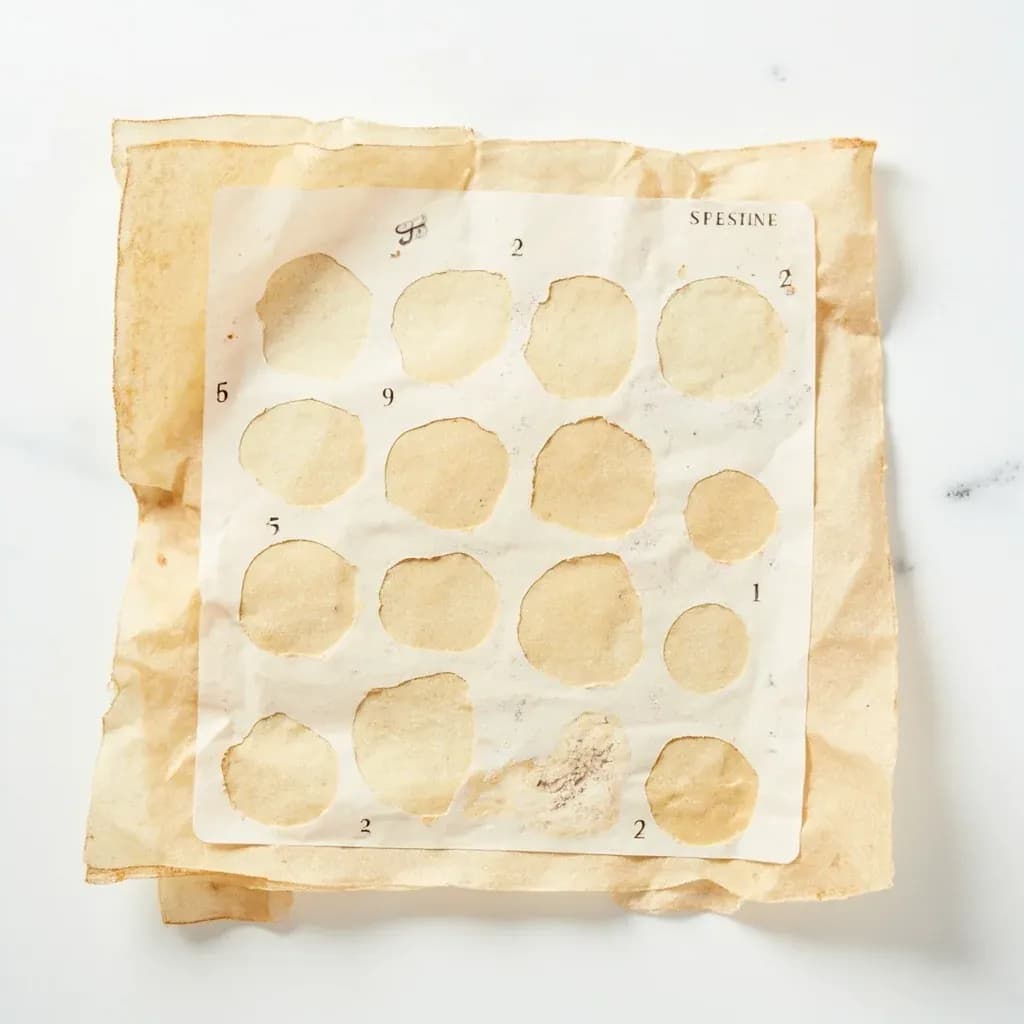
Numbered mat that organizes samples in order during a tasting or evaluation.
A tasting placemat is a printed or paper mat with numbered or labeled spots that hold samples in a fixed order during a tasting session. Cooks, sommeliers, and recipe testers use it to keep blind or comparative samples straight and to jot quick impressions beside each. It standardizes the layout so notes and scores map cleanly to the right sample.
A tasting placemat — usually called a tasting mat or flight mat — is a printed, flat surface marked with numbered circles or wells that hold a sequence of sample glasses, cups, or small pieces in a fixed order. The mat does not change flavor; what it changes is the discipline of the tasting. By pinning every sample to a numbered position and keeping that number consistent for the taster, the notes, and the pour source, it removes the running mental question of "which one was this?" and lets attention go to aroma, body, and finish instead.
This matters most in comparative and blind work, where flavor memory is short and palate fatigue is real. Tasting from low intensity to high, or in the order dictated by a formal protocol (SCA cupping, WSET systematic approach, Cicerone exam), only works if glasses stay in their slots and the taster's nose and palate aren't reset by jumping around. A mat enforces that sequence for everyone at the table, which is why numbered six-spot versions dominate — they map cleanly onto the standards most professionals train on.
Materials range from laminated cardstock to food-grade silicone to molded plastic, and the choice is mostly about setting. Paper is hygienic and disposable for public events; silicone grips glass bases and survives years of classroom or lab use. Some mats print more than numbers: a flavor wheel, an intensity scale, or a small note template. Used well, the mat is a piece of lab equipment for the senses, not a novelty.
Alternatives
Types & varieties
6 numbered spots arranged left-to-right; often pairs with a separate ISO tasting glass holder
Mirrors the SCA cupping protocol, typically 6 cups (or 5 blind plus 1 reference); sometimes labeled A–F instead of 1–6
Often 4 positions; frequently includes BJCP style-guide reference or a hop and aroma wheel
4–6 positions; usually includes a nosing-glass area and a dilution or water-drop spot
Pairs blue-tinted tasting glasses with a numbered mat; often prints a bitterness and pungency scale
Larger numbered wells or spots sized for small pieces; may include flavor-pairing prompts
Single-use laminated cardstock; popular at trade shows, fairs, and large public tastings
Grippy food-grade silicone holds glass bases in place so numbered glasses don't slide during the flight
Why the numbered order matters
Tasting is a sequence, not a free-for-all, and the mat is what turns the sequence into a habit. Flavor memory and palate sensitivity decay quickly — after only a few subsequent samples, the nose and palate have largely reset, which is exactly the window a six-glass flight occupies. Working the mat in order, usually low intensity to high or as dictated by protocol, lets the palate encounter each sample at roughly the same freshness and means a strong sample late in the flight doesn't bias the next note. Reversing the order, skipping a slot, or adding an extra glass at the end of a six-spot mat doesn't just look sloppy; it scrambles the sensory data the taster is trying to write down. The numbered surface is a small piece of insurance against that.
- Low-to-high intensity is the default for wine, whiskey, and olive oil; protocol order (e.g., SCA cupping) is fixed and should not be rearranged
- Write notes on the mat or a clip-in note sheet, never on loose paper, so scores stay tied to the right sample number
- Number the bottles or pour sources to match the mat — the mat does no work if the lineup behind it is anonymous
- Between flights, rinse the mat (silicone or plastic) or replace it (paper) when switching to a very different flavor family
Matching the mat to the protocol
Different tasting traditions have settled on different numbers of samples for a reason, and the mat should match. Coffee cupping under the Specialty Coffee Association standard uses six cups per sample set, with the geometry and brew volume standardized so any deviation throws the protocol off. The WSET systematic approach to wine is built around small flights of four to six wines tasted in a deliberate order. Cicerone-style beer evaluations often work in fours to keep a single style group on the table. Choosing a mat with the right spot count — and, for cupping, the right labeling style (numbers vs. letters) — is what makes the mat an instrument of the protocol rather than a generic tray.
- Coffee: 6 positions (sometimes 5 blind plus 1 reference), letters A–F in cupping rooms, numbers in roaster R&D
- Wine: 4–6 positions, left-to-right numbering, neutral color so the wine's true hue is readable
- Beer: 4 positions typical, leaving room for a small aroma-wheel or style-guide reference on the mat
- Spirits and whiskey: 4–6 positions with a dedicated nosing area and a spot for a water dropper to test dilution
Common uses
Tips & pitfalls
- Taste from lowest intensity to highest, or in the order printed on the mat; reversing mid-flight distorts flavor memory
- Number the bottles or pour sources to match the mat's positions — an anonymous lineup behind a numbered mat does no work
- Pair the mat with a designated spit or rinse cup so tasters can clear the palate between samples without leaving the table
- Keep the mat neutral in color and pattern; bright prints or strong tints can bias perceived aroma and color reading
- For coffee cupping, match the mat's spot count and labeling (numbers vs. letters) to the SCA protocol and do not improvise the layout
- Write notes on the mat itself or a clip-in note sheet rather than on loose paper, so scores stay tied to the right sample number
- When reusing silicone mats, wash thoroughly between samples of very different flavor families (e.g., smoky whisky after a delicate Riesling) to avoid carry-over
- Don't crowd more samples onto the mat than it has spots — adding an unlabeled glass at the end defeats the whole point of the numbered system
Good to know
- Typical capacity
- 6 numbered positions is standard; 4- and 8-position versions also exist
- Common materials
- Food-grade silicone, food-safe molded plastic, or laminated paper/cardstock
- Primary purpose
- Organizing samples in a fixed sequence during blind or comparative tastings so flavor memory stays consistent
- Format
- Mat-shaped (rectangular) with printed numbered circles or spots; often paired with a designated rinse or spit-cup position
- Typical settings
- Wine, coffee (cupping), beer, spirits/whiskey, olive oil, chocolate, cheese, tea
- Educational use
- Widely used in WSET wine courses, SCA coffee cuppings, Cicerone beer programs, and distillery training rooms
- Cleaning
- Reusable silicone or plastic mats wipe clean or go in the dishwasher; paper versions are single-use
- Reference aids
- Higher-end versions print a flavor or aroma wheel, intensity scale, or tasting note template directly on the mat
Also called
tasting mat · tasting placemat · flight mat
Related
Dusting Flour / Bench Flour
Flour scattered on the work surface and dough to stop sticking while rolling and shaping.
Tasting Score Sheet
Printed form for rating samples on aroma, flavor, and texture during a tasting.
Weighing Boat / Weigh Paper
Disposable tray or paper for holding ingredients on a scale during precise weighing.
Wine Label / Tag
Stick-on or hanging tag for marking bottles with vintage, contents, or tasting notes.