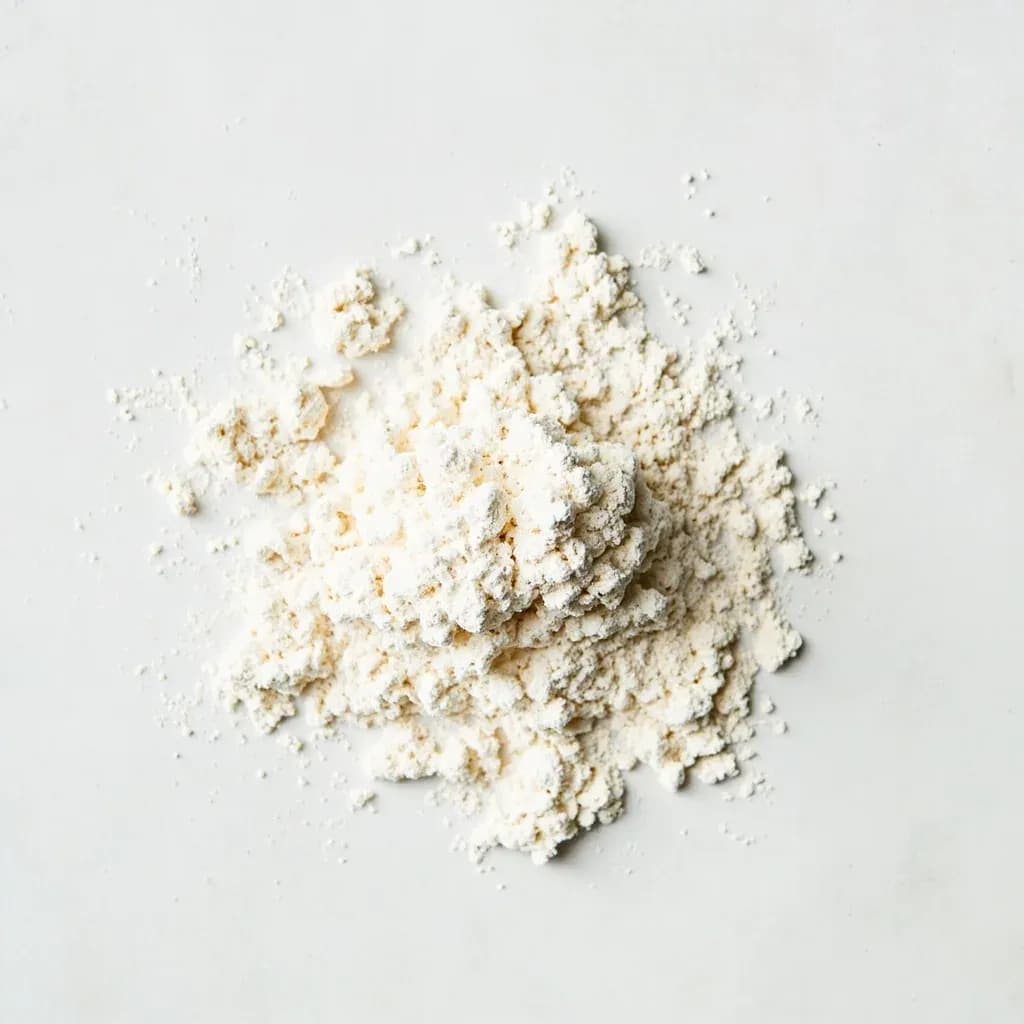
Other
Dusting Flour / Bench Flour
Flour scattered on the work surface and dough to stop sticking while rolling and shaping.
Dusting or bench flour is plain flour kept aside specifically for dusting the counter, rolling pin, and dough during shaping. A light scatter keeps sticky dough from gripping the surface so it can be rolled, folded, and cut cleanly. Bakers use it sparingly, since excess flour can dry out the dough and toughen the crumb.
Bench flour — also called dusting flour — is plain flour kept at hand during dough work to keep dough, tools, and surfaces from sticking together. It is best understood as a working material rather than an ingredient: its only job is to provide a thin, dry barrier between tacky dough and whatever the dough is touching, and the less of it that ends up in the finished bake, the better. A cook who dusts well moves through rolling, shaping, and transferring with calm control; a cook who dusts badly ends up with tough pastry, gummy bread crust, and pale streaks of raw flour baked into the surface.
The choice of flour matters more than the act of dusting itself. As a rule, the bench flour should match the flour in the recipe so any incidental incorporation does not change the dough's protein level or hydration. Rice flour is the standing exception — it absorbs less into wet doughs, releases cleanly from bannetons, and is the standard dusting for Asian noodles and very slack breads. Coarser semolina or finely milled 00 serve Italian pasta and pizza, where a little grit on the underside is a feature, not a flaw.
The principle that runs through every technique below is restraint. A tablespoon or two is usually enough to roll out a single pie dough; a ciabatta or focaccia may want more on a wet day. Whatever is used should sit on the surface and on the dough as a fine, even veil — never a blanket — and any excess should be brushed or shaken off before the dough hits the oven.
Alternatives
Types & varieties
The default bench flour; matches the protein level of most doughs so any folded-in dusting does not change texture.
Used when working tender doughs like shortcrust or biscuits where a lower-protein dusting keeps the crumb delicate.
The go-to for Asian noodle doughs, mochi-style work, and lining bannetons; absorbs less into wet doughs and has a neutral flavor.
Coarse and gritty; the traditional choice for dusting Italian pasta sheets and pizza bases to add bite and prevent sticking.
Very finely milled Italian flour, used on the bench for fresh egg pasta, gnocchi, and pizza where a smooth release is wanted.
Used in Chinese baking and pastry work; gives a very short, tender crumb when dusted into laminated or short doughs.
A roughly 50/50 mix used as a bench flour in some Chinese bakeries to produce a tender, less chewy texture suited to gluten-free and short-dough work.
The match-the-recipe rule
The single most useful habit with bench flour is to reach for the same flour already in the bowl. Bread flour dusted onto a shortcrust pastry will, once folded in, raise the dough's overall protein and toughen the result; pastry flour dusted onto a high-hydration baguette dough will slacken and dull the crust. Keeping a small cup of the working flour beside the bench — refilled from the main bin with clean, dry hands — solves the problem without thinking about it. The exceptions are deliberate: rice flour for very wet doughs and bannetons, semolina or 00 for Italian work, cornstarch or potato starch where tenderness is the goal.
Rice flour and high-hydration doughs
Once a dough crosses roughly 75% hydration, regular bread flour on the bench turns gummy on contact and gets dragged back into the loaf. Rice flour sidesteps this because its starches absorb more slowly and do not develop gluten. It also releases cleanly from a well-floured banneton, leaving the loaf's skin intact when it tips out. A small bowl of rice flour kept apart from the bread flour bin — never mixed back in — is one of the most useful pieces of bench kit a serious home baker can own.
Common uses
Tips & pitfalls
- Less is more — dust only enough to break the tack; any extra gets worked into the dough and dries out or toughens the final product.
- Use the same flour the recipe calls for; swapping in a higher-protein flour on the bench will toughen the dough if it gets folded in.
- Keep a dedicated shaker or cup of bench flour within arm's reach so greasy or wet hands never reach into the main flour bin.
- A fine-mesh sieve gives the thinnest, most even dust — important for rolled pastry, shortbread, and biscuit dough.
- For very wet doughs (around 75% hydration and up), switch to rice flour on the bench; it absorbs less and keeps the crust from turning gummy after baking.
- If dough sticks mid-roll, slide a bench scraper underneath, lift the dough, and dust the bare patch — do not pile flour on top of the dough.
- Brush or shake off excess bench flour from shaped loaves before scoring and baking; burnt raw flour shows up as dark streaks on the crust.
- Reserve a small bowl of rice flour specifically for bannetons and never mix it back into the bread flour bin.
- In hot weather, work with chilled dough and a cool surface; if the kitchen is very warm, a brief chill of the bench flour can help keep fat in short and laminated doughs from softening on contact.
- A silicone rolling-pin cover plus a bare-minimum dusting is usually cleaner than burying the pin in flour.
Good to know
- What it is
- Plain flour kept at hand during dough work to keep dough, tools, and surfaces from sticking.
- Also called
- Bench flour, dusting flour, flour for rolling, bench flour, and (loosely) baker's flour.
- Typical flour used
- Usually the same flour called for in the recipe — bread flour for bread, pastry or AP for pastry, 00 or semolina for pasta and pizza.
- Common alternatives
- Rice flour (high-hydration doughs, Asian noodles, bannetons), potato starch, cornstarch, and semolina for pasta and pizza.
- Where it's used
- Work surface, rolling pin, hands, dough ball, bench scraper, proofing baskets, sheet pans, peels, and couche cloths.
- Storage
- Kept in an open cup, dredger, or shaker at the bench; refill from the main flour bin as needed with clean, dry hands.
- How it's dispensed
- Sprinkled by hand, shaken from a small bowl, flour shaker, or dredger, or dusted through a fine-mesh sieve for an even veil.
- Amount per use
- As little as possible — a tablespoon or two for a pie dough, more for very wet doughs like ciabatta or focaccia.
- Cost
- Negligible — uses the same flour already in the recipe, plus a small amount of rice or specialty flour for specific jobs.
- Shelf life
- Indefinite if kept dry and free of debris; discard if it picks up fat, crumbs, or moisture.
Also called
Bench Flour · Dusting Flour · Flouring Flour
Related
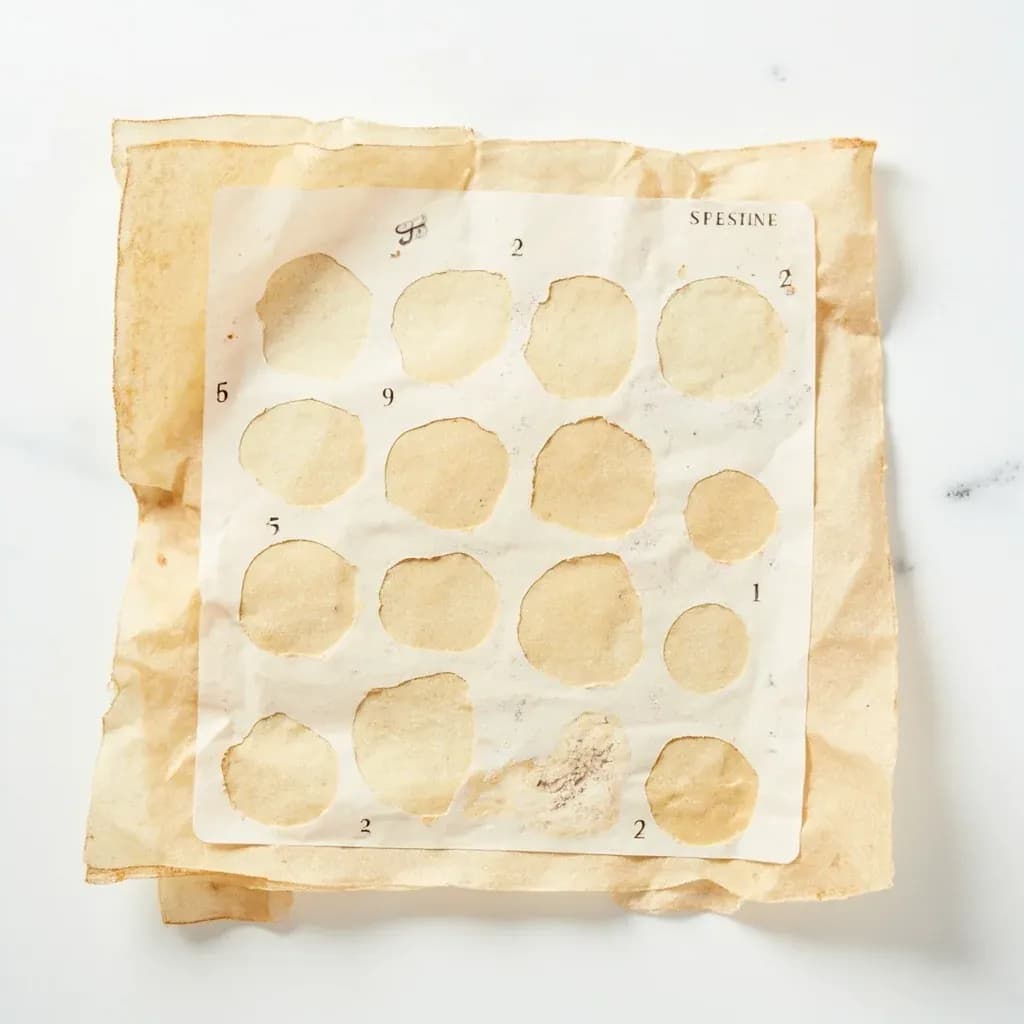
Tasting Placemat
Numbered mat that organizes samples in order during a tasting or evaluation.
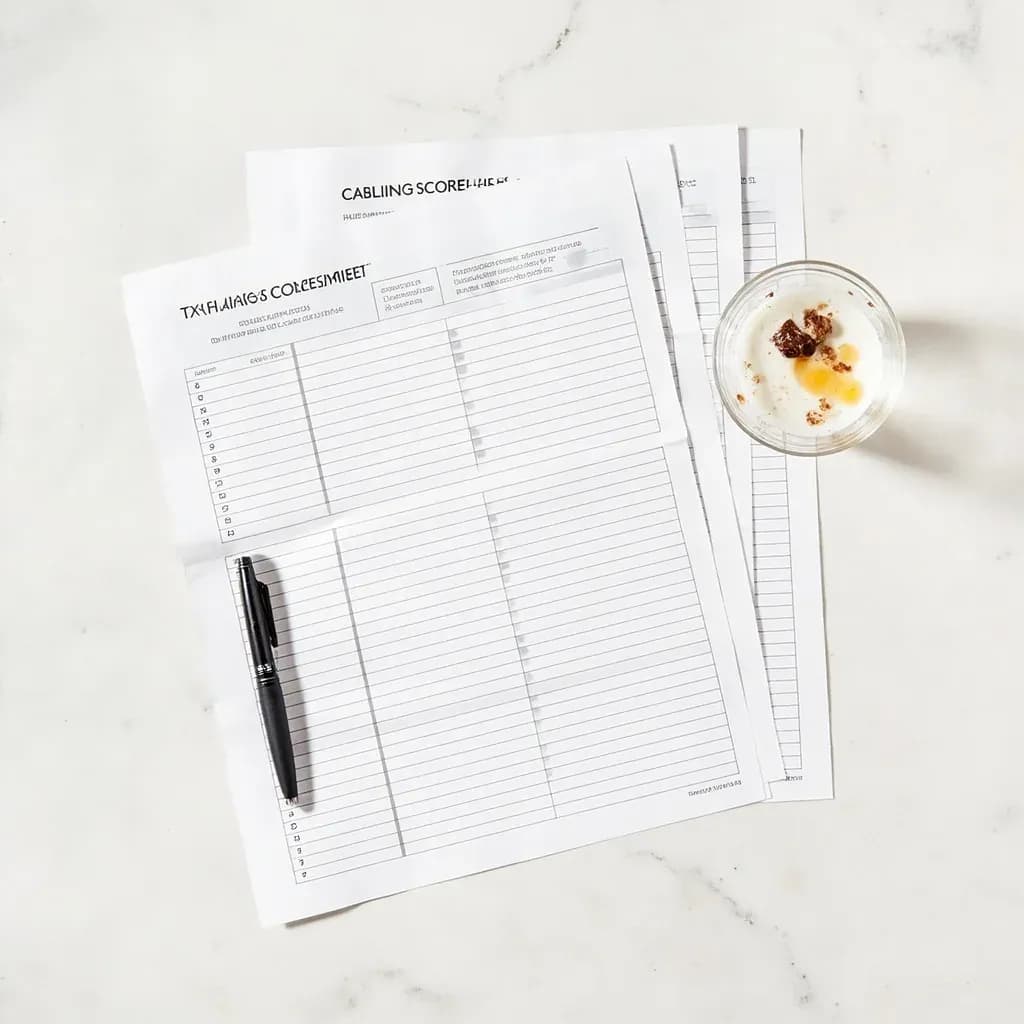
Tasting Score Sheet
Printed form for rating samples on aroma, flavor, and texture during a tasting.
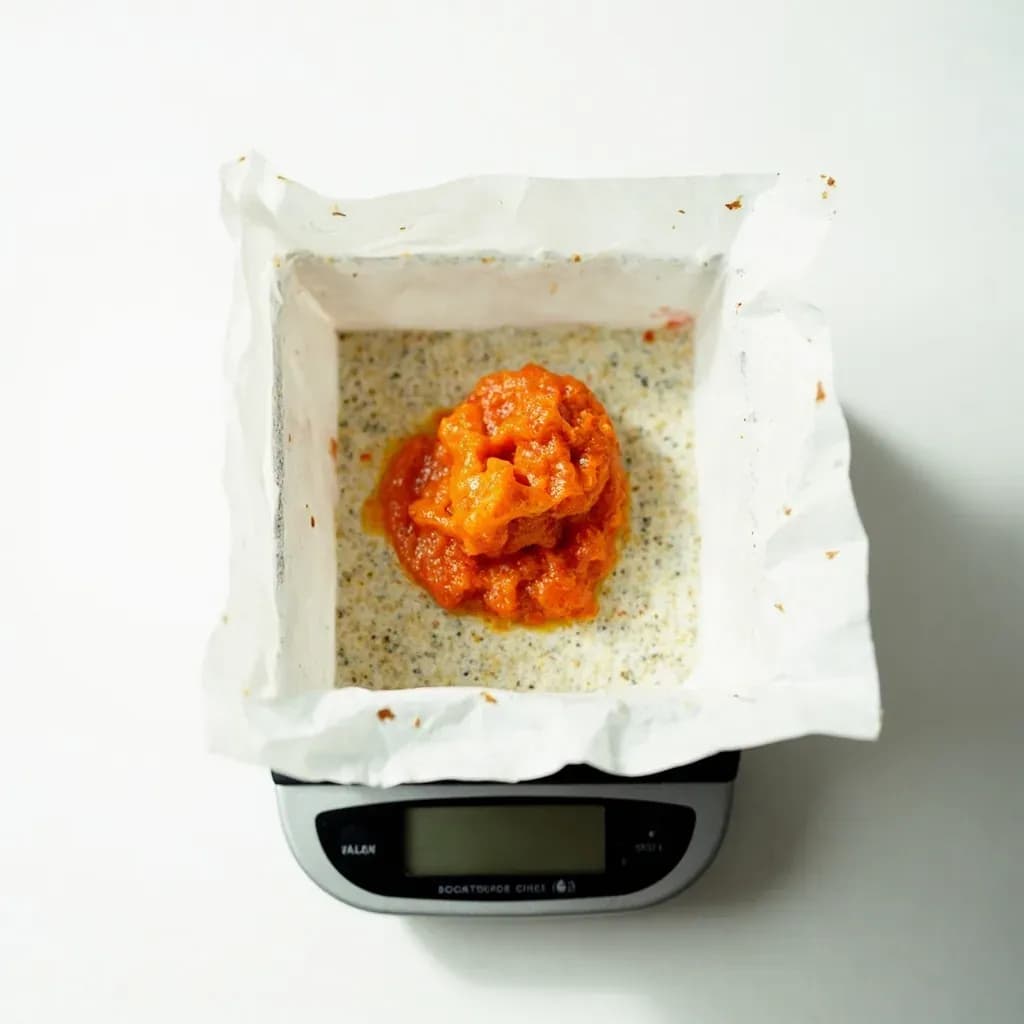
Weighing Boat / Weigh Paper
Disposable tray or paper for holding ingredients on a scale during precise weighing.
Wine Label / Tag
Stick-on or hanging tag for marking bottles with vintage, contents, or tasting notes.