Heat & Safety
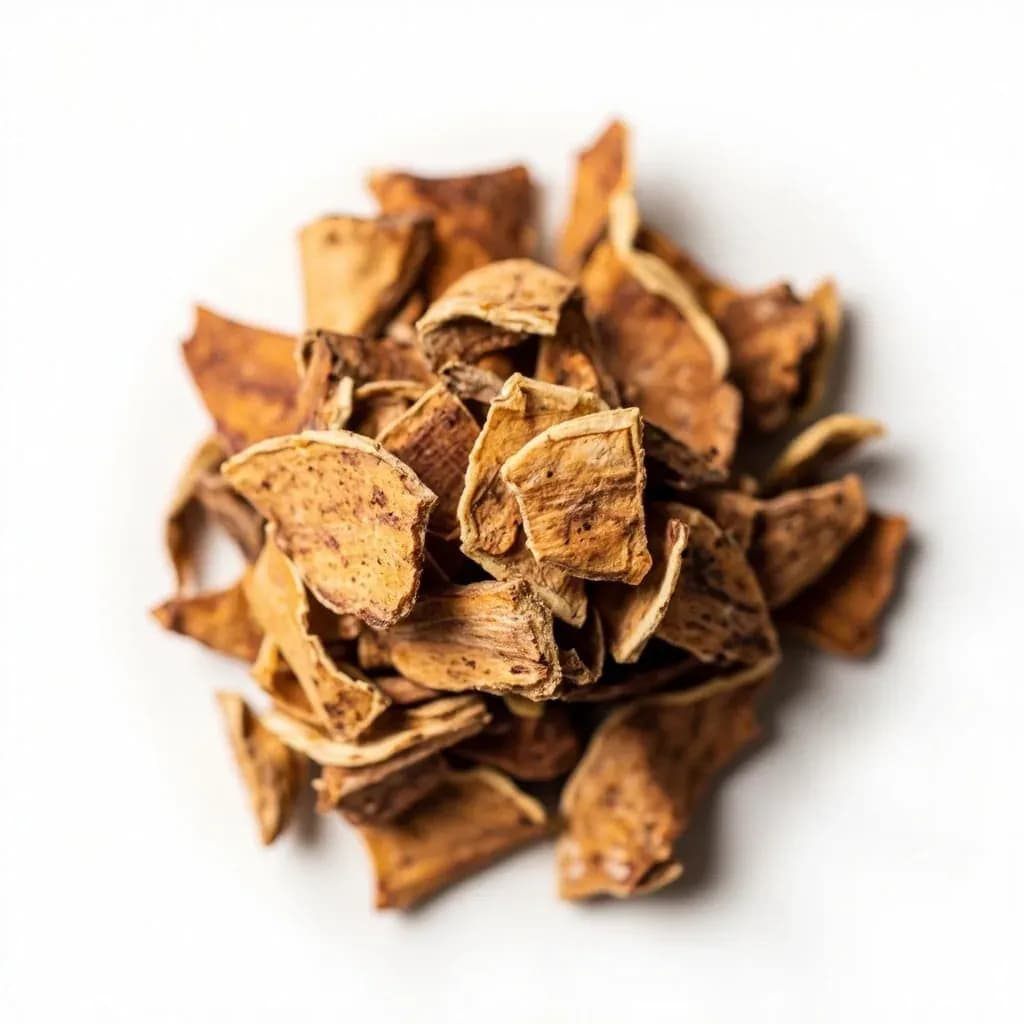
Smoking Wood Chips
Small hardwood chips that smolder to add smoke flavor when grilling and smoking.
Smoking wood chips are small pieces of hardwood such as hickory, apple, mesquite, or oak that smolder over heat to flavor food. They are added to a grill, smoker box, or stovetop smoker, often soaked or dry, where they produce aromatic smoke that perms meats, fish, and vegetables. Each wood gives a distinct profile, from mild fruitwood to bold mesquite, and chips ignite faster than larger chunks for shorter cooks.
Smoking wood chips are small, kiln- or air-dried pieces of hardwood, roughly 1/4 to 1 inch across, that smolder over a heat source to flavor food with real wood smoke. They sit in the middle of the smoking-fuel family: bigger and slower-burning than sawdust pellets (which are compressed into uniform cylinders and fed mechanically), and smaller, faster, and more intense than wood chunks (the fist-sized pieces favored for long, low-and-slow barbecue). For most backyard cooks, chips are the entry point because they work on any heat source — charcoal kettle, gas grill with a smoker box, offset barrel, electric bullet — and they let you dial in a quick burst of flavor without committing to the volume and burn time of chunks.
What makes chips worth choosing thoughtfully is that they are a flavor ingredient, not just a fuel. Every species carries a distinct chemical fingerprint of phenols, carbonyls, and acids that lands differently on meat, fish, and vegetables. The same chicken can taste bacon-like, faintly sweet, or peppery depending on whether hickory, apple, or mesquite is smoldering beneath it. Get the temperature, airflow, and timing right and chips deposit a clean, fragrant smoke; get them wrong and you end up with a creosote-bitter black coating that no sauce can rescue.
Chips are also forgiving. A handful tossed onto hot coals or sealed in a foil pouch on a gas grill burner produces useful smoke in under ten minutes and burns out in 20–45, which means you can experiment with blends, change direction mid-cook, or add smoke to foods that would never make it into a dedicated smoker.
Alternatives
Types & varieties
Strong, bacon-like, slightly sweet. The classic Southern choice for pork ribs and shoulder. Easy to overdo on lighter meats.
Very intense, earthy, almost peppery; iconic in Texas brisket and grilled steaks. Burns hot — best for short smokes or blended with a milder wood.
Medium-strong, neutral, smoky. A versatile backbone wood for beef, lamb, and sausage, central to Memphis- and Kansas City-style barbecue.
Mild, sweet, faintly fruity. A go-to for poultry, pork, ham, and any short smoke where you want gentle flavor rather than a heavy hand.
Mild, slightly sweet, and lends a reddish-mahogany color to the bark. Pairs with poultry, pork, and ham; often blended with hickory or oak.
Mild, sweet, almost caramel-like. Suited to pork, poultry, ham, and smoked cheese; subtler than hickory.
Medium strength, a softer cousin of hickory with a nutty edge. Excellent on poultry, pork, and brisket.
Very delicate, clean, slightly sweet. The traditional Pacific Northwest choice for hot-smoking salmon and other fish.
Mild, sweet, faintly fruity in the same family as apple and cherry. Suited to poultry, pork, and short smokes.
Aromatic Mediterranean tradition, used for lamb, goat, and vegetables in Greek and Middle Eastern cooking. Available as pruned-vine cuttings rather than bagged chips.
Matching wood to food
The simplest working rule is to match smoke intensity to cook time and the delicacy of the protein. Strong, fast woods like mesquite and hickory overwhelm chicken, fish, and cheese in an hour, but shine on a 90-minute steak or a six-hour brisket where the smoke has time to mellow. Mild woods — apple, cherry, alder, maple, pecan — let the food's natural flavor lead and add a sweet, rounded smoke note; they are the safer default for anything under three hours or anything that is itself subtly flavored. Blending a mild wood with a strong one (cherry + hickory, apple + oak) is the easiest way to keep the smoke character interesting without tipping into bitterness.
Reading the smoke
The color and density of smoke coming off the cooker is the most reliable indicator of whether you are depositing good flavor or ruining the food. It is worth learning because chips fail silently otherwise — by the time you taste the bitterness, the creosote is already on the meat.
- Thin, blue, almost invisible haze — the target. Flavorful smoke without soot or creosote.
- Thick white billows — fire is too cool, or the chips are too wet. The smoke wets the food without burning off, leaving a bitter film.
- Heavy gray or black smoke — combustion is starved of oxygen or the chips are flaming. Vent the lid, spread the coals, and let air move.
- No visible smoke at all on a hot grill — the chips have ignited cleanly. Useful for a short kiss of flavor; not enough for a long cook.
Working with a gas grill
A gas grill is the most common place chips are used, and the easiest to get wrong because there is no natural updraft over coals. The two reliable methods are a metal smoker box filled with chips and set directly over a lit burner, or a foil pouch — chips piled on a sheet of heavy foil, folded into a flat packet, and pierced several times with a fork before sitting it on the grate over a burner turned to high. Either way, preheat the box or pouch for 5–10 minutes with the grill closed until smoke begins to stream steadily, then drop the temperature to cooking temp and put the food on. Replenish a fresh handful every 20–40 minutes on anything longer than an hour; chips burn out fast in open air, and a long cook needs several rounds to keep smoke flowing.
Common uses
Tips & pitfalls
- Never use softwoods — pine, spruce, fir, cedar, or untreated pallet wood. Their resins produce harsh, sooty, inedible smoke and can ruin an entire cook.
- Soaking chips in water is optional. A soak slows ignition and produces wetter, steamier smoke that can mute flavor; skip it when you want clean, fast smoke.
- Match wood intensity to cook time: strong woods (mesquite, hickory, walnut) for short, hot cooks; mild woods (apple, cherry, alder, maple) for poultry, fish, and cheese.
- Aim for a thin blue haze. Thick white smoke means tar and creosote are depositing on the food; black smoke means starved combustion — open a vent and let air move.
- Add chips in stages rather than all at once. Chips burn out fast, so replenish every 20–40 minutes on long cooks.
- Reuse cheap, untreated hardwood lumber offcuts only if you know the species and that the wood isn't pressure-treated, glued, or painted.
- Watch for a bitter, ashy coating on the finished food — a sign the cook ran too cold, the smoke was too thick, or too much wood was used at once.
- Buy plain single-species chips rather than pre-flavored blends so you can build your own mixes to taste.
Good to know
- Material
- Hardwood only. Softwoods such as pine, spruce, fir, and cedar must be avoided — their resins produce harsh, acrid, potentially toxic smoke.
- Typical chip size
- Roughly 1/4 to 1 inch (about 1–2 cm); finer than wood chunks, coarser than sawdust pellets.
- Moisture target
- Seasoned chips run 15–25% moisture; kiln-dried chips run about 8–12%.
- Optimal smoke temperature
- Best smoke development at 200–275°F (93–135°C). Below ~150°F the wood smolders and deposits soot and creosote; above ~300°F the smoke turns acrid.
- Smoke duration
- A handful of dry chips smolders for roughly 20–45 minutes; soaked chips burn slower but produce wetter, more steamy smoke.
- Packaging
- Sold by weight in 1–5 lb (450 g–2.3 kg) bags or boxes.
- Storage
- Keep in a sealed, dry container away from heat. Properly stored they last for years; moisture or mold ruins them.
- Form distinction
- Smaller and faster-burning than chunks; unlike pellets, not compressed into uniform cylinders, so they feed by hand rather than mechanically.
Also called
Wood Smoking Chips · smoker chips · BBQ wood chips
Related

Paper Towels
Disposable sheets for spills, drying, and patting dry

Kitchen Towels
Reusable cloths for drying, gripping, and wiping

Oven Mitts
Heatproof gloves to handle hot pans and trays safely

Disposable Gloves
Single-use gloves for safe, mess-free handling

Cleaning Cloths
Reusable cloths for wiping counters and spills

Tortilla Warmer
Insulated holder that keeps tortillas warm and soft

Trivet
Heatproof stand that shields surfaces from hot pots

Ice Bath Setup
Bowl of ice water that halts cooking and sets color