Heat & Safety
Smoker Wood Pellets
Compressed hardwood pellets that fuel and flavor pellet grills and smokers.
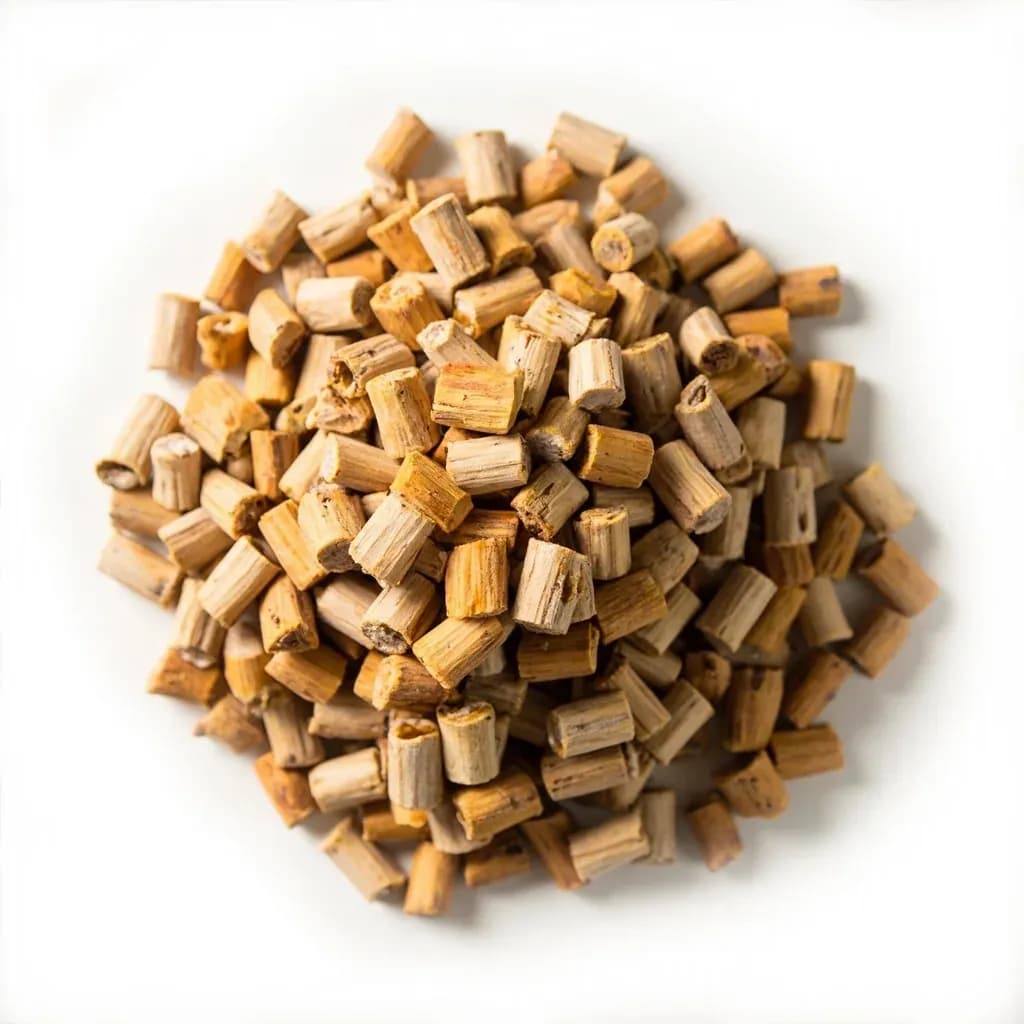
Smoker wood pellets are small cylinders of compressed sawdust made from flavor woods like hickory, oak, or applewood. Pellet grills auger them into a burn pot to produce steady heat and clean smoke for barbecue. Because they are dense and low-moisture, they burn efficiently and impart consistent smoke flavor.
Wood pellets are small, dense cylinders of compressed hardwood sawdust, made without chemical binders and held together by the natural lignin released under heat and pressure. Their uniform size and very low moisture content (typically 5–8%) allow a pellet grill's auger to meter fuel precisely, so the fire pot reaches and holds a target temperature almost like a convection oven. That predictability is why pellet cookers have earned a place alongside charcoal and gas for serious barbecue: set the dial and the grill behaves steadily for hours, while the wood itself does the flavor work.
The flavor range mirrors what a traditional pitmaster would choose from a pile of logs or splits, but standardized into something a hopper can store and dispense by the spoonful. Light fruitwoods (apple, cherry, alder) lend a sweet, delicate perfume that suits poultry, fish, and cheese. Medium woods (pecan, oak, maple) sit comfortably across a wide range of meats. Bold woods (hickory, mesquite) read strongly and demand restraint — a short blast of mesquite can dominate a delicate fillet in minutes, while a long pork shoulder needs its full cook to build noticeable flavor from a lighter wood.
Beyond flavor, pellets are a reliable fuel for some pizza ovens and outdoor boilers. The non-negotiable rule across every application is the same: use food-grade hardwood pellets, keep them dry, and avoid softwoods (pine, spruce, fir, cedar), which release resinous, acrid compounds that ruin food and can glaze the fire pot.
Alternatives
Types & varieties
Strong, bacon-like, classic American BBQ; pairs with pork and ribs; can turn bitter if overused
Bold, earthy, slightly sweet; traditional Tex-Mex; very intense, best for short cooks or blended with a milder wood
Medium intensity, neutral smoke; versatile base wood for long cooks like brisket and whole hog
Milder and nuttier than hickory; excellent on poultry, pork, and vegetables
Light, sweet, fruity; classic for pork, poultry, and cheese
Mild, slightly sweet; gives a reddish-mahogany color to skin and bark
Subtly sweet and mellow; great with poultry, ham, and vegetables
Very light, delicate; traditional Pacific Northwest choice for salmon and other fish
Faintly sweet light fruitwoods; good for poultry, pork, and short smokes
Bold, distinctive; traditional Mediterranean use for lamb and game
Strong, slightly bitter; rarely used alone, sometimes blended with a milder wood
Light, Mediterranean character; pairs with lamb, vegetables, and fish
Balanced, moderately strong; formulated to read well with barbecue-judging entries
Mild, sweet, all-purpose; popular for poultry, pork, and cheese
Matching Wood to Protein
Smoke intensity should be chosen with the food's fat content, surface area, and cook time in mind. Thin, mild, and delicate foods demand light woods; thick, fatty, long-cooking cuts can carry bold ones.
- Poultry (chicken, turkey, duck): pecan, apple, cherry, maple, or a fruitwood blend — light enough not to overwhelm white meat, sweet enough to flatter the skin
- Pork and ribs: hickory, apple, cherry, pecan — hickory for ribs that should taste classically smoky; fruitwoods for shoulder and chops where you want sweetness
- Brisket and beef: post oak, white oak, pecan, or a competition blend — oak is the brisket pit standard because it rides 12+ hours without overpowering
- Lamb and game: grapevine, hickory, mesquite, olive — strong woods that stand up to gamy flavors
- Salmon and other fish: alder (the traditional Pacific Northwest choice), apple, or pecan — short, cold smokes need a delicate wood
- Cheese, nuts, eggs: apple, cherry, pecan — anything stronger overpowers and tastes chemical
- Vegetables and tofu: apple, cherry, maple — light woods complement rather than smother
Reading the Smoke
The color of the smoke leaving the grill is the single best diagnostic a cook has. It tells you whether the fuel is combusting cleanly or smoldering, which in turn determines whether flavor is landing on the food as a clean note or as bitter creosote.
- Thin blue, almost invisible smoke: ideal — full combustion, clean flavor, minimal soot
- Wispy white that you can see but barely smell: acceptable, on the cooler side of the ideal
- Thick white, billowing, acrid smoke: smoldering — fire pot may be starved of oxygen, pellets may be damp, or ash has built up; creosote is depositing on the food
- Dark gray to black smoke: a serious problem — likely a flame-out and grease fire, or wet fuel; shut the grill and ventilate before relighting
Common uses
Tips & pitfalls
- Use only food-grade pellets; heating pellets sold for stoves can contain accelerants and softwood resin that will ruin food
- Store pellets in a sealed container in a dry area — an open or torn bag absorbs ambient moisture overnight and will swell, jam the auger, and misfire
- Empty the hopper before switching to a different wood if you want a clean flavor change; pellets left in the system will keep feeding old flavor for an hour or more
- Aim for thin blue smoke; heavy white smoke means creosote on the food and an inefficient burn — check the fire pot and air supply
- Clean the fire pot regularly of ash buildup; a clogged pot causes misfires, temperature swings, and incomplete combustion
- Avoid softwoods (pine, spruce, fir, cedar, juniper) — they release resinous compounds that taste bitter and can coat the fire pot with flammable residue
- When a new flavor seems weak, run a hotter start-up burn to burn off residual ash and old flavor before loading food
- For long cooks, buy a couple of bags of the same batch at once; partial bags stored open absorb humidity and burn unevenly later
Good to know
- Form
- Compressed hardwood sawdust, formed into uniform cylindrical pellets with no chemical binders
- Standard size
- Approximately 6 mm (¼ in) diameter, 10–38 mm long
- Moisture content
- Typically 5–8%
- Energy output
- Roughly 4,500–5,000 BTU per pound (varies by wood density)
- Burn rate
- About 1–1.5 lb per hour on a low setting (~225 °F); faster at higher temps
- Pack size
- Commonly sold in 20 lb and 40 lb bags
- Shelf life
- Indefinite if stored dry; moisture causes swelling, auger jams, and poor combustion
- Smoke color cue
- Clean combustion produces thin, nearly invisible blue smoke; thick white smoke signals smoldering and creosote
Also called
Hardwood Pellets · BBQ Pellets · Grilling Pellets
Related

Paper Towels
Disposable sheets for spills, drying, and patting dry

Kitchen Towels
Reusable cloths for drying, gripping, and wiping

Oven Mitts
Heatproof gloves to handle hot pans and trays safely

Disposable Gloves
Single-use gloves for safe, mess-free handling

Cleaning Cloths
Reusable cloths for wiping counters and spills

Tortilla Warmer
Insulated holder that keeps tortillas warm and soft

Trivet
Heatproof stand that shields surfaces from hot pots

Ice Bath Setup
Bowl of ice water that halts cooking and sets color