Appliances & Heat
Coffee Machine
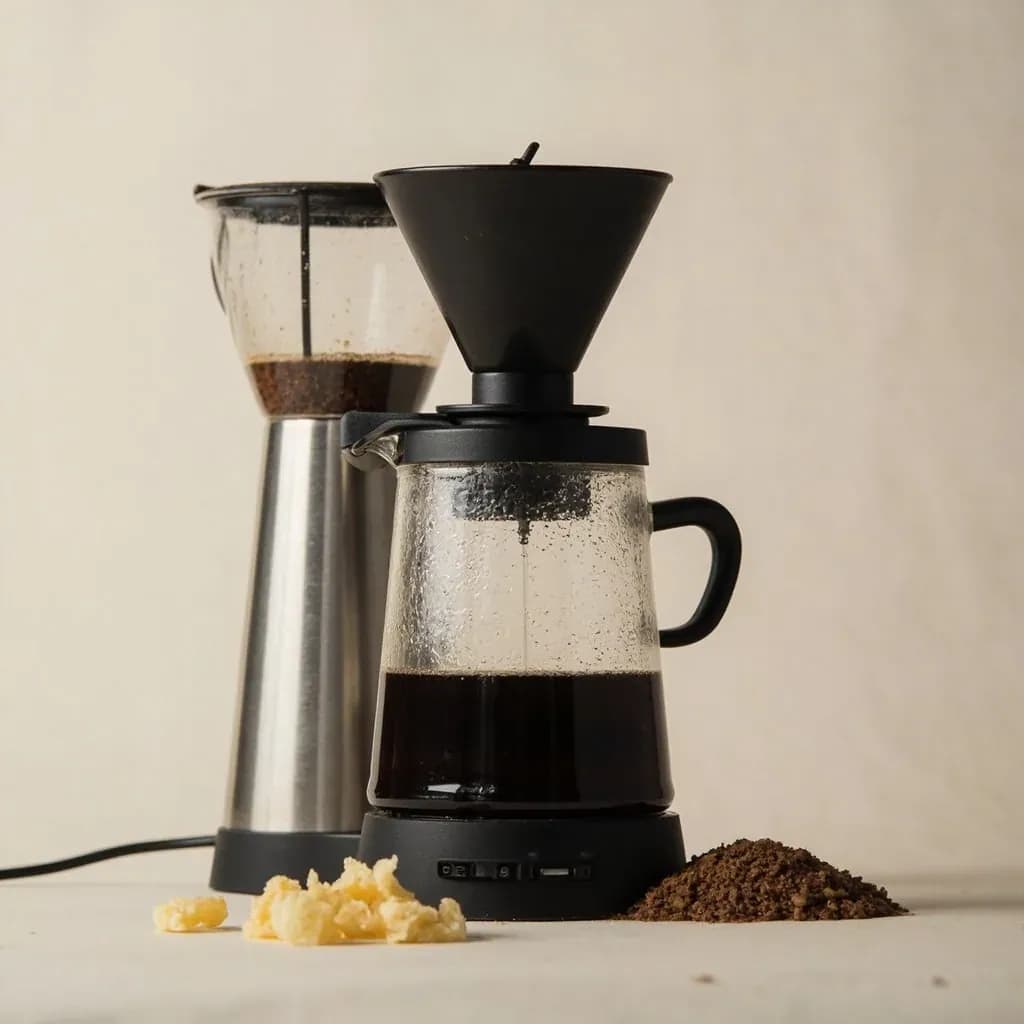
An electric appliance that brews coffee automatically by heating and dripping water through grounds.
A coffee machine is an electric brewing appliance that heats water and passes it through ground coffee to produce a pot or carafe of coffee. Drip models are the most common kitchen type, with a reservoir, filter basket, and warming plate, while espresso and capsule machines pressurize water for stronger shots. It automates a daily ritual and keeps brewed coffee hot for serving.
A coffee machine is any device that uses heat, water, and ground coffee to produce a drinkable cup with less labor than pour-over or stovetop methods. The category spans everything from a $30 drip brewer that fills a carafe in five minutes to a $3,000 prosumer espresso setup with a brass boiler and PID temperature control. Despite the range, every machine is solving the same four problems: heating water to the right temperature, wetting the grounds evenly, holding them in contact for the right amount of time, and separating the liquid from the solids. Get those four things right and the cup is good; get any of them wrong and no machine, however expensive, will save it.
For most home cooks the choice comes down to drip versus espresso versus pod, with moka pot and French press sitting beside them as the manual workhorses. Drip machines are the default because they are forgiving, hands-off, and cheap to run. Espresso machines demand real technique and a good grinder but produce the drinks most people actually order at cafés. Pod and capsule systems trade flavor range and freshness for speed and consistency, a legitimate trade-off on a busy morning.
Underneath the differences, the quality variables are the same: water temperature stability (195–205 °F / 90–96 °C), contact time, grind size matched to the brew method, and clean equipment. A neglected $80 drip machine will make worse coffee than a clean $40 one, and a poorly maintained espresso machine will choke on its own scale within a year. Treat the machine as a piece of cooking equipment that needs washing and descaling, not a black box, and it will repay you for a decade or more.
Alternatives
Types & varieties
Automatic shower-head brewer that drips heated water through a paper or mesh filter of grounds into a carafe. The everyday home standard, hands-off and forgiving.
Hand-pulled piston or lever forces near-boiling water through a tamped puck of finely ground coffee. Purist, barista-style machines that demand skill and a strong arm.
Pump-driven with a manual start/stop button; the user tamps the puck and times the shot. The most common form factor in home espresso.
Grinds, doses, tamps, brews, and (in super-auto) froths milk at the push of a button. Brands like Jura, Breville Barista Touch, and De'Longhi Eletta dominate this category.
Brews single servings from sealed pods such as Keurig K-Cups, Nespresso Original and Vertuo, or Dolce Gusto. Fast and consistent, with limited control over the cup.
Stovetop (sometimes electric) octagonal brewer that uses steam pressure to push water through grounds. Iconic Bialetti design from 1933; produces a strong, espresso-adjacent cup.
Cycles boiling water through a grounds basket continuously, producing a heavier-bodied and often more bitter brew. Largely a retro and camping style today.
Manual immersion brewer: coarse grounds steep in hot water, then a mesh plunger separates them. No electricity, full immersion contact, full body.
Two-chamber glass apparatus that uses vapor pressure and a vacuum to brew. Specialty cafés and ceremonial use; visually striking and produces a clean, tea-like cup.
A small long-handled pot (cezve or ibrik) for unfiltered coffee simmered with sugar and sometimes cardamom. The traditional method for Turkish coffee.
Slow-immersion or drip-style unit (Toddy, Yama, Bruer) that brews 12–24 hours with cold or room-temperature water for a low-acid concentrate.
The four variables that decide a good cup
Every coffee machine, regardless of type, succeeds or fails on the same four factors. Understanding them lets you diagnose a bad cup without blaming the machine.
- Water temperature: aim for 195–205 °F (90–96 °C). Below that, extraction is sour and thin; above it, bitter and astringent. Cheap drip machines often run too cool; cheap espresso machines often run too hot.
- Contact time: drip needs 4–6 minutes, espresso 20–30 seconds, French press about 4 minutes, cold brew 12–24 hours. Time and grind size move together: finer grind, shorter time; coarser grind, longer time.
- Grind consistency: burr grinders produce uniform particles; blade grinders produce dust and boulders that extract unevenly. Uniform grind is the single biggest upgrade most home brewers can make.
- Cleanliness: rancid coffee oils and mineral scale are the two flavors you do not want. A clean machine and a rinsed shower head will out-perform a dirty expensive one every time.
Matching grind to machine
Grind size is the dial that tunes extraction to your specific equipment. Use this as a starting point and adjust finer if the cup tastes sour and weak, coarser if it tastes bitter and harsh.
- Drip / filter: medium grind, roughly the texture of regular table salt.
- Espresso: fine grind, closer to powdered sugar; adjust to hit a 25–30 second shot time.
- Moka pot: fine to medium-fine, slightly coarser than espresso.
- French press and cold brew: coarse grind, like coarse sea salt, to avoid sediment and over-extraction.
Maintenance and descaling
Hard water kills coffee machines faster than any other single factor. Calcium and magnesium precipitate onto heating elements, boilers, and shower heads, insulating them and eventually clogging passages. A simple maintenance rhythm keeps everything running.
- Descale every 1–3 months with citric acid or a commercial descaler; never run vinegar through an aluminum boiler or prosumer espresso machine without flushing thoroughly with several cycles of clean water afterward.
- Rinse the brew basket, carafe, and shower head daily; residual oils go rancid within a day and clog screens.
- For espresso, backflush the group head with detergent such as Cafiza at least weekly if the machine has a three-way valve, more often if you pull many milk drinks.
- Wipe and purge the steam wand immediately after every use; dried milk scorches onto the wand and is miserable to remove.
Espresso-specific notes
Espresso rewards effort more than any other brewing method. A few details matter beyond the basics above.
- Dose, yield, and time: a typical starting recipe is 18 g of coffee in, 36 g of espresso out, in 25–30 seconds. Adjust grind to hit the time, not the other way around.
- Tamping: even and level matters more than heavy. About 30 pounds of pressure, polished and flat.
- Purge the group head for a second before locking in the portafilter to clear stale water and residue.
- Milk texture: stretch first (tip just below the surface, a soft hiss), then spin (tip at the surface, a tearing-paper sound). Stop before the pitcher is too hot to hold.
Common uses
Tips & pitfalls
- Use filtered water; hard water scales heating elements within months and dulls the flavor of every cup you brew.
- Match grind to method: medium for drip, fine for espresso, coarse for French press and cold brew. Wrong grind is the most common cause of bad coffee.
- Weigh your coffee and water. Start at a 1:16 ratio for drip and 1:2 for espresso; volume measures are unreliable.
- Decant drip coffee into a thermal carafe within 20–30 minutes. The warming plate scorches it.
- Put descaling on the calendar. Every 1–3 months is the realistic range for most homes with municipal water.
- Wipe and purge the steam wand the second you finish frothing. Dried milk is a nightmare to remove and ruins the next drink.
- Buy a burr grinder before you buy a better machine. A $30 blade grinder will sabotage a $1,000 espresso setup; a $150 burr grinder will noticeably improve a $50 drip machine.
- Grind right before brewing. Pre-ground coffee loses its best aromatics within minutes.
- When you unbox a new espresso machine, prime the lines according to the manual before first use; air pockets can damage the pump.
- Skip pod systems if flavor and flexibility matter to you. They trade cup quality and choice for convenience and consistency, which is a fair deal for some kitchens and a bad one for others.
Good to know
- Ideal brew temperature
- 195–205 °F (90–96 °C) for drip; 195–204 °F (90–96 °C) for espresso brew water
- Typical power draw
- 600–1,500 W (drip); 1,000–1,500 W (espresso)
- Common materials
- Stainless steel, BPA-free plastic, aluminum, glass carafe; brass or copper boilers in prosumer espresso machines
- Typical capacity
- 4–14 cups (drip); 1–2 shots at a time (home espresso)
- Grind compatibility
- Medium for drip; fine for espresso; coarse for French press and cold brew
- Descaling interval
- Every 1–3 months depending on water hardness; clean brew head and group daily for espresso
- Typical lifespan
- 5–10 years for drip; 7–15 years for a well-maintained espresso machine
- Origin of the espresso machine
- Angelo Moriondo, Turin, 1884 (first patent); Achille Gaggia's spring-piston lever, 1947–48; first U.S. home drip maker (Mr. Coffee) 1972
Also called
Coffee Maker · Cafetera · Kaffeemaschine · Drip Coffee Maker · Kahvinkeitin · Electric Coffee Maker
Related

Stovetop
The everyday burners where most cooking actually happens

Oven
Enclosed dry heat for roasting, baking, and braising

Grill
Live-fire or gas grates for char, smoke, and high heat

Smoker
Low, slow heat and wood smoke for barbecue and brisket

Air Fryer
Countertop convection that crisps with little or no oil

Slow Cooker
Set-and-forget low heat for stews, beans, and braises

Pressure Cooker
Sealed steam pressure that cooks tough food in a fraction of the time

Rice Cooker
Foolproof, perfectly steamed rice every single time