 Spanish
Medium · Warm
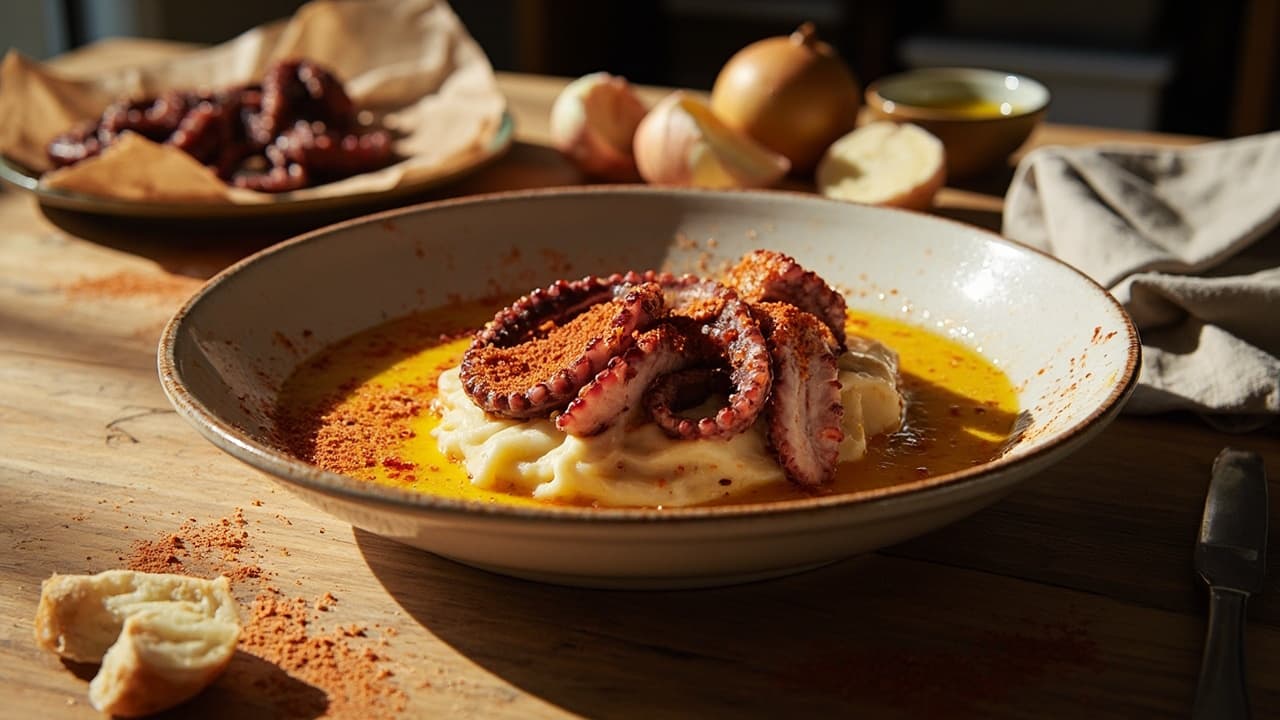
Octopus with Smoked Paprika and Soft Potato
A Galician classic where tender octopus rests on soft boiled potatoes, finished with a generous drizzle of olive oil and a dusting of smoked paprika. Simple, honest, and rooted in the tradition of the feira.
Prep
20 min
Cook
1h 10m
Rest
10 min
Total
1h 40m
Method
Prepare and Poach the Octopus
1
Rinse the octopus under cold running water. If the tentacles are still attached to the head, separate them using a sharp chef knife or kitchen scissors, reserving the body cavity clean.
2
3
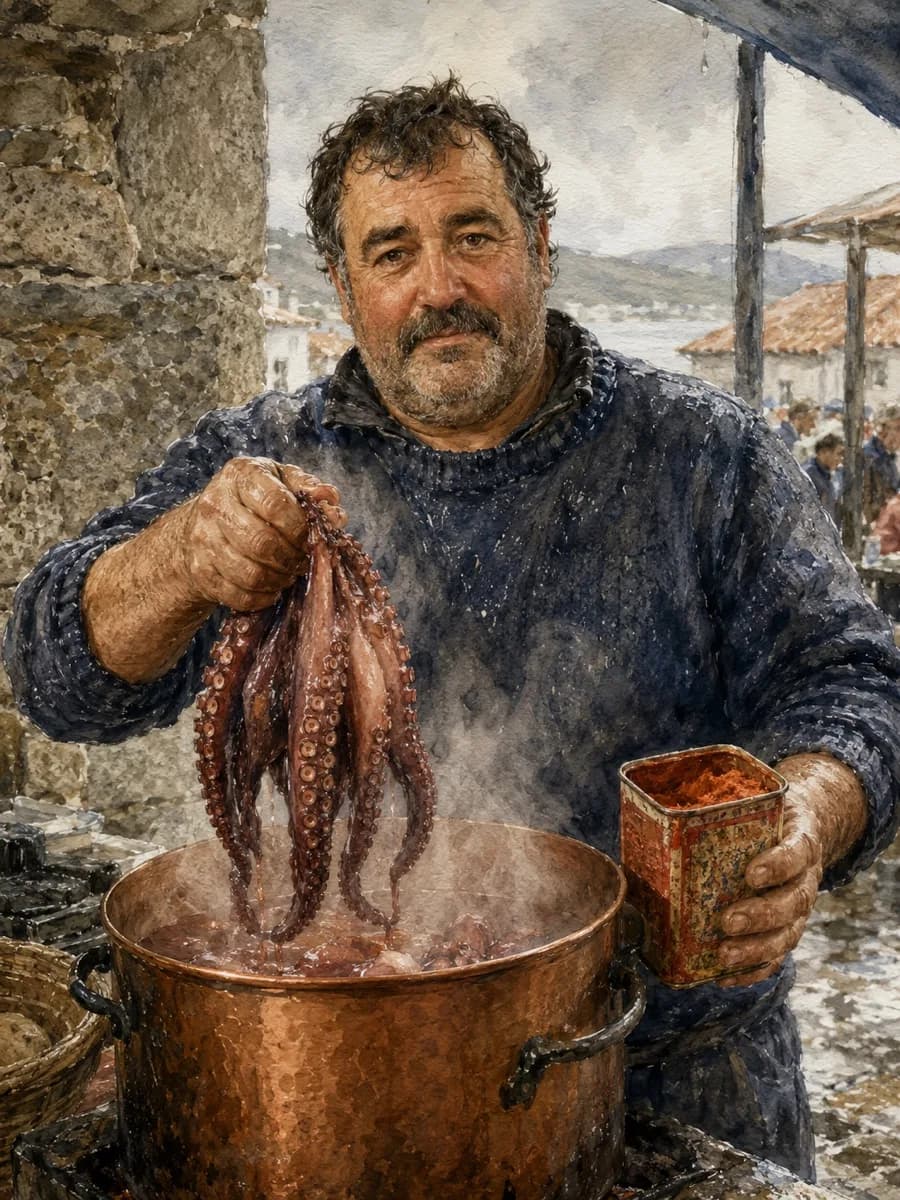
To tenderize the octopus, dip the tentacles into the boiling water three times, holding each time for 3 seconds. This is the classic Galician '吓三次' conditioning step that helps the skin tighten and the flesh stay tender. On the fourth immersion, submerge the octopus completely.
4
Prepare the Soft Potato Base
6
7
Bring a separate pot of lightly salted water to a boil and cook the potato rounds for 12 to 15 minutes until they are completely tender when pierced with a fork but hold their shape.
Assemble and Finish
9
Using kitchen scissors or a sharp knife, cut the octopus tentacles into bite-sized pieces, roughly 3 centimeters in length.
10
11
In a small bowl, mix the smoked paprika with the olive oil, stirring until the paprika is fully incorporated into the oil.
12
13
Serve immediately while warm, with crusty bread to soak up the paprika-scented oil. The dish is best eaten the day it is made.
B
Nutri-Score
Good balance
A–E · lower is better · score 2
Calories
595
per serving
High in salt · 3797mgHigh in protein · 60gLow sugar · 3gLow saturated fat · 4g
Protein
60g
Carbs
35g
Fat
22g
Sat. fat
4g
Fiber
7g
Sugar
3g
Sodium
3797mg
Gluten FreeDairy FreePescatarianHeart HealthyLow CholesterolHigh ProteinLow Carb Option
Nutri-Score is a general nutritional-balance guide, not medical or dietary advice.
Flavor Profile
7
Umami
3
Sweet
6
Salty
1
Sour
2
Bitter
5
Spicy
Textures
TenderSucculentSoft
Aromas
SmokyBrinyHerbal
Kitchen Equipment
Primary Tool
StockpotCounter FootprintMedium
Safety & Storage
Handling
Rinse octopus under cold running water and use separate cutting boards and utensils for raw seafood preparation. Avoid contact between raw octopus and ready-to-eat foods like potatoes.
Cooking Temperature
Poach octopus at a rolling boil (212°F/100°C) then simmer at 180-185°F (82-85°C) for 45-60 minutes until a knife pierces thick tentacles with little resistance to ensure complete doneness.
High Risk Population
This dish contains raw seafood and is not recommended for pregnant women, young children, elderly, or immunocompromised individuals without verifying octopus was frozen to -4°F (-20°C) for 7+ days to kill parasites.
Storage
Store raw octopus at 32-39°F (0-4°C) and use within 1-2 days. Once cooked, refrigerate within 2 hours at 40°F (4°C) or below and consume within 3-4 days. Do not leave cooked octopus at room temperature for more than 2 hours.
Cross Contamination
Use dedicated utensils and surfaces for raw octopus. Sanitize cutting boards, knives, and containers that touched raw octopus with hot soapy water or a bleach solution before using for other foods.
Pro Tips
Technique
The three-dip method for conditioning octopus isn't superstition—it's how we taught the tentacles to tighten so the flesh stays tender and doesn't fall apart in the pot. Each dip for three seconds, that's the rhythm my grandmother taught me, and twenty winters later I still do it the same way.
Substitution
If fresh octopus isn't available, frozen works perfectly. Just thaw it slowly in the refrigerator overnight, never under hot water. You can also use a good quality pre-cooked octopus from a trusted fishmonger if you're short on time, though the poaching liquid will lack depth.
From the chef
Tender octopus resting on soft boiled potatoes, finished with a pour of good olive oil and a dusting of smoked paprika — this is Galicia on a plate, and it has not needed changing in generations. The three-dip method in boiling water is the old Galician trick that keeps the skin tight and the flesh yielding without going rubbery. The potatoes go in a separate pot so they stay firm enough to hold the octopus up. Just good olive oil, smoked paprika, and salt at the end — because some things don't need updating, they just need doing right.
TagsSeafoodGalicianTraditionalPaprikaOlive OilOctopusPotato
AllergensMollusks
Source: generated · June 10, 2026