 Spanish
Easy · Warm
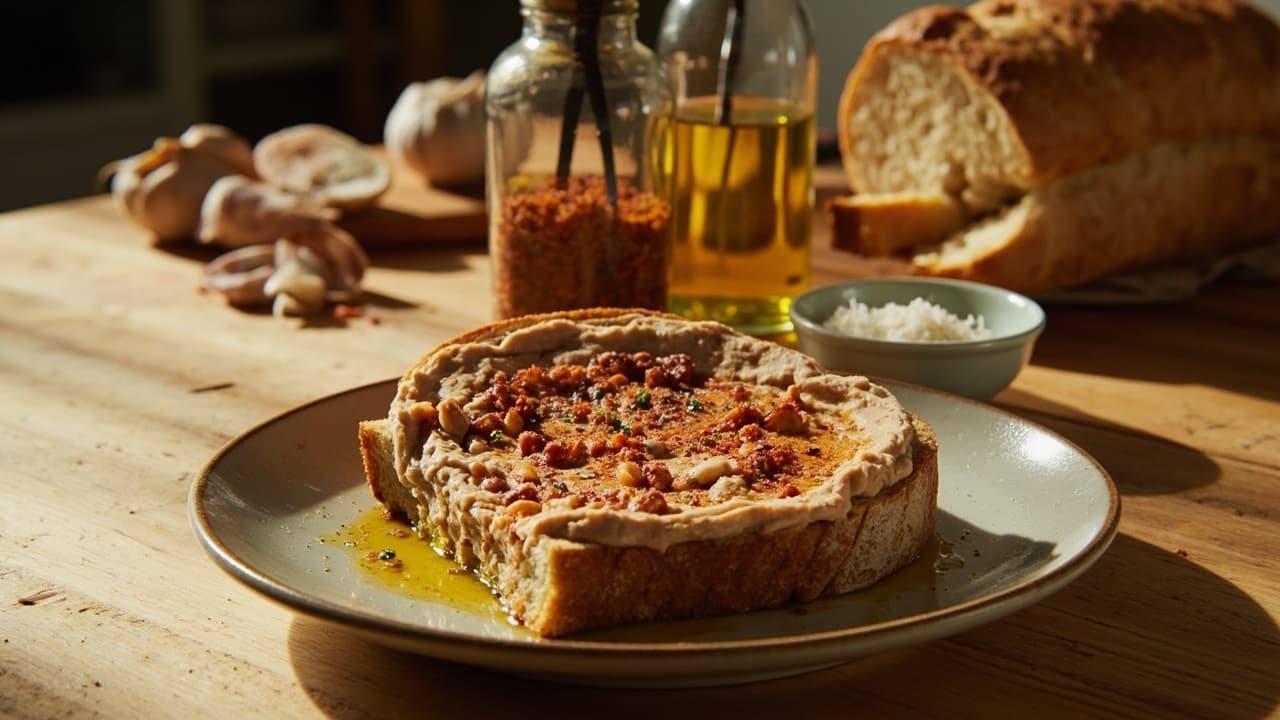
Smoky Pinto Bean Dip with Garlic and Olive Oil on Toast
A warmly spiced, smoky bean dip made velvety with olive oil and served atop crusty toasted bread. Rooted in Atlantic pantry traditions — humble, generous, and deeply satisfying.
Prep
10 min
Cook
25 min
Total
35 min
Method
1
In a wide, heavy-bottomed pan over medium-low heat, warm 60ml olive oil until it shimmers gently. Add the chopped garlic and cook 3-4 minutes, stirring with a wooden spoon, until soft and fragrant but not taking on any color. The garlic should feel pillowy, not crisp.
2
Add the drained pinto beans to the pan. Stir well to coat every bean in the garlic oil. Sprinkle in 2 tsp smoked paprika and 1 tsp salt. Stir to distribute evenly.
3
Mash about half the beans against the pan bottom with the back of your spoon, leaving some whole for texture. Let the mixture cook undisturbed for 5-6 minutes, allowing the edges to lightly caramelize and the paprika to deepen. Stir once, then remove from heat.
4
5
Spoon the warm bean dip generously onto each toast slice. Drizzle with the remaining 45ml good olive oil in a slow, generous stream. Dust with a pinch of smoked paprika and a pinch of coarse salt. Serve immediately while the beans are warm and the oil pools invitingly across the top.
C
Nutri-Score
Fair balance
A–E · lower is better · score 4
Calories
1056
per serving
Calorie-dense · 1056 kcalSource of protein · 45gHigh in fibre · 33gLow sugar · 3g
Protein
45g
Carbs
143g
Fat
34g
Sat. fat
5g
Fiber
33g
Sugar
3g
Sodium
1470mg
Plant BasedVegetarianDiabetesHeart DiseaseHigh FiberPlant Protein
Nutri-Score is a general nutritional-balance guide, not medical or dietary advice.
B
Environmental impact
Low impact
A–E · lower is better · includes estimates
kg CO2e
0.6
per serving
BCarbonAEU all-round· carbon sets the grade
Water
0.7m³
Runoff
0.06g P
pinto beans, drained and rinsed drives 61% of this recipe’s estimated footprint.
Carbon from Poore & Nemecek 2018; water, land & runoff from Agribalyse — modelled averages for comparing recipes, not a measurement of your groceries.
Flavor Profile
6
Umami
3
Sweet
5
Salty
2
Sour
1
Bitter
4
Spicy
Textures
CreamyCrispyTender
Aromas
FruityHerbalSmoky
Kitchen Equipment
Primary Tool
SkilletTechniques
Safety & Storage
Cooking Temperature
Garlic must be cooked over medium-low heat only. If olive oil smokes or garlic takes on color, remove from heat immediately to prevent burning. Burnt garlic develops bitter compounds and should not be consumed.
Handling
When toasting bread under a broiler or in a cast-iron pan, use tongs to avoid burns. The bread edges may char intentionally for flavor, but monitor closely to prevent flare-ups from olive oil residue.
Cross Contamination
If preparing this dish in a kitchen with allergen-sensitive individuals, use separate cutting boards and utensils for bread to prevent gluten cross-contamination with other dishes.
Storage
Store leftover bean dip in an airtight container in the refrigerator within 2 hours of cooking. Do not leave at room temperature for extended periods as the garlic and bean mixture is a potential bacterial growth medium.
Shelf Life
Refrigerated bean dip maintains quality for up to 3-4 days. Freeze for longer storage up to 2 months. Reheat thoroughly to 165°F (74°C) before consuming leftovers.
Allergen Warning
This recipe contains wheat and gluten from white bread. Individuals with celiac disease or gluten intolerance should substitute with certified gluten-free bread.
Pro Tips
Technique
When you warm the olive oil with the garlic, watch it like the tide — the moment it shimmers and smells sweet, not when it's sizzling and golden, that's when the beans should go in. The gentle warmth coaxes the garlic into the oil, and that fragrance is the soul of the whole dish.
Substitution
If you cannot find pinto beans, alubia blanca or even cannellini will carry this dish faithfully. The character changes slightly — a little more buttery, less earthy — but the method holds. What matters is that you drain them well and let them caramelize at the edges in the pan.
From the chef
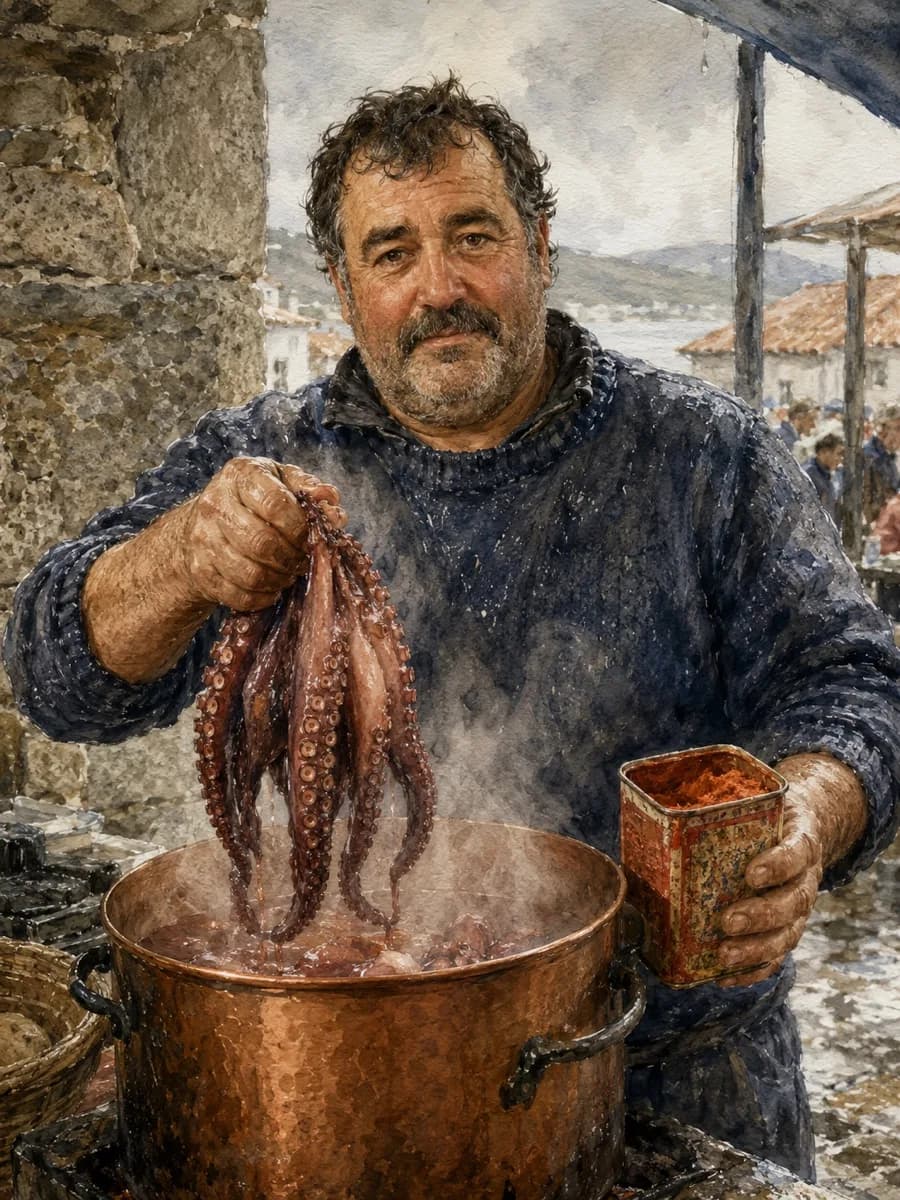
In Galicia, we learn young that the best tables hold what the pantry gives you, not what you chase from the sea. This dip came from a wet Tuesday when the wind off the ría made the stone walls weep and I needed something that would warm the bones and fill the table without fuss. Pinto beans, garlic, smoked paprika, and the best olive oil I had left — the kind of dish my grandmother would have called 'comida de pobres pero sentirse rico.' Humble ingredients, yes, but treated with respect. That is what makes it rich.
TagsAtlantic Pantry
AllergensWheatGluten
Source: generated · June 13, 2026