 Ethiopian
Medium · Hot
Charcoal Ember Jebena Pour-Over
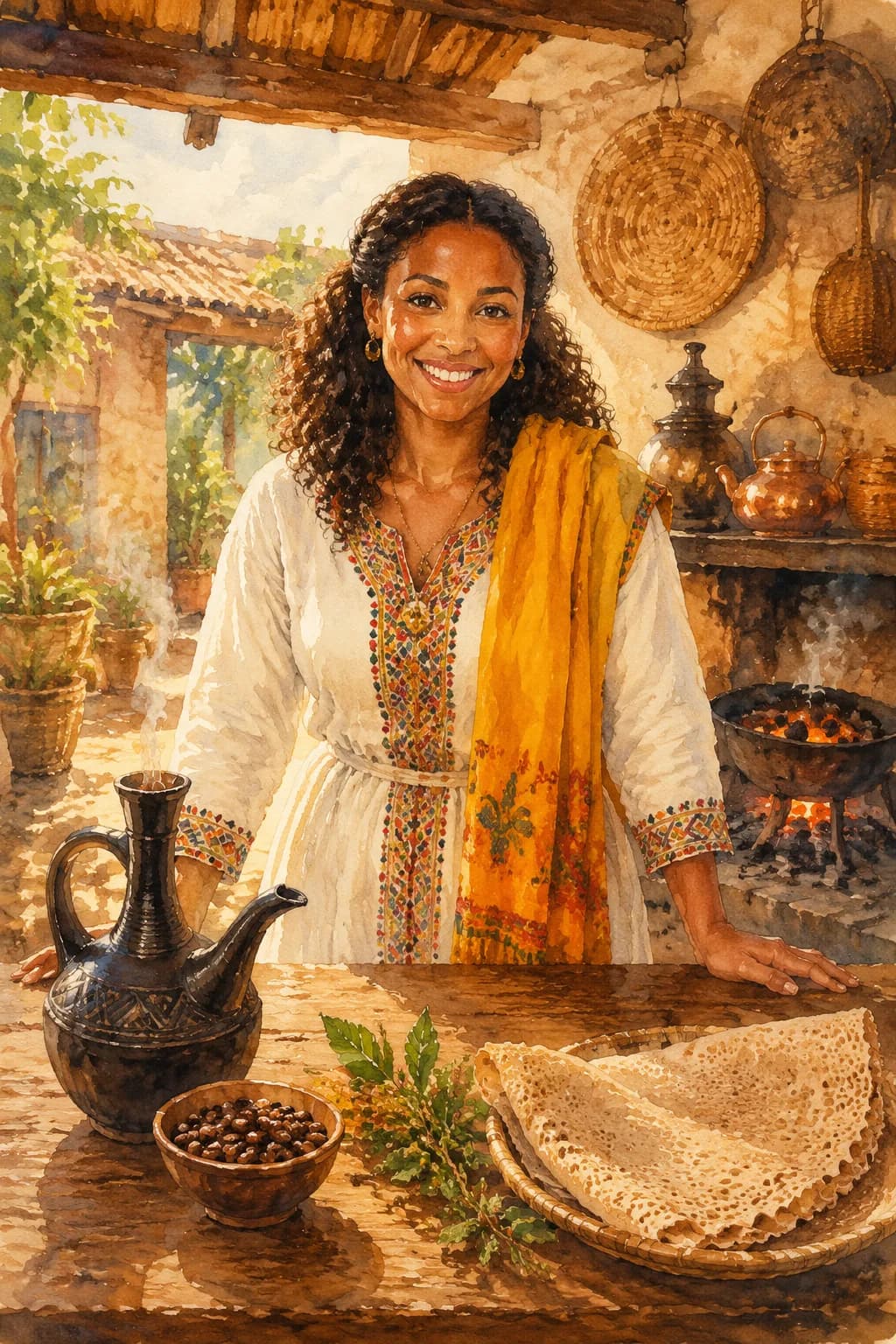
A reverent Ethiopian coffee ceremony prepared in the clay jebena, featuring charcoal-roasted beans hand-ground moments before brewing and served across the traditional three rounds of abol, tona, and baraka.
Prep
15 min
Cook
30 min
Total
45 min
Method
1
Kindle your charcoal brazier until the coals glow bright amber with a soft gray ash cresting the top, 8-10 minutes. Lay a flat Ethiopian roasting pan directly over the embers and allow it to heat for 1 minute until you see the first tremor of heat shimmer.
2
Add the whole coffee beans to the roasting pan in a single even layer. Using a long-handled wooden spoon, stir the beans continuously in a circular motion, lifting and tossing them to expose every surface to the rising heat.
3
Roast for 5-7 minutes, watching as the beans progress from pale tan to chestnut brown to a deep mahogany, their surfaces glistening with released oils and small cracks audible like whispers. The beans are ready when they reach a glossy dark chocolate color and the smoke carries a sweet, toasted fragrance — remove immediately from heat.
4
Transfer the roasted beans to a wide ceramic bowl and let them rest for 2 minutes, just until the surface steam subsides. The beans should remain warm for grinding.
5
Working quickly while the beans retain their warmth, transfer them to a traditional mortar. Grip the pestle with firm pressure and grind in a vigorous circular motion with a slight back-and-forth rocking action.
6
Grind for 3-4 minutes until you achieve a coarse, uneven grind — rougher than espresso, with visible flecks of bean still distinguishable. The warmth from roasting helps release the essential oils during this step.
7
Break the cinnamon sticks into smaller pieces and add them to the mortar along with the whole cloves and salt. Give one final brief grind for 10 seconds to bruise the aromatics and distribute them evenly through the grounds.
8
Transfer the ground coffee and spice mixture into the jebena, distributing it evenly across the bottom vessel. Slowly pour 1 liter of hot water (just off the boil at 95°C) into the jebena, allowing the grounds to bloom and swell as they absorb the liquid.
9
Set the jebena on the edge of the brazier where gentle radiant heat sustains a slow steep. Cover with the lid and allow to brew for 6-8 minutes undisturbed, watching as the liquid above the grounds transitions from near-black to a clear amber caramel.
10
When the liquid has settled and the grounds have clumped together at the bottom of the jebena neck, carefully pour the brewed coffee through the jebena spout into a waiting ceramic serving pitcher, leaving the grounds behind.
11
Pour 2 tablespoons of white sugar into each of six ceremonial coffee cups. Present the first round (abol) by pouring the coffee in a slow, elevated arc from the pitcher, the stream thin and golden. Serve immediately while piping hot.
12
After all cups are served the first round, add another 350ml of hot water to the jebena grounds, steep for 3-4 minutes, and pour the second round (tona) — lighter in body and brightness, with floral notes emerging.
13
For the third and final round (baraka), repeat the dilution with 350ml more hot water and a 3-minute steep. This round carries the deepest complexity and is traditionally considered a blessing. Serve with the remaining sugar.
C
Nutri-Score
Fair balance
A–E · lower is better · score 6
Calories
32
per serving
High in sugar · 7gSource of fibre · 1gLow saturated fat · 0g
Protein
0g
Carbs
8g
Fat
0g
Sat. fat
0g
Fiber
1g
Sugar
7g
Sodium
99mg
Antioxidant RichClean Ingredients
Nutri-Score is a general nutritional-balance guide, not medical or dietary advice.
E
Environmental impact
Very high impact
A–E · lower is better · includes estimates
kg CO2e
0.5
per serving
ECarbon
Whole Coffee Beans drives 97% of this recipe’s estimated footprint.
Carbon from Poore & Nemecek 2018; water, land & runoff from Agribalyse — modelled averages for comparing recipes, not a measurement of your groceries.
Flavor Profile
7
Umami
4
Sweet
3
Salty
4
Sour
4
Bitter
5
Spicy
Textures
Medium BodiedSmoothVelvety
Aromas
EarthyFloralHerbalSmokySpicy
Kitchen Equipment
Primary Tool
Charcoal BrazierCharcoal BrazierJebenaCeramic BowlCeramic Serving PitcherKettleMeasuring SpoonsMortar And PestleRoasting PanCeremonial Coffee Cups
Techniques
Safety & Storage
Handling
Use long-handled wooden spoons when stirring beans over the charcoal brazier to prevent burns from radiant heat and flying embers. Allow beans to cool slightly before handling bare-handed.
The jebena spout and ceramic pitcher become extremely hot during brewing. Use a cloth or protective glove when pouring and serving to prevent scalding from the 95°C liquid.
Cooking Temperature
Charcoal brazier temperatures exceed 200°C during roasting. Position the jebena on the brazier edge only where gentle radiant heat sustains brewing at 95°C — never place the clay vessel directly on hot coals as thermal shock may crack it.
Storage
Roasted coffee beans release CO2 for 24-48 hours after roasting. Store in an airtight container away from light and heat to preserve flavor compounds. Ground coffee degrades significantly within hours — use immediately after grinding.
Shelf Life
Charcoal-roasted beans maintain optimal freshness for 2-4 weeks when stored properly in a cool, dark place. The natural oils released during roasting become rancid faster than lightly roasted beans.
Cross Contamination
The traditional mortar and pestle used for grinding coffee and spices may retain aromatic compounds between uses. Dedicate specific equipment for coffee preparation to prevent flavor contamination from other ingredients.
High Risk Population
This beverage contains approximately 60-80mg caffeine per serving. Individuals with caffeine sensitivity, anxiety disorders, heart conditions, or who are pregnant should limit consumption. The three ceremonial rounds deliver cumulative caffeine doses.
Allergen Warning
While not among the top 14 allergens, cinnamon and cloves may trigger reactions in individuals with spice sensitivities or salicylate intolerance. Ground spices can also produce airborne particles that affect respiratory allergies.
Pro Tips
Technique
The true magic lies in those precious 2-3 minutes between roasting and grinding, when the beans retain enough warmth to release their essential oils into the mortar. If you wait too long, you lose the aromatic complexity that makes jebena coffee truly transcendent.
Substitution
If white sugar feels too modern for your ceremony, unrefined sugarcane would honor the traditional sweetness — simply adjust quantity to taste, remembering that abol carries the most pronounced sweetness while the later rounds reveal deeper spice.
From the chef
The Charcoal Ember Jebena Pour-Over honors the three sacred rounds exactly as they deserve. Whole beans roast directly over glowing coals until their skins crack and glisten with oil, then go straight from mortar to jebena — the warmth from roasting coaxing more fragrance from each pass of the pestle. Cinnamon and cloves are bruised in with the grounds, their aromatics woven through every steep. Abol pours strong and aromatic, tona rises lighter and more floral, and baraka arrives as the sweetest blessing of all. Each round is a distinct cup, drawn from the same earth, the same ceremony.
TagsEthiopian Coffee CeremonyCharcoal RoastedHand GroundCeremonialSpiced CoffeeTraditionalJebenaThree RoundsAbol Tona Baraka
Source: generated · June 13, 2026