Transform & Preserve
Aging Fish
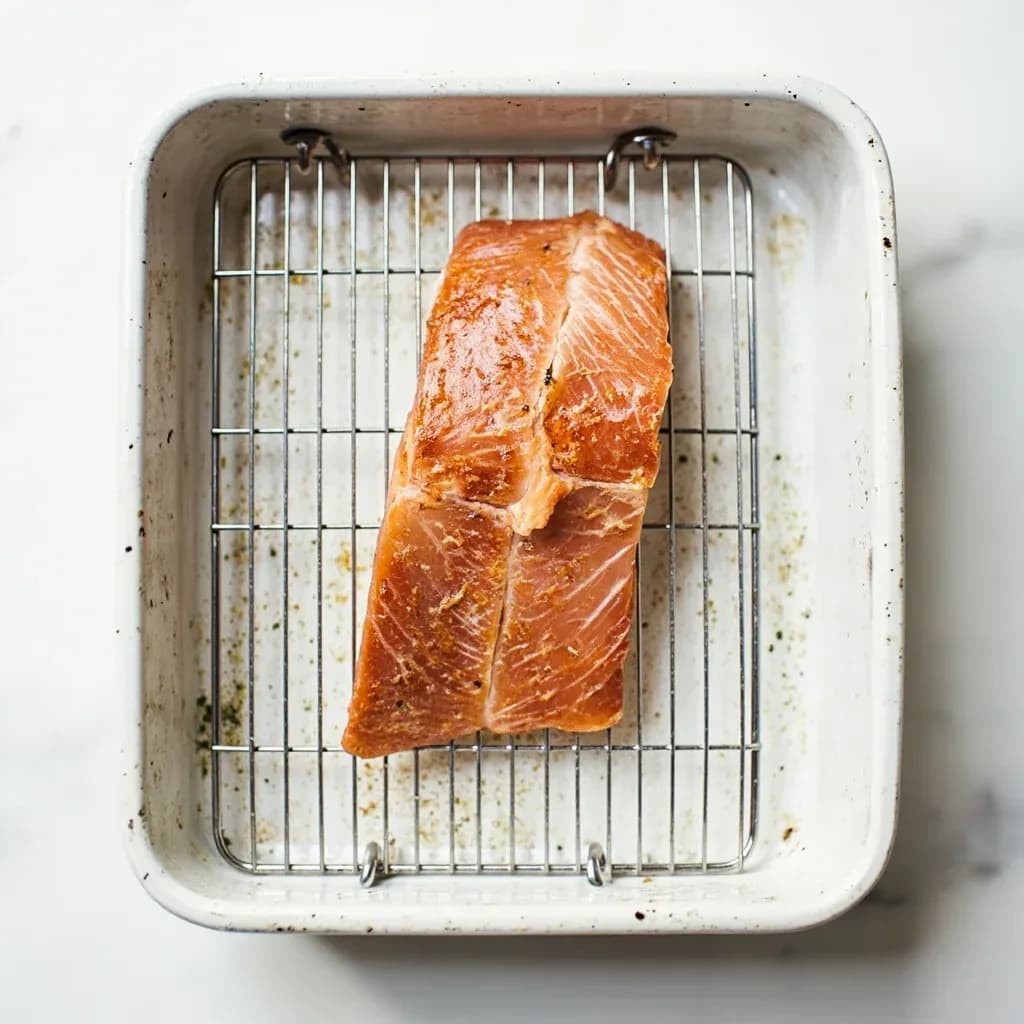
Resting fish under controlled cold to develop umami and firm the flesh for sushi.
Aging fish holds cleaned, dry fillets under controlled refrigeration so enzymes break down proteins into amino acids, deepening umami. Known as neta maturation in sushi, it can take hours to over a week depending on the species and cut. The process firms loose flesh and concentrates flavor beyond what fresh-caught fish offers. It demands meticulous handling and temperature control to stay safe.
Aging fish — jukusei (熟成) in Japanese — is the controlled resting of very fresh fish in cold, dry air to deepen flavor, firm the flesh, and concentrate the savory compounds that define great sushi and sashimi. It is, in essence, a deliberate use of the first quiet days after a fish dies, before spoilage takes over. Done well, it transforms soft, oily fish like mackerel and sardine into something meaty and intensely savory; done carelessly, it produces a sour, slimy piece of waste.
The technique works because a fish's own enzymes — chiefly cathepsins and calpains — keep breaking down muscle proteins into free amino acids, particularly glutamate, while the inosinic acid in the flesh remains abundant. Over several days at refrigerator temperature, those amino acids accumulate and the flesh loses 5–15% of its moisture to evaporation, concentrating what remains. The result is a piece of fish that tastes more of itself: brighter, deeper, and with a cleaner bite than it had the day it was caught.
This is not a beginner's technique. It demands sushi-grade fish, a refrigerator that holds a steady temperature, and the willingness to trust your nose over the calendar. The margin between perfectly aged and spoiled can be less than twenty-four hours. Cooks who learn to read a fish by smell and texture, however, gain one of the most powerful tools in Japanese raw-fish cookery — and one of its oldest.
- Difficulty
- Hard
Types & varieties
Fish rested unwrapped or loosely wrapped on a rack in cold air; the most common form of jukusei and the foundation of the others.
Fillets sandwiched between sheets of dried kombu; the seaweed's natural glutamates and gentle osmotic draw add umami and a firm, glossy texture in 4–24 hours.
A brief salt cure of 10–30 minutes used to firm up delicate fish like mackerel and aji before further aging or service.
A quick dip or short soak in rice vinegar — sometimes mixed with kombu — to set the flesh and brighten flavor; standard for saba and kohada.
Whole fish buried in crushed ice or held on an ice bed for gentle, even aging of large fish like tuna and yellowtail.
A modern technique using vacuum-bagged portions to slow oxidation and control moisture loss; used in some high-end sushiya.
How to do it
- 1
Source extremely fresh fish
Buy sushi-grade fish the same day or the day after it was caught. Whole fish ages more evenly than fillets and protects the interior flesh from oxygen, so prefer it whenever the shape and species allow.
- 2
Clean and prepare
Gut the fish if whole, remove the gills, and rinse under cold running water. Pat completely dry with paper towels — surface moisture is the single biggest accelerant of spoilage. If using shiojime, su-jime, or kombujime, apply the cure at this stage before continuing.
- 3
Set up the aging environment
Line a perforated tray or wire rack with paper towels and set it on a middle refrigerator shelf. Confirm the refrigerator holds a steady 0–2 °C; any warmer and spoilage races ahead of aging, any colder and the flesh can freeze-burn at the edges. Avoid the crisper drawers — they trap humidity and slow airflow, which is the opposite of what aging needs.
- 4
Wrap and position
For dry aging, loosely wrap the fish in cheesecloth or paper towels, leaving the ends open for airflow, and lay it skin-side down on the rack. For kombujime, sandwich fillets between damp kombu sheets weighted lightly with a board. Space pieces apart so cold air circulates on all sides.
- 5
Age at controlled cold
Hold at 0–4 °C. Typical windows: 1–2 days for mackerel, aji, sardine, or sea bream; 2–3 days for yellowtail and bonito; 3–7 days for akami tuna; under 24 hours for very lean white fish. Do not open the door more than once or twice a day — temperature swings are more damaging than time.
- 6
Check daily
Inspect the surface, smell the flesh, and press it lightly with a fingertip. Look for a clean aroma, slight firmness, and a translucent sheen. Trim any darkening or drying at the edges with a clean knife. Discard the piece if ammonia, slime, or sourness appears.
- 7
Skin, debone, and portion
Once the fish has reached the desired age, skin and debone it. For tuna, separate akami, chu-toro, and otoro now — each portion has a different optimal age, texture, and best use, and they should be held separately.
- 8
Serve or hold briefly
Slice against the grain and serve. If holding for service, keep the aged fish wrapped in paper towels at 0–2 °C and use within 12–24 hours; aging has done its work and the fish is now on a countdown to spoilage.
Reading the Aged Fish
The single most important skill in jukusei is learning to judge the fish each day without recipes or timers. A piece that is aging correctly will smell clean — often described as melon, cucumber, or fresh ocean — and the flesh will feel slightly firmer and springier than the day before, with a translucent sheen on the cut surface. A piece that has gone too far will smell ammoniated, sour, or barn-like, and the surface will turn slick and custardy. When in doubt, slice a thin end-piece and taste it raw: properly aged fish should taste brighter and more savory than fresh, never flat or sour.
- Good: clean melon-or-cucumber aroma, slightly firmer flesh, translucent sheen, deeper color at the cut surface.
- Good: the dark bloodline along the spine darkens further but does not smell bad — trim it before service.
- Bad: ammonia, sour, or barnyard odor — discard immediately, do not taste.
- Bad: slick, custardy, or weeping surface — bacterial breakdown has started.
- Bad: edges turning brown or gray and softening faster than the center.
Species-Specific Timing
Duration is the most variable part of aging and depends on species, fat content, and cut. The ranges below are a starting point for whole fish or thick fillets at 0–2 °C; always taste before committing the whole piece.
- Mackerel, aji (horse mackerel), sardine: 1–2 days.
- Sea bream (tai), flounder: 12–24 hours only.
- Yellowtail (hamachi), bonito (katsuo): 2–3 days.
- Akami (lean tuna): 3–7 days; chu-toro 2–4 days; otoro 1–2 days at most — fatty portions turn greasy if pushed.
- Lean white fish (cod, fluke, sole): under 24 hours, often best unaged.
Common uses
Tips & pitfalls
- Start with sushi-grade fish that is day-of or one-day-old — aging cannot rescue mediocre freshness, only build on it.
- Pat the fish bone-dry before it goes into the refrigerator; surface moisture accelerates bacterial growth and slime.
- Wrap loosely in paper towels or cheesecloth. Use plastic wrap only for the vacuum-aging variant — otherwise it traps moisture and sours the flesh.
- Place the fish on a wire rack over a tray so cold air circulates on all sides; resting directly on a refrigerator shelf leads to a wet, spoiled underside.
- Check daily by smell and feel. The first sign of ammonia, sourness, or a slick custardy texture means it has gone too far — do not taste.
- Age akami (lean tuna) longer than otoro. Fatty portions turn greasy and lose their melt if pushed past two days.
- Keep the refrigerator at a steady 0–2 °C. Temperature fluctuations accelerate spoilage faster than time itself.
- Blue-skinned, oily fish benefit more dramatically than lean white fish — target them first while you learn the technique.
- Slice off a thin end-piece and taste it raw before committing the whole piece to service — this single habit will save more fish than any thermometer.
Good to know
- Japanese term
- Jukusei (熟成)
- Temperature range
- 0–4 °C (32–39 °F), ideally a steady 0–2 °C
- Humidity
- 70–80% with light air circulation
- Typical duration
- 1–10 days depending on species and cut
- Key chemistry
- Endogenous enzymes (cathepsins, calpains) break down muscle proteins into free amino acids, especially glutamate and inosinic acid
- Moisture loss
- Typically 5–15% by weight, concentrating flavor
- Best candidates
- Blue-skinned fatty fish (mackerel, sardine, horse mackerel/aji), tuna, yellowtail, bonito, sea bream
- Poor candidates
- Very lean white fish (cod, fluke) and delicate shellfish — they degrade quickly into mush or off-flavors
Also called
Fish Aging (Neta Maturation) · Neta Maturation
Related

Confit
Cook slowly submerged in fat for silky tenderness and keeping

Cure
Draw out moisture with salt and time to preserve and concentrate

Pickle
Steep in acidic brine for bright, tangy, crunchy preservation

Ferment
Let friendly microbes transform food into tangy, complex flavor

Marinate
Soak in a seasoned mix to flavor and tenderize before cooking

Brine
Soak in salt water so meat stays juicy and seasoned throughout

Dehydrate
Slowly dry out moisture to concentrate flavor and extend shelf life

Cold-Smoke
Perfume cured food with smoke without cooking it through