Heat & Fire
Barbecuing
Cooking food over live fire or coals, from quick grilling to slow smoke-roasting.
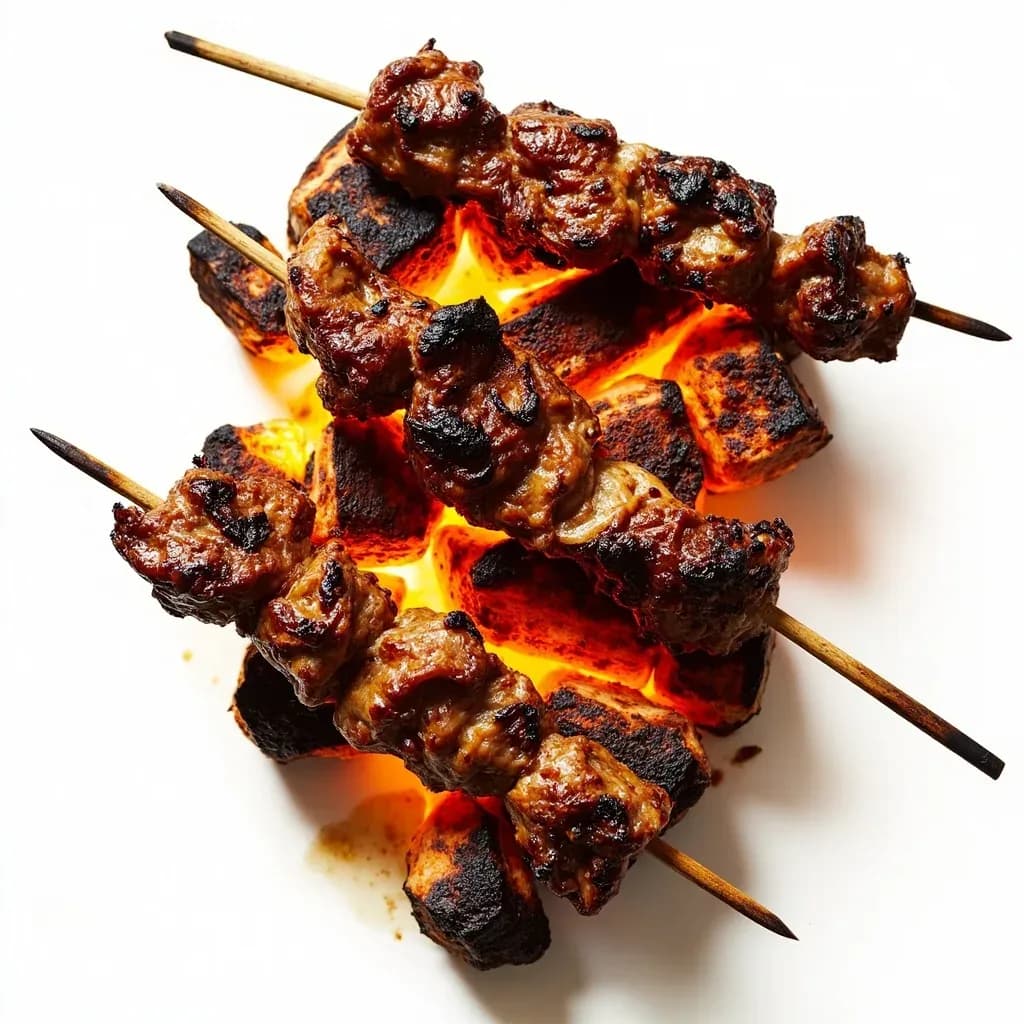
Barbecuing cooks food over or beside a live fire, covering everything from fast grilling of skewers and steaks to slow, low-and-slow smoke-roasting of large cuts. Latin American churrasco threads meat onto skewers over open coals, while American barbecue leans on slow indirect heat. The fire's smoke and char are central to the flavor, distinguishing it from oven or pan cooking.
Barbecuing is the slow, indirect cooking of food over a sustained low fire, most often with wood smoke drifting across the meat for hours. Unlike grilling — a fast, hot, direct-heat method that runs well above 230 °C / 450 °F — barbecue holds the chamber at roughly 107–135 °C (225–275 °F) and uses time as a tool. Those long hours give tough, collagen-rich cuts such as brisket, pork shoulder, beef chuck, and spare ribs the chance to convert their connective tissue into soft, juicy gelatin while smoke lays flavor on the surface. The result is tender, deeply seasoned meat with a dark, peppery crust called bark, and a smoke profile that no oven, grill, or sous-vide bath can replicate.
The technique is older than the word itself. The Spanish picked up "barbacoa" from the Taíno of the Caribbean, who cooked meat on a raised wooden frame over coals; by the late 17th century the English had borrowed the term, and over the next three centuries it branched into a family of regional styles defined by cut, wood, rub, sauce, and slice. Today barbecue is as much a cultural practice as a cooking method — a pitmaster's cooker, wood choice, and sauce tell you where they stand in a centuries-old conversation that runs from the Carolinas to Kansas City to Buenos Aires.
What separates good barbecue from the rest comes down to three things the cook controls: steady low chamber temperature, the right wood smoke at the right intensity, and time on the meat. Thin blue smoke flavors food without bitterness; thick white smoke deposits soot and creosote. Salt applied early penetrates and seasons; sugar burns above about 120 °C and must be held back until the end. The cook who manages these variables — and resists the urge to keep opening the lid — will pull meat that tastes like nothing else on earth.
- Difficulty
- Medium
Types & varieties
Beef-centric: brisket, beef ribs, and sausage; oak (especially post oak) is the classic wood; sauce is optional and typically thin.
Pig cooked whole, skin-on, over coals and hickory; meat pulled and chopped together; served with a sharp vinegar-pepper sauce.
Pork ribs served either dry-rubbed (the signature "dry ribs") or wet with a sweet-tomato glaze; pork shoulder sandwiches topped with coleslaw.
Mixed-meat menu, sweet and thick tomato-based sauce, and burnt ends from the brisket point of beef.
Pulled pork served with a white BBQ sauce of mayonnaise, vinegar, black pepper, and a touch of horseradish.
Spare ribs trimmed of the skirt and sternum cartilage into a neat rectangular rack; sauced and grilled or smoked.
Beef and other meats cooked on a cross-shaped iron frame (parrilla) over hardwood coals; seasoned with nothing but coarse salt.
Thin-sliced beef such as galbi and bulgogi grilled tabletop over charcoal or gas; dressed with sweet-savory marinades.
Pork shoulder traditionally cooked in an underground pit (imu); modern imus use lava rocks, banana leaves, and mesquite or guava wood.
How to do it
- 1
Choose and trim the cut
Select a cut suited to long cooking: whole pork shoulder (Boston butt), beef brisket, beef chuck, or spare or St. Louis-cut ribs. Trim excess hard fat — it won't render and will block smoke — but leave a 3–6 mm fat cap to feed moisture and help bark form.
- 2
Season in advance
Apply a dry rub. Texas-style needs only kosher salt and coarse black pepper; Carolina and Memphis styles build on paprika, garlic, sugar, and chili. Season 12–24 h ahead, uncovered on a rack in the fridge, so the salt penetrates and the surface dries into a tacky pellicle that grabs smoke rather than repelling it.
- 3
Set up the cooker for indirect heat
On an offset or stick-burner, light a small fire in the firebox. On a kettle grill, bank hot coals to one side with a water pan beneath the grate. Target 107–121 °C (225–250 °F); fill the water pan to stabilize humidity and catch drips.
- 4
Add wood for smoke
Once coals are fully ignited and producing thin blue smoke, add splits, chunks, or pellets. Add about one fist-sized chunk every 45–60 minutes rather than loading wood all at once.
- 5
Place the meat and stabilize
Put the meat fat-side up if the heat source is below, fat-side down if above. Close the lid and leave it alone for at least 45–60 minutes to recover chamber temperature and let smoke begin to adhere.
- 6
Monitor, don't babysit
Track the chamber temperature at grate level and the meat's internal temperature with a leave-in probe. Adjust dampers and fuel only when the trend drifts; spritz lightly after the first hour if bark has set and the surface looks dry.
- 7
Manage the stall
When internal temperature plateaus around 70–77 °C (160–170 °F), either ride it out for maximum bark or wrap tightly in pink butcher paper to power through with firmer texture. Foil wraps faster but yields a softer, steamed bark.
- 8
Probe for doneness, not time
Brisket is done at ~95–99 °C (203–210 °F) AND when a probe slides into the thickest part with almost no resistance. Pork shoulder is done at ~95–99 °C and pulls cleanly. Ribs are done when the meat has retracted 6–12 mm from the bone ends and the bark cracks when you bend the rack.
- 9
Rest
Transfer to a board or sheet pan, tent loosely with foil or wrap in butcher paper, and rest at least 20 minutes for ribs, 30–60 minutes for shoulder, and 45 minutes to 2 hours for brisket. A faux cambro — wrapped meat placed in a dry cooler — holds heat through a long rest without overcooking.
- 10
Slice and serve
Slice brisket across the grain in pencil-thick slices; pull pork shoulder along the grain for shreds, then re-chop for finer texture if you like. Serve with slaw, pickles, white bread, and the regional sauce that fits the style you cooked.
Smoke, Wood, and the Look of Good Fire
Wood smoke is not decoration — it is a flavor delivery system, and its quality changes with temperature and airflow. A clean fire burns hot enough to combust volatile compounds completely; what rises off it is a thin, almost invisible blue haze carrying the phenols and carbonyls that give meat its smoky character. A smoldering fire, by contrast, exhales thick white smoke full of unburned tars that taste bitter and coat the meat in soot. The cook's job is to keep the fire on the hot, clean side of that line. Use seasoned hardwood (ideally 12–18 months split and stacked under cover), light a generous starter, and let it ash over before adding meat.
- Hickory and oak are the workhorses of American barbecue — strong enough to flavor beef, clean enough to use for hours.
- Fruit woods (apple, cherry) and pecan are milder and pair well with pork and poultry where you don't want to overpower the meat.
- Mesquite burns hot and fast and delivers an intense, almost earthy flavor; in long cooks it can turn acrid, so use it sparingly or blend it with oak.
- Never use softwoods (pine, fir, spruce, cedar) — their resins produce acrid, eye-watering smoke that ruins food and is genuinely toxic.
- Add a fist-sized chunk of wood every 45–60 minutes rather than loading the firebox all at once; steady small additions beat one big smoke bomb.
Why the Stall Happens (and What to Do About It)
The stall is the most-discussed phenomenon in low-and-slow cooking, and once you understand the physics it stops being mysterious. As the meat's surface approaches the boiling point of water, moisture evaporates and carries heat away through evaporation — almost exactly as fast as the smoker adds it. Internal temperature flatlines until the surface dries enough that evaporation slows, then climb resumes. There is nothing wrong with the meat during the stall; it is simply sweating.
- Riding out the stall produces the best bark but can add 1–2 hours to the cook.
- Wrapping in pink butcher paper (the "Texas crutch") powers through the stall while keeping the bark firmer than foil would.
- Wrapping in heavy foil is faster but steams the bark into a softer, more pot-roast-like crust.
- Spritzing after the bark has set can shorten the stall slightly, but spritzing too early washes the rub off and prevents bark from forming.
Common uses
Tips & pitfalls
- Buy a reliable leave-in probe thermometer — judging by time or touch alone is the single most common beginner mistake.
- Preheat the smoker 20–30 minutes before adding meat so it runs clean and steady; cold metal swings wildly and ruins the first hour.
- Aim for a thin blue stream of smoke, not thick white clouds — heavy white smoke deposits bitter creosote on the bark.
- Don't open the lid more than necessary; every peek drops the chamber temperature 10–20 °C and lengthens the cook noticeably.
- Spritz (apple juice, cider vinegar, or water) only after the bark has set, typically 60–90 minutes in, and only every 30–45 minutes — over-spritzing softens the bark and washes off rub.
- Salt the meat the night before or at least 4 hours ahead so the salt can penetrate; salting right before the cook draws out moisture and prevents browning.
- If the bark darkens too fast, drop the chamber temperature or wrap in butcher paper — sugar in rubs and sauces burns above about 120 °C, so save sweet glazes for the final 15–30 minutes.
- Slice brisket and pork shoulder against the grain; for pulled pork, pull with the grain first, then re-chop across the grain for a cleaner bite.
Good to know
- Origin of word
- From the Taíno word "barbacoa," a wooden frame for cooking meat over coals; adopted into Spanish, then English by the late 17th century.
- Defining temperature
- True barbecue runs at roughly 107–135 °C (225–275 °F) — low and slow, with indirect heat and wood smoke.
- Distinction from grilling
- Grilling is fast, direct, and very hot (typically above 230 °C / 450 °F); barbecue is slow, indirect, and low with continuous smoke.
- Typical cook times
- Pork shoulder 8–14 h; beef brisket 10–18 h; spare ribs 4–6 h; chicken halves 2–3 h; whole hog 12–24 h.
- Done temperatures (internal)
- Pulled pork ~95–99 °C (203–210 °F); brisket ~95–99 °C and probe-tender; chicken 74 °C (165 °F); ribs judged by feel, not number.
- The stall
- Meat temperature plateaus around 70–77 °C (160–170 °F) as surface moisture evaporates; the plateau can last 30 minutes to over two hours.
- Clean smoke
- Thin, almost-invisible blue smoke flavors meat; thick white billowing smoke tastes bitter and deposits soot.
- Common woods
- Hickory (strong, bacon-like), oak (medium, clean), pecan (mild nutty), mesquite (intense, can turn bitter), fruit woods (apple, cherry), and maple.
- Avoid
- Softwoods (pine, fir, spruce) contain resins that produce acrid, eye-watering smoke and are unsafe to cook over.
- Salt-to-meat ratio for rubs
- Roughly 0.5–1% salt by weight of meat is a reliable baseline; sugar in rubs burns above about 120 °C, so apply to cooler parts of the cook or at the end.
Also called
BBQ · Grilling · Churrasco
Dishes that rely on it
Related

Sear
Blast the surface hot for a deep-browned, savory crust

Sauté
Cook quickly in a little fat over lively heat, tossing as you go

Stir-Fry
Toss bite-sized pieces over roaring heat for fast, smoky cooking

Pan-Fry
Crisp food in a shallow layer of hot fat, turning once or twice

Deep-Fry
Submerge in hot oil for an all-over crackling crust

Roast
Cook uncovered in dry oven heat for browned edges and tender centers

Bake
Cook with steady, surrounding oven heat — the soul of bread and pastry

Broil
Hit food from directly above with fierce overhead heat