Heat & Fire
Building Bark
Forming the dark, crusty exterior on smoked or barbecued meat through rub, smoke, and slow dry heat.
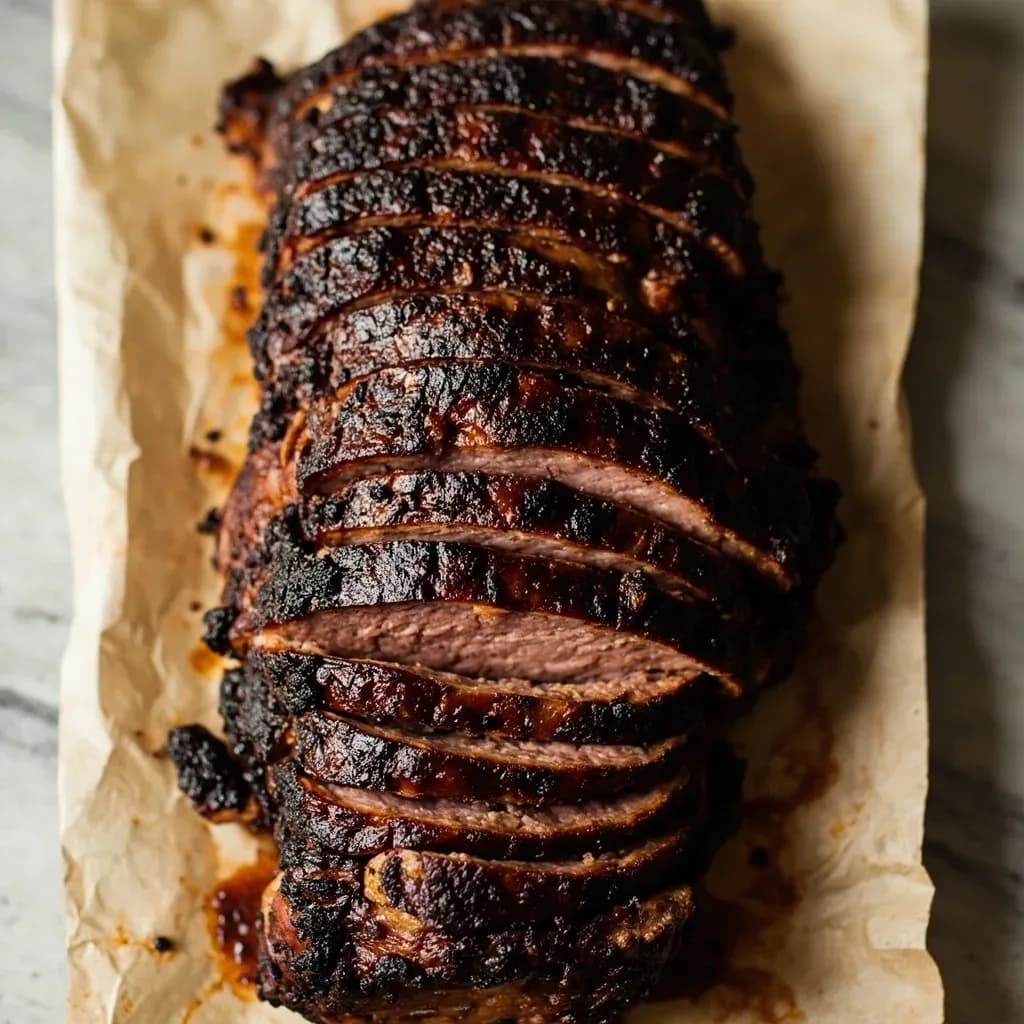
Building bark is the slow formation of a firm, flavorful crust on the surface of barbecue meat. It develops as the spice rub, rendered fat, and smoke compounds react under long, low dry heat, drying and polymerizing into a dark mahogany shell. Pitmasters protect bark by avoiding over-spritzing and wrapping too early, since moisture softens it.
Bark is the dark, savory crust that forms on the surface of smoked and barbecued meats during a long, low-and-slow cook. It is not a coating applied to the meat but a transformation of the meat's own surface: proteins and rub sugars brown through the Maillard reaction, surface sugars caramelize, moisture evaporates, and wood-smoke compounds (phenols, carbonyls, and acids) deposit onto a dry protein film called the pellicle. The result is a mahogany-to-near-black crust that is crusty on the outside, slightly yielding underneath, and inseparable from the meat — it should not flake off in sheets when sliced.
Bark carries most of the perceived smoke and seasoning flavor, gives barbecued meat its signature toothsome bite, and is the primary visual cue that a cook was done well. Building it is less about recipe than about restraint: clean fuel, steady pit temperature, a dry surface, a thin rub, and patience through the stall when evaporation does the real work of drying the surface. Get the fire and the timing right and the bark takes care of itself; rush any of them and you end up with a leathery, bitter, or soggy crust that pulls away from the meat.
- Difficulty
- Medium
Types & varieties
Minimal rub of coarse kosher salt and black pepper; built on beef fat, post oak smoke, and a long cook. Peppery, savory, mahogany in color.
Higher sugar content from brown and white sugar plus paprika and garlic. Darker and sweeter; burns easily if the pit runs hot.
Dry rub laid over a yellow-mustard slather. The mustard dries into the crust, adds tang, and helps the rub adhere to slick proteins like pork.
Finely ground coffee deepens the color and adds bitter-roasted notes; common on brisket and beef ribs.
Ancho, chile de árbol, cumin, and oregano blends; used on lamb, goat, and barbacoa for a Mexican-leaning crust.
Gochugaru, garlic, soy, and brown sugar; popular on pork shoulder and short ribs.
Firmest, driest, darkest crust, achieved by never wrapping. Longest cook and highest risk of over-smoking.
Pink butcher paper wrap preserves most of the bark while pushing the cook through the stall faster than foil would.
How to do it
- 1
Trim and prepare the meat
Trim hard, waxy fat that will not render and blocks rub contact, but leave a thin 1/4-inch fat cap to baste during the cook. Pat the surface thoroughly dry with paper towels.
- 2
Apply a thin, even rub
Season with a coarse rub — for brisket, the classic 2:1 ratio of coarse kosher salt to coarse black pepper. Coat all sides lightly and evenly. What does not stick now will not stick after the cook; a thick layer turns pasty and sloughs off.
- 3
Dry-brine uncovered in the refrigerator
Set the meat on a wire rack over a sheet pan and refrigerate uncovered for 8–24 hours. The salt draws surface moisture, the dry air re-evaporates it, and a tacky pellicle forms — the foundation of good bark.
- 4
Temper the meat and stabilize the pit
Pull the meat out 45–60 minutes before cooking to take the chill off. Preheat the smoker to 225–275°F and settle on a clean, thin blue smoke. Thick white smoke means incomplete combustion and will deposit bitter creosote.
- 5
Lay on smoke, do not drown it
Place the meat in the cooker fat-side up. Add only a small handful of smoke wood at the start; heavy smoke in the first hour lays down black, acrid soot rather than true bark. Maintain steady airflow through the cook.
- 6
Let the rub set before spritzing
Hold off any spritz for 45–90 minutes, until the surface has darkened and the rub no longer washes off under a light mist. After that, spritz lightly with water, apple cider vinegar, or a thin stock every 60–90 minutes — never every 20.
- 7
Manage the stall
When the internal temperature stalls around 150–170°F (typically 2–4 hours in), the surface is drying and bark is firming. Leave it unwrapped for the firmest crust, or wrap in pink butcher paper once the bark is set and firm to the touch to push through faster.
- 8
Probe for doneness by feel and temperature
Bark is ready when it is dry, leathery, and slightly cracked and the rub does not pill under a fingertip. Brisket probes like soft butter near 203°F internal, ribs bend and the bone pulls clean, pork shoulder probes tender at 200–205°F.
- 9
Rest before slicing
Hold the meat off the cooker and rest in a faux cambro (empty cooler) or a warm 170°F oven for at least 30 minutes, ideally 1–2 hours. Tent loosely if needed; do not wrap tightly in foil, which traps steam and softens the bark.
- 10
Slice with a sharp blade
Use a long, sharp slicing or brisket knife and cut across the grain in pencil-thick slices. A dull knife drags bark off the meat; a sharp one parts it cleanly so the crust stays on the slice, not on the board.
The Science of Bark
Bark is the product of three things happening at once on the meat's surface: water leaving, heat staying, and chemistry catching up. As the surface dries, its temperature climbs above the boiling point of water, and amino acids (from the meat and the rub) react with reducing sugars to form melanoidins — the brown pigments and savory flavors of Maillard browning. At the same time, sucrose in the rub breaks down into fructose and glucose and caramelizes above 320°F, deepening color and adding sweetness. Finally, volatile wood-smoke compounds — primarily guaiacol and syringol from lignin — dissolve into the moist surface film early on, then set as the surface dries. None of this works on a wet surface: smoke on wet meat tastes acrid, rub on wet meat slides off, and the surface temperature never climbs high enough to brown.
- Maillard browning accelerates above 285°F surface temperature — well above the boiling point of water — which is why dehydration is the precondition for bark.
- Creosote (the bitter, black, ashy taste) is unburned smoke condensing on a cold or wet surface; thin blue smoke and a dry surface prevent it.
- Sugar in the rub browns faster than protein; high-sugar rubs darken quickly but burn easily above 300°F pit temperature.
Reading Bark: What Good and Bad Look Like
Good bark is judged three times: at the pull, after the rest, and on the slice. A black, acrid, or ashy crust almost always means heavy smoke, burning rub sugars, or both — not a successful cook. A pale, soft crust means the surface never dried, usually from wrapping too early or spritzing too often.
- At the pull: bark should be dry, leathery, slightly cracked, and tacky. The rub should not pill under a fingertip.
- After the rest: bark should remain firm, not steamed-soft. Wrapping tightly in foil or towels during the rest is the most common way to ruin it.
- On the slice: crust should stay on the meat, not on the cutting board. A dull knife tears bark off; a sharp slicing knife parts it cleanly.
Fire Management Is the Real Skill
Most bark failures trace back to fire, not the rub. Clean fuel, steady temperature, and disciplined smoke output do more for the crust than any blend of spices. A thin, blue, almost invisible stream of smoke is what you want; thick white or gray smoke is unburned fuel that will coat the meat in creosote.
- Use seasoned hardwood (moisture under 20%) so it ignites cleanly and burns hot.
- On an offset smoker, manage the firebox to keep a constant thin blue stream; on a pellet or electric smoker, run the smoke setting low for the first 2 hours.
- Wide temperature swings cause the surface to alternately sweat and dry, producing a leathery, uneven crust. Hold pit temp within ±15°F.
Common uses
Tips & pitfalls
- Dry the surface aggressively: pat the meat dry and refrigerate uncovered 8–24 hours so a true pellicle forms before the pit.
- Do not cake on the rub — a thin, even coat adheres far better than a thick layer, which turns pasty and falls off during the cook.
- Use coarse-grind salt and pepper; fine table salt dissolves into the meat and will not drive surface dehydration the way coarse grains do.
- Keep pit temperature steady — wide swings create a leathery, uneven bark and can cause the surface to sweat and re-dry repeatedly.
- Go easy on smoke during the first hour; heavy smoke early deposits as a bitter, creosote-like black soot rather than true bark.
- Do not spritz or mop until the rub has set (usually 45–90 minutes in) and then only every 60–90 minutes — frequent mopping washes rub off and slows bark formation.
- If wrapping, do it after the bark is fully set and firm to the touch, usually past 165°F internal, and choose butcher paper over foil.
- Resist pulling at a fixed time — bark is set by feel (tacky, leathery, no rub sloughing) and color, not the clock.
- Rest in a cooler or warm oven, tented loosely, never wrapped tightly in foil or towels that trap steam and soften the crust.
- Slice against the grain with a sharp knife; a dull blade tears bark off in sheets instead of cutting through it cleanly.
Good to know
- Definition
- The dark, crusty, well-adhered exterior formed on smoked and barbecued meats by Maillard browning, sugar caramelization, and smoke deposition onto a dehydrated protein surface.
- Key chemical processes
- Maillard browning of proteins and amino acids, caramelization of rub sugars, and deposition of wood-smoke compounds onto a dry surface.
- Pellicle
- A dry, tacky protein film that forms on the meat before or early in the cook; it is the foundation that lets smoke and rub adhere to form true bark.
- Pit temperature range
- 225–275°F (107–135°C) is standard; some pitmasters run hotter (300°F / 149°C) during the bark phase only.
- Cook time range
- Roughly 4–8 hours for ribs, 8–14 hours for pork shoulder, 6–18 hours for brisket depending on size and pit temp.
- The stall
- A 1–4 hour plateau around 150–170°F internal where evaporative cooling halts the temperature rise; this is when the surface dries and bark fully sets.
- Classic smoke woods
- Post oak for Texas brisket, hickory and pecan for ribs and shoulder, fruit woods (cherry, apple) for pork and poultry, mesquite in moderation.
- Wrapping effect
- Pink butcher paper breathes and preserves bark; aluminum foil traps steam and softens the crust. Unwrapped cooks yield the firmest, darkest bark.
- Texas 'Dalmatian' rub
- Roughly 2 parts coarse kosher salt to 1 part coarse black pepper, with optional garlic powder — the minimalist rub that defines Central Texas brisket bark.
- Rest before slicing
- Minimum 30 minutes, ideally 1–2 hours in a faux cambro (empty cooler) so juices redistribute without steaming the bark soft.
- Difficulty
- Moderate to high — rewards fire management, patience, and restraint more than technique.
- Equipment
- Offset smoker, pellet smoker, kamado, or kettle set up for indirect cooking; reliable pit and probe thermometers; optional sprayer; pink butcher paper for wrapping.
Also called
building-a-bark · bark-formation · Bark Formation
Dishes that rely on it
Related

Sear
Blast the surface hot for a deep-browned, savory crust

Sauté
Cook quickly in a little fat over lively heat, tossing as you go

Stir-Fry
Toss bite-sized pieces over roaring heat for fast, smoky cooking

Pan-Fry
Crisp food in a shallow layer of hot fat, turning once or twice

Deep-Fry
Submerge in hot oil for an all-over crackling crust

Roast
Cook uncovered in dry oven heat for browned edges and tender centers

Bake
Cook with steady, surrounding oven heat — the soul of bread and pastry

Broil
Hit food from directly above with fierce overhead heat