Heat & Fire
Mopping
Brushing or swabbing thin basting liquid onto barbecue meat during a long cook to keep it moist and flavored.
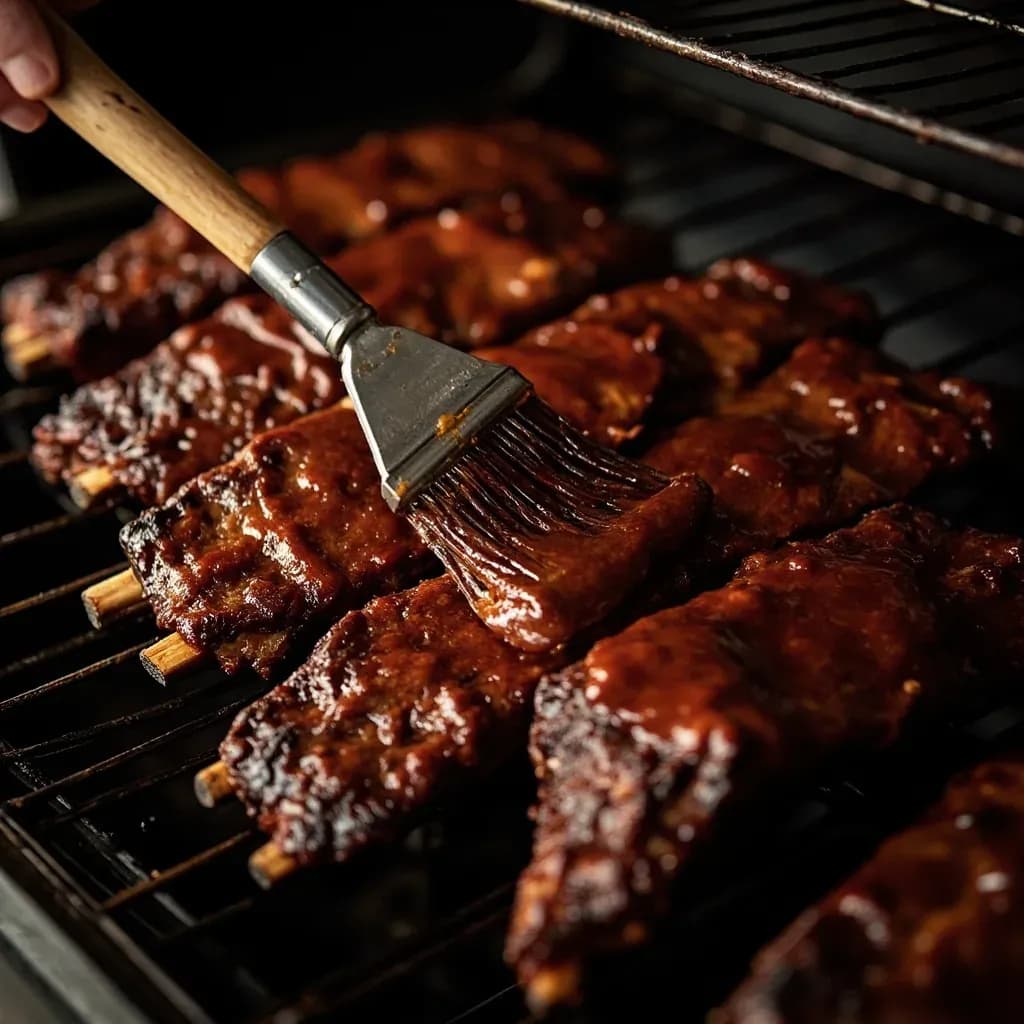
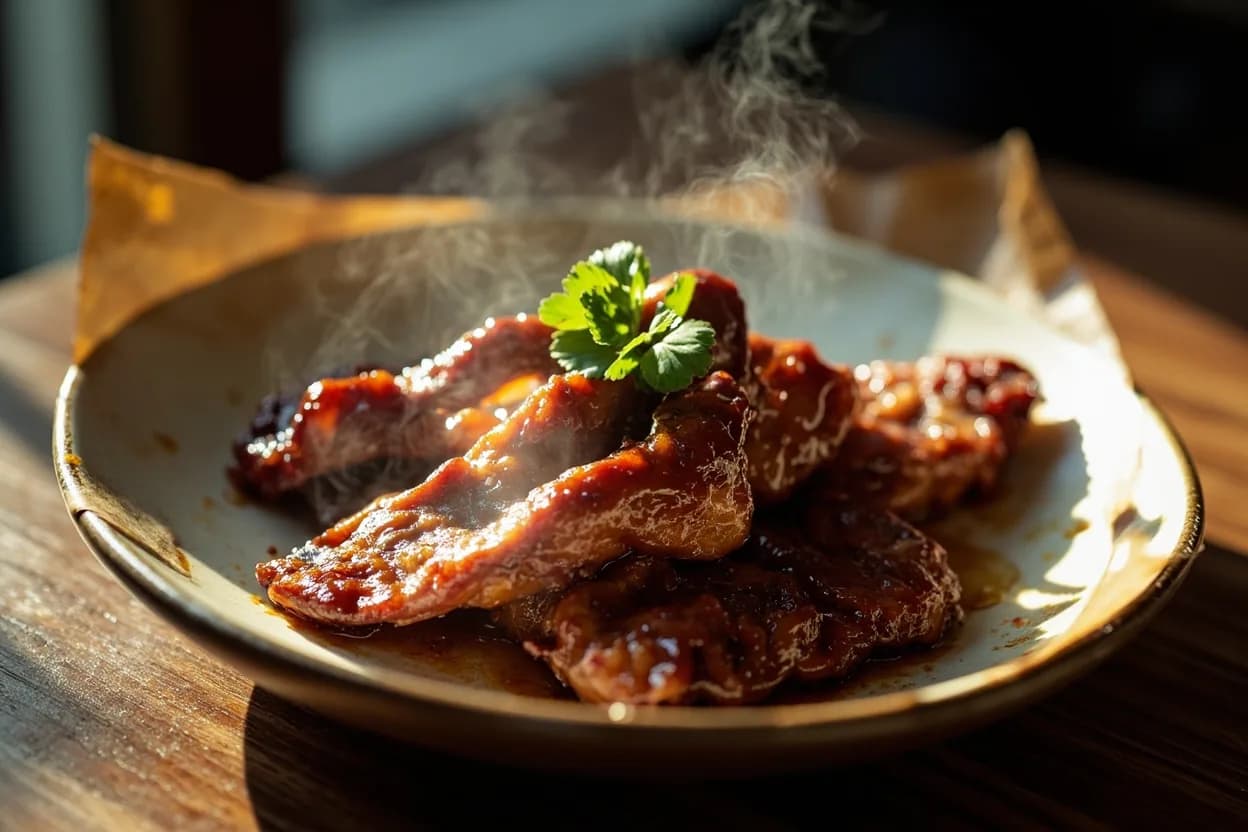
Mopping applies a thin, often vinegar-based basting liquid onto meat during long barbecue cooks using a small mop or brush. The liquid keeps the surface from drying out, adds layers of flavor, and helps smoke adhere to the meat. Unlike thick glazes added at the end, mop sauces are watery so they do not burn over hours of low heat.
Mopping is the practice of brushing or swabbing a thin, water-based liquid over meat during a long, low-and-slow barbecue cook. The liquid, called mop sauce or simply "the mop," is almost always built on vinegar, beer, stock, or a mix of the three, and is loose enough to flow through a cotton BBQ mop or spray bottle. Its job is twofold: replace surface moisture that the pit steadily wicks away, and lay down successive, subtle layers of seasoning that deepen as the cook progresses. A well-mopped brisket or pork butt will taste more complex than a dry-rubbed one, even when both come off the pit at identical internal temperatures.
What separates mopping from other basting moves is restraint. The traditional sauce is thin and tangy by design, because sugar and starch scorch at pit temperatures of 250–300°F and would destroy the bark the cook has worked to build. Mopping is timed to the meat's own evolution: the first application waits for bark to set (typically 60–90 minutes in), and the last stops 30–45 minutes before the pull so the surface can re-tighten. Done right, the cook loses almost no time to the technique, and the bark emerges glossy, seasoned through, and protected from drying out.
- Difficulty
- Easy
Types & varieties
Apple cider vinegar, water, salt, red pepper flakes, sometimes a touch of oil; the classic on whole hog and pork shoulder.
Beer (lager or bock), Worcestershire, beef stock, garlic, black pepper; common on brisket.
Beef or chicken stock thinned with water or vinegar; neutral, lets the rub and smoke lead.
Melted butter thinned with apple juice or vinegar; used on turkey and sometimes chicken for richness.
Heavy on Worcestershire, vinegar, and pepper; a bold savory profile for beef cuts.
Tomato or fruit-juice base with a small amount of sugar — applied carefully late in the cook to avoid burning.
Strong brewed coffee, Worcestershire, and beef stock; dark, earthy profile for brisket.
How to do it
- 1
Mix the mop sauce ahead of time
Combine a thin, vinegar- or beer-based liquid with stock, Worcestershire, salt, pepper, and aromatics. Aim for a water-thin consistency. Plan on 1 to 2 cups per hour of cook time for a full pit — you will use more than you expect.
- 2
Bring sauce to room temperature
Set the pan of mop sauce beside the cooker so it stays warm. Cold sauce drops the meat's surface temperature and can stall fat rendering.
- 3
Let the bark set first
Put the meat on the pit dry and don't touch it for the first 60–90 minutes. The rub needs to set and the surface needs to dry before any liquid goes on, otherwise you will wash the seasoning away.
- 4
Prepare the mop
Use a shirred cotton BBQ mop, a silicone brush, or a spray bottle. If using a cotton mop, rinse it well first to remove lint and loose fibers.
- 5
Dip and wring
Dip the mop into the sauce and press it against the side of the pan to remove excess — the mop should be damp, not dripping.
- 6
Apply in quick, even strokes
Brush the meat in long passes with the grain. Work fast: target under 30 seconds with the lid open. Cover the entire surface once; do not over-soak.
- 7
Close the lid and let the smoke do its work
Don't peek for at least 20–30 minutes after mopping. The temperature dip and smoke loss are cumulative — every open-lid moment costs you.
- 8
Repeat every 30–60 minutes
Mop on a consistent cadence. Once an hour is standard for most pitmasters; every 30 minutes is appropriate for very lean cuts like brisket flat.
- 9
Stop mopping in the final stretch
With 30–45 minutes left, set the mop aside. Let the bark re-dry and tighten. This is the window where you might apply a thin finishing glaze if you want one, but never a thick sugary sauce.
- 10
Rest the meat before slicing
Pull the meat off, tent loosely with butcher paper or foil, and rest 30 minutes to 1 hour (longer for brisket, wrapped in a towel in a dry cooler). The surface moisture you added keeps the interior juicier as it relaxes.
Mopping vs. spritzing vs. saucing
Mopping sits in the middle of a spectrum of three related moves, and confusing them is one of the most common mistakes pit cooks make. Spritzing is a fine mist from a spray bottle, applied more often and more lightly; it refreshes surface moisture without ever touching the bark with a wet tool. Mopping lays down a real layer of seasoning, not just water, and is the right choice when you want flavor to build over hours. Saucing — a thick, sweet, ketchup- or molasses-based BBQ sauce — is almost always a finishing move, brushed on in the last 10–15 minutes or served at the table. A thick sauce slathered on at hour one will carbonize into a black, bitter lacquer; a mop applied at hour eight will look like nothing happened, and that is exactly the point.
- Spritzing: water, juice, or thin vinegar in a spray bottle; every 20–30 minutes; protects bark, adds little flavor.
- Mopping: thin, seasoned liquid with a brush or mop; every 30–60 minutes; moisture plus layered flavor.
- Saucing: thick, sweet BBQ sauce; final 10–15 minutes or off the pit; gloss and stickiness, not basting.
- Competition pitmasters often finish with a clean, unmopped surface so bark reads cleanly on the judging plate.
Planning a mop cadence around your fire
Mopping is a rhythm move as much as a flavor move. The 15–30 seconds the lid is open is the moment the fire is breathing hardest, and a consistent cadence keeps the cook predictable. Plan each pass so it lines up with natural fire-management checkpoints.
- Offset stick-burners: mop just after adding a split or two so the temp dip is masked.
- Kettles and bullet smokers: mop on a steady hourly interval; check vents during the open lid.
- Wrapping points (the stall around 160–170°F internal): mop one last time, then wrap in butcher paper or foil.
- Long overnight cooks: pre-portion mop sauce in a thermos so it stays warm through a 12-hour session.
Common uses
Tips & pitfalls
- Wait for bark to form before the first mop — usually 60–90 minutes in, once the surface has dried and darkened.
- Wring the mop out thoroughly; a sopping-wet mop steams the meat instead of basting it and can wash the rub off.
- Never mop with a sauce containing more than a tablespoon of sugar per cup until the final 30 minutes — sugar burns fast at pit temps.
- Keep the mop sauce in a warm pan beside the cooker so you do not shock the meat with cold liquid.
- Use a dedicated, clean mop — old mop heads harbor bacteria and impart off-flavors.
- Mop in long, even strokes with the grain; do not press or scrub the bark, or you will tear the crust you spent an hour building.
- Once an hour is plenty. More frequent mopping softens the bark and lengthens the stall.
- If the bark is already where you want it, switch to a spray bottle (spritzing) for the same moisture benefit without disturbing the crust.
- Reserve a portion of unmopped sauce for serving — sauce that touched raw drippings should not go back on finished meat.
Good to know
- Category
- Low-and-slow barbecue basting technique
- Also called
- Sopping (the liquid is a 'mop sauce' or 'mop')
- Origin
- American barbecue tradition, rooted in the Carolinas and the broader Southern US
- Sauce consistency
- Thin, water-based — never thick or sugary; sugar scorches at pit temps
- Application frequency
- Every 30–60 minutes once bark has set
- Lid-open time per mop
- 15–30 seconds; minimize heat and smoke loss
- Sauce temperature
- Room temperature or warm — cold liquid drops surface temp and stalls the cook
- Best on
- Brisket, pork shoulder/butt, ribs, whole hog sections; not on thin or fast-cooking cuts
Also called
Basting · Sopping
Dishes that rely on it




Related

Sear
Blast the surface hot for a deep-browned, savory crust

Sauté
Cook quickly in a little fat over lively heat, tossing as you go

Stir-Fry
Toss bite-sized pieces over roaring heat for fast, smoky cooking

Pan-Fry
Crisp food in a shallow layer of hot fat, turning once or twice

Deep-Fry
Submerge in hot oil for an all-over crackling crust

Roast
Cook uncovered in dry oven heat for browned edges and tender centers

Bake
Cook with steady, surrounding oven heat — the soul of bread and pastry

Broil
Hit food from directly above with fierce overhead heat