Heat & Fire
Butcher Paper Wrap
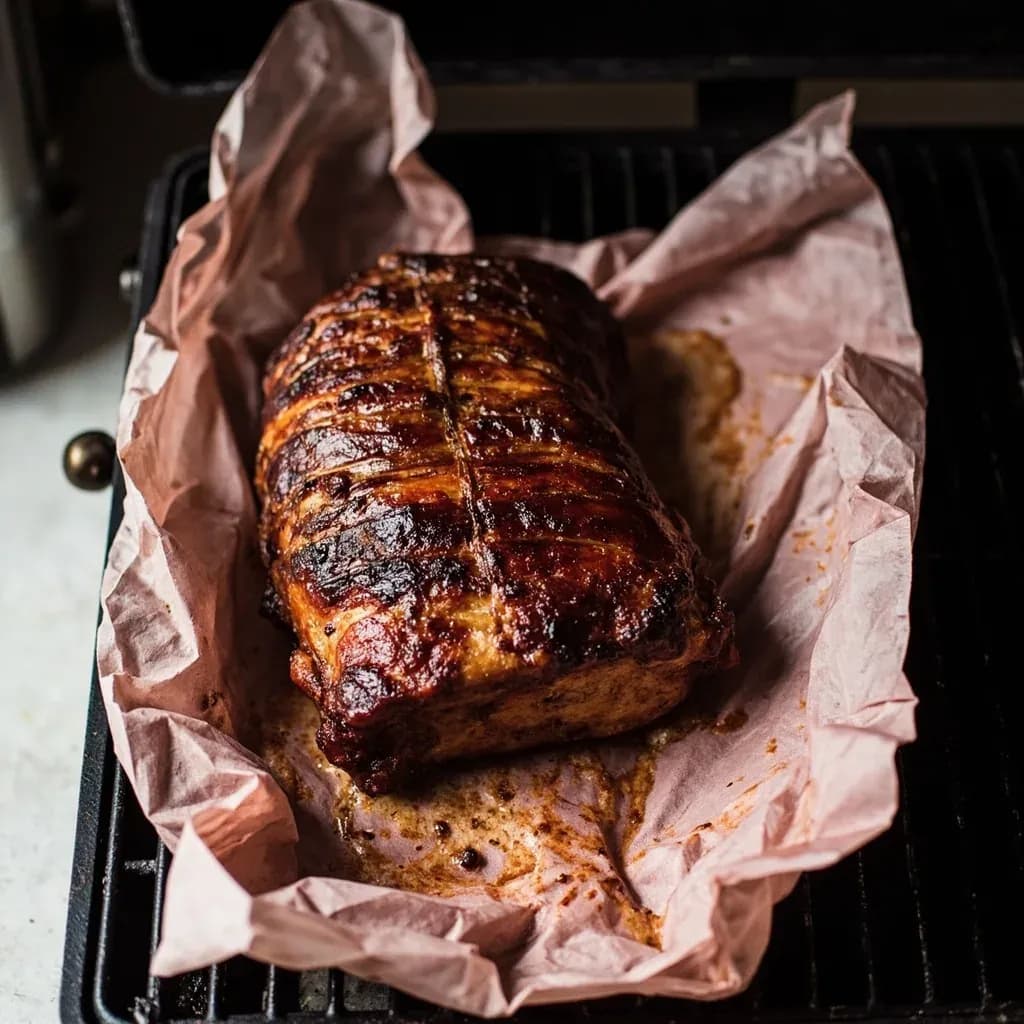
Wrapping barbecue in butcher paper to push through the stall while keeping bark intact.
Butcher paper wrap encloses smoking meat, classically brisket, in unwaxed pink butcher paper partway through a long cook. The paper holds in some moisture to power through the temperature stall while still breathing enough to keep the bark firm rather than soggy as foil would make it. It is a hallmark of Texas-style barbecue.
Wrapping meat in butcher paper mid-cook is the defining move of the modern Central Texas brisket style — a tight, breathable bundle that powers the cook through the stall while keeping the bark dry and crinkly. The paper itself is humble commodity: food-grade, unbleached, uncoated stock, the same material butcher counters wrap fresh cuts in. What matters is what it does at 250–275°F. Unlike foil, which seals steam against the meat and turns the crust to mush, butcher paper holds in enough heat to push past the 150–170°F plateau where evaporative cooling has stalled the cook, while still venting just enough moisture for the bark to keep breathing. The result is a brisket that finishes hours sooner than a fully unwrapped cook, with a peppery, crinkly crust that would not survive a foil crutch. Aaron Franklin is often credited with making the technique standard in the late 2000s, though the method had been used informally in some Texas pits before that; what changed is that the rest of the country started paying attention. Today, butcher-paper wrap is the default crutch for low-and-slow beef, pork shoulder, and beef rib cooks, and it works as well in a backyard offset as it does on a trailer-mounted stick burner.
- Difficulty
- Medium
Types & varieties
The standard. Uncoated, unbleached, FDA-approved for food contact; breathable enough to vent steam but tight enough to retain heat.
Bleached version of the same food-grade paper; performs identically, used mainly for appearance and for writing notes on the wrap.
Common on long brisket cooks to prevent grease bleed-through and protect the smoker from flare-ups late in the cook.
Variant where a thin layer of beef tallow or butter is spread on the bark before wrapping to baste as the paper steams.
Some pits wrap in paper first, then a loose foil sleeve over the top for extra heat retention on very long cooks.
How to do it
- 1
Cook unwrapped until the stall
Run the smoker at 250–275°F and let the meat develop deep mahogany bark. Expect the internal temperature to plateau in the 150–170°F range.
- 2
Judge bark readiness
Press the surface — it should feel firm and dry, not tacky. If a fingerprint leaves a wet sheen, give it another 20–30 minutes unwrapped.
- 3
Pre-tear the paper
Cut two sheets of pink butcher paper, each roughly twice the length of the cut and at least 1.5× the width. Set them on a sheet pan near the pit.
- 4
Lay out and season (optional)
Place one sheet flat, then the second rotated 90° to cover the seams. Optionally smear a thin layer of beef tallow or softened butter on the paper or directly on the bark.
- 5
Wrap tight
Set the meat fat-side up in the center. Pull the long sides up and over, pressing flat against the top to expel air. Fold the ends under the meat like a burrito, tucking firmly.
- 6
Return to the smoker
Place the bundle back on the cooler side of the grate, seam-side down. Continue cooking unworried about bark softening.
- 7
Probe to finish
Test for doneness by sliding an instant-read probe into the flat — it should glide in with no resistance, usually around 203°F internal.
- 8
Rest in a faux cambro
Transfer the still-wrapped meat to a dry cooler, tuck a towel around it, and close the lid. Rest 1–4 hours; carryover heat will finish the cook and redistribute juices.
- 9
Optional bark reset
If the bark has gone a little soft during the rest, unwrap and place the meat on a hot pit or in a 500°F oven for 5–10 minutes to crisp it back up before slicing.
The science of the stall
The stall is not the smoker losing power — it is the meat sweating. As surface temperature climbs past roughly 150°F, moisture in the outer layer of the muscle turns to vapor and carries heat away, exactly the way sweat cools skin. Internal temperature sits flat at 150–170°F for one to four hours on a brisket, sometimes longer on a pork shoulder, until surface moisture has evaporated and the developing crust begins to insulate the meat again. A wrap interrupts that cooling cycle by trapping vapor close to the surface, letting the meat climb through the plateau without giving up the bark that took the previous six hours to build. Butcher paper is the right tool because it slows the cooling without sealing it, venting just enough steam to keep the crust from going soft.
Common uses
Tips & pitfalls
- Wait for color: if the bark is still pale or tacky, you wrapped too early and the paper will steam it soft.
- Wrap tighter than feels right — loose paper lets steam pocket and creates a soggy band on the bark.
- Pre-tear your sheets before the meat hits the stall; fumbling with a roll at 160°F is a classic pit mistake.
- Use two full sheets, with the second rotated 90° to the first, to eliminate seam leaks.
- Tear sheets roughly twice the length of the cut and 1.5× the width so you can fully fold the ends under.
- Do not substitute parchment or wax paper — both can scorch, off-gas, or melt against a 275°F grate.
- Return the wrapped meat to the cooler side of the smoker so the paper doesn't scorch on a direct flame.
- Track where the flat is in the wrap so your instant-read probe hits the thickest part through a seam, not the bark.
- If bark softens in the hold, unwrap and place the brisket back on the uncovered pit for 10–15 minutes to re-set.
Good to know
- Origin
- Popularized by Aaron Franklin of Franklin Barbecue in Austin, Texas, in the late 2000s; now a standard Texas-style brisket technique.
- Purpose
- Pushes meat through 'the stall' (the 150–170°F / 66–77°C plateau caused by evaporative cooling) without sacrificing bark.
- Paper Type
- Food-grade, unbleached, uncoated pink/peach butcher paper (the same FDA-compliant paper used to wrap fresh meat at butcher counters).
- Do Not Use
- Wax paper, parchment, kraft grocery bags, or freezer paper — none are rated for prolonged direct-heat contact.
- Wrap Window
- Most pitmasters wrap when bark is set and color is deep mahogany, typically 150–170°F internal for brisket.
- Wrapping Style
- Tight, double-sheet wrap with folded and tucked ends to trap steam against the meat while the porous paper lets excess moisture escape.
- Finish Temp
- Brisket typically returns to the smoker and finishes when probe-tender, around 203°F internal in the flat.
- vs. Foil
- Paper breathes; foil does not. Foil steams the bark soft, paper keeps it textured and dry.
- Common Applications
- Beef brisket, pork shoulder/butt, beef ribs, and occasionally pork spare ribs.
- Resting
- Most pits hold the wrapped meat in a warm cooler (faux cambro) for 1–4 hours after the cook.
Also called
Texas Crutch · Paper Wrapping
Related

Sear
Blast the surface hot for a deep-browned, savory crust

Sauté
Cook quickly in a little fat over lively heat, tossing as you go

Stir-Fry
Toss bite-sized pieces over roaring heat for fast, smoky cooking

Pan-Fry
Crisp food in a shallow layer of hot fat, turning once or twice

Deep-Fry
Submerge in hot oil for an all-over crackling crust

Roast
Cook uncovered in dry oven heat for browned edges and tender centers

Bake
Cook with steady, surrounding oven heat — the soul of bread and pastry

Broil
Hit food from directly above with fierce overhead heat