Heat & Fire
Boil and Fry (Vegetables)
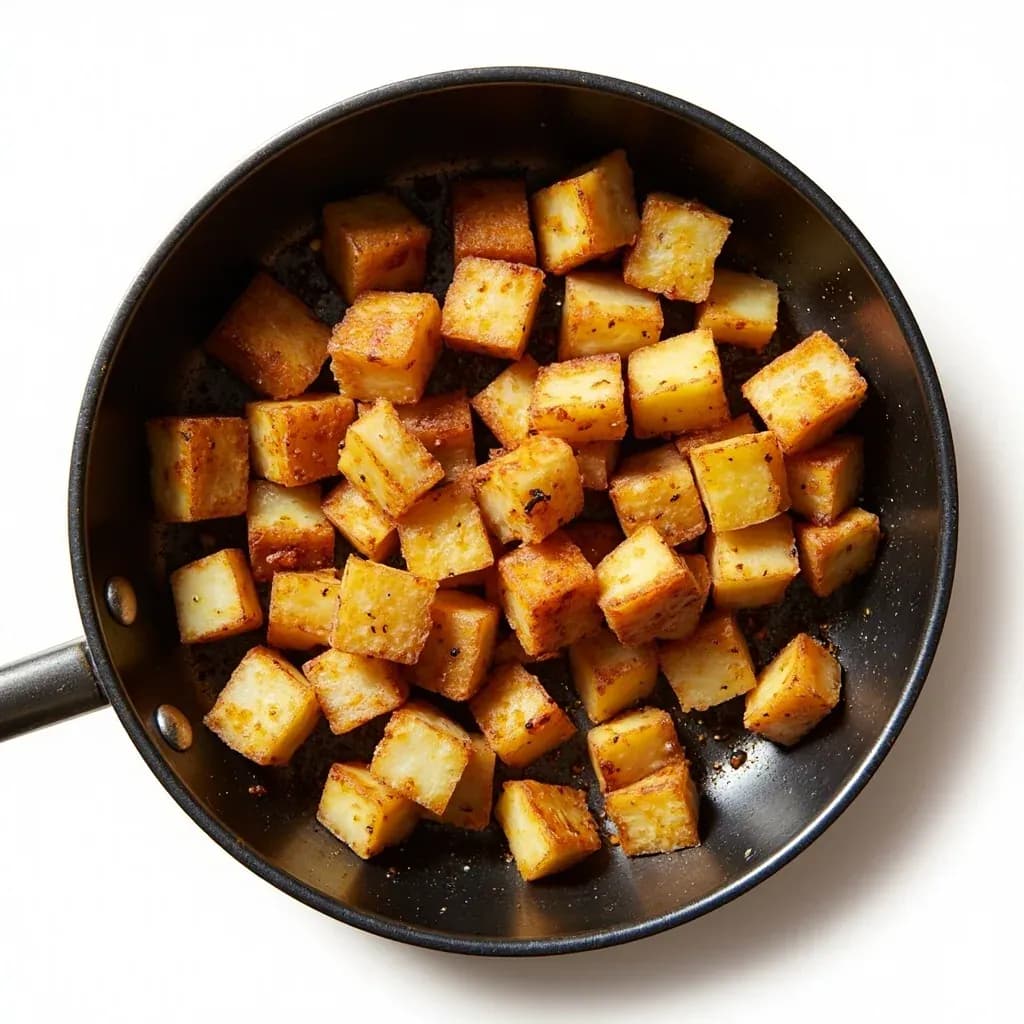
Parboiling vegetables to soften them, then frying for color and crisp edges without a raw center.
Boil and fry first parboils or blanches dense vegetables such as potatoes, cauliflower, or green beans to cook them through, then fries or sautés them to develop browning and crisp surfaces. Pre-boiling guarantees a tender interior and shortens frying time, avoiding the burnt-outside, raw-inside problem of frying alone. It is common in Indian sabzi and many home vegetable dishes.
Boil-and-fry is less a single named technique than a universal kitchen logic: split the cook into a moist phase that softens cell structure, then a dry phase that drives off surface water and runs the Maillard browning reaction. The same handful of rules govern french fries, pommes sarladaises, Sichuan dry-fried green beans, Korean gamja jorim, and British bubble and squeak — cuisines with no shared lineage but identical underlying physics.
The method exists because some vegetables are too dense, too fibrous, or too starchy to brown from raw in a reasonable time on the stovetop. A potato dropped into a skillet simply steams in its own moisture; a green bean goes leathery before its sugars caramelize. A few minutes in salted boiling water collapses the cell walls just enough that hot fat can do what it does best — render the surface dry, crisp, and deeply savory in a fraction of the time an oven or a raw-to-fry approach would need.
The single most-skipped and most-consequential step is drying the parboiled pieces before they meet the fat. A wet surface flash-evaporates on contact with oil, dropping pan temperature by 50–80 °C and producing pale, greasy food rather than a proper crust. Get that part right and the rest of the technique is essentially trouble-free.
- Difficulty
- Easy
Types & varieties
The default form: shallow oil in a wide skillet for a crusty pan finish — the workhorse version for home fries, Brussels sprouts, and carrots.
Full immersion in 175–190 °C oil for even color; used for patatas bravas, Korean fried cauliflower, and twice-fried green beans.
Dry oven heat instead of pan; classic English roast potatoes — floury spuds boiled 8 minutes, drained, roughed up, then roasted in hot fat.
Brief boil, ice bath to set color and stop cooking, then a fast high-heat stir-fry — the Chinese approach for broccoli, asparagus, and snap peas.
Sichuan technique: vegetables (often green beans) oil-blanched or simmered until leathery, then fried dry in a wok with very little oil until wrinkled and blistered.
Central American and Caribbean method where firm vegetables (plantain, yuca, chayote) are boiled until just tender, then fried with aromatics to build a flavor foundation.
British leftover dish: boiled cabbage and potato pressed together and fried until a brown crust forms.
French Périgord preparation: potatoes parboiled in salted water, sliced, then cooked in a wide pan of duck fat until golden on both sides.
How to do it
- 1
Cut for even cooking
Cut vegetables into uniform pieces sized to the cook time you want — 2–3 cm chunks for potatoes and root vegetables, whole or halved for Brussels sprouts, batons for carrots, whole trimmed beans. Uniformity matters more here than in a pure stir-fry because the boil must finish them all simultaneously.
- 2
Salt and boil the water
Fill a pot with plenty of water (vegetables should swim, not crowd), cover, and bring to a full rolling boil. Add salt once boiling — about 1 tablespoon per litre. The salt seasons the vegetable from the inside and slightly firms cell walls; the only cost is a few extra seconds for the water to return to a boil.
- 3
Parboil to just under done
Add vegetables and cook until a knife meets a little resistance at the centre — typically 4–6 min for 2 cm potato cubes, 3–4 min for green beans or broccoli florets, 6–8 min for whole small potatoes or halved Brussels sprouts. Pull them out 1–2 minutes before you think they should be done; they will finish in the fat.
- 4
Drain and steam-dry
Drain in a colander. For potatoes, return to the empty hot pot, set over the turned-off burner, and shake gently for 30–60 seconds until surfaces look matte and a fine starch dust is visible. For green vegetables, immediately plunge into a bowl of ice water for 1–2 minutes to set color, then drain and spread on a clean towel to dry completely.
- 5
Roughen and rest
For potatoes especially, toss gently in the colander or rough with a fork to fray the corners. Transfer to a tray in a single layer and chill uncovered for at least 20 minutes, or refrigerate up to 2 days. Cold, dry, starchy surfaces fry far more aggressively than warm ones.
- 6
Heat the fat to frying temperature
Add 3–4 mm of neutral oil (or duck fat, ghee, clarified butter) to a wide heavy skillet over medium-high heat. Bring to 180–190 °C (350–375 °F) — a test piece should sizzle vigorously and brown within 30 seconds.
- 7
Fry in a single layer
Add vegetables in a single, uncrowded layer, laying the first face down. Resist moving them for the first 2–3 minutes — this is when the crust forms. Flip once to color the second side. Total pan time is usually 4–8 minutes depending on size and desired crust.
- 8
Drain, season, serve
Lift onto a paper-towel-lined tray or warm plate, season immediately with finishing salt, and add any finishing elements: a knob of butter tossed through, a squeeze of lemon, chopped herbs, flaky salt, or a splash of vinegar. Serve at once; the crust is at its best in the first few minutes.
The science in two minutes
Two reactions carry the technique. In the boil, starch granules embedded in the cells absorb water and swell (gelatinization), and pectin between the cells softens — the vegetable goes from raw-firm to tender-firm in minutes. In the fry, surface water must leave before the oil can climb above 100 °C, after which temperatures of 140 °C and above trigger the Maillard reaction between amino acids and reducing sugars, producing the brown color and savory flavor. Parboiling front-loads the softening work so the fry phase can spend almost all its energy on browning rather than cooking.
- Gelatinization happens between 60–70 °C for most starches, which is why even a brief boil changes potato texture dramatically.
- Maillard browning requires a dry surface; oil at 180 °C contacting a wet vegetable drops to ~100 °C instantly and produces steam, not browning.
- Rough, starchy parboiled surfaces (especially chilled potatoes) brown faster because they have more exposed area and less surface moisture.
- Cold, parboiled potatoes fry better than warm ones because the gelatinized starches firm up again as they cool (retrogradation), releasing surface water and resisting oil absorption.
When to skip the technique
Boil-and-fry solves a specific problem — a vegetable that won't brown from raw before it turns mush or dries out. When that problem isn't there, the boil step is wasted time and waterlogging.
- Naturally quick-cooking vegetables (zucchini, mushrooms, sliced peppers, leafy greens) brown perfectly well from raw in a hot pan; skip the boil entirely.
- Very long-cooking items (whole beets, whole winter squash, whole heads of cabbage) may need a much longer simmer or even a confit, not a quick parboil.
- Delicate herbs and tender greens wilt in the boil; finish them in the hot fat straight from the cutting board, if at all.
- For puréed dishes (soups, mash, purées) the fry step is decorative and can often be replaced with a quick sauté in butter for flavor alone.
Common uses
Tips & pitfalls
- Pull vegetables a full 1–2 minutes before they reach the texture you want. Carryover heat and the fry phase will finish the job; over-boiled vegetables turn to mush the moment they hit the pan.
- After draining, return vegetables to the hot empty pot for 30–60 seconds and shake. The residual steam escapes and a fine, dry starch film forms on the surface — this single step is the difference between crisp and soggy.
- Dry thoroughly before frying. Even a thin film of water flash-evaporates on contact with oil, dropping the pan temperature by 50–80 °C and producing greasy, pale food. Pat dense pieces with a towel if needed. Skipping this is the most common reason boil-and-fry fails.
- For potatoes, rough the corners with a fork or by shaking in the colander, then chill uncovered in the fridge for at least 20 minutes (up to 2 days). Cold, dry, frayed surfaces fry far more aggressively — the secret to restaurant-style roast potatoes.
- Use enough oil to coat but not submerge, and bring it to 180–190 °C before vegetables go in. Test with a single piece — it should sizzle hard immediately and brown within 30 seconds.
- Fry in a single, uncrowded layer. Crowding drops oil temperature, steams the vegetables, and yields limp, oily results. Work in batches and hold finished pieces warm in a low oven.
- Season at the end, not during. Salt added during frying draws out moisture and prevents crust formation; finishing salt, acid, or fresh herbs added after frying preserve crispness.
- Don't drop cold, wet vegetables into smoking oil — the moisture flash-evaporates violently and can crack fragile pieces (especially loose Brussels sprout leaves). Chilled parboiled potatoes are the exception: their surfaces are dry, so they fry beautifully straight from the fridge.
Good to know
- Also known as
- Parboil-and-fry, double-cook, blanch-and-finish-in-fat (Chinese: 焯炒 / 飞水后煎)
- Primary purpose
- Guarantee a tender, fully cooked interior while producing a browned, crisp exterior
- Best for
- Dense or fibrous vegetables that brown slowly from raw — potatoes, root vegetables, Brussels sprouts, green beans, cauliflower
- Total time
- 10–30 minutes depending on vegetable; faster than raw-to-fry, slower than a pure stir-fry
- Yield effect
- Roughened, parboiled surfaces fry up to 30–40% more crisply than raw-cut vegetables of the same size
- Maillard threshold
- Frying phase must reach 140–160 °C (285–320 °F) surface temperature for proper browning
- Origin / tradition
- Universal; documented in European, East Asian, Latin American, and South Asian kitchens with no shared lineage
Also called
Parboil and Fry · Blanch and Fry
Related

Sear
Blast the surface hot for a deep-browned, savory crust

Sauté
Cook quickly in a little fat over lively heat, tossing as you go

Stir-Fry
Toss bite-sized pieces over roaring heat for fast, smoky cooking

Pan-Fry
Crisp food in a shallow layer of hot fat, turning once or twice

Deep-Fry
Submerge in hot oil for an all-over crackling crust

Roast
Cook uncovered in dry oven heat for browned edges and tender centers

Bake
Cook with steady, surrounding oven heat — the soul of bread and pastry

Broil
Hit food from directly above with fierce overhead heat