Prep & Assembly
Bread Soaking
Moistening stale bread with liquid so it becomes the base of soups, salads, and dishes.
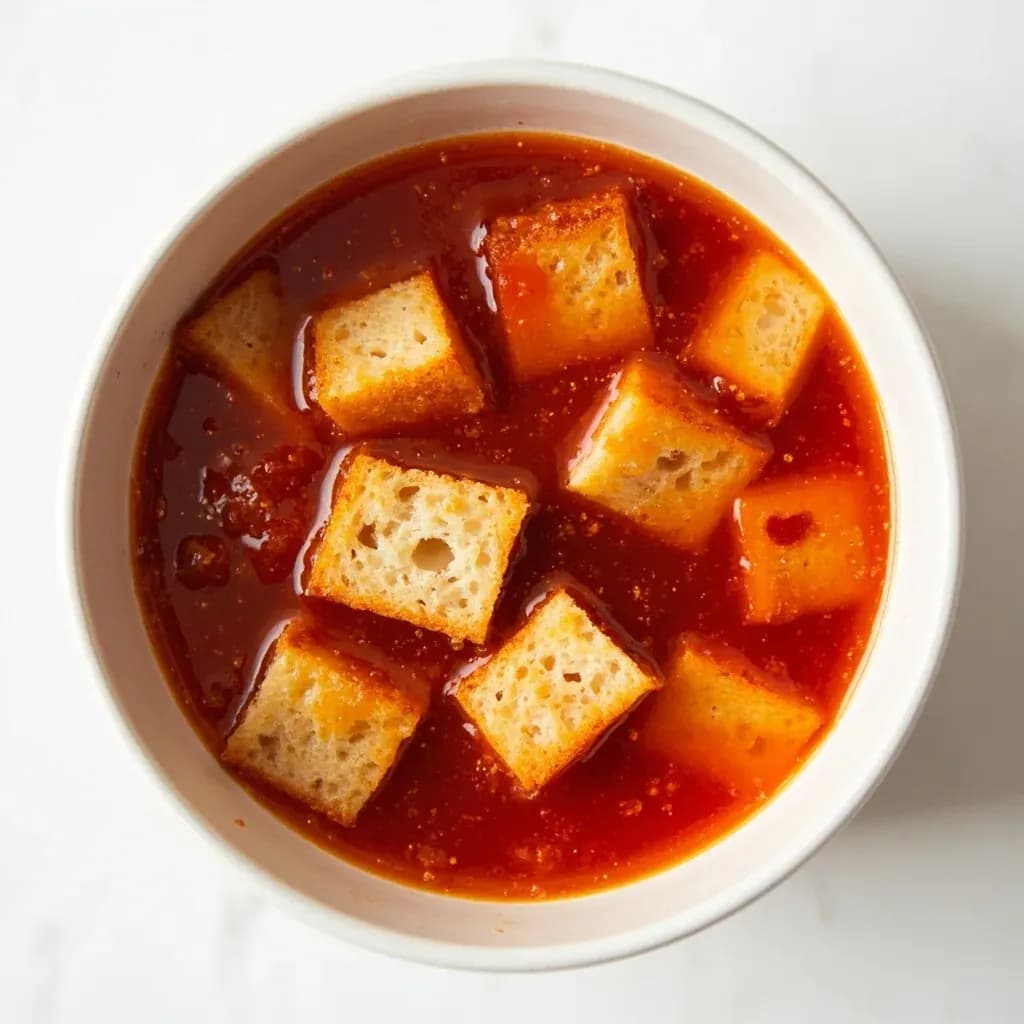
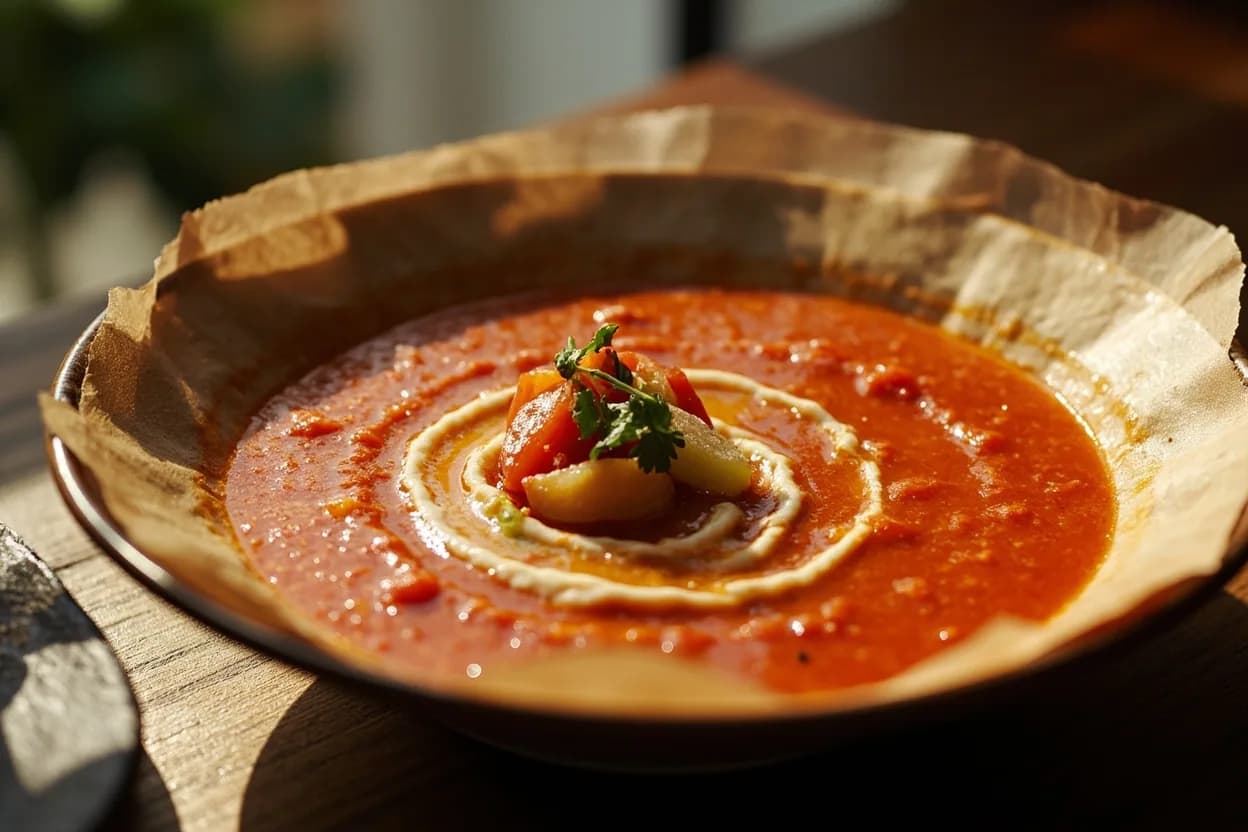
Bread soaking revives stale or dried bread by wetting it with water, broth, or tomato so it softens and absorbs flavor. It is the heart of frugal Mediterranean dishes like Tuscan pappa al pomodoro and panzanella salad, and underlies Catalan pa amb tomàquet where bread is rubbed with tomato. Stale bread is preferred because it soaks up liquid without turning to mush as quickly as fresh bread.
Bread soaking is the simple but foundational technique of moistening dry, stale bread in a chosen liquid so it can be folded, stirred, or cooked into a dish. The principle is mechanical: a day-old loaf has lost much of its moisture to evaporation, leaving an open, rigid crumb that drinks liquid through capillary action. Once saturated, the swollen starches and softened gluten become a versatile ingredient — a thickener for soup, a binder for forcemeat, a tenderizing base for bread salad, or a custard-soaked slab ready for the pan. This is why the technique shows up independently in Italian, Spanish, Portuguese, French, and Levantine peasant kitchens: it stretches a hard loaf into a meal and replaces flour, breadcrumbs, or rice as a thickener.
Three broad families of dish depend on bread soaking. The first is the panade, where milk- or stock-soaked bread is squeezed dry and folded into ground meat to bind meatballs, meatloaf, and terrines. The second is the bread-thickened soup — ribollita, pappa al pomodoro, acquacotta, gazpacho, açorda — where the soaked loaf dissolves into the broth to give it body and a silken, flourless texture. The third is the bread salad — panzanella, fattoush — where torn rustic bread is moistened in vinaigrette or tomato juice until just tender, then tossed with vegetables. The unifying rule across all three is that the bread must be stale. Fresh bread is too soft and elastic; it collapses into glue the moment it meets liquid.
- Difficulty
- Easy
Types & varieties
Bread soaked in milk, then squeezed and used as a binder in meatballs, meatloaf, forcemeats, and vegetable gratins.
Stale bread softened in savory stock; the base of Tuscan ribollita, bread-thickened minestrone, and other peasant soups.
Tuscan unsalted country bread soaked in plain water, then squeezed and added to soups such as acquacotta.
Bread softened in tomato juice or crushed tomatoes; the defining step in pappa al pomodoro and similar bread-and-tomato soups.
Bread tossed with red wine vinegar, wine, or vinaigrette; the foundation of panzanella.
Cultured-dairy soak that softens bread while adding tang; used in some Southern U.S. and Eastern European preparations.
Bread dipped in a beaten-egg-and-milk custard; the starting point for pain perdu and savory bread puddings.
Dried or toasted crumbs moistened with a small amount of liquid or fat, as in Spanish and Portuguese migas.
How to do it
- 1
Choose the right bread
Select a stale, crusty loaf — country sourdough, ciabatta, baguette, or rustic Italian bread that is at least a day old. The crumb should feel dry and firm, not springy. If the bread is only slightly soft, dry it in a 300°F (150°C) oven for 10 minutes until firm but not browned.
- 2
Tear or cut into pieces
Tear the bread by hand into rough 1- to 2-inch pieces, or cut into cubes with a serrated knife. Hand-tearing creates ragged, irregular surfaces that absorb liquid more evenly and give a more rustic final texture in salads and soups.
- 3
Select and season the liquid
Match the liquid to the dish: milk for panade, broth for hearty soups, tomato juice for pappa al pomodoro, vinaigrette for panzanella. Lightly season the liquid with salt — and, where appropriate, garlic, pepper, or herbs — so flavor penetrates the bread rather than sitting only on the surface.
- 4
Submerge and soak
Place the bread in a bowl and pour the liquid over it, pressing down so all pieces are moistened. Soak 5 to 15 minutes for torn rustic bread, up to 30 minutes for denser loaves. Warm liquid absorbs faster than cold, but never use boiling liquid for milk soaks — it will curdle. The bread is ready when it is soft throughout but still holds its shape when lifted.
- 5
Drain or squeeze as needed
For panade, lift the bread and firmly squeeze out excess milk so only moist crumbs remain. For salads, drain briefly in a colander. For soups, leave a small amount of liquid clinging to the bread so it integrates smoothly with the broth.
- 6
Incorporate into the dish
Crumble, tear, or blend the soaked bread as the recipe directs: stir into broth and simmer briefly for soup, fold into ground meat for binding, toss with vegetables and more dressing for panzanella, or layer into a pudding dish and bake.
Why stale bread is non-negotiable
The success of bread soaking depends almost entirely on the loaf's moisture level at the moment it meets the liquid. A truly stale or lightly toasted piece of bread has a dry, rigid crumb full of empty capillaries; when submerged, those capillaries pull liquid in quickly and evenly, and the bread softens while keeping its structure. Fresh bread, by contrast, is already saturated with water and held together by relaxed, elastic gluten. It absorbs little, and the moment you stir or knead it, the crumb disintegrates into a starchy paste — gluey in a meatball, gummy in a salad, cloudy in a broth. If your bread is only slightly soft, dry it in a 300°F (150°C) oven for about 10 minutes to simulate staleness. Avoid the very softest supermarket sandwich loaves, very dense ryes that soak unevenly, and heavily seeded loaves whose flavors can turn bitter when soaked.
The three families of soaked-bread dishes
Each of the major uses of soaked bread depends on how much liquid is left in or on the crumb at the moment of use. Understanding this gives you control over texture in any recipe.
- Panade (binders): The bread is fully saturated, then squeezed until only moist crumbs remain. The residual moisture is just enough to soften the bread so it can be distributed evenly through ground meat, but dry enough to avoid weakening the protein network. Too wet a panade, and meatballs and loaves turn fragile and steam themselves apart.
- Soup thickener: The bread is soaked just until tender and added with a small amount of its soaking liquid. As it simmers, the swollen starches leach out and the bread breaks down, giving the broth a silky, body-rich consistency without the raw-flour taste of a roux. Add soaked bread late and simmer only briefly; overcooking turns it to paste.
- Bread salad: The bread is moistened just enough to soften while keeping chew. Drain it briefly, then toss with vegetables and more dressing so the bread can absorb the salad's flavors over the next 20–30 minutes of resting.
Common uses
Tips & pitfalls
- Use truly stale bread — 1 to 3 days old, or lightly toasted in a low oven — so the crumb drinks liquid without collapsing into paste. Fresh bread is the single most common cause of gluey, gummy results.
- Tear bread by hand rather than slicing; ragged edges absorb more evenly and give a more rustic final texture in salads and soups.
- For panade, fully submerge the bread in milk and let it sit 10–15 minutes, then squeeze out excess milk before adding to the mixture. Too much residual liquid weakens the bind and makes meatballs and loaves fall apart.
- Season the soaking liquid with salt, pepper, garlic, or herbs so the bread carries flavor into the dish rather than tasting flat at the center.
- Warm liquid absorbs faster than cold, but never pour boiling liquid over milk-soaked bread — it will curdle on contact.
- For soups, add soaked bread at the end and let it simmer only briefly; overcooking turns the starches to glue and clouds delicate broths.
- Common mistake: using fresh, soft sandwich bread. It disintegrates almost immediately and produces a starchy, gluey texture in everything from meatballs to panzanella.
- Common mistake: skipping the squeeze step. Excess liquid throws off the moisture balance of bound mixtures and dilutes dressings in bread salads.
Good to know
- Also called
- Panade (when used as a binder), bread softening, bread moistening
- Primary purpose
- Rehydrates stale bread so it can serve as a thickener, binder, or base in cooked dishes
- Difficulty
- Easy
- Active time
- 2–5 minutes
- Soak time
- 5–30 minutes depending on bread density and liquid
- Best bread condition
- Stale, day-old, or lightly toasted; fresh bread turns gummy
- Best bread types
- Crusty country loaves, sourdough, ciabatta, stale baguette, rustic Italian bread
- Bread to avoid
- Soft sandwich bread, very dense rye, heavily seeded loaves
- Core mechanism
- Stale bread's dry crumb absorbs liquid through capillary action; starches swell and later release to thicken or bind
- Common liquids
- Water, milk, broth, tomato juice, wine, vinegar, eggs, buttermilk
- Origin
- Ancient and global; a peasant technique for using up hard bread across Mediterranean, Middle Eastern, and Northern European cuisines
- Storage of soaked bread
- Use immediately; do not store — texture and food safety degrade
- Yield
- 1 cup torn bread absorbs roughly 1/2 to 3/4 cup liquid before reaching a soft, drainable consistency
- Equipment
- Mixing bowl, fork or whisk for breaking up clumps, fine-mesh strainer or cheesecloth for draining
Also called
Bread Soaking (Pappa/Panzanella) · Bread Staling for Soups & Salads · Rubbing Bread with Tomato (Pa amb Tomàquet)
Dishes that rely on it
Related

Whisk
Beat ingredients smooth and aerated with a looping wire motion

Sift
Pass dry ingredients through mesh to aerate and remove lumps

Strain
Pour through mesh to separate solids from liquid for a smooth result

Filter
Pass liquid through fine material to clarify out the smallest particles

Rice
Press cooked potatoes through small holes for fluffy, lump-free texture

Mash
Crush soft cooked food into a rustic, creamy purée

Grind
Crush food into a coarse to fine texture, from spices to meat

Grate
Shred food into fine bits against a sharp-toothed surface