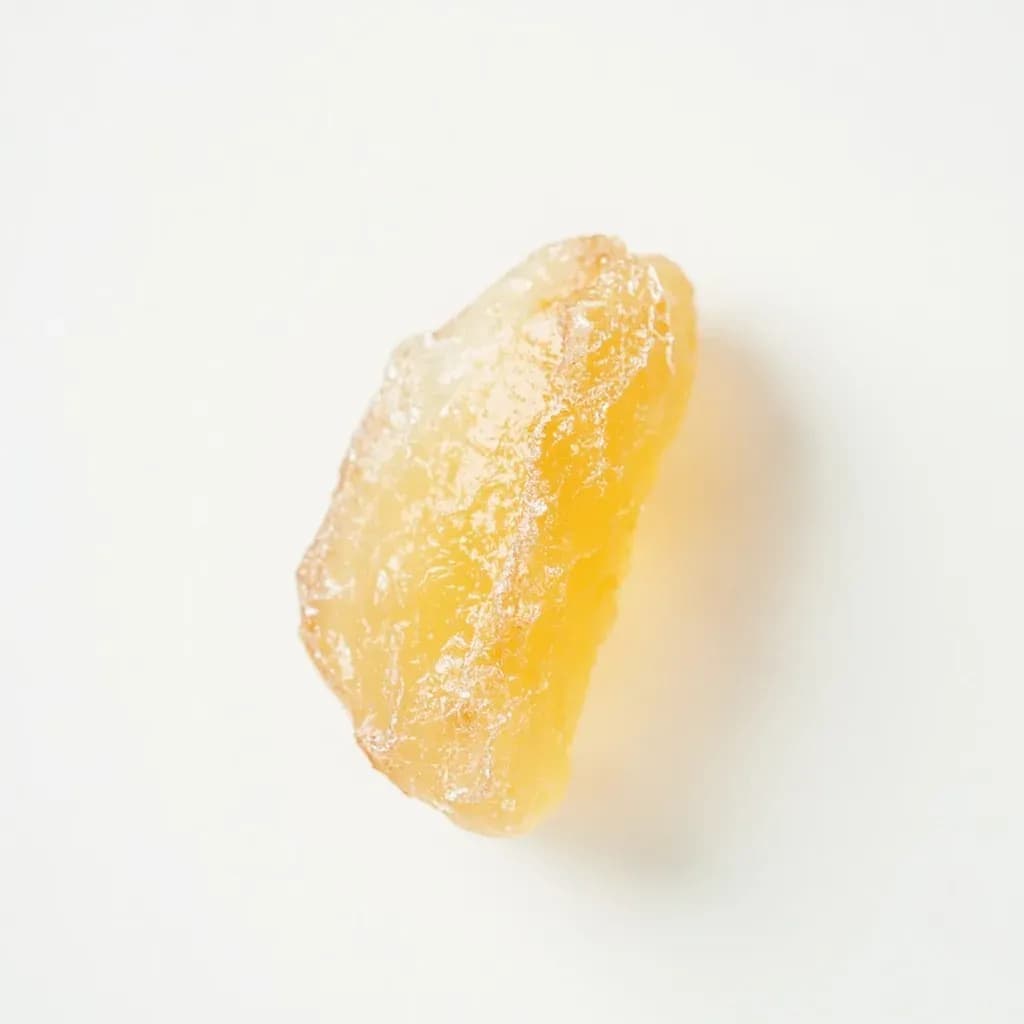
Transform & Preserve
Clean Break Test
Checking sugar or candy doneness by how a sample snaps or sets when cooled.
The clean break test judges whether a cooked sugar syrup or candy has reached the right stage by cooling a small sample and seeing how it behaves. A piece that snaps cleanly without bending indicates the hard-crack stage, while softer breaks signal earlier stages. It is a tactile backup to a candy thermometer for confirming the correct set.
The clean break test is a tactile check confectioners have used for centuries to identify when a boiling sugar syrup has reached the hard-crack stage — roughly 300–310°F / 149–154°C. A small spoonful of syrup is dropped into ice water, where it solidifies almost instantly into a thin thread. If that thread snaps cleanly in two rather than bending or squashing, the syrup has lost enough moisture to set into a hard, glassy candy on cooling. It is the difference, in a single gesture, between a chewy toffee and a brittle peanut snap.
The test's real value lies in the narrow window it reads: the few seconds and few degrees between soft crack and brittle, when the syrup's structure flips from pliable to rigid. A thermometer tells you the temperature; the clean break tells you what that temperature will actually feel like in the finished candy. Experienced confectioners often prefer it because the break correlates directly with the texture in the mouth — something a number on a dial cannot fully capture. For beginners, the two checks together are far more reliable than either one alone.
It is also one of the most hazardous routine tests in the kitchen. Sugar at 300°F is close to typical deep-frying temperatures, but unlike hot oil it adheres to skin on contact and keeps burning as it cools, causing deep, slow-healing damage. Treat every drop, every splash, and every tool that has touched the syrup as dangerous until it has been thoroughly cooled or washed.
- Difficulty
- Medium
Types & varieties
Threads form in cold water but bend before snapping — used for butterscotch, taffy, and some brittles.
Threads hold their shape and snap cleanly with a brittle break — the canonical 'clean break' result.
Threads break with a sharper, almost glassy snap and the cooled drop is glassy; the upper limit before scorching.
How to do it
- 1
Prepare an ice-water bath
Fill a wide glass or metal bowl with cold water and add a generous amount of ice. Place it next to, but not on, the burner so you can reach it without crossing the hot pot.
- 2
Cook the sugar to the target range
Combine sugar, water, and any glucose or acid in a heavy-bottomed pan. Bring to a boil over medium heat, brush down the sides with a wet pastry brush, and cook without stirring until the syrup reaches roughly 285°F / 140°C on a candy thermometer.
- 3
Reduce heat and begin testing
Lower the heat to a gentle boil so the syrup climbs slowly and predictably. From here on, work in short, deliberate movements.
- 4
Drop a sample into the ice water
Dip a clean metal spoon into the syrup and let a small drop fall from its tip into the ice water. The drop will sink and solidify almost instantly.
- 5
Fish out the sample and feel the break
Retrieve the cooled thread with a fork or slotted spoon, or with great care your fingertips. Try to bend it.
- 6
Read the result
If the thread bends before breaking, you are at soft crack — keep cooking. If it forms a rigid, glassy strand that snaps in two with a clean, audible break, you have reached hard crack.
- 7
Stop the cook immediately
Remove the pan from the heat the moment the test passes. If using a thermometer, the reading should be 300–310°F / 149–154°C. Set the pot on a dry heatproof surface, not on a cold or wet one, which can crack the pan.
- 8
Proceed with your recipe
Pour onto a heat-treated or silicone-lined surface, pour into molds, or dip the item to be coated. Work quickly — the syrup will not stay workable for long.
Reading the result
When you fish the cooled thread from the ice bath, three outcomes are possible. A thread that bends into a soft U before giving way means soft crack — keep cooking and test again in a minute. A thread that holds its shape and snaps with a clean, audible crack means hard crack, the canonical clean break, and you should stop the cook at once. A thread that fractures with a sharper, almost glassy snap — and feels brittle rather than chewy if you sample it — is in the upper brittle band; the syrup is at the edge of scorching and should be poured immediately.
The result is most repeatable when the syrup contains an interfering agent — cream of tartar, lemon juice, or a glucose syrup — because these limit crystal growth and keep the cooked sugar clear and glass-like. With pure sucrose, the test still works, but the syrup is more prone to recrystallization during the cook, which can muddy the result if crystals form before the test is taken. Honey-heavy syrups darken faster than pure sucrose and can take on a deep amber color before the structural change is complete; in those cases, trust the break and the thermometer over the color.
Why the test works
Sugar at hard crack has lost most of its water and is now a supersaturated solution of sucrose. When a thin drop hits ice water, it quenches so quickly that the dissolved sugar has no time to crystallize — it sets instead into an amorphous glass. That glass is brittle: there are no soft crystal bonds to absorb the bend, so it fractures. At soft crack, a little more water remains in the structure, the glass is softer, and the thread yields before it breaks. The break is, in effect, a tiny mechanical proof that the syrup has crossed the line from flexible to glassy — exactly the line that decides chewy versus brittle in the finished candy.
Common uses
Tips & pitfalls
- Set the ice-water bowl on your station before you begin heating the sugar — scrambling for it at 300°F is dangerous and slows the test.
- Use truly ice-cold water; a few floating cubes in a bowl are far more reliable than running tap water, which can be 55–70°F and skews the result toward softer than the syrup actually is.
- Wipe or rinse the testing spoon between drops — residual syrup on the spoon can seed new crystals back into the pot and grain the whole batch.
- Test only when you think you are close, typically in the last 10–20°F of the target range. Repeated tests cool the batch and slow the cook.
- Brush the inside walls of the pan with a wet pastry brush early in the cook to dissolve stray sugar crystals and prevent a grainy, recrystallized syrup.
- Pull the pot off the heat the moment the test passes; residual carryover heat will push the syrup another 5–10°F.
- Never drop more than a half-teaspoon of syrup into the water — less is safer and the result is just as readable.
- Have a clean, damp cloth and a bowl of cool water within reach for burns before you start; sugar at this temperature causes instant, serious damage.
Good to know
- Technique family
- Cold-water sugar doneness test (sub-test of the candy-stage family)
- Stage identified
- Hard crack, 300–310°F / 149–154°C
- Also known as
- Snap test, hard-crack test, break test
- Test medium
- Ice water — plain cold tap water is generally not cold enough
- Time to perform
- A few seconds per drop
- Skill level
- Intermediate to advanced; sugar at this temperature is extremely hazardous
- Equipment
- Heavy-bottomed saucepan, candy thermometer, ice-water bowl, metal spoon or fork, wet pastry brush
- Distinguished from
- Soft crack (threads bend before breaking) and thread stage (fine syrupy threads)
- Hazard
- Burns instantly and severely; syrup at 300°F+ adheres to skin and causes deep burns
Also called
Hard Crack Test · Snap Test
Related

Confit
Cook slowly submerged in fat for silky tenderness and keeping

Cure
Draw out moisture with salt and time to preserve and concentrate

Pickle
Steep in acidic brine for bright, tangy, crunchy preservation

Ferment
Let friendly microbes transform food into tangy, complex flavor

Marinate
Soak in a seasoned mix to flavor and tenderize before cooking

Brine
Soak in salt water so meat stays juicy and seasoned throughout

Dehydrate
Slowly dry out moisture to concentrate flavor and extend shelf life

Cold-Smoke
Perfume cured food with smoke without cooking it through