Water & Steam
Coconut Curry Simmering
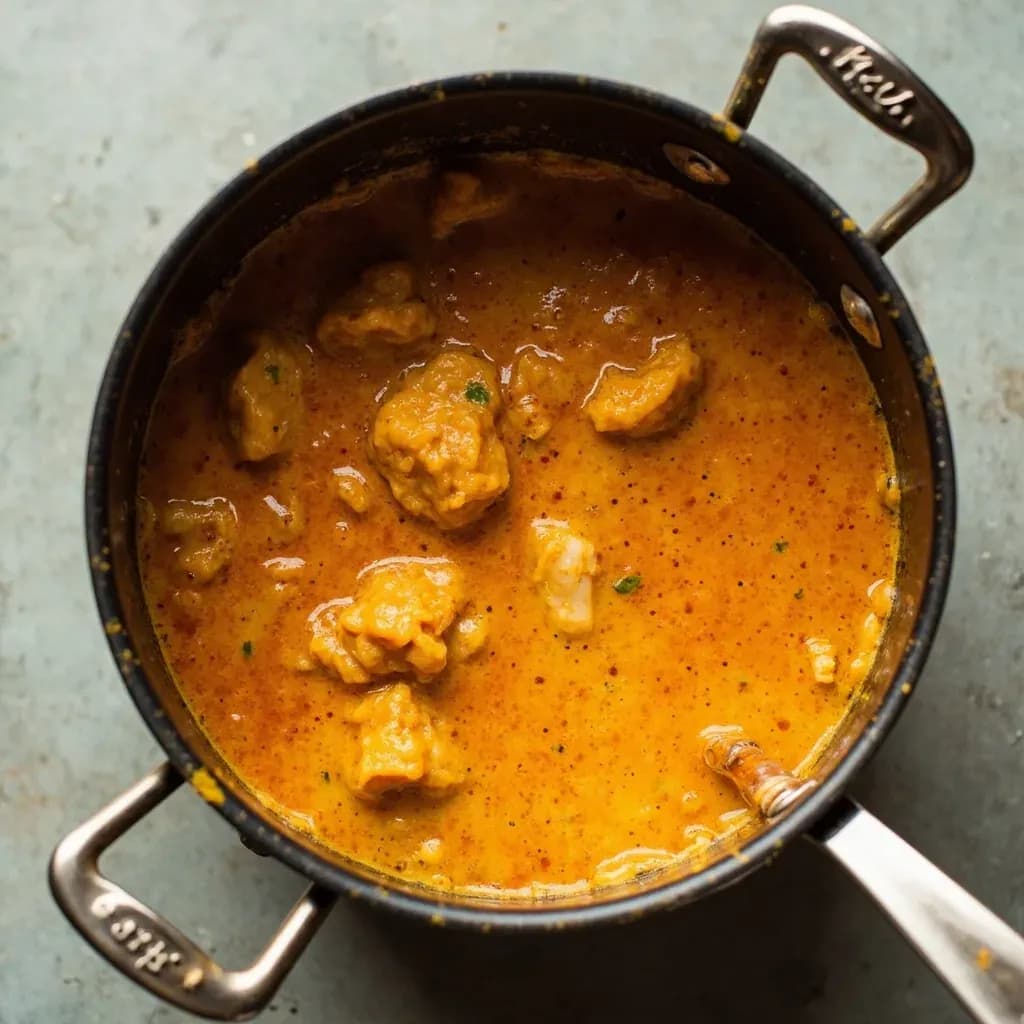
Simmering a spiced curry in coconut milk to a rich, fragrant sauce.
Coconut curry simmering gently cooks aromatics, spices, and protein or vegetables in coconut milk until the flavors marry into a creamy, fragrant sauce. The fat in the coconut carries spice flavor and softens heat, common across Thai, Sri Lankan, and South Indian cooking. Keeping the heat low avoids splitting the coconut milk, and the curry is often finished with a fresh herb or citrus lift.
Coconut curry simmering is the wet-heat technique of building a curry sauce by gently cooking aromatics and protein in coconut milk, holding the liquid at a true simmer — small bubbles breaking the surface every second or two — rather than a rolling boil. It is the backbone of curry cookery across South and Southeast Asia, from Thai gaeng and Malaysian lemak to Sri Lankan and Keralan fish curries, and the technique that determines whether a coconut curry tastes rich and unified or thin and greasy. At its heart, the method is an emulsion-management problem: canned coconut milk is an unstable fat-in-water suspension that breaks under heat shock, aggressive boiling, or premature acidification, releasing its fat as free oil and leaving a watery, curdled-looking base.
The technique is therefore defined as much by restraint as by action. A short, hot fry of the curry paste in oil — long enough for the fat to visibly separate from the solids, a step cooks call "cracking" — builds the flavor foundation before any liquid enters the pan. Coconut milk is then warmed, added in stages, and held at a low simmer until the sauce coats the back of a spoon. Acidic ingredients (lime, tamarind, tomato) and final seasonings are introduced only at the end, off the heat, where they brighten the dish without destabilizing the sauce. Master the temperature, and the technique is forgiving; ignore it, and no amount of good paste or premium milk will save the curry.
- Difficulty
- Easy
Types & varieties
Curry paste is fried in oil until fat visibly separates from the solids before any coconut milk is added — the foundation of most Thai, Malaysian, and Indonesian curries.
Thick coconut cream is simmered first to concentrate flavor and thicken, then thinner coconut milk extends the volume; used in Massaman and Panang.
Coconut milk is added in ladlefuls to a bloomed spice base in one continuous gentle simmer — typical of Sri Lankan and Keralan fish curries.
Deliberately allowed to break so coconut oil beads on the surface, concentrating flavor and creating a glossy sauce — seen in some Southern Thai, Burmese, and Malaysian dishes.
Simmered uncovered for a longer period to evaporate water and intensify coconut flavor; used for thicker sauces clinging to meat or vegetables.
Most of the simmer uses canned milk; a final swirl of fresh or thin coconut milk is stirred in off the heat for brightness and aroma.
How to do it
- 1
Bloom aromatics and fry the curry paste
Heat 2–3 tablespoons of coconut, peanut, or neutral oil in a heavy-bottomed pan over medium heat. Add whole dry spices first (cinnamon, cardamom, cloves, cumin seeds) and fry 30–60 seconds until fragrant. Add curry paste and stir constantly until it darkens slightly and oil visibly separates from the solids — 3–6 minutes. This 'cracks' the paste and is the single most important flavor step.
- 2
Warm the coconut milk
In a separate small saucepan or measuring jug, bring the full-fat coconut milk to room temperature, or warm it gently over low heat. Cold milk hitting a hot pan is the most common cause of splitting.
- 3
Add coconut milk in stages
Add one ladleful of warm coconut milk to the cracked paste and stir vigorously until the mixture is smooth and fully incorporated. Add a second ladle, stir, then the remainder. This gradual incorporation tempers the emulsion and gives the cook control over consistency.
- 4
Bring to a gentle simmer
Increase heat slightly to bring the liquid to a bare simmer — small bubbles breaking the surface every second or two, never a rolling boil. Adjust the burner to hold this temperature steadily for the rest of the cook.
- 5
Add proteins and longer-cooking vegetables
Add ingredients in order of required cooking time: root vegetables (potato, pumpkin, carrot) and firm proteins (chicken thighs, beef, chickpeas) first; quicker items (fish, shrimp, leafy greens, peas, eggplant) later. Keep the simmer steady throughout.
- 6
Manage the surface and stir regularly
Skim any foam or surface impurities that rise in the first few minutes. Stir every 3–5 minutes, scraping the bottom and sides to prevent scorching — coconut milk solids burn quickly and an acrid scorched note is hard to fix. If oil beads on the surface and you want a glossy, restaurant-style finish, leave it; if you prefer a unified sauce, skim lightly.
- 7
Reduce to desired consistency
Simmer uncovered for 15–40 minutes total, until the sauce lightly coats the back of a spoon and the volume has reduced by roughly a quarter. Thai-style curries are usually looser; Keralan fish curry stays thin and brothy; Massaman-style curries reduce further to a thick, clinging sauce.
- 8
Add acid and final seasoning off the heat
Remove the pan from the burner. Stir in lime juice, fish sauce, palm sugar, tamarind, or any acidic elements at this point — they will not break the emulsion now that cooking is done. Taste and balance salt, sweet, sour, and heat. Add a final handful of fresh herbs (Thai basil, cilantro, curry leaves) off the heat so their aroma survives.
- 9
Rest briefly before serving
Let the curry stand, off heat, for 3–5 minutes. The sauce will continue to thicken slightly as the proteins and starches set, and the flavors will settle and marry. Serve over jasmine or basmati rice, with roti, or alongside rice noodles.
The emulsion problem
Coconut milk is a fat-in-water emulsion stabilized by milk proteins and naturally occurring phospholipids. That stability is fragile: it fails when the milk is heated too fast, boiled, salted inadequately, or acidified early. When the emulsion breaks, the fat coalesces into a clear golden oil that pools or beads on the surface, and the watery phase beneath looks thin, pale, and sometimes grainy. The curry is not ruined — the flavor is still there — but the texture is no longer cohesive, and a greasy mouthfeel often follows.
The cure is prevention. Warming the milk before it meets the hot pan, adding it gradually, holding the pot at a bare simmer, salting lightly early on, and saving acid for the end are the five habits that keep the emulsion intact. A wide, heavy pan helps because it spreads heat evenly and gives the cook a thinner column of liquid to control. A split sauce can usually be rescued: remove from heat, cool briefly, then whisk vigorously while streaming in 2–3 tablespoons of room-temperature coconut milk or a small cornstarch slurry to bring the fat back into suspension.
- Coconut milk is an unstable fat-in-water emulsion — heat, acid, and cold shock all break it.
- Salting early helps proteins stabilize the emulsion; acid does the opposite, so add it last.
- A split sauce can be rescued off the heat with fresh coconut milk or a cornstarch slurry whisked in vigorously.
Common uses
Tips & pitfalls
- Keep heat at a true simmer — small, lazy bubbles — never a rolling boil; aggressive heat is the single biggest cause of split sauce.
- Warm canned coconut milk to room temperature or in a separate pan before adding it to the hot pot to prevent thermal shock.
- Add coconut milk in stages, starting with a small ladleful stirred fully into the paste before adding more — this tempers the mixture and stabilizes the emulsion.
- Use full-fat coconut milk; 'light' versions have less fat and more water and break far more easily.
- Add a small pinch of salt with the first coconut milk — salt helps the milk proteins hold the emulsion together.
- Hold acidic ingredients (lime, vinegar, tamarind, tomatoes) until the final minutes off the heat; acid accelerates the emulsion break.
- If the sauce splits (you see clear oil pooling), pull it off the heat, cool 1–2 minutes, then whisk in 2–3 tablespoons of room-temperature coconut milk or a small cornstarch slurry to re-emulsify.
- Stir frequently in the first ten minutes and scrape the bottom — coconut milk solids scorch quickly and a burnt note is hard to mask.
- Adjust seasoning off the heat so fish sauce, palm sugar, and lime retain their brightening effect rather than cooking out.
Good to know
- Technique family
- Wet-heat cooking; sauce-building by gentle simmering in a fat-rich plant milk
- Target temperature
- True simmer, ~180–200°F (82–93°C) — well below a rolling boil
- Splitting point
- Coconut milk's emulsion typically breaks above ~200°F (93°C) or under high-acid, high-heat conditions
- Fat content matters
- Full-fat canned coconut milk is roughly 17–20% fat; light versions (5–10%) split more readily
- Typical simmer time
- 15–45 minutes, depending on desired sauce reduction and ingredients
- Key equipment
- Heavy-bottomed saucepan or Dutch oven, wide enough to expose surface; wooden spoon or silicone spatula
- Yield cue
- Sauce is finished when it lightly coats the back of a spoon and oil just begins to bead on the surface
- Acidity rule
- Lime, tamarind, vinegar, and tomato are added near the end to prevent early emulsion break
Also called
white-curry · coconut-curry-simmer · making-curry
Related

Boil
Cook in vigorously bubbling liquid at full rolling heat

Simmer
Hold liquid at a gentle shimmer for tender, unhurried cooking

Poach
Cook gently in barely-trembling liquid for silky, tender results

Steam
Cook in rising vapor to keep color, nutrients, and shape intact

Blanch
Plunge briefly in boiling water, then shock cold to lock color

Braise
Sear, then cook slow in a little liquid until fall-apart tender

Stew
Simmer bite-sized pieces fully submerged into a rich, unified pot

Sous-Vide
Seal and cook in precise warm water for edge-to-edge doneness