
Transform & Preserve
Cure
Draw out moisture with salt and time to preserve and concentrate
Curing uses salt, and often sugar and spice, to pull moisture from meat or fish, preserving it and concentrating flavor. It's how you make gravlax, bacon, and charcuterie. Weigh your salt accurately and give it the full time — curing is chemistry, not improvisation.
Curing is the oldest form of meat and fish preservation, using salt — and often sugar, nitrites, and spice — to draw water out of the flesh through osmosis. With less free water, spoilage microbes can't thrive, so the food keeps far longer while its flavor concentrates and deepens. A dry cure packs the salt directly onto the surface; an equilibrium cure weighs an exact percentage so the food can never over-salt. From gravlax and bacon to bresaola and prosciutto, curing is precise chemistry dressed as craft: weigh accurately, hold the temperature, and give it the full time.
- Difficulty
- Advanced
Types & varieties
Salt and seasonings rubbed straight onto the surface; the classic for bacon and pancetta.
A measured percentage of salt so the food self-limits and can't over-salt — forgiving and repeatable.
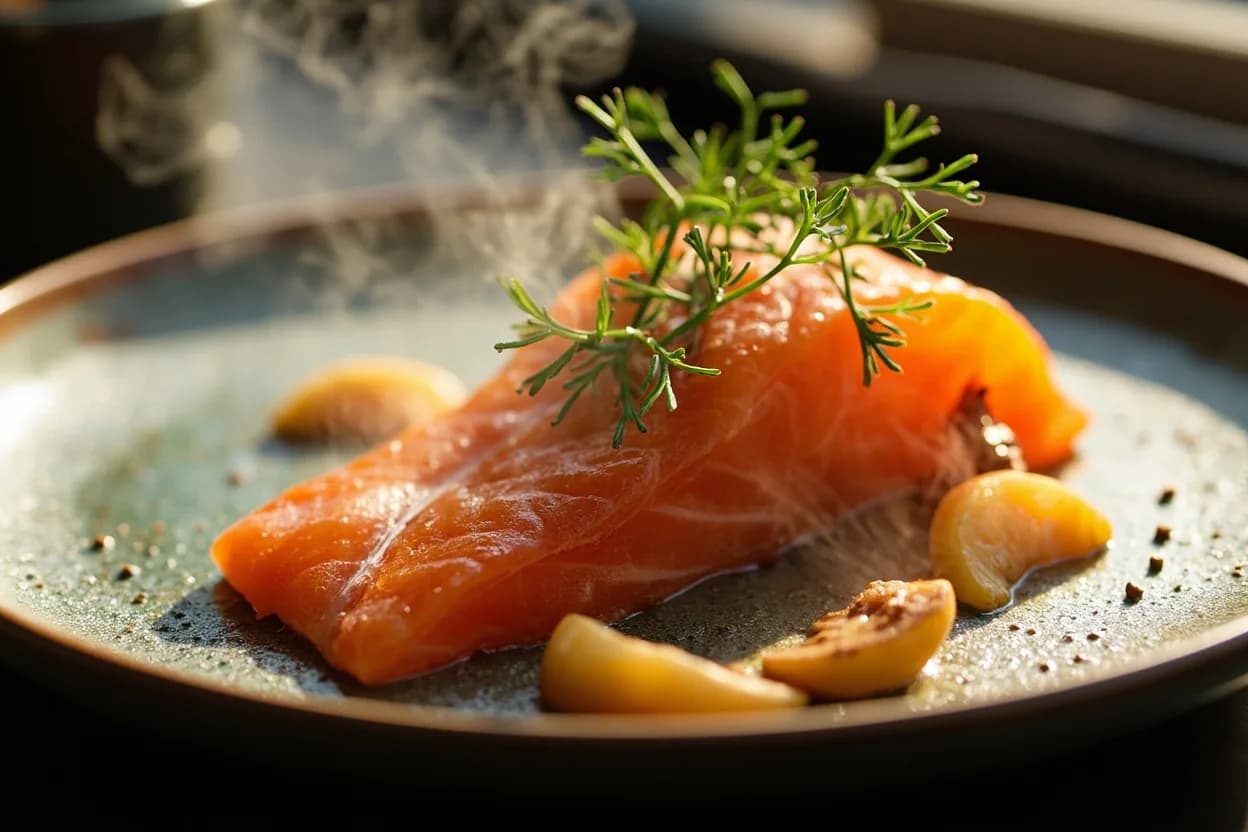
Salmon cured with salt, sugar, dill, and sometimes spirits — no smoke, no cooking.
Long dry-curing of whole muscles (bresaola, lomo) to a target weight loss for shelf stability.
How to do it
- 1
Weigh everything
Put the protein on a scale and note its weight. Calculate salt (and any cure salt and sugar) as a percentage of that — accuracy is the whole game.
- 2
Mix the cure
Combine salt, sugar, any nitrite cure, and aromatics. For equilibrium curing every gram goes onto the meat.
- 3
Apply and pack
Coat the surface evenly, pressing the cure into every crease. Set fish or thin cuts in a dish, larger cuts in a bag or vac-pack.
- 4
Refrigerate and turn
Cure in the fridge, turning daily and pouring off or redistributing the liquid the salt pulls out.
- 5
Rinse and dry
When the time is up, rinse off the surface cure, pat dry, and let a tacky skin (pellicle) form for smoking or slicing.
- 6
Rest or age
Let it equalize in the fridge a day or two; for dry-cured charcuterie, hang in controlled humidity until it hits target weight loss.
The chemistry
Salt drives water out of the cells by osmosis and lowers the food's water activity — the amount of unbound water microbes need to multiply. Below roughly 0.85 water activity, most pathogens stall. Salt also denatures proteins, firming texture and concentrating flavor, while sugar softens the harshness and feeds beneficial bacteria in fermented cures.
Safety: nitrites and botulism
Curing whole muscles and air-drying them is the one home technique where getting it wrong can be lethal. Nitrite is what suppresses Clostridium botulinum, so the controls below are not optional for any anaerobic, air-dried, fermented, or vacuum/oil-stored cure.
- For any cured meat that won't be fully cooked or that air-dries slowly, use a curing salt containing sodium nitrite — Prague Powder/Cure #1 for cooked or short cures, Cure #2 (with nitrate) for long air-dried products — dosed by weight with an accurate 0.1g scale (typically ~0.25% of the meat weight, e.g. ~2.5g of #1 per kg, or per the cure's instructions).
- Never improvise nitrite-free recipes for anaerobic or long-aged products, and never guess the amount — weigh by gram and follow a tested formula exactly.
- Use a calibrated salt percentage (equilibrium cures run ~2.5–3%), and hold curing/drying in the safe range: fridge temperature (~2–4°C) for cures, and 12–15°C at controlled humidity for air-drying. Warm curing invites pathogens before the salt can take effect.
- Gravlax and short fish cures should still be made from sushi-grade or previously frozen fish to control parasites.
- When in doubt, follow a tested formula exactly.
Common uses
Tips & pitfalls
- A 0.1 g jeweler's scale makes nitrite dosing safe and exact.
- Weigh before and after to track moisture loss in long cures.
- Sugar in the cure balances salt and aids browning later.
- Let a pellicle dry on cured fish before smoking — smoke clings to it.
- Slice cured fish and meat very thin, against the grain, for the best texture.
Good to know
- Salt level
- Equilibrium cure: ~2–3% of total weight; classic dry cure uses excess
- Cure #1
- 0.25% (6.25% sodium nitrite blend) for cooked/short cures like bacon
- Temperature
- Cure at fridge temp, 2–4 °C (36–40 °F)
- Time
- 1–3 days for gravlax; 5–7 days for bacon; weeks–months for dry-cured whole muscle
- Weight loss
- Aim for ~30% loss for shelf-stable dry-cured charcuterie
Also called
salt-cure · dry-cure
Dishes that rely on it

Related

Confit
Cook slowly submerged in fat for silky tenderness and keeping

Pickle
Steep in acidic brine for bright, tangy, crunchy preservation

Ferment
Let friendly microbes transform food into tangy, complex flavor

Marinate
Soak in a seasoned mix to flavor and tenderize before cooking

Brine
Soak in salt water so meat stays juicy and seasoned throughout

Dehydrate
Slowly dry out moisture to concentrate flavor and extend shelf life

Cold-Smoke
Perfume cured food with smoke without cooking it through

Emulsify
Whisk fat and liquid into one glossy, stable suspension