Water & Steam
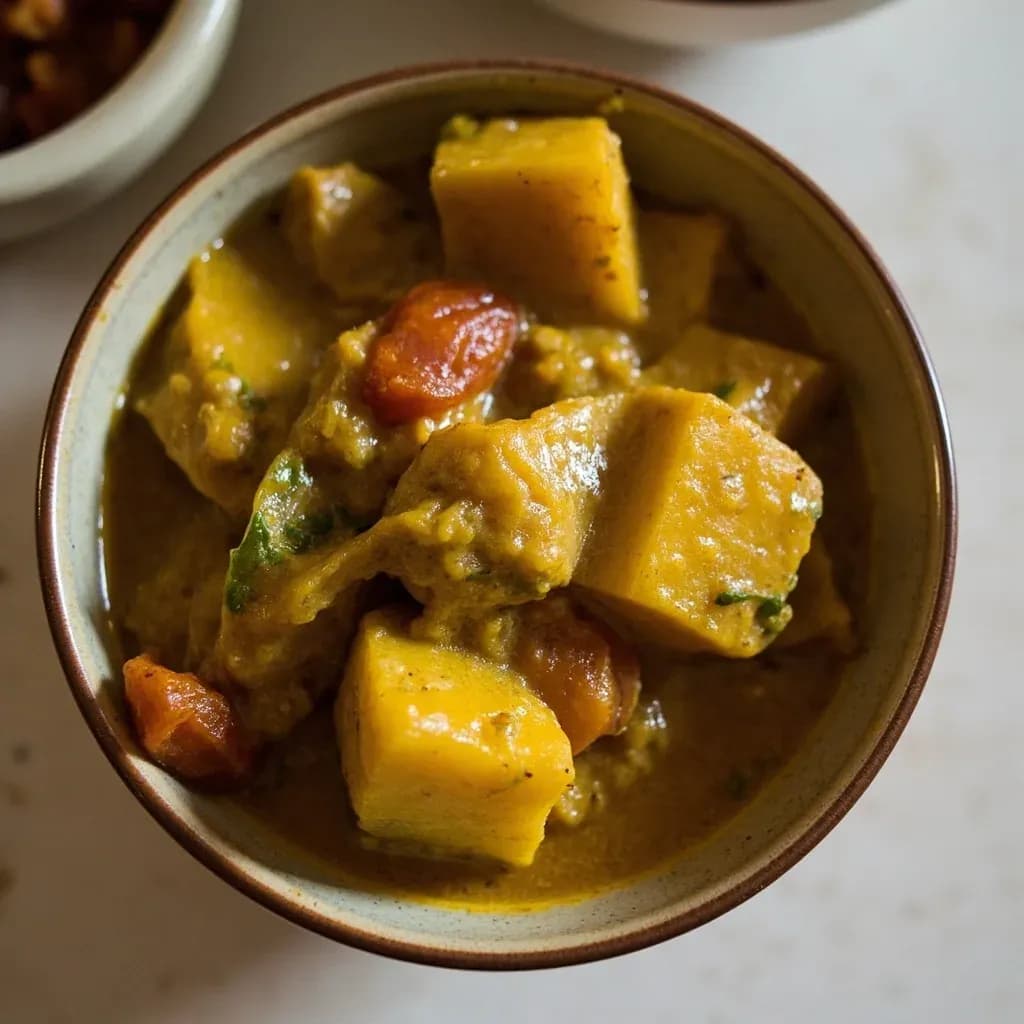
Spiced Vegetable Curry (Dalna)
A Bengali method simmering vegetables in a lightly spiced gravy finished with ghee and garam masala.
Dalna is a Bengali vegetable or paneer curry built by frying whole spices and ground masala, then simmering the vegetables in a medium-thick gravy. It is typically finished with ghee and a sprinkle of garam masala or roasted cumin for aroma, and seasoned with the subtle warmth of cumin, ginger, and turmeric rather than heavy chili. The technique yields a comforting, lightly spiced gravy that coats the vegetables without overwhelming them.
Dalna is one of the foundational techniques of Bengali home cooking — a method of simmering vegetables in a tightly spiced, oil- or ghee-based gravy that clings to each piece rather than pooling around it. The dish is built on a deliberate sequence of flavor moves: a tempered whole-spice base of panch phoron bloomed in hot mustard oil, an onion paste cooked down to a deep reddish-brown bhuna stage, and a finishing shower of Bengali garam masala and ghee stirred in off the heat. The result is a curry that tastes far more layered than its modest ingredient list suggests, and forgiving enough to serve as a daily cooking template across seasons and vegetables.
Despite the spelling, dalna has no connection to lentils — the name traces to a Sanskrit root meaning to pour or to the cooking vessel itself. It is also distinct from neighboring Bengali categories that travelers often conflate: jhol is a thinner, soupier preparation; ghonto uses ground poppy or coconut with fried elements folded in at the end; chorchori is a drier mixed-vegetable sauté; shukto is a bitter, milk-based medley. The boundaries matter because the way the masala is built — and the final texture of the curry — are genuinely different in each case.
What makes dalna work is restraint. The gravy carries just enough liquid to coat, not to submerge. Chili is usually mild and color-leaning rather than hot. Acid is often absent. Success is read in the way each vegetable holds its shape, the way the masala hugs rather than drowns, and the way the finishing ghee delivers a final aromatic lift that smells unmistakably of a Bengali kitchen.
- Difficulty
- Medium
Types & varieties
General category; mixed vegetables (potato, cauliflower, peas, carrot) simmered together in one gravy
The everyday potato curry; the simplest and most frequently cooked dalna in Bengali homes
Eggplant/brinjal, often pan-fried in mustard oil first for smoky edges and a firmer bite
Pointed gourd; frequently paired with potato as Alu Potol Dalna, a classic dryish weekday curry
Cauliflower, almost always combined with potato (Aloo Phulkopi Dalna)
Bottle gourd cooked with milk for a pale, mild, faintly sweet register
Ridge gourd curry; quick-cooking, watery vegetable suits a tighter gravy
Radish, often paired with potato and green peas
Spiny gourd/kakora, a seasonal favorite with a slightly bitter edge
Prawn version; shell-on shrimp simmered in the same masala architecture, finished with ghee
Meat variant, typically mutton; the dalna spice base applied to red meat rather than vegetables
How to do it
- 1
Prepare the vegetables
Cut all vegetables into uniform bite-sized pieces, roughly 1.5 to 2 cm, so they finish cooking at the same time. For eggplant or pointed gourd, optionally shallow-fry in mustard oil until lightly browned and set aside on a plate. Denser vegetables like potato or cauliflower can be par-boiled for 4 to 5 minutes to shorten the simmer and keep them intact.
- 2
Make the spice base (masala)
Blend or finely grate the onion into a coarse paste. Grate the ginger fresh. If using garlic, crush it with the ginger. In a small bowl, mix turmeric, Kashmiri red chili powder, and ground cumin-coriander — a typical ratio is one part cumin to two parts coriander, with a quarter part each of the color spices.
- 3
Temper the whole spices
Heat mustard oil (or a neutral oil if you must) in a heavy kadai or deep pan over medium heat until it shimmers and just begins to smoke. Add the panch phoron and let the seeds pop and the fenugreek darken to a deep amber — about 15 to 20 seconds. The fenugreek should change color, not burn.
- 4
Build the onion masala
Add the onion paste and a pinch of salt to slow browning. Cook, stirring frequently, until the paste darkens to a reddish-brown and oil begins to separate at the edges — 8 to 12 minutes depending on moisture. This is the structural backbone of the dish; undercooked paste tastes raw and sharp, and the curry will never come together.
- 5
Add ginger (and garlic) and ground spices
Stir in the ginger paste (and garlic, if using) and cook for 1 minute. Add the turmeric-chili-cumin-coriander mix and stir for 30 seconds until fragrant. Have a splash of water at hand to loosen the pan if the spices threaten to scorch.
- 6
Optional tomato stage
If using tomato, add finely chopped or pureed tomato now and cook until the masala releases oil again at the edges — 3 to 5 minutes. Skip this for a paler, more traditional dalna; the onion-only version is the more authentic register.
- 7
Add vegetables and combine
Tip in the prepared vegetables and stir to coat every piece in the masala. Cook for 2 to 3 minutes so the spices begin to adhere to the surface of each piece before any water is added.
- 8
Simmer with measured water
Add water sparingly — typically 1/4 to 1/2 cup depending on the vegetable's water content. Cover and simmer on low until the vegetables are tender but still hold their shape. Eggplant and bottle gourd need 8 to 10 minutes; potato and cauliflower need 12 to 15.
- 9
Adjust and finish the gravy
Uncover, taste, and adjust salt and chili. If the gravy is too thin, raise the heat and reduce; if too dry, splash in a little water. Add slit green chilies here — whole for aroma with minimal sting, slit lengthwise for mild heat.
- 10
Temper with ghee and garam masala
Take the pan off the heat. Sprinkle Bengali garam masala over the top and drizzle 1 to 2 teaspoons of ghee. Cover and let rest 2 minutes so the finishing aromatics bloom through the curry. Serve hot with steamed white rice or luci.
Dalna and its Bengali cousins
Bengal has a dense vocabulary of vegetable preparations, and several look like dalna at a glance but cook quite differently. Knowing the differences is what lets you read a recipe — or improvise one — correctly. The unifying feature of all dalnas is the bhuna onion masala plus off-heat ghee finish; the neighboring categories diverge on liquid, finishing elements, and the role of dairy or seeds.
- Jhol is a thinner, soupier curry, often built around fish or a single vegetable in a watery gravy; the masala is lighter and the liquid is meant to be eaten with rice as a thin soup. Dalna's gravy is concentrated and clinging by comparison.
- Ghonto folds in fried fish or dried lentil dumplings (bori) and is bound with ground poppy seed or coconut; it is a drier, more texturally varied dish. The dalna masala has no poppy or coconut.
- Chorchori is a dry mixed-vegetable sauté with multiple vegetables cooked together in their own moisture; there is no separately built gravy. Calling a chorchori a dalna is a common mistake in restaurants.
- Shukto is a bittersweet, milk-based medley led by bitter elements like neem flowers or bitter gourd, with a sweeter, creamier profile. The flavor register is the opposite of dalna's savory restraint.
- Potoler Dorma and other stuffed preparations sit beside dalna in a Bengali thali but belong to a different category — the stuffed format and binding paste set them apart.
Common uses
Tips & pitfalls
- Toast the panch phoron until the fenugreek seeds darken to amber and the nigella pops; under-tempered spices leave a flat, raw-tasting curry. This is the single biggest flavor lever in the dish.
- Fry potato, eggplant, or pointed gourd separately in mustard oil before folding them into the gravy. Pre-frying prevents mushiness, adds a smoky depth, and keeps each piece identifiable in the final plate.
- Use freshly grated ginger, not paste that's been sitting in the fridge. Pre-ground ginger reads muddy in a lightly spiced dalna and dulls the brightness of the masala.
- Build the gravy with onion paste, not sliced onion, for a smooth restaurant-style finish; sliced onions give a more rustic, home-style texture with visible bits. Both are valid — choose deliberately.
- Hold the green chilies whole or slit lengthwise. Slit for mild heat released into the gravy; leave whole for aroma with minimal sting. Removing the seeds pulls heat down further.
- Resist heavy chili powder. Kashmiri chili gives the brick-red color Bengalis associate with dalna without the harshness of cayenne or regular chili powder.
- Common mistake: drowning the vegetables in water. The gravy should coat, not pool. Add liquid in small splashes as it reduces, and remember that many vegetables — eggplant, bottle gourd, tomato — release their own water as they cook.
- Common mistake: adding garam masala too early. It loses its lift with prolonged cooking. It belongs in the last 60 seconds, off the heat, so the volatile aromatics survive into the bowl.
- Common mistake: using strong-smelling oils like sesame, extra-virgin olive, or coconut. Traditional mustard oil (or a neutral oil finished with a mustard-oil drizzle) is the correct choice; pungent oils clash with the delicate balance of the masala.
Good to know
- Origin
- Bengal (West Bengal and Bangladesh); a foundational category of Bengali home cooking (tarkari/sobji dalna)
- Etymology
- From Sanskrit 'dhalana' (to pour/serve) or a Bengali root referring to the cooking vessel; unrelated to the Hindi word 'dal' (lentils)
- Primary whole spice
- Panch phoron — nigella, fenugreek, cumin, black mustard, fennel — tempered in mustard oil
- Aromatics
- Onion (usually as paste), fresh ginger (never powder); garlic is optional and debated in older Bengali households
- Gravy consistency
- Thick and coating — drier than a jhol, wetter than a bhaja
- Color base
- Turmeric for a golden tone, sometimes a pinch of Kashmiri red chili for color without harsh heat
- Finishing
- Bengali garam masala (cardamom, cinnamon, clove, sometimes nutmeg and mace) and a spoonful of ghee added off the heat
- Traditional fat
- Mustard oil for the bulk of the cooking; ghee added at the very end for aroma and a round, mellow finish
Also called
dalna · Bengali vegetable curry
Related

Boil
Cook in vigorously bubbling liquid at full rolling heat

Simmer
Hold liquid at a gentle shimmer for tender, unhurried cooking

Poach
Cook gently in barely-trembling liquid for silky, tender results

Steam
Cook in rising vapor to keep color, nutrients, and shape intact

Blanch
Plunge briefly in boiling water, then shock cold to lock color

Braise
Sear, then cook slow in a little liquid until fall-apart tender

Stew
Simmer bite-sized pieces fully submerged into a rich, unified pot

Sous-Vide
Seal and cook in precise warm water for edge-to-edge doneness