Water & Steam
Decoction (Kadha)
Boiling herbs, roots, or spices in water to extract their soluble compounds.
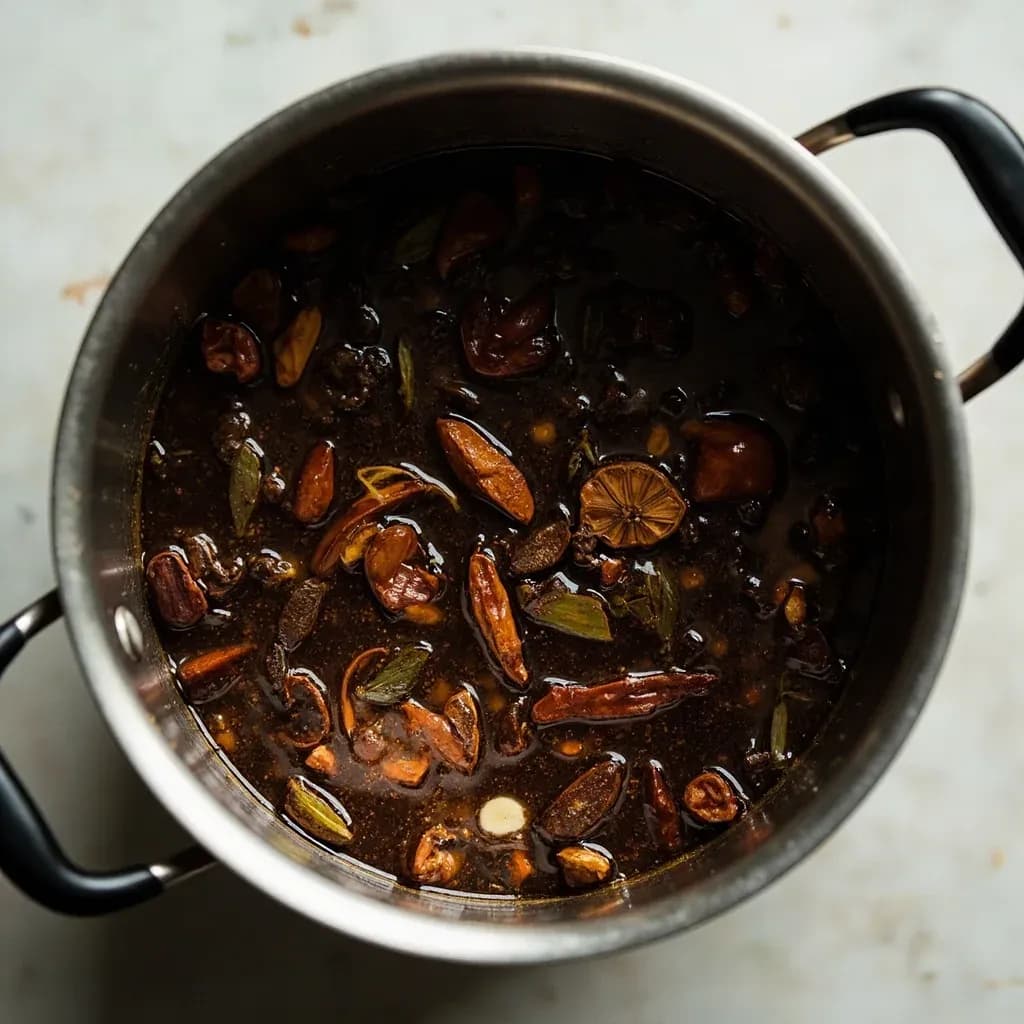
Decoction boils tougher botanicals — roots, bark, seeds, and hardy spices — in water for an extended time to draw out compounds that simple steeping can't. Kadha is the Indian herbal version, a concentrated medicinal brew of spices like ginger, tulsi, and pepper. The vigorous, prolonged heat distinguishes it from gentle infusion or steeping.
A decoction is the concentrated liquid you get when you simmer tough, woody, or fibrous plant material — roots, bark, seeds, dried rhizomes, stems — in water long enough to dissolve out the compounds that a brief steeping cannot reach. In South Asian kitchens and Ayurvedic households this same preparation is called kadha (Hindi) or kashayam (Tamil, Telugu, Malayalam) and kashaya (Kannada), and the same logic underlies Chinese tang, Japanese senjiru, and the Western herbal tradition. The technique is older than recorded cookery: it sits in the Charaka Samhita and Sushruta Samhita, and it quietly drives a daily South Indian ritual — filter coffee — where boiling water is pulled through ground coffee to produce a strong, dark decoction that is then stretched with hot milk at the table.
The reason decoction exists as a separate technique from tea-style infusion is mechanical. Delicate leaves and flowers surrender their aromatics within minutes of contact with hot water, but the soluble bitters, mucilages, alkaloids, and pigments in a slice of dried licorice root or a chunk of cinnamon bark are locked inside dense cellulose. Sustained heat and time are needed to drive the water into those cells and pull the goods out. The trade-off is that volatile, fragrant oils evaporate during a long boil, which is why leafy herbs such as tulsi or mint are best added at the end or infused separately and combined.
Done well, a decoction is a deep-colored, full-bodied liquid that tastes like the plant itself concentrated — warming, slightly bitter, often faintly astringent. Done badly it is either thin and grassy (under-extracted) or muddy and acrid (boiled in reactive metal, or over-reduced). The discipline is in the simmer: gentle, patient, partially covered, and reduced by roughly half.
- Difficulty
- Easy
Types & varieties
South Asian herbal decoction using spices and Ayurvedic herbs such as dry ginger (sonth), black pepper, pippali (long pepper), tulsi, cinnamon, and cloves; often finished with jaggery.
Holy basil simmered with ginger, black pepper, cloves, and cinnamon; a classic household remedy for cough and cold.
Turmeric simmered in milk or water with black pepper (to boost curcumin absorption), ginger, and finished with ghee or honey.
Licorice root decoction used in Ayurveda for sore throat and as a demulcent; naturally sweet, so no added sweetener is usually needed.
Decoction of the three Ayurvedic fruits — amla, bibhitaki, and haritaki — used as a digestive tonic.
Standardized Ayurvedic decoction made from coarse herbal powders (choorna), reduced to a specified fraction for repeatable potency.
Traditional Chinese Medicine decoction of sliced or crushed raw herbs simmered 30–45 minutes, often performed twice on the same marc.
European and North American tradition using barks (slippery elm, willow), seeds (flax), and roots (valerian, echinacea, dandelion); usually 20–30 minutes of simmering.
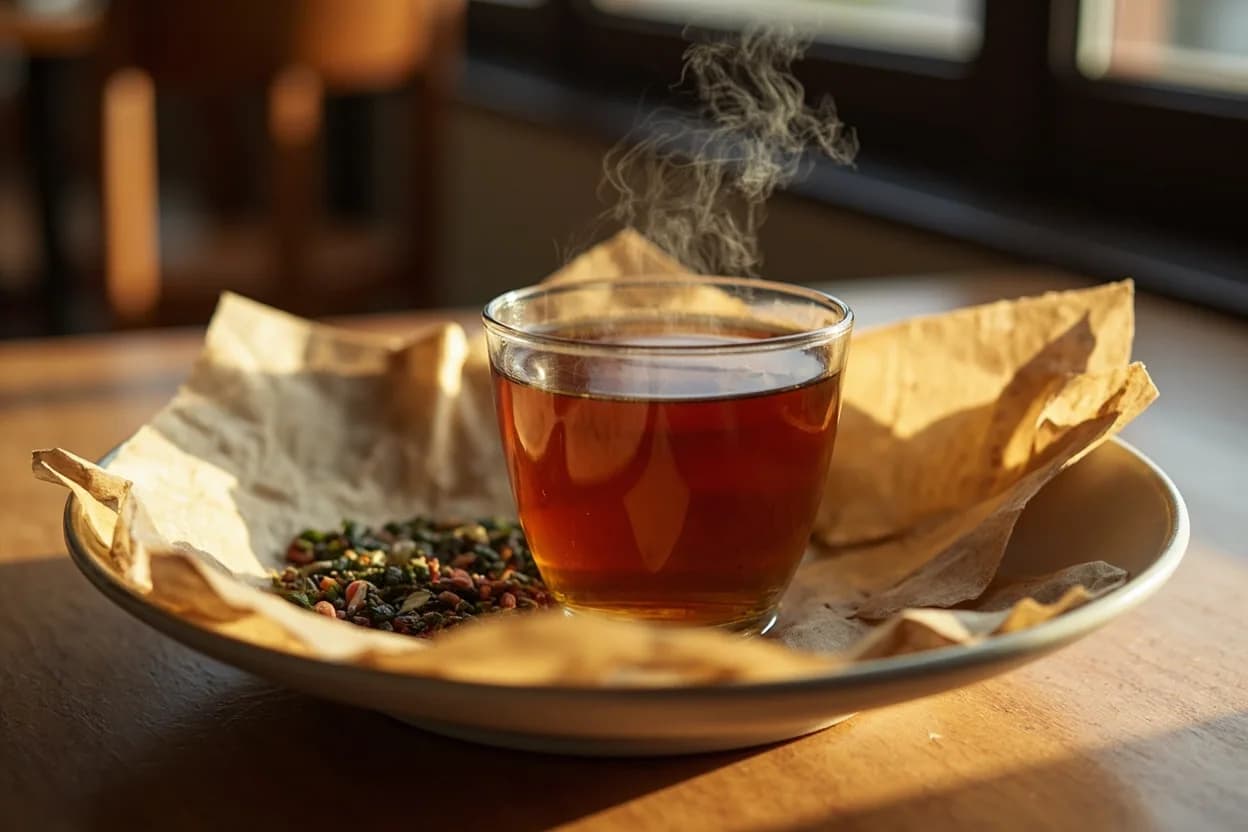
Japanese decoction prepared in an earthenware donabe or tetsubin, typical of Kampo medicine.
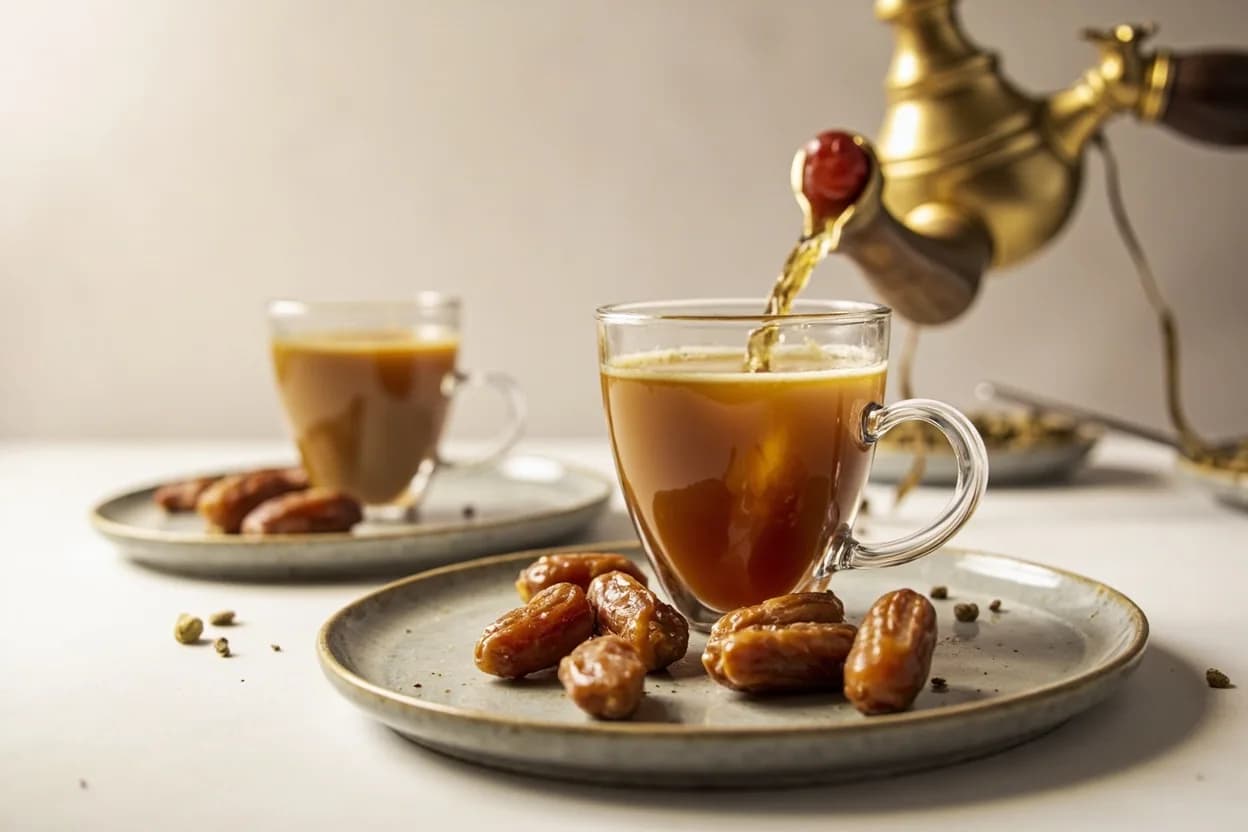
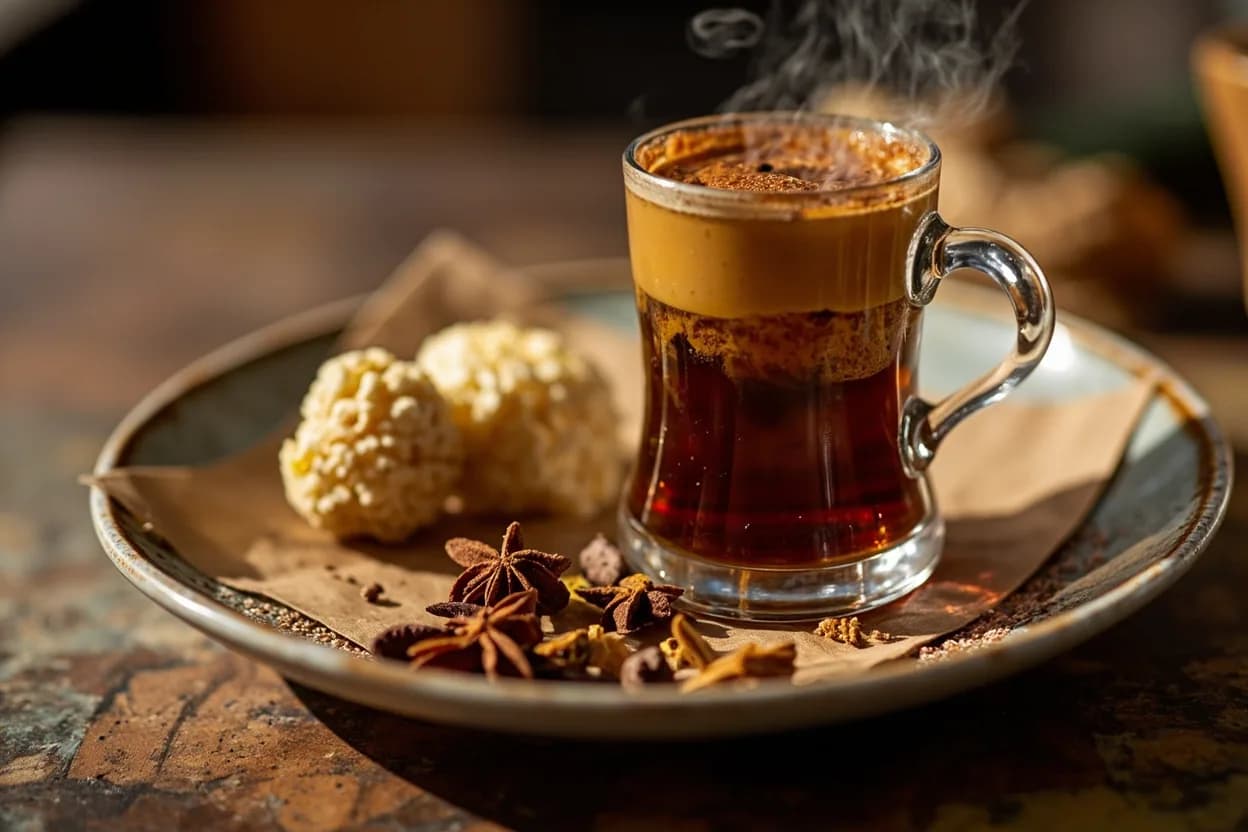
Culinary (not medicinal) decoction made by passing boiling water through ground coffee in a metal filter, producing the concentrated base for milky South Indian filter coffee.
How to do it
- 1
Select and prepare the ingredients
Choose roots, bark, seeds, dried rhizomes, or woody stems — the parts dense enough to need boiling. Rinse them, then crack, slice, or pound to expose the inner fibers. A rough chop to 1–2 cm pieces is ideal; finer powder extracts faster but clouds the liquid and is harder to strain.
- 2
Combine with cold water
Place the prepared ingredients in a heavy-bottomed stainless-steel or clay pot. Add cold water at roughly 16–20 parts water to 1 part dried herb by volume. Starting cold lets the soluble compounds extract gradually as the temperature rises.
- 3
Bring to a boil and skim
Set over medium-high heat and bring to a rolling boil. Skim off any foam or scum that gathers on the surface in the first 5 minutes; it is largely coagulated protein and surface tannins that will muddy flavor if left in.
- 4
Reduce and simmer
Lower the heat so the liquid holds a gentle, steady simmer. Partially cover with a lid (ajar) to slow evaporation without trapping all the steam. Simmer 20–45 minutes, depending on toughness — bark and dried roots may take the full 45 minutes; seeds and small rhizomes are usually done in 15–25.
- 5
Watch the reduction
Aim for the liquid to drop to about one-half to one-third of its original volume. The decoction should look deeply colored and taste concentrated, but still pourable like a strong tea, not syrupy.
- 6
Strain while hot
Pour through a fine muslin-lined sieve into a heatproof jug or directly into cups. Twist the cloth to extract every drop, then set the marc aside — it can be reused once more for a weaker second decoction, the Chinese herbal method.
- 7
Sweeten and serve
If using jaggery, palm sugar, or rock sugar, stir it in while the decoction is hot so it dissolves fully. If using honey, let the liquid cool to lukewarm (about 40 °C / 104 °F) first. Serve hot, traditionally in a small steel tumbler or kulhar, once or twice daily.
Decoction vs. Infusion: When to Use Which
The two techniques are complementary, not interchangeable, and the deciding factor is plant density. An infusion is hot water over delicate material for a few minutes; a decoction is sustained boiling of dense material. The same ginger behaves differently in each: sliced thin and steeped, it gives a light, aromatic tea; cracked and simmered, it gives a sharp, throat-warming liquid that drives out the deeper pungent compounds. In a kitchen, the rule of thumb is simple — if the part of the plant you can break by hand gives way easily (fresh leaves, flowers, soft stems), infuse it; if you have to work at it (dried root, bark, seed, woody stem), decoct it.
Common uses
Tips & pitfalls
- Crack, bruise, or coarsely pound roots, bark, seeds, and dried rhizomes before boiling; this breaks cell walls and dramatically improves extraction.
- Use a heavy-bottomed stainless-steel or traditional earthen pot; aluminum reacts with tannins, discoloring the decoction and leaving a metallic taste.
- Start with cold water so the soluble compounds extract gradually as the temperature rises; dropping herbs into already boiling water traps starches and yields a cloudy result.
- Keep the lid partially closed (ajar) — this slows evaporation just enough to maintain a steady simmer without losing too much volume.
- Strain through a fine muslin cloth rather than a metal sieve to catch fine sediment, then twist the cloth to recover every drop.
- Add honey only after the decoction has cooled to lukewarm (about 40 °C); heating honey above this is believed in Ayurveda to destroy its enzymes and produces bitter notes.
- For stronger flavor, reuse the strained marc a second time with fresh water — Chinese herbal decoctions routinely do a double extraction.
- Reduce by more than half for a concentrated, kashaya-style shot; keep closer to the original volume for a lighter, tea-like drink.
- Common mistake: using delicate leaves alone for a long boil — they are better infused briefly and added at the end; long boiling drives off their aromatic oils and turns the drink grassy.
- Common mistake: over-reducing until thick — a decoction is a watery extract, not a syrup; if you want a syrup, sweeten and reduce further deliberately and label it as such.
- Common mistake: leaving refrigerated decoctions unlabeled and undisposed — label with the date and discard if sour or fizzy, which signals fermentation.
Good to know
- Origin
- Practiced worldwide; the Indian/South Asian kadha (kashayam/kashaya) is rooted in Ayurveda, with references in the Charaka Samhita and Sushruta Samhita from around the 6th century BCE onward.
- Typical Ratio
- Roughly 1 part dried herb or root to 16–20 parts water by volume, simmered down until the liquid drops to about one-half to one-third.
- Cook Time
- 15–45 minutes of gentle simmering after the initial boil; tougher roots and barks may need up to an hour.
- Temperature
- Held at or just below a rolling boil, typically 90–100 °C (194–212 °F).
- Yield
- About 200–300 ml of finished decoction per liter of starting water, depending on how far it is reduced.
- Equipment
- Heavy-bottomed stainless-steel saucepan or traditional earthenware pot (manchha or matka); avoid aluminum and other reactive metals.
- Sweetener Note
- Jaggery, palm sugar, or rock sugar can be simmered in; honey is added only once the liquid cools below roughly 40 °C (104 °F) to preserve its enzymes and avoid bitterness.
- Shelf Life
- Best consumed the same day; refrigerated in a sealed glass jar for 2–3 days, or frozen in ice-cube trays for longer storage.
- Difficulty
- Easy; requires only attention to simmering time and reduction.
- Season
- Traditionally prepared and consumed in the monsoon (varsha ritu) and winter, when Ayurvedic texts associate increased vata and kapha imbalances.
Also called
kadha · kashayam
Dishes that rely on it
Related

Boil
Cook in vigorously bubbling liquid at full rolling heat

Simmer
Hold liquid at a gentle shimmer for tender, unhurried cooking

Poach
Cook gently in barely-trembling liquid for silky, tender results

Steam
Cook in rising vapor to keep color, nutrients, and shape intact

Blanch
Plunge briefly in boiling water, then shock cold to lock color

Braise
Sear, then cook slow in a little liquid until fall-apart tender

Stew
Simmer bite-sized pieces fully submerged into a rich, unified pot

Sous-Vide
Seal and cook in precise warm water for edge-to-edge doneness