Transform & Preserve
Diacetyl Rest
Warming a fermenting beer briefly so yeast reabsorbs buttery diacetyl off-flavors.
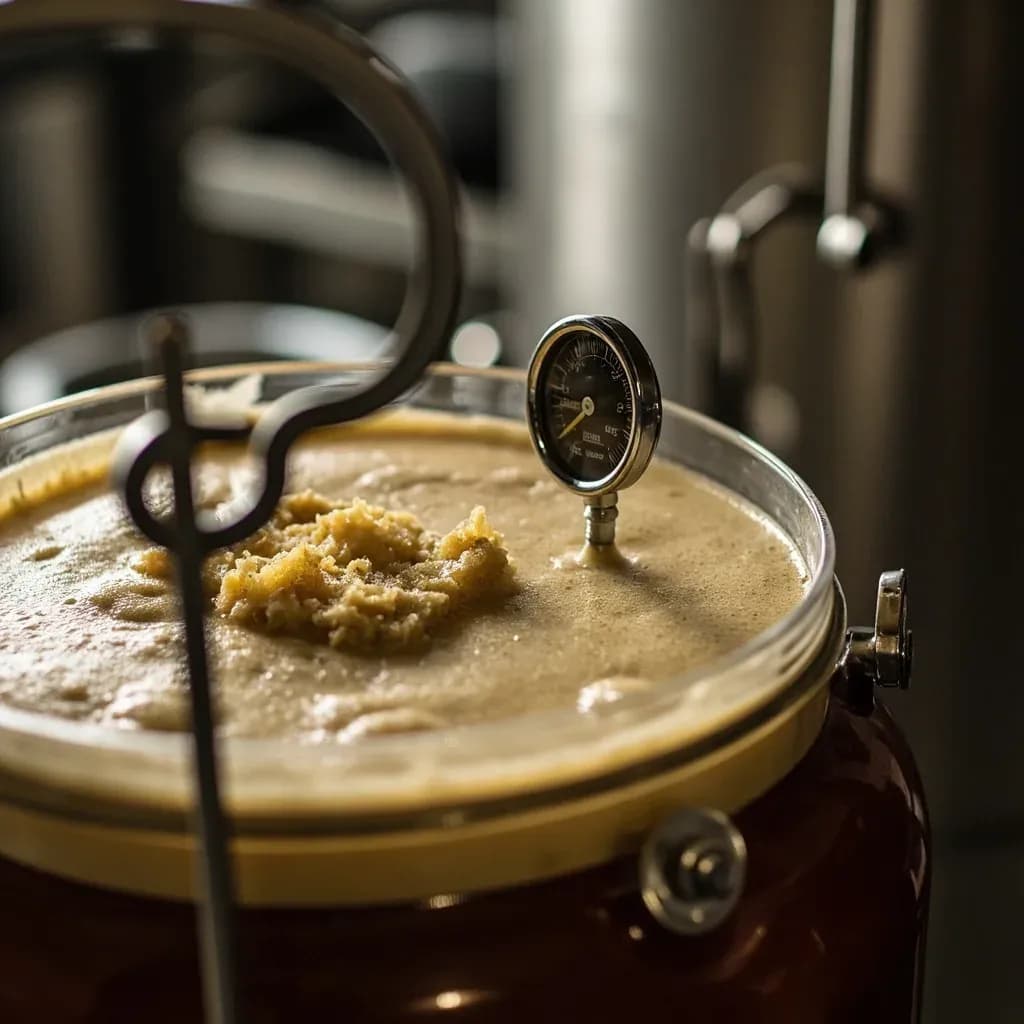
A diacetyl rest raises the temperature of fermenting beer near the end of fermentation to encourage yeast to clean up diacetyl, a compound that tastes of butter or butterscotch. The warmth keeps the yeast active enough to reabsorb it before cooling and conditioning. It's a standard step in lager brewing to ensure a clean, crisp finish.
Diacetyl is the compound most brewers mean when they describe a beer as 'buttery' or slick with butterscotch. Chemically it is 2,3-butanedione, a vicinal diketone (VDK) produced by every Saccharomyces strain as an overflow intermediate in the biosynthesis of the amino acid valine. Early in fermentation it is secreted into the wort at concentrations that can climb well above its flavor threshold of roughly 0.1–0.15 ppm. As active yeast reach the tail end of primary fermentation they reabsorb diacetyl from the beer and reduce it to 2,3-butanediol, a flavor-neutral alcohol with a threshold more than a hundred times higher and virtually no perceptual impact. The diacetyl rest is simply a deliberate warm hold that gives yeast the metabolic boost to finish that cleanup before the beer is chilled for conditioning.
The technique matters most in lagers because cold primary fermentation — typically 45–55 °F (7–13 °C) — slows yeast metabolism enough that the natural reduction step is often incomplete by the time brewers want to begin cold conditioning. A lager that skips a proper rest can still clean up during long cold lagering, but reduction is so slow that butter character often lingers, and the slick note tends to reassert itself when the beer warms in the glass. By raising the fermentor to roughly 65–72 °F (18–22 °C) for two to three days near the end of primary, brewers give yeast enough warmth to finish reduction without pushing into the ester- and fusel-producing range that higher temperatures would create.
In practice the diacetyl rest is a finishing maneuver, not a fermentation stage in its own right: it sits between primary and the slow cold lagering that follows, and it is judged complete by taste rather than by time on a clock. The same hold incidentally clears 2,3-pentanedione, a chemically similar diketone that contributes a honey-like slickness at high concentrations, so brewers who monitor VDKs treat the rest as a single cleanup window for both compounds.
- Difficulty
- Medium
Types & varieties
Gradual 5–10 °F rise near the end of primary, held 2–3 days at 65–72 °F. The default approach for most lagers.
4–5 or more days at elevated temperature; used for high-gravity lagers or when diacetyl persists past a normal hold.
Temperature controller is turned off and the fermentor drifts to ambient room temperature. Common in homebrew setups without a glycol or fermentation chamber.
Some pro brewers crash the fermentor toward 32 °F and then warm it back up; the chill-then-rewarm cycle is thought to stress yeast and accelerate VDK reduction.
Same warm hold, deliberately held long enough to also drive out 2,3-pentanedione, the chemically similar diketone responsible for honey-slurry notes.
How to do it
- 1
Confirm fermentation is nearly finished
Take a hydrometer or refractometer reading. The rest should begin when gravity has dropped to within about 2–3 points (SG) of your expected final gravity — typically four to five days into primary for a standard-gravity lager. Yeast must still be in suspension and metabolically active; a settled beer with a true terminal gravity has often already finished diacetyl reduction on its own.
- 2
Raise the fermentor temperature gradually
Increase the setpoint 5–10 °F (3–6 °C) over 12–24 hours using your fermentation chamber's controller. Without a chamber, move the fermentor to a warmer room and wrap it in a towel or blanket for insulation. A slow rise avoids shocking yeast into producing fruity esters or fusel alcohols that will linger in the finished beer.
- 3
Hold at 65–72 °F (18–22 °C) for 2–3 days
Maintain the elevated temperature steadily. During this window yeast reabsorb diacetyl and 2,3-pentanedione and reduce them to flavor-neutral diols. Do not exceed roughly 75 °F (24 °C) — you want active yeast, not heat-stressed yeast making off-flavors of its own.
- 4
Sample and assess
Pull a small sample and taste it at room temperature, or run a forced diacetyl test (chill, then rewarm). If a buttery slickness remains, extend the hold another 24–48 hours. If the beer tastes clean and faintly cidery — a temporary, slightly tart note that dissipates with lagering — you are ready to move on.
- 5
Record gravity and begin the lagering ramp
Note the gravity at the end of the rest. A small additional drop from your pre-rest reading confirms yeast were active and reduction is complete. Now lower the temperature gradually toward 33–40 °F (1–4 °C) over a few days, then hold for the lagering period appropriate to the style: several weeks for pilsners, a month or more for Märzens, and many months for bocks and doppelbocks.
Diacetyl as a feature, not a flaw
Diacetyl is not always something to chase out. At very low levels, just under the threshold of conscious perception, it contributes a soft, rounded slickness to mouthfeel and a faint butterscotch warmth on the finish. Brewers of traditional English ordinary bitter, mild, and some Scottish ales regard a whisper of diacetyl as part of the style, and Czech-style pale lagers are similarly judged for a low, restrained buttery note. The rest is therefore a finishing choice as much as a corrective one: a brewer who overcleans an ordinary bitter can end up with a beer that tastes thin and acetaldehyde-driven rather than soft and full. Taste before you lager; pull the rest the moment the beer reads clean to your palate, not later.
- English ordinary bitter and best bitter — restrained butter note is style-appropriate
- Czech pale lager — a touch of diacetyl is part of the classic profile
- Scottish light and heavy — low diacetyl rounds the malt character
- Vienna lager and Märzen — traditionally clean, but small amounts are tolerated
The forced diacetyl test
Because cold beer masks butter notes, brewers who want certainty run a forced test: chill a small sample to near freezing for an hour or two, then bring it back to room temperature. As the sample warms through the 50–60 °F (10–16 °C) band, any residual diacetyl pops forward as a slick, buttery slide across the palate. If the beer tastes clean on rewarming, the rest is finished. If the slickness reappears, give the fermentor another 24–48 hours before lagering.
- Use a small, capped sample so the beer doesn't oxidize during the test
- Taste at room temperature, not fridge-cold — chilling suppresses the note
- Run the test the same day you pull the sample; oxidation off-flavors will distort the picture
- If unsure, compare against a known-clean commercial lager at the same temperature
Common uses
Tips & pitfalls
- Don't start the rest too early — yeast must still be metabolically active to reabsorb diacetyl. Aim for gravity within 2–3 points of expected FG, not the day krausen falls.
- Raise temperature gradually over 12–24 hours; a sudden jump can stress yeast into producing esters or fusel alcohols that survive into the finished beer.
- Taste the sample warm. Diacetyl is dramatically easier to detect at 60–70 °F than at fridge temperatures, which is why problems often seem to appear only after lagering.
- Run the forced test (chill then rewarm) when you are unsure. Cold suppresses the note; the buttery pop returns as the beer passes through the 50–60 °F band.
- Do not overshoot 75 °F (24 °C). The rest should wake yeast, not cook it. Pushing higher invites the very off-flavors you are trying to prevent.
- Ales fermented at 65–72 °F rarely need a formal rest — their warm primary already permits full reduction. Reach for this technique only when an ale is sluggish or under-attenuated.
- Some British and Czech styles intentionally retain a low diacetyl note. Do not over-clean an ordinary bitter, a mild, or a Czech pale lager; the style calls for that round, slick character.
- Once the rest is clean, start the lagering ramp immediately. Extended warmth will not make the beer cleaner past the diacetyl window and will only age the profile in unwanted directions.
Good to know
- Target compound
- Diacetyl (2,3-butanedione); the same rest also reduces 2,3-pentanedione
- Off-flavor addressed
- Buttery, butterscotch, or 'movie popcorn' slickness in finished beer
- Typical rest temperature
- 65–72 °F (18–22 °C), roughly 10–15 °F above standard lager ferment temp
- Typical duration
- 2–3 days; sometimes extended to 4–5 days for high-gravity worts
- Trigger point
- Gravity within 2–3 points (SG) of expected final gravity, with yeast still in suspension
- Flavor threshold
- Diacetyl is perceptible at roughly 0.1–0.15 ppm in beer
- Metabolic role
- Yeast produce diacetyl as a valine biosynthesis intermediate, then reabsorb and reduce it to nearly flavorless 2,3-butanediol
- Step that follows
- Cold lagering at 33–40 °F (1–4 °C) for weeks to months, depending on style
Also called
d-rest
Related

Confit
Cook slowly submerged in fat for silky tenderness and keeping

Cure
Draw out moisture with salt and time to preserve and concentrate

Pickle
Steep in acidic brine for bright, tangy, crunchy preservation

Ferment
Let friendly microbes transform food into tangy, complex flavor

Marinate
Soak in a seasoned mix to flavor and tenderize before cooking

Brine
Soak in salt water so meat stays juicy and seasoned throughout

Dehydrate
Slowly dry out moisture to concentrate flavor and extend shelf life

Cold-Smoke
Perfume cured food with smoke without cooking it through