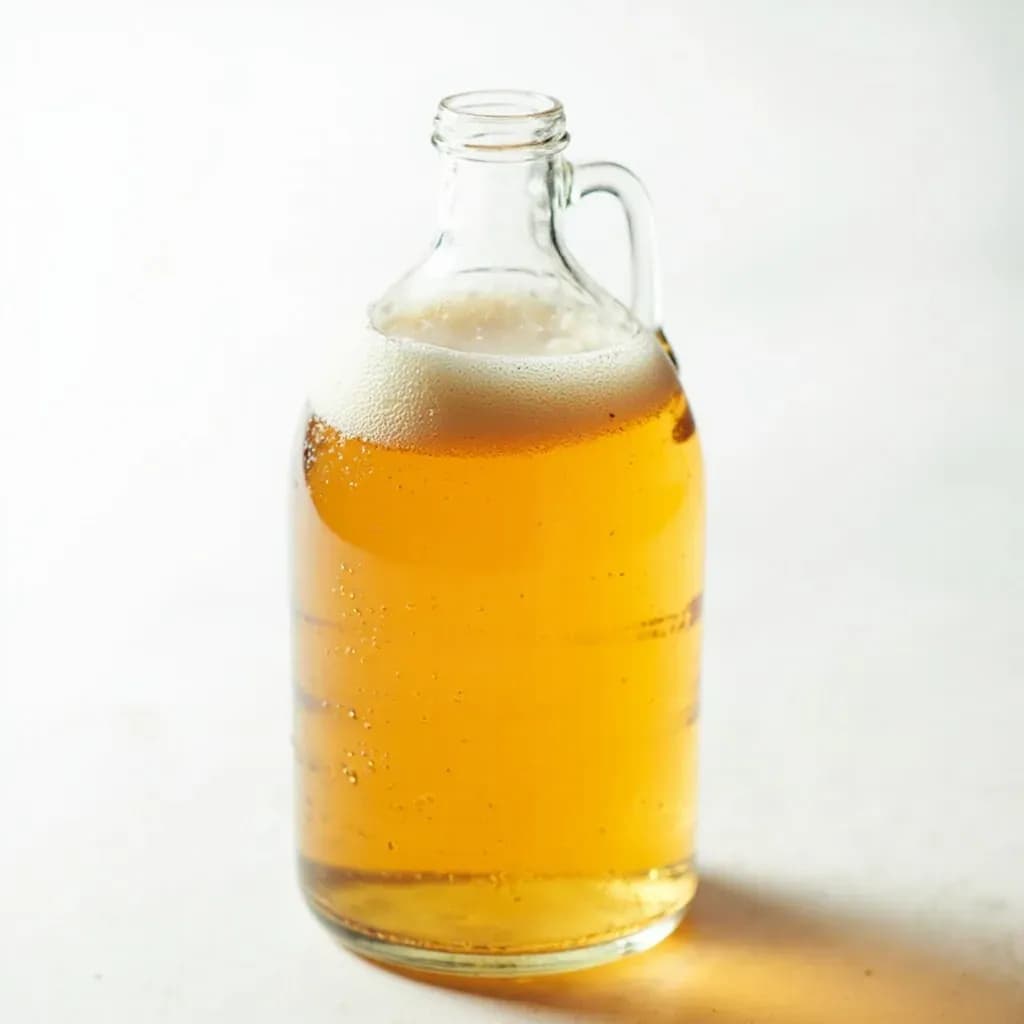
Transform & Preserve
Lagering (Cold Conditioning)
Storing beer cold for weeks to mellow flavors and clarify it before serving.
Lagering is the long cold-conditioning phase that follows primary fermentation, where beer is held near freezing for several weeks to months. The cold slows yeast activity so it cleans up harsh byproducts like diacetyl and sulfur, while suspended yeast and proteins settle out for a crisp, clear result. It is the defining step that gives lagers their smooth, clean character.
Lagering is the extended cold-conditioning step that follows primary fermentation of a lager-style beer, when the green beer is held at near-freezing temperatures for weeks or months before packaging. While ales are typically conditioned warm for a few days, lagers demand patience: the vessel is dropped to roughly 32–35°F (0–2°C) and left alone long enough for suspended yeast, proteins, and polyphenols to aggregate and fall out of solution. The cold does two things at once — it suppresses the ester and fusel alcohol production that would muddy a clean beer, and it gives yeast cells time to scrub away flavor-active byproducts they created during primary fermentation.
The payoff is unmistakable in the glass. Weeks of cold rest let the yeast reabsorb and reduce diacetyl (the butterscotch note), acetaldehyde (green apple), and dimethyl sulfide (cooked corn), while chill haze and yeast cells settle into a compact sediment. The result is the crisp, brilliant, snappy character that defines styles like Pilsner, Helles, and Märzen, and the deep, rounded malt complexity expected of a Doppelbock or Eisbock. Clarity comes largely for free from the cold hold, which is why traditional German and Czech breweries historically skipped filtration altogether.
The technique traces back to fifteenth-century Bavaria, when brewers stored beer in deep stone cellars and mountain tunnels through the warm months. The word 'lager' is simply German for 'storage.' That seasonal logic — brew in winter, hold cold through summer, drink in fall — is why Märzen became the beer of Oktoberfest, and why lagering equipment and patience, not ingredient trickery, remain the heart of the style.
- Difficulty
- Medium
Types & varieties
Tanks laid on their side to maximize surface area for yeast and particle settling; the classic German and Czech configuration.
Standard upright cylindroconical fermenters dropped to near-freezing after primary fermentation.
Sealed vessel retains CO2 from residual fermentation, naturally carbonating the beer during the cold hold.
Addition of a small charge (5–10%) of actively fermenting wort to the lagering beer to carbonate and condition it.
Old-school storage in naturally cool stone or earth cellars, the pre-refrigeration original.
Use of deep subterranean tunnels such as the historic Plzeň brewery cellars or Munich's Hofbräuhaus lager cellars.
Modern practice of purging tanks with CO2 and lagering under pressure to prevent oxidative staling.
How to do it
- 1
Complete primary fermentation
Ferment wort with Saccharomyces pastorianus at 48–55°F (9–13°C) until final gravity is reached, typically 7–14 days depending on strength and strain.
- 2
Run a diacetyl rest
Raise the fermenter to 65–70°F (18–21°C) for 2–4 days. The active yeast will absorb and reduce vicinal diketones (diacetyl and 2,3-pentanedione) that cause a butterscotch off-flavor. Confirm by pulling a sample, warming it to room temperature, and smelling.
- 3
Rack off the yeast
Transfer the green beer to a clean, sanitized lagering vessel, leaving the heavy yeast cake behind. Purge the receiving vessel with CO2 if doing closed or zero-oxygen transfers.
- 4
Drop to lagering temperature
Lower the temperature gradually — about 5°F (3°C) per 12 hours — to avoid shocking the yeast and to prevent CO2 breakout. Target 32–35°F (0–2°C); for strong lagers intended for long aging, some brewers go to 28–30°F (−1 to −2°C).
- 5
Hold and condition
Maintain the cold temperature for the full conditioning period. Helles 4–8 weeks; Pilsner 6–12 weeks; Märzen and Bock 8–12 weeks; Doppelbock 3–6 months. Keep the vessel sealed and, ideally, pressurized.
- 6
Carbonate (spund or kraeusen)
Either seal the vessel to capture residual CO2 (spunding) at 10–15 psi for natural carbonation, or add a measured amount of actively fermenting wort (kraeusening) to produce about 2.5–3.0 volumes of CO2.
- 7
Clarify naturally or filter
Yeast and chill haze proteins drop out during the cold hold. For bottle-conditioning or draft, the beer can be packaged bright; for competition or shelf-stable packaging, a polish through a fine filter is optional.
- 8
Verify and package
Pull a sample, warm it to room temperature, and check for any lingering diacetyl, acetaldehyde, or DMS. Once clean, package into kegs, bottles, or cans while keeping the beer cold to preserve clarity and carbonation.
Why Cold Changes Everything
The defining chemistry of lagering is the relationship between temperature and yeast metabolism. Saccharomyces pastorianus is a hybrid strain adapted to cold: at lagering temperatures it slows nearly to dormancy, which is exactly what you want, because the off-flavors most associated with 'green' beer are yeast-derived. Diacetyl, the butterscotch-slick compound produced as a byproduct of yeast amino-acid synthesis, is reabsorbed and enzymatically reduced by yeast sitting in suspension; acetaldehyde, which smells like green apples or raw pumpkin, dissipates as it is reduced to ethanol; and DMS, a Maillard byproduct of malt kilning that smells of cooked corn or tomato, slowly vents from solution. Cold also drives proteins and tannin-polyphenol complexes out of suspension as chill haze, which is why a properly lagered beer pours bright even without filtration.
Seasonal Roots
Before mechanical refrigeration, lagering was a calendar event as much as a process. Breweries dug cellars and tunnels deep enough to hold a steady 32–35°F year-round, brewed strong, well-hopped beer in the cold months, and let it condition until fall. Märzen — the malty, amber March beer — is the direct descendant of that rhythm: brewed in March, lagered through summer, and tapped at Oktoberfest. Even today, with glycol jackets replacing mountain caves, the logic holds: the cold does the work that heat and speed cannot.
- Brew in winter, condition through summer, drink in fall — the original lagering calendar.
- Märzen's amber color and malt depth were practical answers to a six-month storage window.
- Historic Plzeň cellars run over 30 meters deep and hold near-freezing temperatures year-round.
Common uses
Tips & pitfalls
- Always run a diacetyl rest before dropping the temperature, or butterscotch and a slick mouthfeel will lock into the cold-conditioned beer and be nearly impossible to remove later.
- Hold the temperature steady — cycling up and down wakes yeast and pulls settled compounds back into suspension, undoing weeks of clarification.
- Do not rush the timeline; the famous crisp character of a Pilsner is built over weeks, not days, and is the single most common shortcut homebrewers regret.
- Keep the tank sealed and under a blanket of CO2 to prevent oxidation during the long cold hold; stale cardboard and sherry notes are nearly always an oxygen problem, not a yeast problem.
- Sample from the bottom of the vessel, not the top, when judging readiness — the top layer can look bright while the cone is still dropping material.
- Do not apply true lagering to ale yeast strains; most ales will throw off-flavors — diacetyl, esters — when held this cold this long, because the technique is purpose-built for S. pastorianus.
- Plan refrigeration capacity in advance: holding several hundred liters near freezing for months is a real utility cost, and most homebrew chest freezers cannot keep a full corny keg at 33°F for 12 weeks without help.
- Mark the calendar at racking, not at packaging — tasting the beer before its minimum conditioning window is the fastest way to convince yourself a lager is finished when it is not.
Good to know
- Origin
- Bavaria, 15th century; contemporaneous with the Reinheitsgebot (1516). 'Lager' is German for 'storage.'
- Temperature range
- 32–35°F (0–2°C) is traditional; some brewers go as low as 28–30°F (−1 to −2°C) for long-aged strong lagers.
- Typical duration
- 4–6 weeks for most pale lagers; 8–12 weeks for Märzen, Bock, and Schwarzbier; 3–6+ months for Doppelbock, Eisbock, and traditional Bohemian lagers.
- Beer styles
- Pilsner, Helles, Märzen/Oktoberfest, Bock, Doppelbock, Schwarzbier, Vienna lager, Maibock.
- Yeast used
- Saccharomyces pastorianus, a bottom-fermenting strain that flocculates and settles best at cold temperatures.
- Pre-lagering step
- Diacetyl rest at 65–70°F (18–21°C) for 2–4 days to allow yeast to clean up vicinal diketones.
- Equipment
- Insulated horizontal lagering tanks, glycol-jacketed fermenters, cold rooms, or deep stone cellars and tunnels.
- Flavor impact
- Reduces diacetyl, acetaldehyde, and DMS; smooths hop and malt edges while promoting brilliant clarity.
Also called
cold conditioning · cold maturation
Dishes that rely on it
Related

Confit
Cook slowly submerged in fat for silky tenderness and keeping

Cure
Draw out moisture with salt and time to preserve and concentrate

Pickle
Steep in acidic brine for bright, tangy, crunchy preservation

Ferment
Let friendly microbes transform food into tangy, complex flavor

Marinate
Soak in a seasoned mix to flavor and tenderize before cooking

Brine
Soak in salt water so meat stays juicy and seasoned throughout

Dehydrate
Slowly dry out moisture to concentrate flavor and extend shelf life

Cold-Smoke
Perfume cured food with smoke without cooking it through