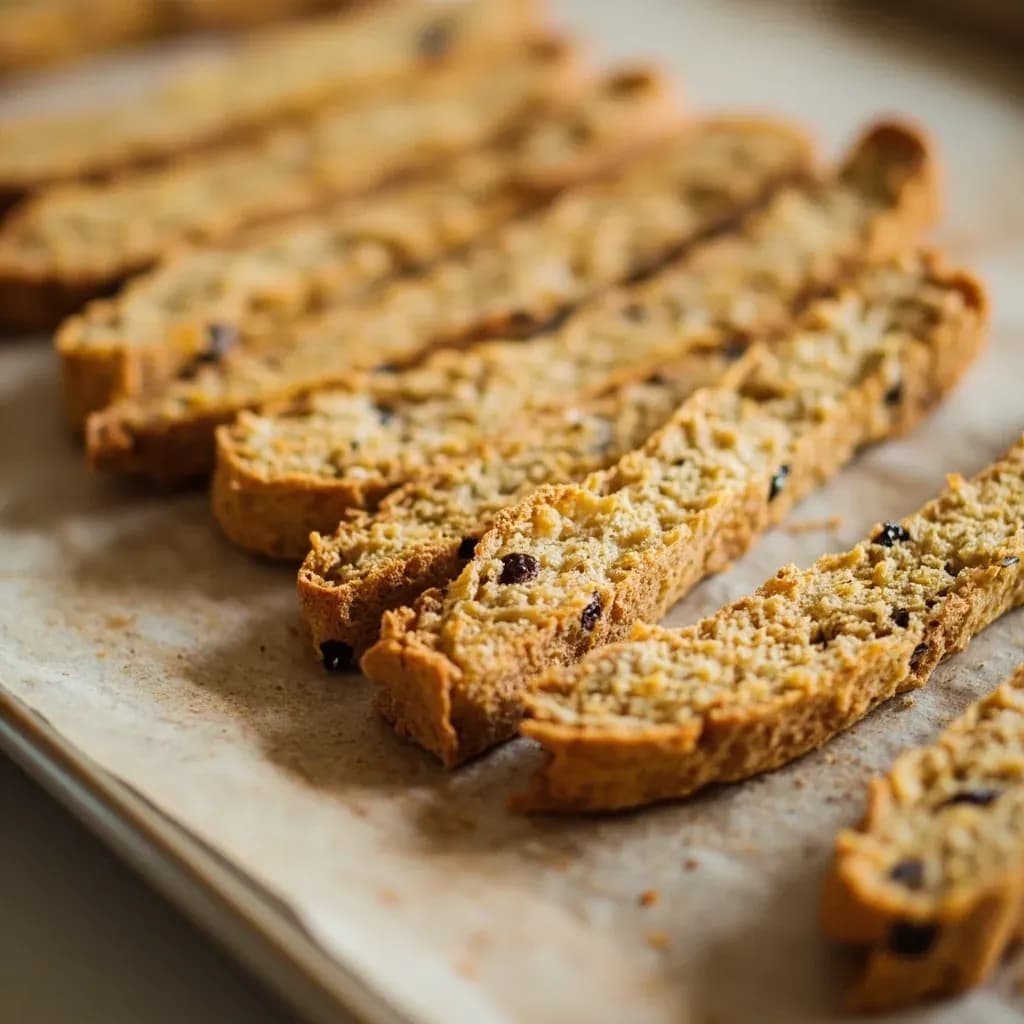
Heat & Fire
Double-Baking (Biscotti/Carasatura)
Baking a loaf then slicing and baking again to dry it into crisp, long-keeping biscotti or crackers.
Double-baking bakes a dough once as a log or sheet, then slices it and returns the pieces to the oven to dry out further. The second bake drives off moisture so the result, such as biscotti or carasau, becomes crunchy and shelf-stable. This twice-baked method is the literal meaning of biscotti and gives these breads and cookies their characteristic snap.
Double-baking is the practice of baking a shaped dough once to set its structure, slicing or splitting it, then returning the pieces to a gentler oven to drive residual moisture out of the crumb. The Latin roots of the word — bis (twice) and coctus (baked) — describe the technique exactly, and they also name its most famous product, biscotti. What the second bake really accomplishes is dehydration: by the time a slice or flat hits a lower oven the second time, most of the free water has been cooked out during the first bake, and the gentler temperature finishes the job without scorching the surface or browning it long before the interior dries.
The technique is unforgiving of rich doughs. A standard cookie batter loaded with butter, eggs, or fresh fruit holds onto moisture and resists crisping — it will color long before it dries through. Lean doughs (more flour relative to fat, dried fruit toasted before folding in, nuts and seeds for structure) are the ones that snap cleanly. The defining variable isn't flavor or shape but water activity: drive it below roughly 5% for rusks and ship's biscuit, land at 8–12% for sweet biscotti that should give slightly when bitten without bending.
Pliny the Elder records Roman legionaries carrying a double-baked sweet bread on long marches, and the technique has resurfaced in every culture that valued shelf-stable travel food — Tuscan cantucci for dipping in Vin Santo, Sardinian carta di musica thin enough to read through, Scandinavian skorpa for breakfast, Central European zwieback for teething children, and hardtack that kept sailors alive for months at sea. It is one of the oldest food-preservation techniques still in active home use, and it remains the cleanest way to turn an ordinary loaf or cookie into something that keeps for weeks without preservatives.
- Difficulty
- Medium
Types & varieties
Tuscan almond cookies traditionally dipped in Vin Santo; sliced on a sharp diagonal and baked once on each cut face.
Sardinian flatbread split into two thin discs and re-baked briefly until it crackles like paper (literally 'sheet of music,' named for its papery thinness).
Central European small rusks, often slightly sweet, given to teething children and dunked in coffee or soup.
Very thin, crisp toast named after Dame Nellie Melba; used as a garnish vehicle and in classical plated desserts.
Unleavened flour-and-water cracker baked twice to near-total dryness for months-long storage at sea.
Scandinavian rye or wheat rusks, often gently sweetened, served for breakfast with butter, cheese, or coffee.
Cube- or slice-cut bread re-baked until dry for soups, salads, and stuffings.
Toasted flatbread served with cheese, olives, and breakfast spreads across the Levant.
How to do it
- 1
Mix and shape a lean dough
Combine a relatively low-fat, low-moisture dough (more flour, less butter and egg than a standard cookie dough). Shape into a log roughly 12 in / 30 cm long and 3 in / 7.5 cm wide, or a flat slab of even thickness about ¾ in / 2 cm. Smooth the top so it bakes evenly and doesn't crack on slicing.
- 2
First bake to set the structure
Bake at about 350°F / 175°C for 25–35 minutes, until the surface is lightly golden and a skewer comes out clean, but the interior is still slightly moist. The goal here is structure, not dryness — that's the second bake's job.
- 3
Cool briefly and slice
Rest on the pan 10–15 minutes — long enough to hold its shape, short enough to cut cleanly. Slice with a long serrated knife using a gentle sawing motion into even ½ in / 1.25 cm pieces, on a sharp diagonal for cantucci or straight across for traditional rusks.
- 4
Arrange for the second bake
Place slices cut-side up on a parchment-lined sheet, spaced about ½ in apart. Don't crowd; airflow between pieces is what dries them. For thicker logs, you can lay them on their side so both large faces are exposed.
- 5
Second bake low and slow
Reduce oven to 300°F / 150°C and bake 10–15 minutes. Flip each piece and bake another 10–15 minutes, until deeply golden, dry to the touch, and a piece tapped on the counter sounds hollow and crisp. For very dry rusks or hardtack, extend the time until almost no flex remains.
- 6
Cool fully on a rack
Transfer immediately to a wire rack and cool completely — at least 30 minutes. Any warmth sealed in a tin will soften the pieces via condensation within hours. They will continue to crisp as residual moisture migrates out during cooling.
- 7
Store airtight
Once fully cold, pack in an airtight tin or glass jar, layered with parchment if stacking. Keeps 4–6 weeks at room temperature; freeze in a sealed bag for longer storage, refreshing in a 300°F / 150°C oven for 5 minutes before serving to revive the snap.
The moisture principle
Double-baking is fundamentally a water-removal technique, not a flavor technique. The first bake at conventional 350°F / 175°C sets starch and protein structure and drives off the bulk of free moisture, but the interior of a typical log still retains enough water (often 20–30%) to soften within a few days. The second bake at a lower 300°F / 150°C exploits that fact: a gentler temperature evaporates remaining water without driving the Maillard and caramelization reactions fast enough to burn the surface. Get the balance wrong — second bake too hot — and you'll get a brown, seemingly-done cookie with a soft, almost doughy core.
- Below ~5% moisture, mold and most bacterial activity stall; this is the range for rusks and hardtack designed to keep for months.
- At 8–12% moisture, the piece still has enough bound water to give slightly under tooth — the sweet-biscotti sweet spot.
- Above ~15%, you're back in soft-cookie territory and shelf life collapses to days.
- Dryness is audible: a properly finished slice tapped on the counter sounds hollow and almost brittle, not dull.
Common uses
Tips & pitfalls
- Slice with a long serrated knife using a gentle sawing motion while the log is still warm (10–15 min out of the oven) — the crumb crumbles when hot and shatters when cold.
- Aim for slices about ½ in / 1.25 cm thick: thicker pieces stay chewy in the center, thinner ones scorch before drying through.
- Keep the second bake low and slow; high heat browns the surface long before the center dries, producing a misleadingly 'done' look with a soft core.
- Flip each piece once at the halfway mark so both cut faces color evenly and the bottom doesn't steam against the pan.
- Cool completely on a wire rack before storing — residual warmth sealed in a container condenses and ruins the crunch within hours.
- Lean doughs (more flour, less butter and egg) plus toasted nuts or seeds achieve the classic snap; high-fat doughs will only ever reach a 'crispy-soft' plateau.
- Toast nuts and dried fruit before folding them in to keep total moisture down and extend shelf life.
- For a glossy finish, brush the shaped log with a thin egg wash or milk before the first bake rather than after slicing.
Good to know
- Etymology
- 'Biscotti' from Latin 'bis' (twice) + 'coctus' (baked); German 'zwieback' means 'twice-baked'; Sardinian 'carasatura' names the second browning pass on carasau bread.
- Origin
- Documented in Roman times — Pliny the Elder mentions a double-baked sweet bread carried by legionaries; refined in Tuscan bakeries as cantucci or biscotti di Prato.
- Core principle
- The second bake drives residual moisture below the threshold that supports mold and staling, dramatically extending shelf life.
- First bake parameters
- About 350°F / 175°C for 25–35 minutes, until the surface is lightly golden and a skewer exits clean, but the interior is still slightly moist — structure, not dryness, is the goal.
- Second bake parameters
- Reduced to 300°F / 150°C, 10–15 minutes per side, until pieces are deeply golden, dry to the touch, and sound hollow when tapped.
- Target final moisture
- Under ~5% for true long-keeping rusks and ship's biscuit; 8–12% for sweet biscotti with a slight yielding bite.
- Dough characteristics
- Lean, low-fat, low-moisture doughs work best; high butter, eggs, or fresh fruit keep the crumb tender and resist crisping.
- Storage
- Fully cooled in an airtight tin or jar, 4–6 weeks at room temperature; up to 3 months frozen. Slice only when fully cold and dry to avoid trapping steam.
Also called
double-baking-cantucci · double-baking · Twice-Baking
Dishes that rely on it
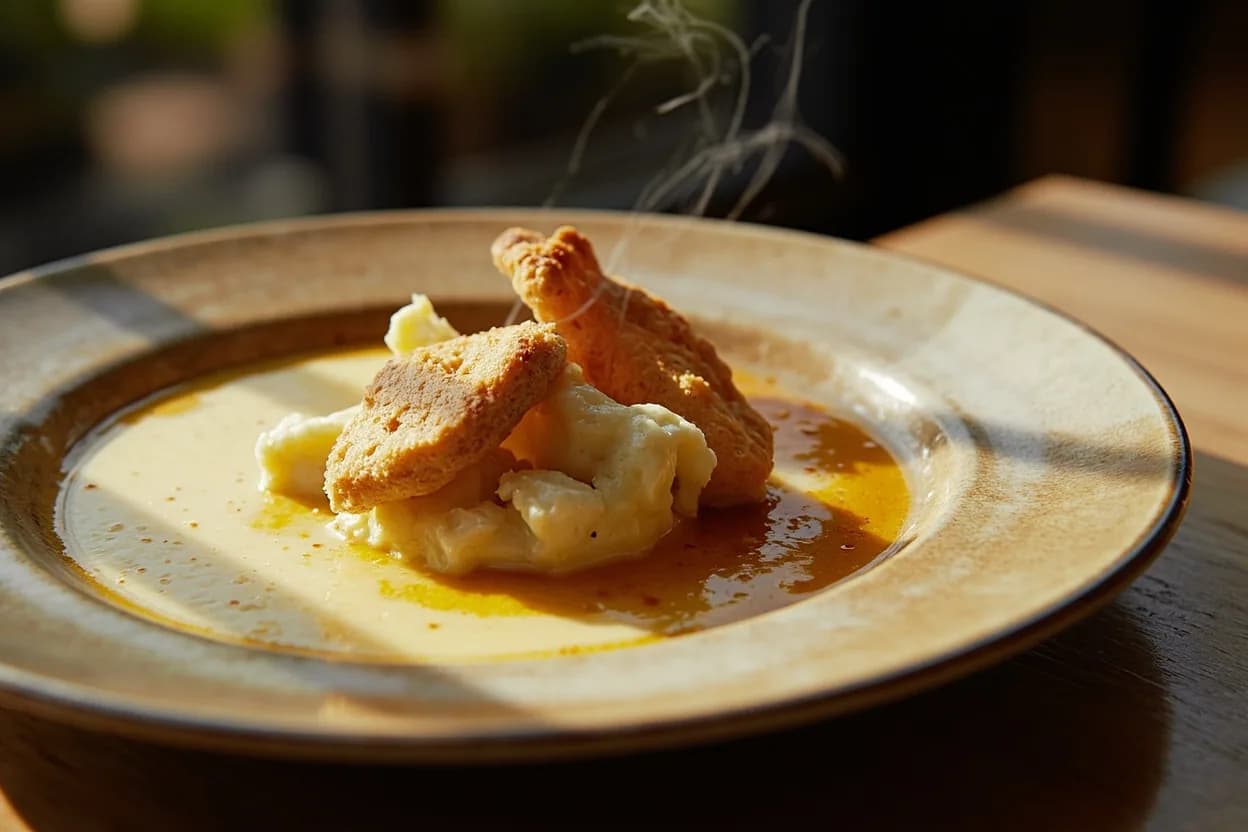
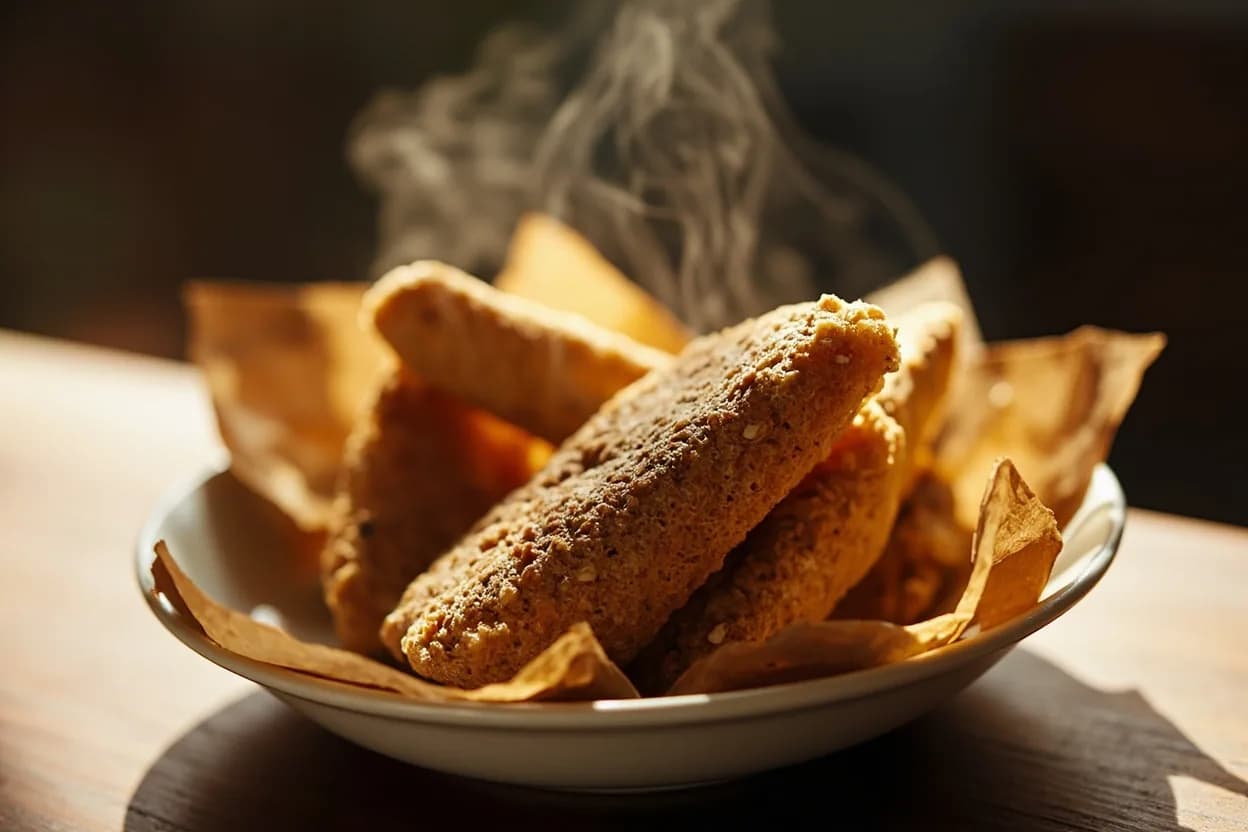
Related

Sear
Blast the surface hot for a deep-browned, savory crust

Sauté
Cook quickly in a little fat over lively heat, tossing as you go

Stir-Fry
Toss bite-sized pieces over roaring heat for fast, smoky cooking

Pan-Fry
Crisp food in a shallow layer of hot fat, turning once or twice

Deep-Fry
Submerge in hot oil for an all-over crackling crust

Roast
Cook uncovered in dry oven heat for browned edges and tender centers

Bake
Cook with steady, surrounding oven heat — the soul of bread and pastry

Broil
Hit food from directly above with fierce overhead heat