Heat & Fire
Dutch-Oven Baking
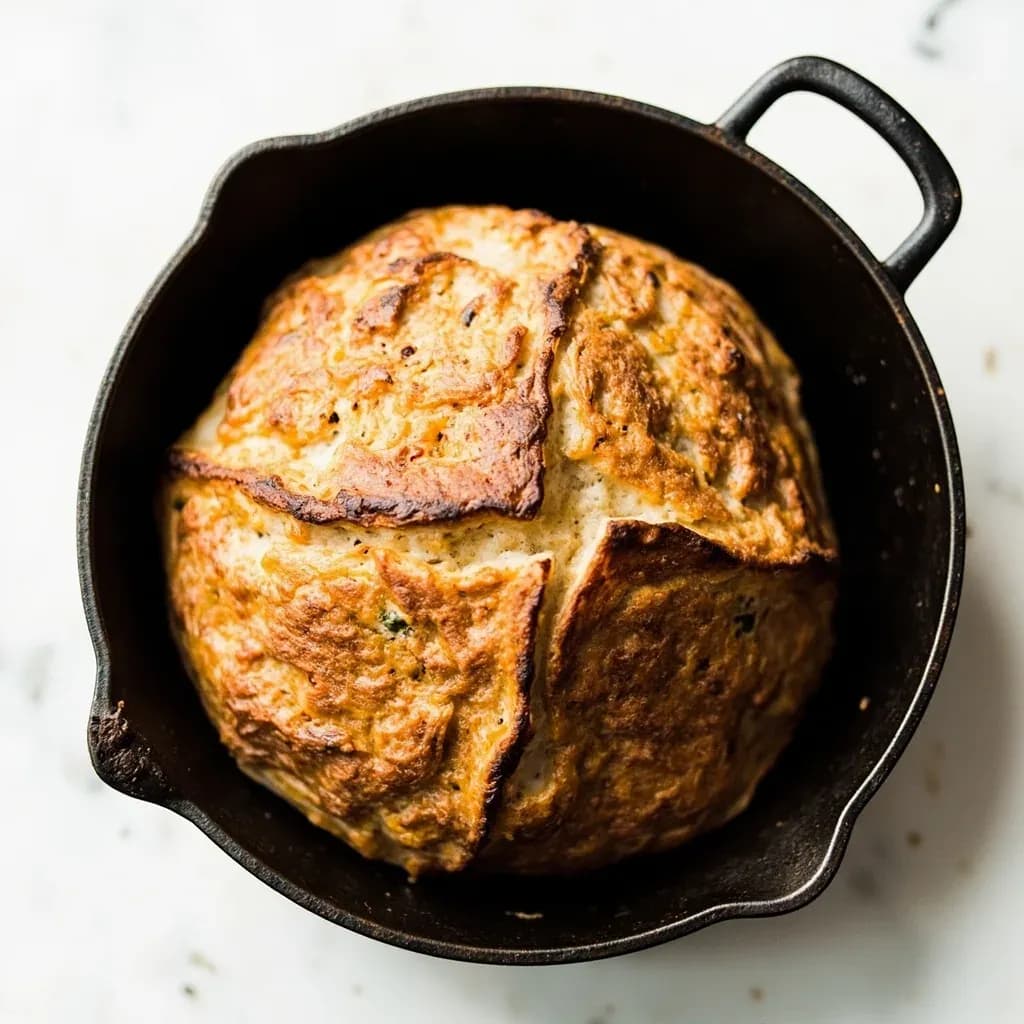
Baking inside a heavy lidded pot that traps steam, giving bread a crackling crust and open crumb.
Dutch-oven baking uses a heavy cast-iron or ceramic lidded pot to create a sealed, steamy environment around the food, especially artisan bread. The trapped steam keeps the crust pliable so the loaf can expand fully before the lid comes off to brown and crisp it. Outdoors, coals are placed on top and bottom to bake evenly without an oven.
Dutch-oven baking is the technique of baking bread inside a heavy, lidded pot that has been preheated in the oven. The pot functions as a miniature oven-within-an-oven, trapping the steam the dough releases and holding it against the loaf's surface. The result is a thin, glossy, deeply browned crust and an open, airy crumb — qualities home bakers had previously associated only with professional deck ovens fitted with steam injectors.
The physics are simple but exact. As the loaf heats up, moisture vaporizes from the dough and saturates the air inside the closed pot. That trapped humidity keeps the starch on the surface gelatinized and elastic instead of drying into a skin, so the loaf can expand freely during oven spring. Once the lid is removed, the surface dehydrates rapidly and Maillard browning proceeds at full intensity, caramelizing the crust into the dark, crackling finish that defines an artisan hearth loaf. The two phases — covered steam bake, then uncovered dry bake — are the whole method.
Covered-vessel baking is in fact one of the oldest cooking techniques known, used for Roman clibani, Egyptian and Mesopotamian clay pots, Moroccan tagines, and Georgian tone bread. The modern home-baking version is widely credited to Jim Lahey's no-knead boule at Sullivan Street Bakery, written up by Mark Bittman in The New York Times on November 8, 2006. The realization that any heavy lidded pot can replicate the effect is what turned the technique into a global home-baking phenomenon.
- Difficulty
- Easy
Types & varieties
Traditional workhorse (Lodge, Camp Chef); most affordable; requires dry heat and oil seasoning; dark interior hides browning progress.
Le Creuset, Staub, Cuisinart, Tramontina; lighter cream-colored interior makes crust color easier to gauge; no seasoning needed; pricier.
Two-piece cast iron in which a deep skillet base inverts as a domed lid; a budget-friendly entry point.
Emile Henry, Romertopf, tagine-style vessels; gentler and more even heat, attractive for table service, but more fragile and often need lower temperatures.
Round pots for boules; oval pots or oval roasters for batards and longer loaves.
Older smooth-bottom spun-iron pots are lighter than cast iron and prized by some bakers for more even heat.
How to do it
- 1
Preheat the pot
Place the empty Dutch oven with its lid in the lower third of a 450°F (230°C) oven. Preheat for 30–45 minutes so the cast iron is fully saturated with heat.
- 2
Shape and proof the dough
After bulk fermentation, shape the dough into a tight round (boule) or oval (batard). Proof until it passes the poke test — a floured finger pressed gently into the dough should leave an indent that slowly springs back. Generously flour a sheet of parchment and set the dough on it.
- 3
Score the loaf
Just before baking, score the top with a lame, sharp knife, or scissors — a single bold slash, a cross, or an ear-cut. The cuts give the loaf a controlled place to expand during oven spring.
- 4
Load the dough into the pot
Remove the hot pot from the oven and set the lid on a trivet or folded towel. Lift the dough by the parchment corners and lower it into the pot. The parchment acts as a sling so the sticky surface is never handled.
- 5
Cover and bake (steam phase)
Replace the lid and return the pot to the oven. Bake 20–30 minutes. The moisture released by the dough is trapped inside, keeping the surface pliable and gelatinized so the loaf can spring fully.
- 6
Uncover and finish baking
Remove the lid; the crust will be pale, set, and slightly wrinkled. Continue baking 15–25 minutes, until the crust is deep golden to mahogany and crackles when tapped. The internal crumb should read 205–210°F (96–99°C) on an instant-read thermometer.
- 7
Cool completely
Lift the loaf out on the parchment and transfer to a wire rack. Cool at least 1 hour before slicing — the crumb finishes setting and residual steam escapes as it cools; cutting too early yields a gummy interior.
The physics of the two phases
Understanding what happens during the covered and uncovered phases is what separates a pale, gummy loaf from a crackling boule. The technique works because it stages the chemistry of the crust deliberately.
- Phase 1 (covered, 20–30 min): the dough's own moisture saturates the air inside the pot at or near 100% relative humidity. Starch on the surface stays gelatinized between roughly 140–180°F (60–82°C), so the crust remains elastic and the loaf can spring freely. Without that humidity the surface would dry and set within 5–7 minutes, choking off expansion.
- Phase 2 (uncovered, 15–25 min): the lid is removed and the surface dehydrates. Above about 285°F (140°C) the Maillard reaction between amino acids and reducing sugars accelerates; above about 320°F (160°C) caramelization of surface sugars takes over, producing the deep mahogany color and the audible crackle as the glassy crust fractures on cooling.
- Internal crumb sets when starch fully gelatinizes at 205–210°F (96–99°C). Pulling the loaf at this internal temperature — not by color alone — is the most reliable indicator of doneness.
Common uses
Tips & pitfalls
- Preheat the empty pot and lid for a full 30–45 minutes so the iron is fully saturated with heat — a lukewarm pot gives a flat, pale loaf with a thick, dense bottom.
- Use a parchment 'sling' to lower sticky, proofed dough into the scorching pot without burning yourself or deflating the loaf.
- Dust the bottom of the dough or the parchment with semolina, rice flour, or coarse cornmeal to prevent sticking and add crunch under the crust.
- Score the dough immediately before loading; once the crust begins to set in the hot pot, a blade will drag and tear rather than cut cleanly.
- Remove the lid for the last 15–20 minutes of baking — that is what produces the deep mahogany color and audible crackle.
- Set the hot pot on a wooden board, trivet, or folded towel — never on a cold stone countertop, glass cooktop, or wet surface, where thermal shock can crack enamel or stone.
- Cool the finished loaf at least 1 hour on a wire rack before slicing; the crumb sets and residual steam escapes as it cools, and cutting early gives a gummy interior.
- Check the lid knob's temperature rating — many Dutch ovens ship with phenolic knobs rated to only 400–450°F. For hotter bakes, remove the knob entirely, swap it for a stainless steel replacement, or shield it with a double layer of aluminum foil; never wrap a knob in a wet towel, which will dry out and scorch within minutes.
Good to know
- Origin of the technique in home kitchens
- Brought to mainstream attention by Jim Lahey's no-knead boule, written up by Mark Bittman in The New York Times on November 8, 2006.
- Standard baking temperature
- 450°F (230°C); many bakers push to 475–500°F (245–260°C) for deeper color and faster oven spring.
- Preheat time
- 30–45 minutes minimum, lid on, with the pot in the oven.
- Covered bake time
- 20–30 minutes with the lid on.
- Uncovered bake time
- 15–25 minutes with the lid off to brown and crisp the crust.
- Doneness temperature
- Internal crumb 205–210°F (96–99°C).
- Pot size and shape
- Round 4–6 qt pots suit boules; oval pots or oval roasters suit batards and longer loaves.
- Yield
- One boule or batard per pot, typically 800 g–1 kg of dough.
Also called
Coals Top and Bottom · camp oven baking · no-knead pot baking
Dishes that rely on it
Related

Sear
Blast the surface hot for a deep-browned, savory crust

Sauté
Cook quickly in a little fat over lively heat, tossing as you go

Stir-Fry
Toss bite-sized pieces over roaring heat for fast, smoky cooking

Pan-Fry
Crisp food in a shallow layer of hot fat, turning once or twice

Deep-Fry
Submerge in hot oil for an all-over crackling crust

Roast
Cook uncovered in dry oven heat for browned edges and tender centers

Bake
Cook with steady, surrounding oven heat — the soul of bread and pastry

Broil
Hit food from directly above with fierce overhead heat