Prep & Assembly
Fish-Fragrant Sauce Building (Yu Xiang)
Sichuan flavor profile built from pickled chiles, garlic, ginger and sweet-sour seasoning — no fish involved.
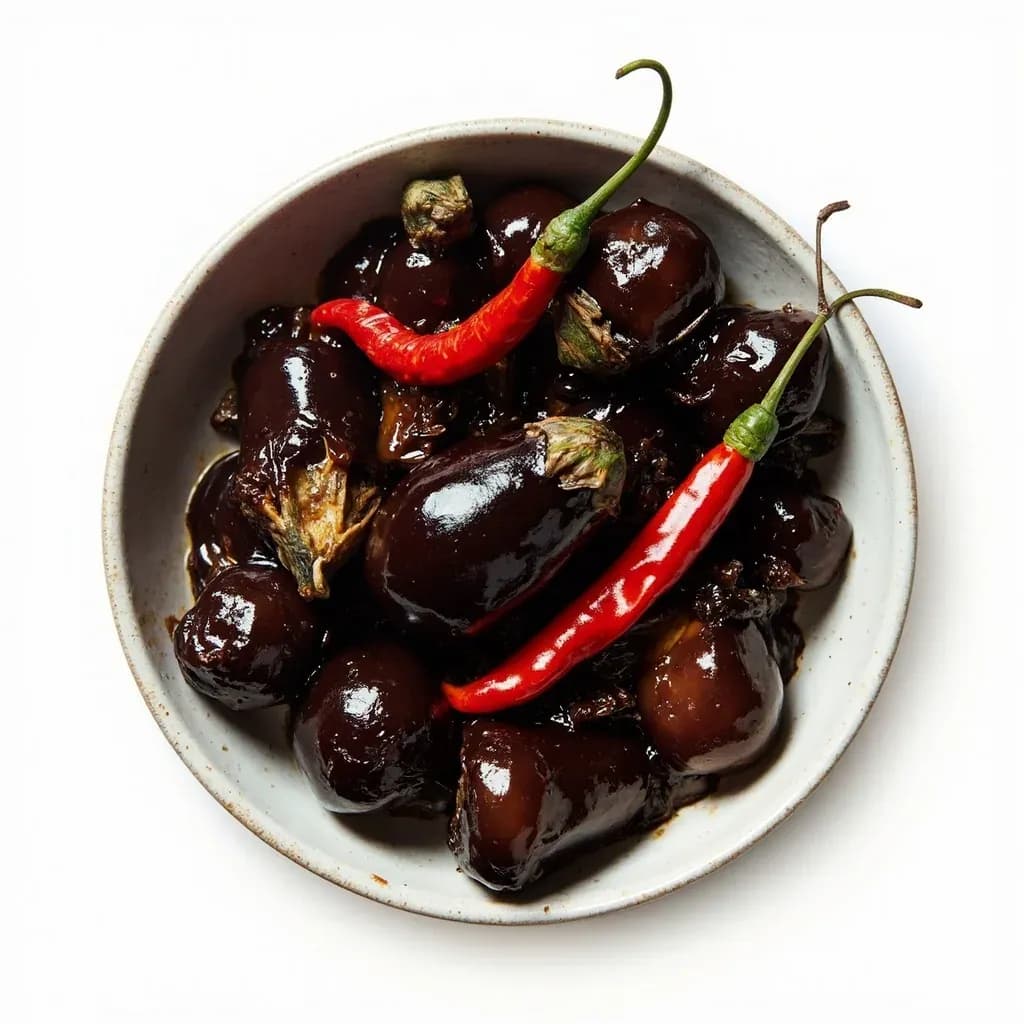
Fish-fragrant, or yu xiang, is a Sichuan technique of layering pickled chili (pao la jiao), garlic, ginger, scallion, sugar, vinegar and soy into a sauce that mimics the seasonings traditionally used to cook fish. Despite the name, it contains no fish; it is famous in dishes like yu xiang eggplant and shredded pork. The hallmark is a balanced sweet, sour, savory and spicy bite.
Yu xiang wei — fish-fragrant flavor — is a Sichuan flavor profile, not a bottled sauce. It is built in the wok in under five minutes from three structural elements: fermented pickled red chiles (pao jiao) for the aromatic, slightly funky heat; a sharp sweet-sour seasoning of Chinese black vinegar and sugar; and a trio of fresh aromatics — ginger, garlic, and scallion — added in stages so each one hits the oil at the right moment. The defining dish, yu xiang rou si (shredded pork), is what most people encounter first, but the same logic works on eggplant, chicken, duck, mushrooms, and even cold noodles.
The balance is what makes it distinctive. Compared with the numbing, chile-oil punch of mapo or the dry-tossed fire of gan bian, yu xiang is glossy, savory-sweet, and warm rather than searing. The pickled chiles provide depth without aggressive heat, the vinegar brightens and cuts through fat, and the sugar rounds everything into a glaze that clings to the protein or vegetable rather than pooling at the bottom of the plate. Doubanjiang is optional; the purer, brighter versions use only pao jiao, while restaurant versions often add a small spoon for color and body.
The reason cooks treat this as a technique rather than a recipe is timing. Everything — the minced aromatics in separate piles, the pre-mixed sauce, the velveted protein — must be ready before the wok gets hot. Once the fire is on, you have seconds to bloom the chiles, add the ginger, return the protein, and pour the sauce in a single stream. Get the ratios right, keep the garlic off the heat until the end, and stop tossing the moment the sauce turns glossy. Miss any of those and the dish flattens into something cloying, raw, or scorched.
- Difficulty
- Medium
Types & varieties
Wider use of doubanjiang for a deeper red color and rounder savor; the default in Sichuan restaurants
Pickled chiles only, no doubanjiang; brighter, sharper sweet-sour profile, considered the older, more 'authentic' form
Built around eggplant, mushrooms, or wood-ear; relies more on vinegar brightness to compensate for the missing meat juices
Built around shredded pork, beef, or chicken; protein moisture and a splash of stock help carry the sauce
Sometimes folds in a spoon of ya cai (preserved mustard) or uses homemade pao jiao brine for an extra fermented tang
How to do it
- 1
Mise en place
Finely mince pickled red chiles, garlic, ginger, and scallion into four separate piles. In a small bowl, whisk together Chinese black vinegar, sugar, light soy sauce, a splash of water, and a cornstarch slurry (about 1 tsp cornstarch to 1 tbsp water). Have everything within arm's reach of the wok — once the fire is on there is no time to measure.
- 2
Velvet the protein (if using pork or chicken)
Toss shredded pork or chicken in a pinch of salt, an egg white, and cornstarch until lightly coated. Either blanch briefly in simmering water or pass through a thin film of hot oil until just opaque. Remove and reserve. This step keeps the meat tender under the sauce and prevents the shredded strands from seizing up in the wok.
- 3
Bloom the chiles and ginger
Heat a well-seasoned wok over high until just smoking. Add oil, swirl, then add the pickled chiles and stir-fry 15–20 seconds until the oil turns fragrant and takes on a light red tint. Add the minced ginger and stir a few seconds more. If using doubanjiang, add it now with a small splash of water and stir until the oil reddens again.
- 4
Combine with the main ingredient
Return the velveted protein to the wok (or add pre-fried eggplant, blanched mushrooms, etc.) and toss until heated through and coated in the chile oil. The mixture should be hot and glossy before the sauce goes in.
- 5
Sauce and finish
Stir the pre-mixed sauce to recombine the slurry, then pour it in one steady stream down the side of the wok while tossing continuously for 20–30 seconds. The sauce should bubble, thicken, and turn glossy — clinging to the ingredients rather than pooling. Off the heat, add the minced garlic and scallion, give one or two final tosses, and serve immediately.
The three pillars of yú xiāng
Every successful yu xiang dish rests on three legs. Remove any one and the profile collapses into something generic.
- Pickled chiles (pao jiao): the non-negotiable. They give the fermented, slightly sweet heat that defines the flavor. Fresh chiles cannot substitute — they are grassy and one-dimensional by comparison.
- Sweet-sour seasoning: roughly equal parts Chinese black vinegar and sugar, balanced with light soy for salt. The vinegar should taste assertive on its own before the sugar is added; if it doesn't, the finished sauce will read flat.
- Staged aromatics: ginger goes in with the chiles, garlic and scallion go in off the heat. This sequencing lets each aromatic express itself without burning into bitterness.
Why it's called 'fish-fragrant'
The name is a historical tag, not an ingredient list. The seasoning was originally developed to dress freshwater fish, where the pickled chiles, vinegar, and aromatics masked muddy off-notes and complemented the delicate flesh. The combination proved so compelling that Sichuan cooks began applying the same aromatic-and-sweet-sour logic to pork, then eggplant, then chicken and duck. Today the flavor profile is most often encountered on shredded pork, and the 'fish' in the name survives as a marker of provenance rather than a description of contents.
Common uses
Tips & pitfalls
- Use pickled chiles (pao jiao), not fresh — fresh chiles give grassy heat, never the fermented tang that defines yu xiang.
- Mince the ginger, garlic, and scallion separately and add them at different stages; dumping them together is the fastest way to scorch the garlic and mute the ginger.
- Pre-mix the entire sauce (vinegar, sugar, soy, slurry, water) before the wok goes on the fire. Once you start cooking, you will not have time to measure.
- A good starting ratio is roughly equal parts sugar and vinegar by volume, with enough soy to salt and just enough slurry to cling. If the sauce tastes flat, add more vinegar — not more sugar.
- Add the slurry-bearing sauce in a single pour and stop tossing the moment it turns glossy; over-reduction makes the dish sticky-sweet and dulls the vinegar.
- Garlic burns in seconds. Add it off the heat at the very end so it stays pungent and slightly raw, not bitter.
- Doubanjiang is optional. Skip it for a brighter, cleaner profile; add a small spoon for the deeper red color and rounder savor of restaurant-style yu xiang.
- For eggplant, pre-fry or steam the pieces so the sauce glazes the surface instead of soaking into raw flesh and diluting.
- Water-velvet shredded pork before stir-frying so the strands stay silkily tender under the sauce rather than toughening up.
Good to know
- Chinese name
- 鱼香味 (yú xiāng wèi), literally "fish-fragrant flavor"
- Origin
- Sichuan province, China; one of the province's defining flavor profiles
- Core identity
- A flavor profile assembled in the wok, not a pre-made sauce
- Aromatic base
- Pickled red chiles (pao jiao), ginger, garlic, scallion — added in separate stages
- Sweet-sour seasoning
- Chinese black vinegar (Sichuan aged vinegar or Zhenjiang/Chinkiang) balanced with sugar
- Umami and salt
- Light soy sauce; optional small spoon of doubanjiang for color and roundness
- Thickener
- Cornstarch slurry whisked into the pre-mixed sauce
- Texture
- Glossy, lightly clinging glaze — never soupy, never a dry stir-fry
- Active cook time
- Under 5 minutes once ingredients are prepped
Also called
yu xiang · fish-fragrant
Related

Whisk
Beat ingredients smooth and aerated with a looping wire motion

Sift
Pass dry ingredients through mesh to aerate and remove lumps

Strain
Pour through mesh to separate solids from liquid for a smooth result

Filter
Pass liquid through fine material to clarify out the smallest particles

Rice
Press cooked potatoes through small holes for fluffy, lump-free texture

Mash
Crush soft cooked food into a rustic, creamy purée

Grind
Crush food into a coarse to fine texture, from spices to meat

Grate
Shred food into fine bits against a sharp-toothed surface