Prep & Assembly
Gluten Development
Working dough so gluten proteins align into an elastic, stretchy network.
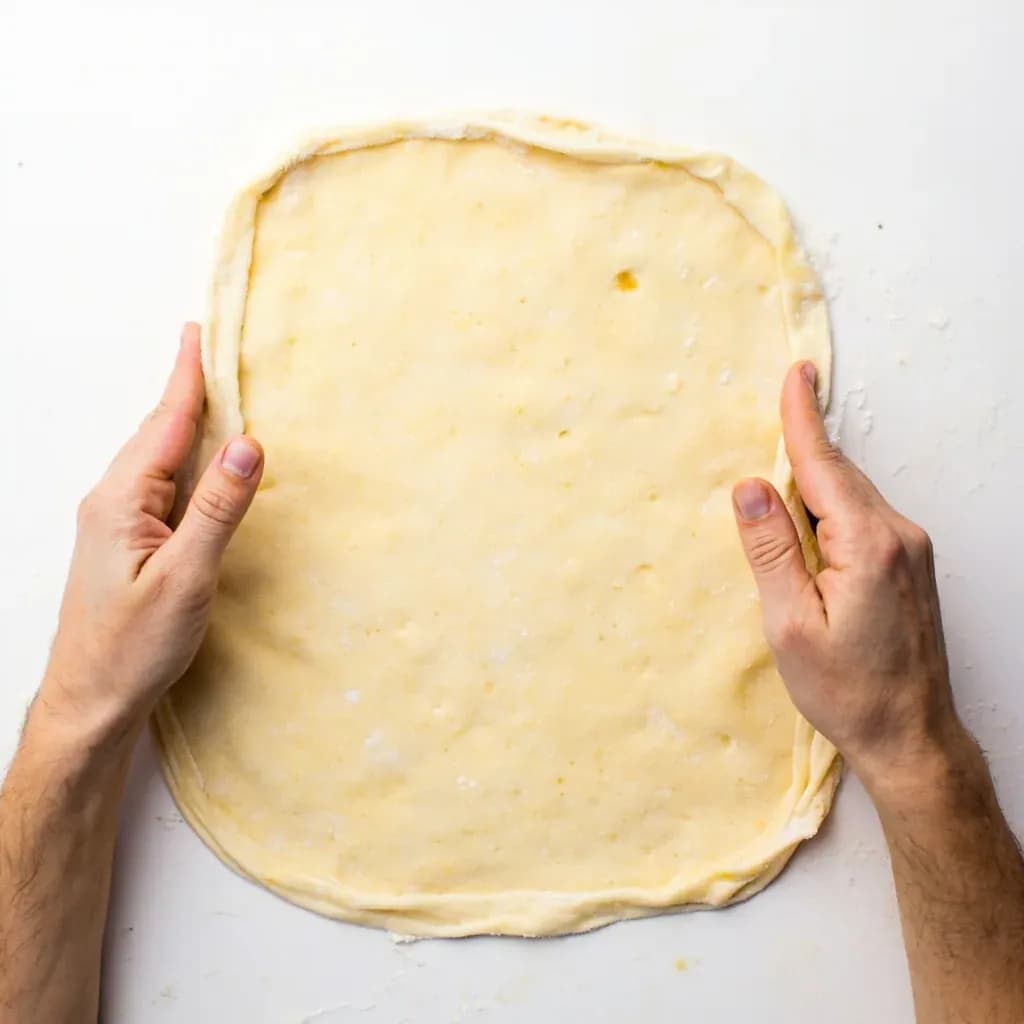
Gluten development is the process of mixing and kneading wheat dough so the proteins glutenin and gliadin link into a strong, elastic web that traps fermentation gases. Adequate development gives bread its chew and rise, while underworked dough tears and overworked dough turns tough. Cooks judge it with the windowpane test, stretching a piece thin enough to see light through without breaking.
Gluten development is the process by which the two storage proteins in wheat flour — glutenin and gliadin — combine with water and align into a continuous, elastic network under mechanical work. Once hydrated and agitated, these proteins link end-to-end and side-by-side, transforming a shaggy mass of flour and water into a smooth, springy dough that can trap fermentation gases, hold its shape, and stretch without tearing. It is the single most important structural event in any wheat-based bake, from a tender dinner roll to a heavily fermented sourdough loaf.
The strength and character of that network is governed by four factors working in concert: the protein content of the flour, the ratio of water to flour (hydration), the amount and type of mechanical work, and time. Salt tightens the network and slows its formation; fat coats the proteins and shortens the strands, limiting how far development can go. A standard-hydration dough (60–65%) kneaded actively yields a fine, even crumb suited to sandwich loaves; a wet, high-hydration dough developed gently through folds produces the open, glossy holes of ciabatta and artisan boules.
The baker's job is to read the dough and apply just enough of each factor to reach the structure the recipe calls for. A well-developed dough feels smooth and alive, springs back slowly when poked, and passes the windowpane test — stretching thin enough to see light through without tearing. Recognizing that moment, and knowing how to back off when you have passed it, is what separates predictable bread from a guessing game.
- Difficulty
- Medium
Types & varieties
Push, fold, and quarter-turn on the bench for 10–15 minutes; offers maximum tactile feedback and is best for small batches and stiffer doughs
Low-medium speed for 6–10 minutes; fast and consistent, but friction heats the dough — monitor temperature to stay below ~85°F (29°C)
20–60 minute rest after initial hydration to let glutenin and gliadin bond passively, followed by 3–4 sets of folds spaced 30 minutes apart during bulk fermentation; gentler and produces more extensible dough
Typically high-hydration dough (often 70%+) developed entirely by time and occasional folds over 12–18 hours; relies on long, cool fermentation to build structure
Builds strength gradually over several hours of bulk fermentation (commonly 4–8 hours at room temperature, longer in the cold) with stretch-and-folds or coil folds every 30 minutes; aligns with active wild-yeast fermentation
How to do it
- 1
Combine flour and water
Measure flour by weight and mix with water (and starter or yeast if applicable), stirring just until no dry flour remains. Hold the salt back if doing an autolyse. The goal at this point is even hydration, not a developed network — the dough will look shaggy and rough.
- 2
Autolyse (optional but recommended)
Cover and rest the hydrated dough 20–60 minutes at room temperature (or up to a few hours in the fridge). Water fully absorbs into the flour, glutenin and gliadin begin bonding on their own, and active kneading time drops noticeably. Skip for enriched doughs with butter or eggs added early.
- 3
Add salt and any remaining ingredients
Sprinkle salt (and sugar, starter, or small amounts of fat if using) over the dough and pinch or fold them in. Salt tightens the network; adding it after the autolyse prevents it from inhibiting early hydration.
- 4
Knead or fold to develop gluten
Hand knead by pushing, folding, and quarter-turning for 10–15 minutes, or use a stand mixer with the dough hook on low-medium for 6–10 minutes. For high-hydration doughs, skip active kneading and perform 3–4 sets of stretch-and-folds (or coil folds) spaced 30 minutes apart during bulk fermentation.
- 5
Check for full development
Pull off a golf-ball-sized piece and gently stretch it between your thumbs and forefingers. A fully developed dough thins to a translucent membrane (the windowpane) without tearing. If it breaks or stays opaque, keep working the dough and re-test every minute or two.
- 6
Bulk ferment
Place dough in a lightly oiled or just-damp container, cover, and let rise until 50–75% larger (typically 1–4 hours at warm room temperature, or 8–14 hours cold). Periodic folds during this stage continue to build strength and align the network.
- 7
Pre-shape, rest, and final shape
Divide and gently pre-shape into rounds, rest 15–30 minutes (bench rest) to relax the gluten so it can be shaped without resistance, then shape into loaves, rolls, or pizza bases.
- 8
Final proof and bake
Proof until puffy and the dough holds a light indentation when poked (or until appropriately aerated for the style), then bake. Gluten sets permanently in the oven as starches gelatinize and proteins coagulate around 140–160°F (60–71°C).
The Science in Brief
When water meets wheat flour, two insoluble proteins begin a quiet but dramatic transformation. Glutenin supplies strength and elasticity through long, chain-like molecules; gliadin supplies extensibility, letting those chains slide and stretch. Hydrated and agitated, they cross-link into a three-dimensional web — the gluten network — that behaves like a stretchy, gas-trapping balloon. The longer and more vigorously the dough is worked, the more bonds form and the stronger the network becomes, up to a point. Beyond it, bonds begin to tear and the dough turns tight, resistant, and prone to springing back. Time and gentle folding can often achieve what brute-force kneading cannot, by giving bonds room to form without rupture — which is why high-hydration artisan doughs, barely touched by hand, develop structure so gracefully.
Hydration and Crumb Structure
Hydration is the single most powerful lever a baker has over the final crumb. As the water-to-flour ratio climbs, the gluten network has more room to expand and trap gas, producing larger and more irregular holes. Lower hydration confines the network and yields a fine, even crumb suited to slicing and sandwiches.
- 50–60% (stiff): bagels, pretzels, some enriched doughs — dense, chewy, tight crumb
- 60–65% (standard): sandwich loaves, dinner rolls, most beginner breads — fine, even crumb
- 65–75% (artisan): hearth breads, boules, baguettes — moderately open crumb with some irregularity
- 75–85%+ (high-hydration): ciabatta, focaccia, open-crumb sourdoughs — glossy, irregular, holey crumb
- Higher-hydration doughs are difficult to knead by hand and are usually developed with stretch-and-folds or coil folds instead
Common uses
Tips & pitfalls
- Use the windowpane test to confirm full development — stretch a small piece; if it tears immediately, keep working
- Reserve an autolyse of 20–60 minutes after the initial mix to let the flour fully hydrate, reducing knead time and improving extensibility
- Do not add extra flour to fix sticky dough; a tacky dough often hydrates correctly and produces better crumb — use wet hands or a bench scraper instead
- Add salt after the autolyse rather than at first mix; salt slows gluten development and can inhibit early hydration if added too soon
- Refrigerate dough overnight to extend fermentation; this lets weaker flours develop flavor and structure without overworking
- Add fat (butter, oil) only after gluten is mostly developed if you want a strong, chewy network — fat shortens strands and limits development
- Over-kneaded dough feels tight, shrinks back when shaped, and may tear along the sides; let it rest 15–20 minutes to relax before continuing
- Stand-mixer friction heats dough — check temperature and stop if it climbs above ~85°F (29°C) to avoid killing yeast and degrading the network
Good to know
- Core proteins
- Glutenin (strength, elasticity) and gliadin (extensibility), found in wheat and in modified form in spelt, rye, and barley
- Hydration range
- Bread doughs typically 60–80% water-to-flour by weight; lower for bagels and pretzels, higher for ciabatta and focaccia
- Optimal dough temperature
- 75–80°F (24–27°C) for yeast-leavened breads, balancing yeast activity against network development
- Test for full development
- The windowpane test: a small piece stretches thin enough to see light through without tearing
- Salt's role
- Tightens and strengthens the gluten network; typically dosed at 1.8–2.2% of flour weight
- Fat's role
- Coats flour proteins and shortens gluten strands, intentionally limiting development in pastry, biscuits, and enriched doughs
- Protein content by flour
- Cake ~7–9%, all-purpose ~9–11%, bread flour ~11–13%, high-gluten ~13–15%
- Time required
- Hand kneading ~10–15 minutes; stand mixer with dough hook ~6–10 minutes; an autolyse plus folds can replace active kneading entirely
- Historical note
- Wheat gluten was first isolated and described by Italian chemist Jacopo Bartolomeo Beccari in 1728
Dishes that rely on it
Related

Whisk
Beat ingredients smooth and aerated with a looping wire motion

Sift
Pass dry ingredients through mesh to aerate and remove lumps

Strain
Pour through mesh to separate solids from liquid for a smooth result

Filter
Pass liquid through fine material to clarify out the smallest particles

Rice
Press cooked potatoes through small holes for fluffy, lump-free texture

Mash
Crush soft cooked food into a rustic, creamy purée

Grind
Crush food into a coarse to fine texture, from spices to meat

Grate
Shred food into fine bits against a sharp-toothed surface