Prep & Assembly
Hand-Pulling Noodles
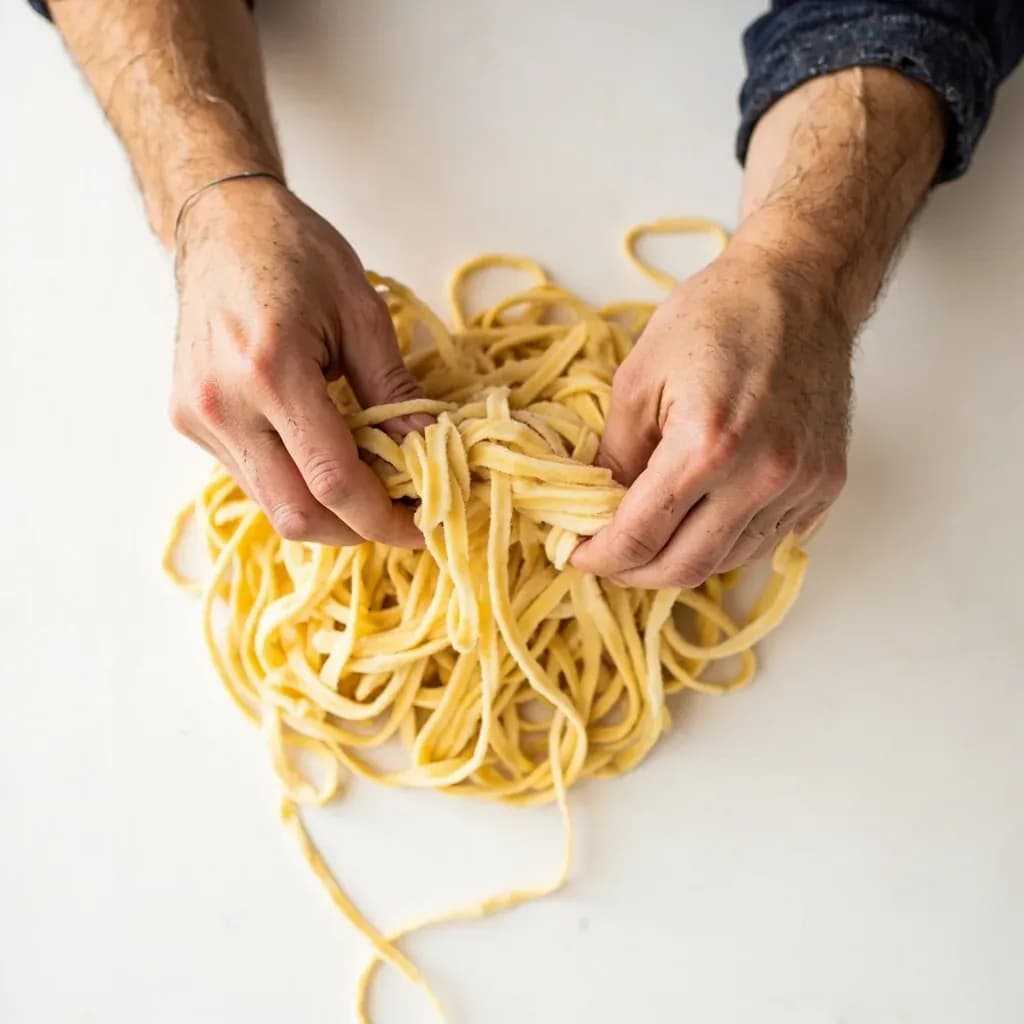
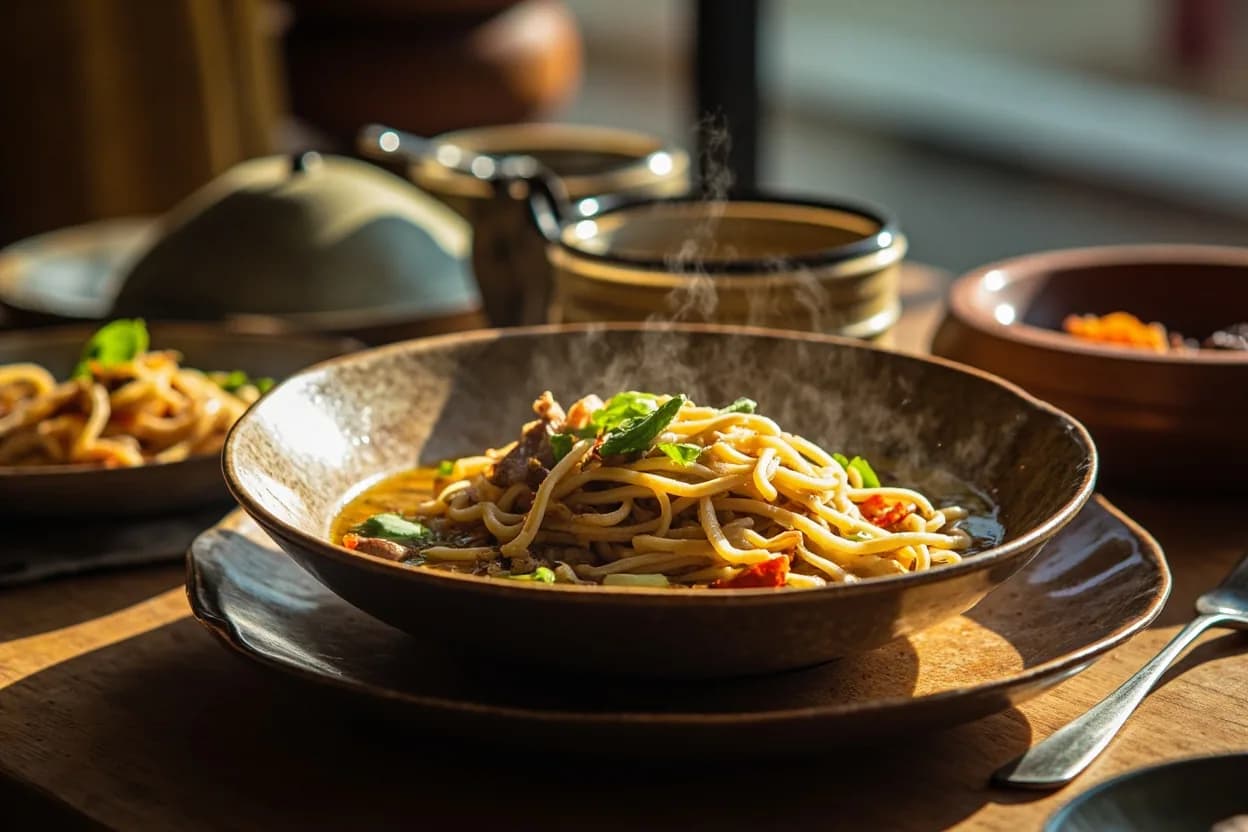
Stretching and folding dough by hand into strands of fresh noodles.
Hand-pulling noodles repeatedly stretches and folds a length of wheat dough, doubling the strands with each pass until they thin into fresh noodles. The technique, lamian, relies on a well-developed, elastic dough rested so the gluten can endure the pulling. It takes years to master the rhythm that turns one rope into hundreds of even strands without breaking.
Hand-pulling noodles (拉面, lāmiàn; also written 抻面, chēnmiàn in northern, non-Hui traditions) is the Chinese technique of stretching and folding a well-developed wheat dough by hand into long, even strands without the aid of a knife or extrusion die. Each stretch-and-fold cycle roughly doubles the strand count — start with one rope, end with hundreds — which is why a single portion of dough can produce anything from a few thick ribbons to a fine tangle of hair-thin threads. The technique is most closely identified with Lanzhou in Gansu province, where it has been codified by Hui Muslim cooks into a system of nine named thicknesses, each tied to a specific cycle count and a corresponding use in broth, sauce, or stir-fry.
What makes hand-pulled noodles distinctive is the texture: a chewy, springy bite with a slightly rough surface that grabs sauce and broth far better than smooth extruded or machine-cut pasta. That texture comes from three factors working in concert — high-protein flour, low hydration (around 48–52% water to flour, drier than bread or pasta dough), and thorough gluten development through 20–30 minutes of vigorous kneading followed by a long rest. Pulling itself is almost passive: the dough is bounced and stretched under its own weight rather than yanked, and the strands form as the dough is folded back on itself, the loop at the fold becoming the next grip point. The result is a noodle that cooks in one to three minutes and must be eaten almost immediately — a fresh, not a stored, food.
- Difficulty
- Hard
Types & varieties
'Hair-thin,' the finest standard thickness (~1–1.5 mm), reached after 7–8 pulls (~128–256 strands); used in clear broths
'Thin,' about 2–3 mm, 6–7 pulls; light, delicate, quick-cooking
'Three-fine,' round, about 3–4 mm, 5–6 pulls
'Two-fine,' round, about 4–5 mm, 4–5 pulls — the classic Lanzhou beef-noodle-soup thickness
'Chive-leaf,' a flat narrow ribbon about 5 mm wide
'Wide,' flat ribbon roughly 2–3 cm across
'Extra wide,' broad flat ribbon, often pulled without extensive doubling
'Buckwheat-ridge,' triangular cross-section for denser sauces
'Two-columns,' pencil-thick, only two pulls — for hearty stews and braises
How to do it
- 1
Mix and combine
Combine high-gluten flour (12–14% protein) with water at roughly 50% of flour weight and salt at 1–2% of flour weight. For Beijing/Shandong-style noodles, add a small splash of kansui (lye water) for yellow color and elasticity. Stir to a shaggy mass, then begin kneading.
- 2
Knead to full gluten development
Knead vigorously for 20–30 minutes. The dough is ready when it is smooth, slightly tacky but not sticky to the hands, and springs back when pressed. Under-kneaded dough tears during pulling; over-kneaded dough becomes tight and difficult to stretch.
- 3
Rest the dough
Shape into a ball, wrap tightly in plastic or a damp cloth, and rest at room temperature for at least 30 minutes. One to two hours is better, and an overnight rest in the refrigerator (lightly oiled and sealed) produces the easiest home pulls and a more developed flavor.
- 4
Oil and portion
After resting, coat the dough generously with neutral oil and divide into individual portions of roughly 120–150 g. Roll each portion into an even strip about 10–12 cm long and 2–3 cm thick. Let the strips rest 10–15 minutes under a cloth before pulling.
- 5
Begin the first pull
Hold one strip by the ends, bounce it gently on the work surface, and let gravity stretch it until it is roughly doubled in length. Do not yank — the weight of the dough does the work.
- 6
Fold and repeat to target thickness
Bring the ends together to fold the rope in half without twisting; the loop at the fold becomes the new grip. Repeat the bounce, stretch, and fold. Each cycle doubles the strand count. Stop at the cycle that matches the desired thickness: 4–5 cycles for 二细, 6–7 for 细面, 7–8 for 毛细.
- 7
Cook immediately
Drop the pulled strands directly into a large pot of vigorously boiling water, separating them with chopsticks the moment they enter so they do not fuse. Cook 1–3 minutes depending on thickness, drain, and serve at once in broth or with sauce.
The Lanzhou Tradition
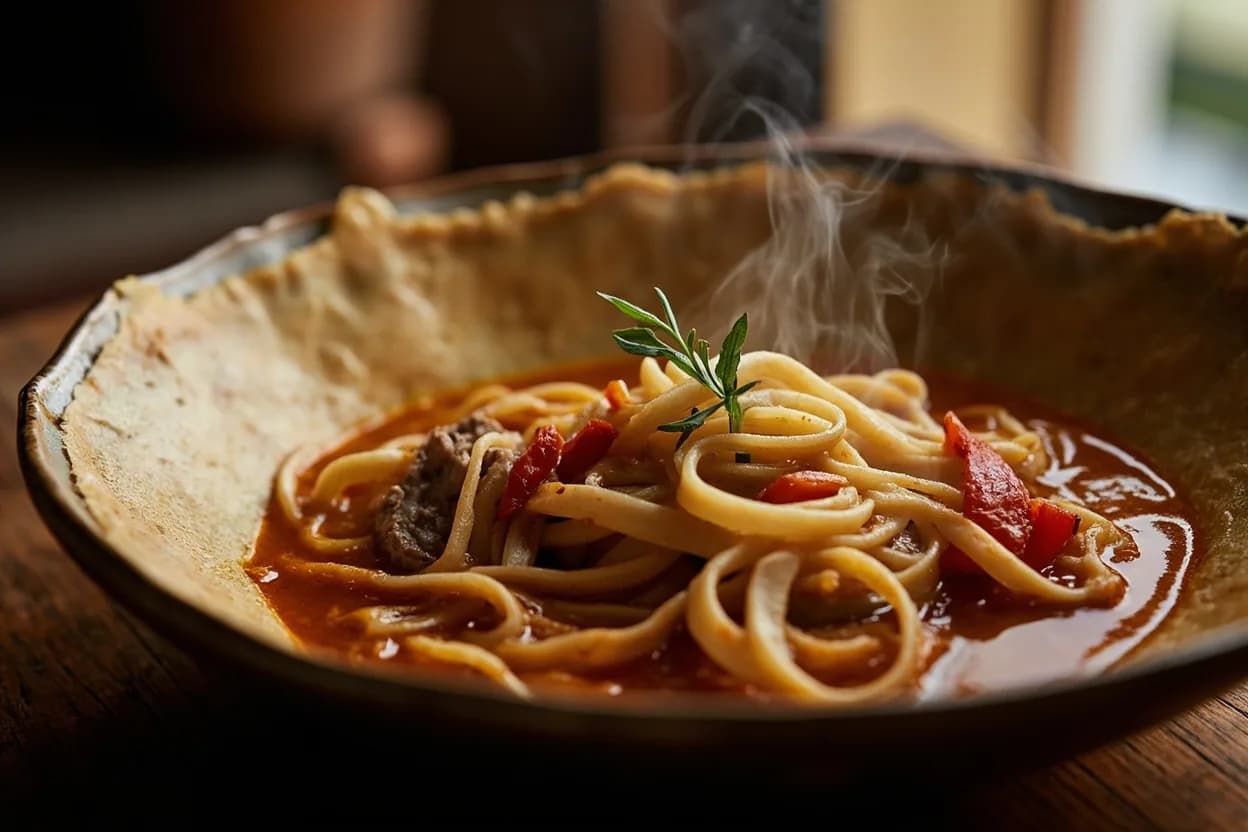
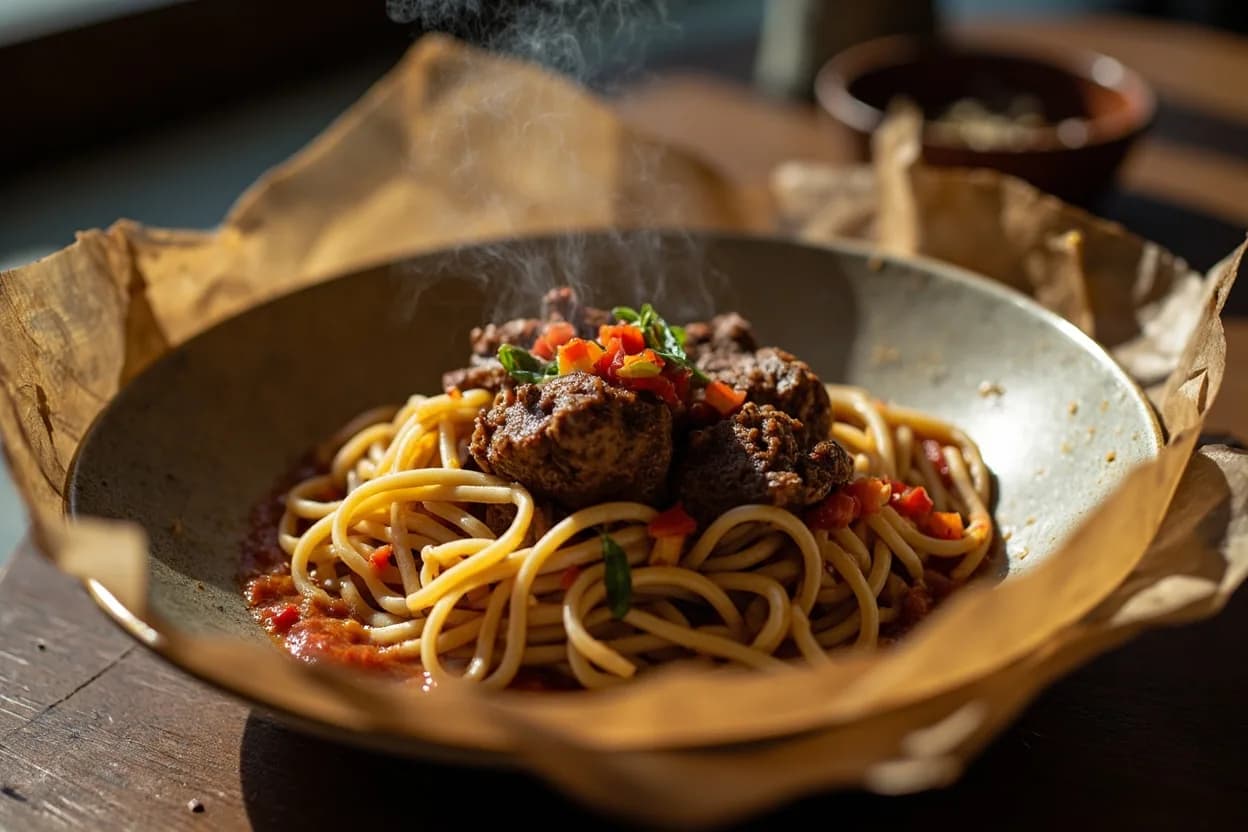
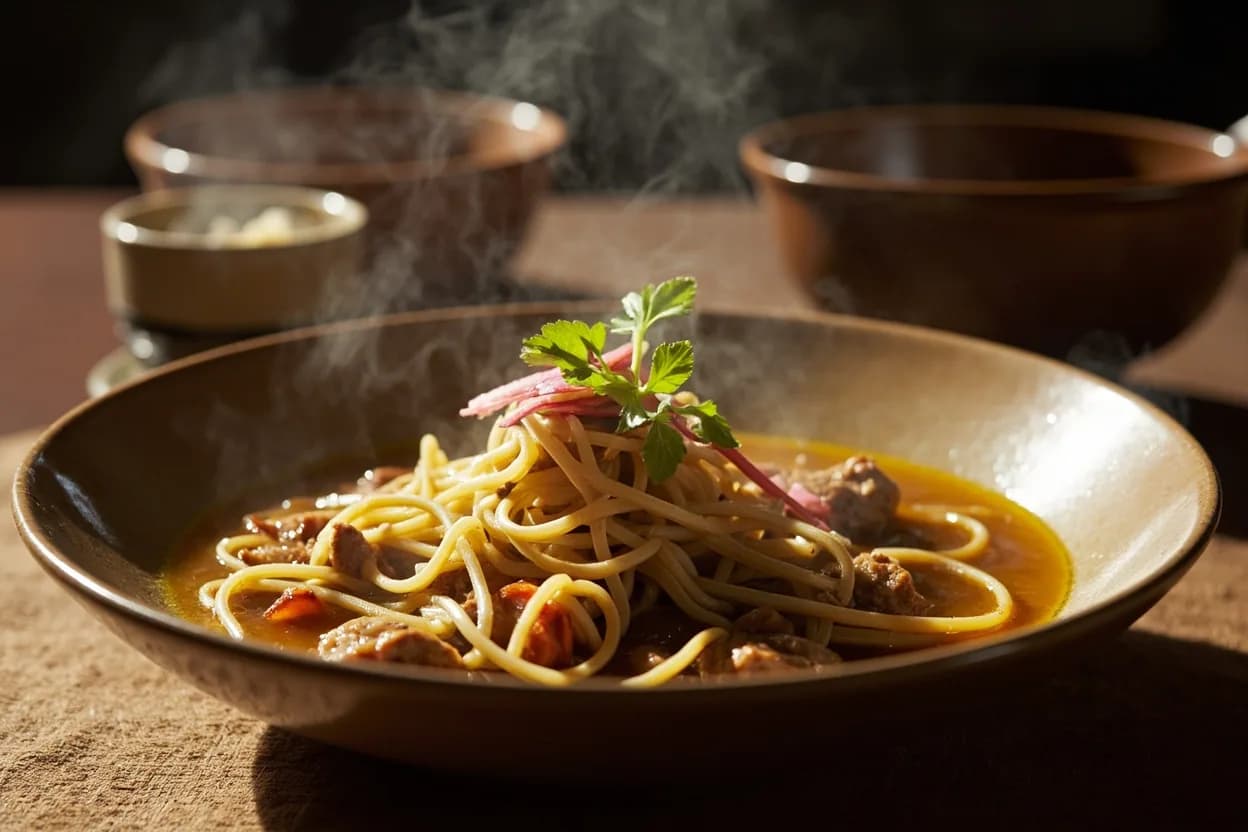
Lanzhou-style lamian is the most codified form of hand-pulled noodles in the world. Trained pullers (拉面师) traditionally refuse to weigh dough, judging portion size by eye and feel, and most shops display a vertical banner outside listing the nine named thicknesses so customers can order by number as much as by name. The strand-counting convention — 2, 4, 8, 16, 32, 64, 128, 256, 512 — is not decorative arithmetic. Each doubling produces an immediately identifiable thickness and texture, and the cook decides which one to make based on what is being served. 二细 is the everyday soup standard; 毛细 is reserved for the lightest, cleanest beef broths; 荞麦棱 or 二柱子 only appear when the noodle must stand up to a heavy sauce or long braise. Outside Lanzhou, the technique varies: Xinjiang laghman uses the same stretch-and-fold mechanics but folds differently and stops earlier, producing thicker strands meant for tossing with stir-fried lamb and tomato rather than floating in broth. Beijing and Shandong chenmian leans harder on lye water (kansui), yielding a yellower, more elastic, slightly alkaline-tasting noodle that holds up well in zhajiangmian and fried-tomato sauces.
Why the Dough Behaves the Way It Does
Hand-pulling works because of gluten — the network of protein strands that forms when high-protein wheat flour is hydrated and agitated. Three variables control whether the dough will stretch into clean strands or snap into ragged pieces. First, protein content: below about 12%, the gluten network is too weak to hold the repeated stretching, and strands tear. Second, hydration: a wetter dough is more extensible but also more prone to sticking to the work surface and to itself; the relatively dry 48–52% window gives enough slack to stretch while keeping the rope coherent in the hands. Third, rest: after kneading, the gluten is tight and springy. Resting for at least 30 minutes (longer is better; overnight in the refrigerator is best for home cooks) lets the proteins relax, which is the single biggest factor in clean, even pulls. Salt tightens the gluten and reduces stickiness, which is why it goes into the mix water rather than being sprinkled on later. Lye water, used in the Beijing/Shandong tradition, raises pH and cross-links the gluten further, producing a yellower color and the particular 'Q' (弹, tán) bounce prized in northern Chinese noodle cookery.
Pulling Mechanics
The pulling motion itself looks theatrical but is mostly gravity. The dough is held by both ends and bounced on the work surface — the impact and the downward force of the dough's own weight do the stretching. Once the rope has roughly doubled, the ends are brought together to form a loop, and the loop becomes the new grip. The fold is the doubling event: each cycle turns one strand into two, two into four, four into eight, and so on. Twist is the enemy: a folded rope that has been twisted along its axis produces strands of unequal length that kink and cook unevenly. The puller should fold cleanly, end to end, and never rotate the dough between cycles. Jerky or rushed pulls snap strands; confident, even, sustained tension keeps them intact. As strands multiply and the bundle grows long, it is draped over the back of the hand or the forearm rather than held out at full extension, which would tear the thinnest strands under their own weight.
Common uses
Tips & pitfalls
- Use flour with at least 12% protein — pastry or cake flour produces strands that tear before they stretch.
- Hydrate cautiously: 50% water is a starting point; a stiffer dough is far easier to pull than a slack one, and you can always add a few drops while kneading.
- Rest the dough for at least 30 minutes, longer if you have time — this relaxes the gluten and is the single biggest factor in clean pulls. Overnight in the refrigerator, lightly oiled and sealed, is the most reliable approach for home cooks.
- Oil the dough generously after resting, not before — oil added too early interferes with gluten development, while oil added after resting forms a film that keeps the surface from drying and sticking.
- Pull with even, sustained tension and let gravity do the work; jerky or rushed pulls snap the strands.
- Fold end-to-end without twisting — twists create uneven strand lengths and kinks that cook unevenly and tangle in the pot.
- Avoid humid kitchens for practice: stickiness multiplies when moisture is in the air, and a cool, dry room makes pulling dramatically easier.
- Cook within minutes of pulling — the surface of raw strands dries quickly, and dried strands fuse together in the pot. Have the boiling water ready before you start the final pulls.
Good to know
- Chinese name
- 拉面 (lāmiàn); 抻面 (chēnmiàn) in northern, non-Hui traditions
- Origin
- Northwest China, most strongly associated with Lanzhou, Gansu province, and Hui Muslim cuisine
- Flour
- High-gluten wheat flour, 12–14% protein (noodle or strong bread flour)
- Hydration
- Roughly 48–52% water to flour by weight — lower than pasta or bread dough
- Key additives
- Salt (1–2% of flour weight) for gluten strength; optional kansui/lye water for yellow color and springy chew
- Kneading
- 20–30 minutes of vigorous kneading to develop gluten
- Strand doubling
- Lanzhou tradition recognizes 9 thicknesses, each a doubling: 2, 4, 8, 16, 32, 64, 128, 256, 512 strands
- Cooking time
- 1–3 minutes in boiling water; hair-thin strands (毛细) under one minute
Also called
Hand-Pulling Noodles (拉面) · Lamian · Folding Dough for Cutting
Dishes that rely on it
Related

Whisk
Beat ingredients smooth and aerated with a looping wire motion

Sift
Pass dry ingredients through mesh to aerate and remove lumps

Strain
Pour through mesh to separate solids from liquid for a smooth result

Filter
Pass liquid through fine material to clarify out the smallest particles

Rice
Press cooked potatoes through small holes for fluffy, lump-free texture

Mash
Crush soft cooked food into a rustic, creamy purée

Grind
Crush food into a coarse to fine texture, from spices to meat

Grate
Shred food into fine bits against a sharp-toothed surface