Prep & Assembly
Hung Curd Coating
Coating ingredients in strained, thick yogurt for marinades and dips.
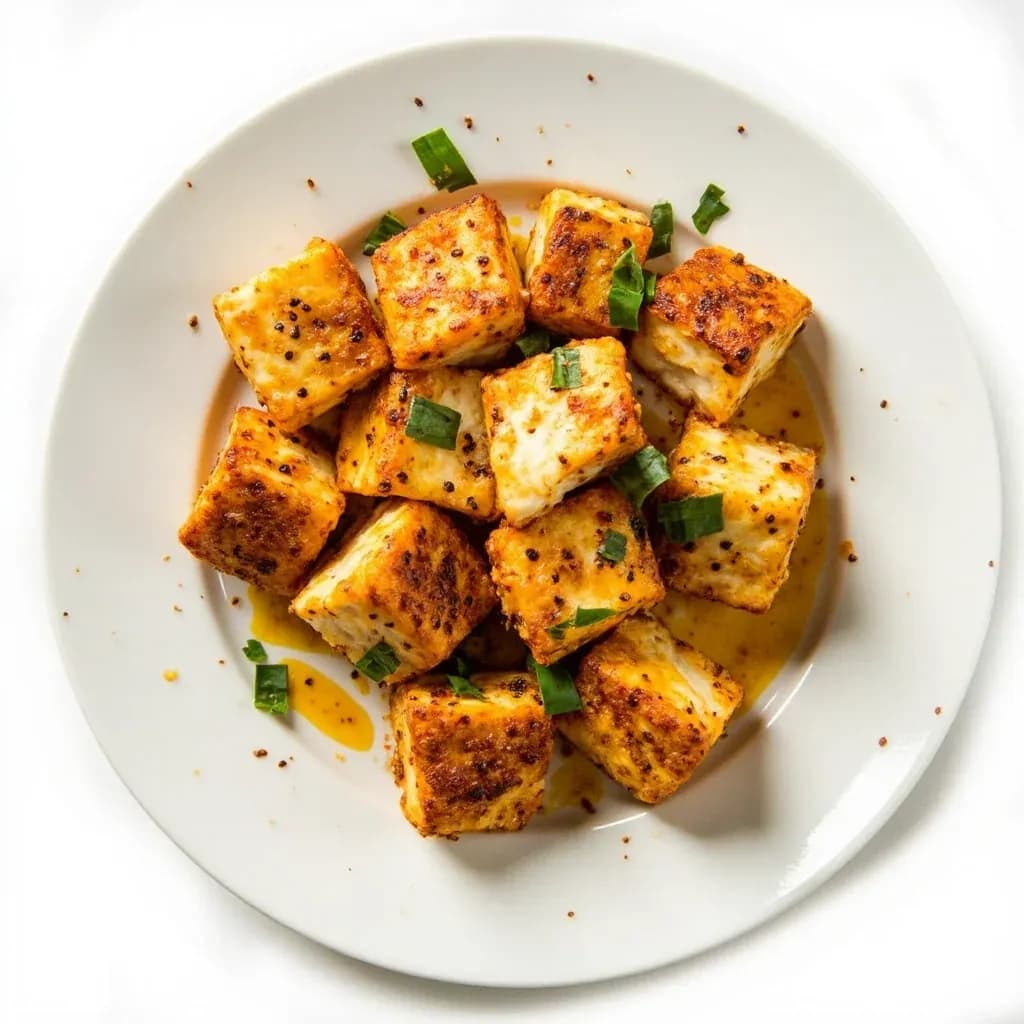
Hung curd coating uses yogurt that has been drained in cloth to remove whey, leaving a thick, creamy base. Spices and aromatics are blended in and the mixture clings to vegetables, paneer, or meat as a marinade before grilling or tandoor cooking. The reduced water content keeps the coating from sliding off and prevents a watery final dish.
Hung curd coating is the technique of marinating food — most often meat, fish, paneer, or vegetables — in yogurt that has been drained of its whey until thick, creamy, and spoonable. The drained curd is whisked smooth, built into a spiced marinade, and massaged onto the food, where it does three jobs at once: its lactic acid gently denatures surface proteins to tenderize, its concentrated milk solids brown into a glossy blistered crust, and its viscous body holds ground spices in a uniform film that clings through grilling, roasting, or tandoor cooking. The result is the tandoori red of chicken tikka, the green sheen of hariyali kebab, the pale gold of malai tikka, and the tangy base of dahi bhalla — flavors and textures that ordinary yogurt, with its thin body and high water content, simply cannot deliver.
The method is the foundation of North Indian and Mughlai tandoor cookery and, under different names, runs the former Mughal corridor from Punjab through Delhi, Lucknow, and Hyderabad, and across into Levantine and Turkish grilling as labneh-based marinades. The quality of the final dish is decided almost entirely by two disciplines: how well the curd is strained, and how the food is handled before and after it meets the marinade. Strain too little and the coating slides off in the oven; strain too aggressively and the curd turns gummy. Work at the wrong temperature and the food either sits in unsafe acid or takes on a sour edge. Get those right, and the coating becomes a near-effortless vehicle for char, spice, and tenderness.
- Difficulty
- Easy
Types & varieties
Hung curd whisked with Kashmiri chilli, garam masala, ginger-garlic paste, lemon, and mustard or vegetable oil; the red-orange coating for chicken, fish, and paneer tikka.
Blanched and puréed spinach, mint, cilantro, and green chilli folded into hung curd; used for hariyali kebab, fish, and chicken.
Hung curd tempered with mustard seeds, fennel, nigella, and a touch of pickle masala; sharp, sour-spicy profile for vegetables and fish.
Hung curd enriched with fresh cream, white pepper, cardamom, and a little saffron; mild, luxurious coating for malai tikka and reshmi kebab.
Hung curd combined with roasted besan, grated onion, and minced aromatics; binds the kebab mixture and keeps it moist during pan-frying.
Hung curd whisked into a slow-cooked onion-tomato-spice base; thick, almost paste-like, used as a finishing binder for richer curries and kofta gravies.
Plain, unstrained-with-spices version; finished with olive oil, za'atar, or sumac, served as a dip or part of a mezze.
How to do it
- 1
Prepare the hung curd
Line a fine-mesh sieve with damp muslin or cheesecloth and set it over a deep bowl. Spoon in 1 kg of full-fat, plain yogurt, gather the cloth corners, and tie. Refrigerate 4–6 hours for a thick, coating consistency (8–12 hours for a stiffer, labneh-like result). Discard the collected whey or save it for kneading dough or adding to soups.
- 2
Whisk until smooth and glossy
Scrape the hung curd into a mixing bowl. Whisk firmly for 1–2 minutes until it loosens into a smooth, ribbon-like cream with no lumps. If it feels stiff, loosen with 1–2 tablespoons of milk, cream, or a neutral oil.
- 3
Build the marinade
Whisk in ginger-garlic paste (1 tbsp per cup of curd), minced green chilli, and ground spices in this order: turmeric, Kashmiri chilli powder, coriander powder, garam masala. Add lemon juice or vinegar, then a tablespoon of mustard or vegetable oil. Add salt and any fresh herbs last. For a clingier coat, whisk in 1–2 tsp of toasted besan or rice flour.
- 4
Prepare the food to be coated
Pat the protein or vegetable completely dry. For chicken, lamb, or large fish, score the surface in shallow diagonal cuts so the curd can penetrate. For paneer, tofu, or vegetables, leave whole or cut into uniform 2–3 cm pieces.
- 5
Coat and work the marinade in
Add the food to the bowl and use your hands to massage the marinade into every surface, pushing it into the scores and crevices. Each piece should be evenly and generously coated; no bare patches should show.
- 6
Rest under refrigeration
Cover and refrigerate. Chicken pieces 2–4 hours (whole chicken up to 8 hours); lamb 4–8 hours; fish fillets 20–30 minutes; whole fish or prawns 30–45 minutes; paneer and vegetables 30–60 minutes. Do not exceed these windows for delicate items.
- 7
Cook over high, direct heat
Remove from the fridge 20–30 minutes before cooking. Brush the coated surface with a thin film of oil or melted butter. Cook on a screaming-hot tandoor, grill, cast-iron tawa, or under a 230 °C / 450 °F oven broiler. The curd sugars and milk solids will blister and char in 6–12 minutes depending on thickness; turn once and brush with reserved marinade in the final minute for a glossy finish.
Why it works: the three functional properties
Three properties of strained yogurt do the heavy lifting in a hung-curd coating, and understanding them is the difference between a reliable glossy char and a watery puddle on the tray. First, acidity: the lactic acid in hung curd is concentrated in the remaining solids after the whey drains off and gently denatures the surface proteins of meat, fish, and paneer. This tenderizes from the outside in and gives those proteins a head start on browning. Second, fat and milk solids: by draining off the watery whey, you concentrate the milk fats and casein proteins — and it is these, not the spices, that blister into the golden restaurant-style crust. Third, viscosity: a properly strained curd is thick enough to suspend ground spices in a uniform film that clings to food through handling, refrigeration, and the heat of a grill. Get any one of these wrong — too thin, refrigerated too long in acid, or whipped with too much citrus — and the coating fails.
- Acidity: lactic acid tenderizes surface proteins and accelerates browning; too much contact time turns delicate proteins mushy.
- Fat and milk solids: concentrate the components that actually char and blister; low-fat yogurt cannot develop a real crust.
- Viscosity: a thick, glossy curd suspends spice particles evenly and clings through handling and heat; thin yogurt runs off before the oven finishes preheating.
Common uses
Tips & pitfalls
- Always use whole-milk yogurt; low-fat versions weep whey and the coating slides off the food.
- Do not add salt to the yogurt before straining — salt pulls more whey out and can make the curd grainy.
- Strain in the refrigerator, not on the counter, to keep the curd food-safe and prevent over-fermentation.
- Let gravity do the work — never wring or squeeze the muslin; the curd will turn gummy.
- Whisk the hung curd vigorously until glossy before adding anything else; this is what makes the coating cling to the food.
- Pat proteins completely dry before coating; surface moisture is the single most common reason marinades slide off in the oven.
- Marinate fish and shellfish briefly (20–45 minutes); long baths in acid will cure the surface and turn it mushy.
- Brush a thin film of oil or melted butter on the marinated surface just before cooking — it keeps the protein from drying out and helps the crust blister.
Good to know
- Also known as
- Chakka (Marathi); Labneh (Levantine); Greek yogurt is a Western analog, but not identical
- Base ingredient
- Full-fat plain yogurt (cow or buffalo), minimum 4% fat
- Straining time
- 4–6 hours for a coating consistency; 8–12 hours for a stiffer, labneh-like texture
- Typical yield
- Roughly 40–50% of the original yogurt volume; 1 kg yogurt yields about 450–500 g hung curd
- Acidity
- Retains the lactic acidity of fresh yogurt; pH is similar to or only slightly higher than fresh yogurt, but the concentration of acid in the remaining solids is still enough to denature surface proteins and aid browning
- Heat behavior
- Maillard-rich crust at high heat; chars well in a tandoor (≈400 °C / 750 °F) or a 230 °C / 450 °F oven
- Traditional straining cloth
- Muslin or fine cotton (mal-mal); modern shortcut is cheesecloth over a fine-mesh sieve
- Regional use
- Core technique in Mughlai, Punjabi, and Maharashtrian tandoor and kebab cookery; equivalent in Levantine, Turkish, and Greek grilling
- Storage of finished hung curd
- Airtight container, refrigerated, 4–5 days; freezes acceptably for 2–3 weeks (texture thins slightly on thawing)
Also called
Strained Yogurt Coating · Hung Yogurt
Related

Whisk
Beat ingredients smooth and aerated with a looping wire motion

Sift
Pass dry ingredients through mesh to aerate and remove lumps

Strain
Pour through mesh to separate solids from liquid for a smooth result

Filter
Pass liquid through fine material to clarify out the smallest particles

Rice
Press cooked potatoes through small holes for fluffy, lump-free texture

Mash
Crush soft cooked food into a rustic, creamy purée

Grind
Crush food into a coarse to fine texture, from spices to meat

Grate
Shred food into fine bits against a sharp-toothed surface