Prep & Assembly
Icing Down (On-Ice Storage)
Burying fresh ingredients in ice to chill and hold them safely.
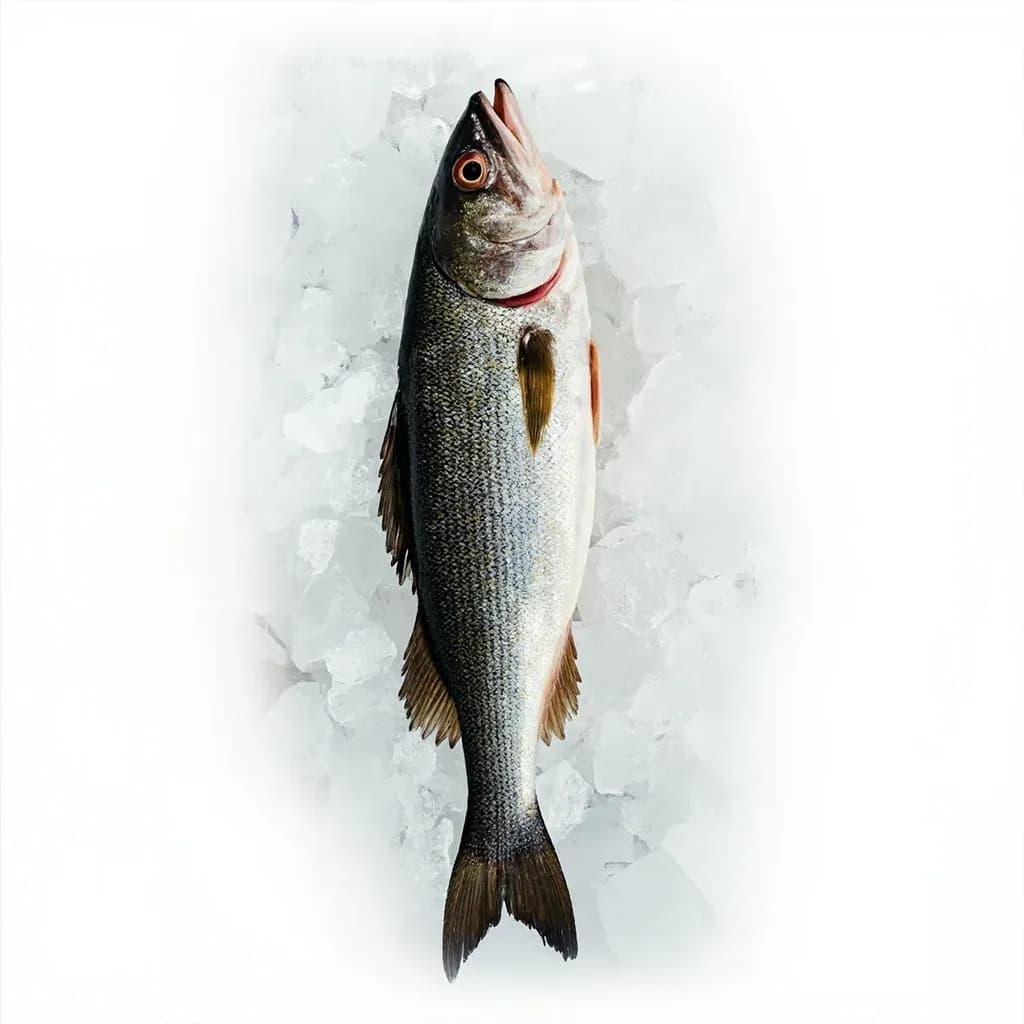
Icing down packs fish, shellfish, or produce directly on or in crushed ice to rapidly chill and hold it at a safe, fresh temperature. The constant cold and slight moisture from melting ice preserve quality and slow bacterial growth before service or processing. It is standard practice at fish counters and on boats to keep the catch firm and fresh.
Icing down — also called on-ice storage or ice hold — is the practice of burying or bedding fresh ingredients in crushed or cubed ice to keep them at holding temperature during service. It is the standard method on raw bars, at fish markets, and across catering lines where cold seafood, composed salads, or cold appetizers must stay at or below 41°F (5°C) for hours while still looking fresh. Unlike a blast chiller or ice-water bath, icing is fundamentally a holding technique: it preserves an already-cold product rather than pulling a warm one down to temperature, which is why pre-chilling before icing is non-negotiable.
The physics of the bed are simple but unforgiving. Cold sinks, so ice on top of the product matters as much as ice beneath it. Meltwater is unavoidable, and the moment it pools around the food it begins to leach flavor, dilute sauces, waterlog delicate items, and create a sanitation hazard by sitting in contact with the product and the surrounding ice. Every well-run ice display is built around moving that water away from the product — through perforated pans, wire racks, or frequent draining — and around rebuilding the bed with fresh ice before the original load melts into a tepid puddle.
In regulated kitchens the technique sits inside a tight food-safety framework. The FDA Food Code (3-501.16) requires TCS food to be held at 41°F (5°C) or below, and ready-to-eat product that creeps above 41°F for more than four cumulative hours must be discarded (3-501.17). Salted-ice holds and insulated Cambro builds can extend that window, but none of them replace a calibrated thermometer and a staff member whose job is to drain, refresh, and check temperatures throughout service.
- Difficulty
- Easy
Types & varieties
Food is buried in or laid directly on ice. Standard for whole fish, shrimp cocktail service, and oysters cupped-down on crushed ice.
Food sits on a perforated pan, wire rack, or in a sealed container surrounded by ice. Used for prepared salads, delicate produce, and items that would waterlog or bleed into the ice.
Visible ice bed built into a buffet well, market counter, or carved ice tray. Functional and decorative; common at oyster bars and seafood stations.
Ice mixed with rock salt for a sub-freezing bath; used on raw bars and prep lines to keep product firm and bright.
Food submerged in ice water for rapid cooling of blanched vegetables, stocks, or just-cooked fish. Related but distinct from storage icing.
Icing with added salt or brine for whole fish on a fishing vessel or in a commercial fish hold; preserves texture and slows spoilage for hours to days.
How to do it
- 1
Pre-chill the product
Bring the food to 40°F (4°C) in the walk-in before it goes on ice. Icing holds temperature; it does not rapidly pull a warm product down to safe temps, and skipping this step is the most common path to a four-hour-rule violation.
- 2
Select the right pan
Use a perforated hotel pan or a wire rack set inside a solid pan for items that bleed, waterlog, or are sauce-coated. Use a solid pan only for items meant to sit in direct contact with ice — whole fish on a bed of ice, oysters cupped-down on crushed ice.
- 3
Build the ice bed
Fill the base pan with a generous layer of crushed or cubed ice, at least 1 inch deep across the entire surface and deeper for long holds. Mound it so ice surrounds the product on all sides, not just underneath.
- 4
Set the product
Place food on the rack or perforated pan so meltwater drains away from it. For whole fish, lay on a thick bed of ice with crushed ice packed into the cavity. For oysters, nestle them cup-down on a flat bed of crushed ice so the liquor stays in the shell.
- 5
Pack ice around and on top of the product
Top-icing is critical — cold sinks, and a layer of ice over the product keeps the upper surface at holding temp. Pack firmly but don't crush delicate items.
- 6
Drain and replenish
Pour off meltwater every 20–30 minutes during service and top up with fresh ice. Stagnant meltwater is a cross-contamination and flavor-leaching risk.
- 7
Monitor and time-limit
Track holding time from when the product left the walk-in. Discard ready-to-eat TCS food after 4 cumulative hours above 41°F. Probe with a thermometer at least once per hour.
- 8
Break down and sanitize
At end of service, discard all ice that touched raw animal product, wash and sanitize all pans and racks, and store ice-machine scoops separately from food-contact tools.
Why it still works in a modern kitchen
Commercial ice-making machines became widespread in the late 19th century, and mechanical refrigeration gradually replaced ice as the primary cold-storage method through the 20th century — yet icing has never lost its place on the service line. There are three reasons. First, ice is a visible, tactile guarantee of cold — customers see it and trust it. Second, ice surrounds the product on every side, including the top, which a walk-in shelf cannot do. Third, ice is portable: it goes in a Cambro, a buffet well, or a catering transport without any electrical hookup. For raw bars, oyster service, and outdoor events, no refrigeration system matches that combination of presentation, coverage, and mobility.
- Visible cold builds customer trust at raw bars and oyster displays
- Ice covers the top of the product, which a shelf cannot do
- Portable for off-site events where no power is available
- Cheaper to deploy for short service windows than building out cold tables
Pan setup and drainage
The single biggest decision in any ice display is whether the product sits in direct contact with ice or on a perforated pan or wire rack above it. Direct contact is faster and colder but only safe for items that won't waterlog or contaminate the meltwater — whole fish, oysters, raw shrimp, lobster. Indirect contact is the right call for anything porous, sauce-coated, or pre-dressed: composed salads, tartare, ceviche, fruit, pâté. The perforated pan should sit inside a deeper solid pan that catches meltwater, so you can lift, drain, and reset without rebuilding the bed.
- Solid pan for direct-contact items (whole fish, oysters, shrimp)
- Perforated pan or wire rack over a solid pan for anything that bleeds or waterlogs
- Cambro or insulated box for transport, with ice packed top and bottom
- Reserve a dedicated drip pan under the entire station to protect countertops and floors
Temperature and time discipline
Icing looks passive, but it requires active monitoring. A probe thermometer left in the bed and checked hourly is the only reliable way to confirm the FDA's 41°F ceiling is being met. Time-stamp every pan that goes on ice so you can enforce the four-hour cumulative rule without guesswork. Salted ice, insulated containers, and pre-chilled product all buy you margin, but none of them reset the clock once the temperature has crept.
- Probe the bed with a calibrated thermometer at least once per hour
- Time-stamp every pan from the moment it leaves the walk-in
- Discard ready-to-eat TCS food after 4 cumulative hours above 41°F
- Never reuse ice that has touched raw fish or meat for service to ready-to-eat food
Common uses
Tips & pitfalls
- Drain meltwater every 20–30 minutes — pooled water is the number-one mistake and the fastest path to soggy food and bacterial growth.
- Use crushed ice for direct-contact applications because it conforms to the product; use cubed or block ice under a rack for longer holds.
- Salt the ice when you need extra-cold holding (raw bars, sashimi displays) — roughly 1 part rock salt to 8 parts ice by volume gets the bath near 15°F.
- Set porous, delicate, or sauce-coated items on a perforated hotel pan or wire rack so they sit above meltwater rather than in it.
- Cover the display with a domed lid or sneeze guard; exposed ice picks up ambient heat, odors, and contaminants fast.
- Keep a calibrated probe thermometer in the bed and check it at least hourly — guessing temperature is how four-hour violations start.
- Never reuse ice that has been in contact with raw fish, raw meat, or unwashed produce for service to ready-to-eat food.
- For transport, pack ice on top as well as underneath in an insulated Cambro — cold sinks, so top-icing matters as much in a box as it does on a buffet.
- Pre-chill the product before icing it; icing alone won't pull a 60°F item to 41°F quickly enough to meet the four-hour rule.
- Label and time-stamp anything held on ice past four hours and, if temperature has crept up, discard rather than gamble.
Good to know
- Also called
- On-ice storage, ice hold, ice display, fish hold (when used for seafood)
- Goal temperature
- 41°F (5°C) or below per FDA Food Code 3-501.16; aim for 40°F (4°C) in practice
- Maximum hold for TCS food
- Discard ready-to-eat TCS food held above 41°F for more than 4 cumulative hours (FDA 3-501.17)
- Ice types
- Crushed ice (best surface contact and conformance) and cubed or block ice (longer melt time, used under racks)
- Salt effect
- Rock salt added to ice drops the bath to roughly 15–20°F (−9 to −7°C), extending hold time and firming texture
- Common containers
- Perforated and solid hotel pans (1/6, 1/4, 1/2, full), Cambro polycarbonate boxes, stainless inserts, wire racks
- Drainage cadence
- Pour off meltwater every 20–30 minutes; pooled water dilutes flavor and accelerates bacterial growth
- Pre-chill requirement
- Product should enter the ice already at 40°F; icing alone cannot safely pull a warm item to holding temp in time
- Direct vs. indirect
- Direct contact for whole fish, shellfish, and oysters; indirect (racked or sealed) for items that waterlog or bleed
Also called
On-Ice Storage · Packing on Ice
Related

Whisk
Beat ingredients smooth and aerated with a looping wire motion

Sift
Pass dry ingredients through mesh to aerate and remove lumps

Strain
Pour through mesh to separate solids from liquid for a smooth result

Filter
Pass liquid through fine material to clarify out the smallest particles

Rice
Press cooked potatoes through small holes for fluffy, lump-free texture

Mash
Crush soft cooked food into a rustic, creamy purée

Grind
Crush food into a coarse to fine texture, from spices to meat

Grate
Shred food into fine bits against a sharp-toothed surface