Transform & Preserve
Malaxation (Paste Kneading)
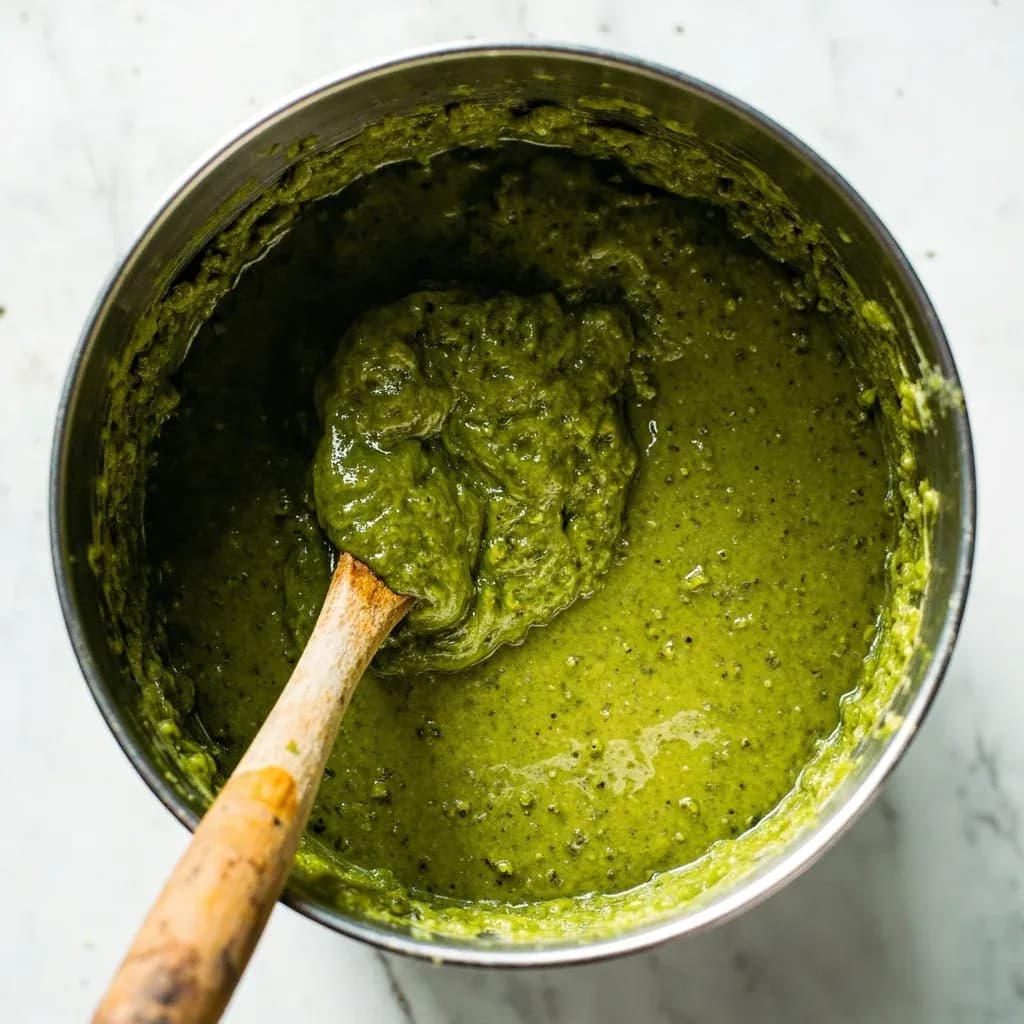
Slowly stirring crushed olive paste so oil droplets merge before extraction.
Malaxation is the slow, continuous kneading of crushed olive paste during olive-oil production, encouraging tiny oil droplets to coalesce so more oil separates out during pressing or centrifuging. Time and temperature are balanced to maximize yield and aroma without oxidizing the oil; cooler, shorter malaxation preserves more polyphenols and freshness. It is a key quality lever for extra-virgin olive oil.
Malaxation is the slow, gentle kneading of crushed olive paste that happens between milling and extraction. When olives pass through a hammer mill, disc mill, or stone mill, their cells rupture and release oil as microscopic droplets suspended in a watery, fibrous mash. Those droplets are far too small to separate cleanly by centrifuge or press. Malaxation gives them time to find one another, collide, and merge into larger drops that will break free of the aqueous phase during solid–liquid separation.
The step matters far more than its quiet machinery suggests. While the paste is being folded at low speed, residual enzymes — chiefly lipoxygenase and a cascade of related activities — convert polyunsaturated fatty acids into the C6 aldehydes that smell like cut grass, tomato leaf, and green apple. The same window releases and stabilizes phenolic compounds such as oleocanthal (the throat-tickle), oleacein, and hydroxytyrosol, which carry bitterness, pungency, and most of the oil's oxidative shelf life. A short, cool malaxation preserves those molecules and yields a greener, more peppery oil. A long, warm malaxation drives yield up but trades away aroma and stability.
In practical terms, malaxation is exclusively a mill operation, not a home cook's technique. Yet it is the single biggest reason two extra virgin olive oils pressed from the same orchard on the same day can taste so different. The 27 °C ceiling enshrined in EU and IOC cold-extraction rules exists precisely because temperature is the lever that swings flavor most directly. Anyone who buys or judges EVOO is, in effect, judging how the producer malaxed the paste.
- Difficulty
- Hard
Types & varieties
Traditional setup with the paste surface exposed to air. Simpler equipment, common in small artisanal mills, but higher oxidation risk; cycles are kept short to compensate.
Hermetically sealed stainless-steel tank with minimal headspace. Standard in modern mid-range mills; better retention of phenols and aroma than open tanks.
Paste kneaded under reduced pressure to strip dissolved oxygen. Used for premium EVOO where green, grassy character and polyphenol load are priorities.
Headspace blanketed with N2 or CO2 to displace oxygen. Commercial high-end units from Pieralisi, Alfa Laval, Mori-Tem, AMB, and others.
Talc, natural calcium carbonate, or enzymatic preparations (pectinases, cellulases) added within IOC limits to speed droplet merging, mainly on difficult, low-moisture pastes.
How to do it
- 1
Confirm the paste is ready for the malaxer
Paste from the crusher (hammer mill, disc mill, or stone mill) should be a homogeneous, gritty mash with no intact kernels or large pulp chunks and no standing free oil on top. If you see whole pits or dry clumps, the crush is incomplete and malaxation will not save it.
- 2
Transfer and load quickly
Move the paste to the pre-cleaned malaxer tank without delay. The longer it sits in transfer, the more it oxidizes. On closed systems, close the lid and engage atmosphere control as soon as the tank is loaded.
- 3
Bring paste to target temperature
Use the tank's water jacket to bring the paste to 25–28 °C, aiming for roughly 26 °C for premium EVOO. Never exceed 27 °C if you intend to label the oil 'cold extracted.' Cold paste is too viscous for clean separation; warm paste loses volatiles and phenols.
- 4
Start slow agitation
Engage the augers or paddles at low speed — single-digit to low-teens rpm. The aim is gentle folding, not whipping. Fast agitation incorporates air, oxidizes the paste, and can build emulsions that hurt yield and clarity.
- 5
Manage the atmosphere
On open tanks, accept air contact and keep the cycle short. On closed tanks, minimize headspace. On vacuum or nitrogen systems, pull vacuum or flush with N2 once the lid is closed and maintain it throughout the cycle.
- 6
Time the cycle to the fruit
Run 20–30 minutes for ripe or black olives and for delicate cultivars such as Arbequina or Maurino. Run 30–45 minutes for green, hard, or low-moisture fruit. Higher oil content and warmer paste both shorten the time needed; difficult pastes need more.
- 7
Check for coalescence before stopping
A finished paste is uniform, slightly dense, and shows a fine oily sheen; small drops may begin to weep on the surface. If the paste still looks matte, dry, or foamy, give it more time rather than more heat.
- 8
Send paste directly to extraction
Discharge the malaxed paste to the decanter centrifuge (two- or three-phase) or to the press without holding. Holding a finished paste undoes the work — coalesced droplets re-disperse and oxidation resumes.
The temperature–time trade-off
Every minute and every degree in the malaxer is a bet between yield and quality. Warmer paste flows more easily, droplets coalesce faster, and more oil ends up in the decanter. The cost is paid in volatiles that evaporate and phenols that oxidize or polymerize. Premium producers typically run closer to 22–25 °C than the 27 °C ceiling and accept a few percent lower yield in exchange for a markedly more aromatic, more shelf-stable oil. Lower-tier and high-volume producers run hot and long because volume compensates for quality loss.
- ≤27 °C is the legal ceiling for 'cold extracted' labeling under EU Reg. 1019/2002 and the IOC trade standard.
- Yield gains flatten after roughly 45–60 minutes; further time only erodes quality.
- Each degree above 27 °C measurably reduces polyphenol content and accelerates oxidative aging.
Why this step drives olive oil flavor
The bitter, peppery, green character that distinguishes fresh extra virgin olive oil is not created by the tree or by pressing — it is created in the malaxer. The lipoxygenase pathway, still active in the freshly crushed paste, converts linoleic and linolenic acids into hexanal and E-2-hexenal, the compounds responsible for the cut-grass and tomato-leaf aromas. At the same time, oleocanthal and related secoiridoids are released from the olive flesh. Malaxation controls how much of each survives to the bottle.
- Short, cool cycles preserve C6 aldehydes — the 'green' and 'grassy' notes.
- Phenolic retention drives bitterness, pungency, and oxidative stability.
- Ripe or black olives need shorter cycles because their softer tissue breaks down faster; green olives need longer cycles for harder cell walls to release their contents.
Cultivar behavior in the malaxer
Not all olive varieties behave the same way in the tank. Robust cultivars with high polyphenol loads tolerate longer and warmer cycles because they have more to lose; delicate cultivars reward restraint and lose their perfume quickly. A miller's malaxation program is essentially a cultivar-by-cultivar calibration.
- Picual and Cornicabra: tolerant of longer, warmer cycles; high in polyphenols.
- Arbequina, Peranzana, Maurino: reward short, cool cycles; lose character quickly.
- Late-harvest or water-stressed fruit often needs the longer end of the range.
Common uses
Tips & pitfalls
- Hold paste at or below 27 °C if you want the 'cold extraction' label and maximum polyphenol content; every degree above that measurably erodes phenols.
- Do not shorten the cycle below about 20 minutes — insufficient coalescence leaves oil trapped in the watery phase and lowers yield.
- Do not extend past roughly 45–60 minutes — past the optimum, yield plateaus while oxidation, off-flavors, and phenol loss accelerate.
- Ripe or black olives malax faster and at the cooler end; green, hard, or late-harvest fruit needs the longer, slightly warmer end.
- Watch the paste, not just the clock: a properly malaxed paste looks uniform and slightly glossy with a thin oily sheen, not dry and not foamy.
- On vacuum or nitrogen systems, degas and seal promptly after the crusher; any air folded in at loading undermines the protection.
- Different cultivars behave differently — Picual and Cornicabra tolerate long, warm cycles, while Arbequina and other delicate varieties reward short, cool ones.
- Clean the malaxer thoroughly between batches; residual paste oxidizes quickly and taints the next lot.
Good to know
- Also called
- Gramolatura (Italian); batido (Spanish); malaxage or pâte de malaxation (French)
- Stage in process
- Between crushing (milling) and solid–liquid separation (centrifugation or pressing)
- Target temperature
- 25–28 °C for premium EVOO; ≤27 °C to claim 'cold extraction' under EU/IOC rules
- Typical duration
- 20–45 minutes, shorter for ripe olives or delicate cultivars, longer for green or hard fruit
- Agitation speed
- Slow rotation of augers or paddles, generally single-digit to low-teens rpm
- Effect on yield
- Properly done, raises oil yield by 5–15% over immediate extraction; over-malaxation does not keep raising yield
- Effect on quality
- Longer, hotter cycles raise yield but reduce polyphenols, grassy volatiles, and oxidative stability
- Standard reference
- International Olive Council (IOC) trade standard; EU Reg. 1019/2002 for cold extraction; Codex Alimentarius olive oil standard
Also called
Paste Kneading · Olive Malaxation
Related

Confit
Cook slowly submerged in fat for silky tenderness and keeping

Cure
Draw out moisture with salt and time to preserve and concentrate

Pickle
Steep in acidic brine for bright, tangy, crunchy preservation

Ferment
Let friendly microbes transform food into tangy, complex flavor

Marinate
Soak in a seasoned mix to flavor and tenderize before cooking

Brine
Soak in salt water so meat stays juicy and seasoned throughout

Dehydrate
Slowly dry out moisture to concentrate flavor and extend shelf life

Cold-Smoke
Perfume cured food with smoke without cooking it through