Water & Steam
One-Pot Cooking
Cooking a whole dish in a single pot so grains absorb the seasoned liquid.
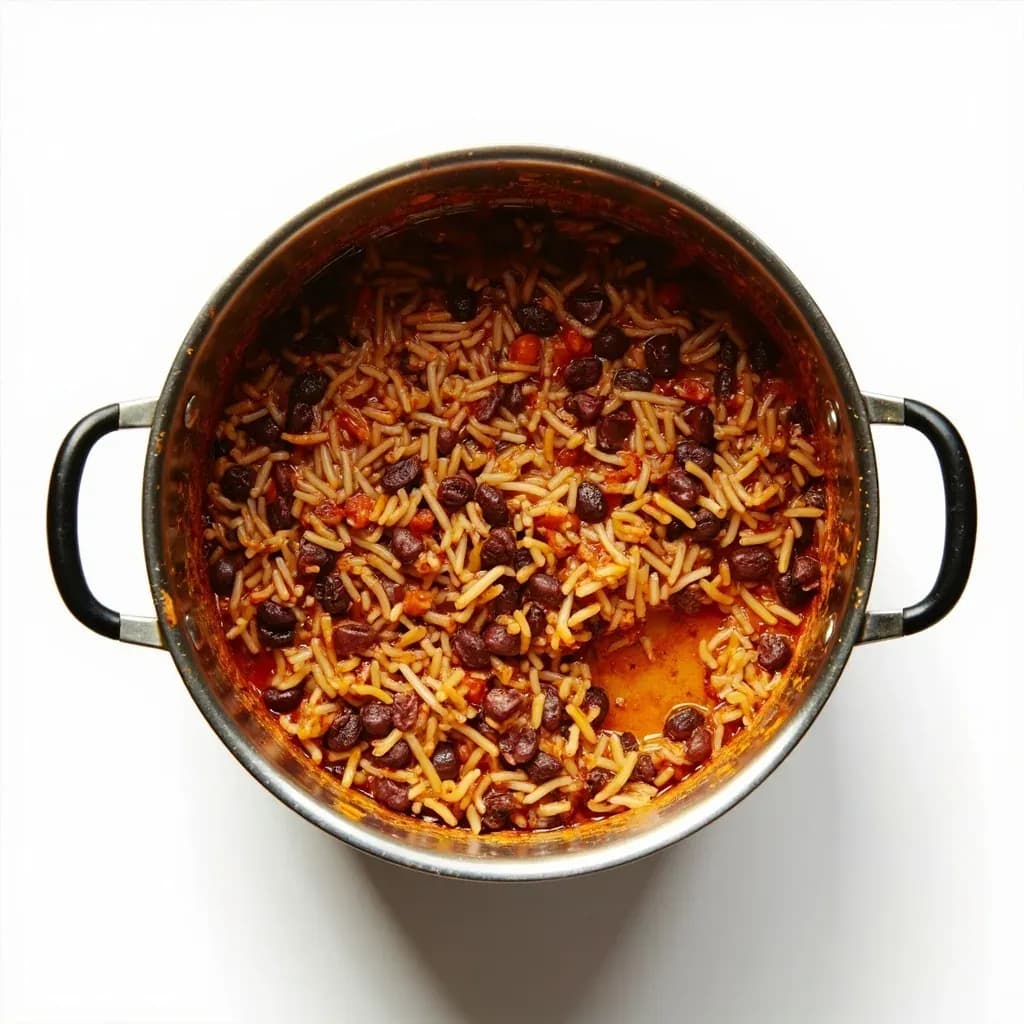
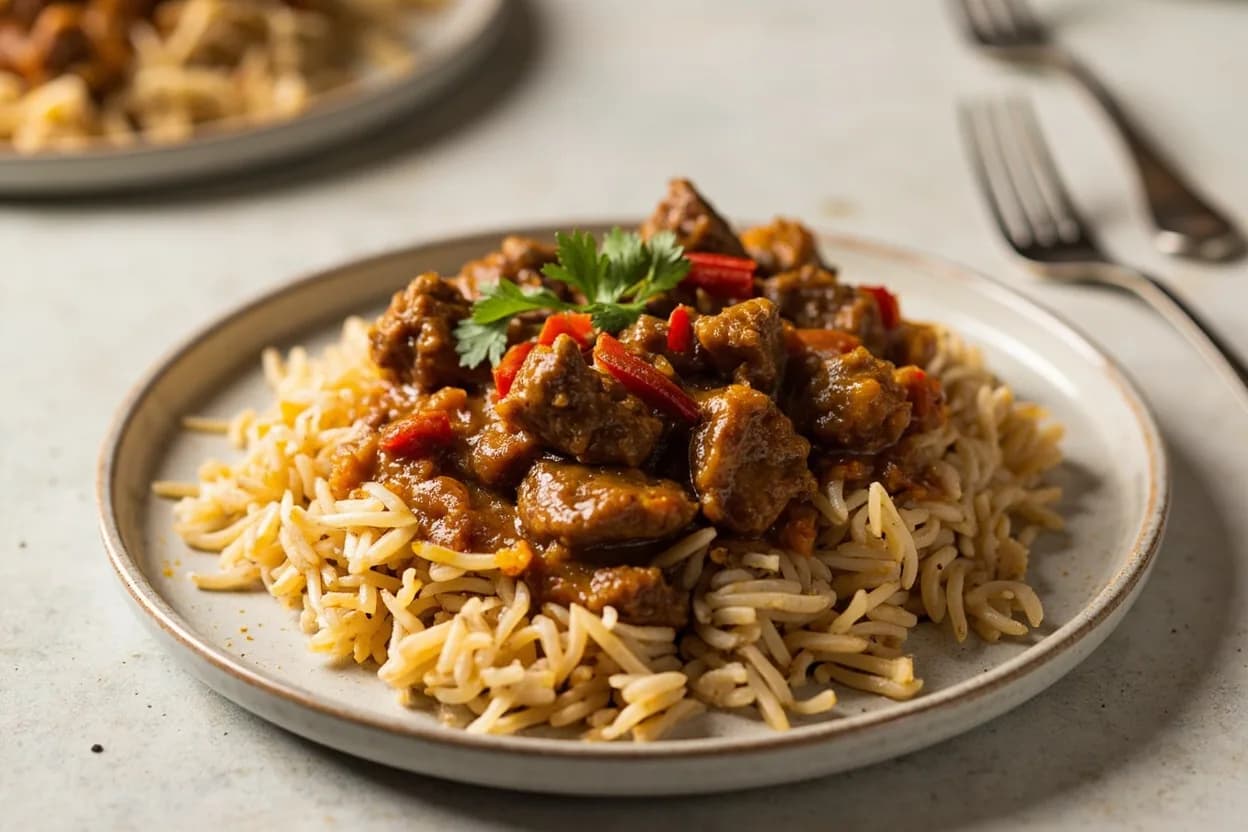
One-pot cooking builds an entire dish in a single vessel, typically frying aromatics then adding grains and liquid to cook together so the rice or beans absorb all the flavor. It produces dishes like jollof, riz gras, diri kole, and Caribbean pelau. Layering ingredients by cooking time and resting the pot at the end gives evenly cooked, well-flavored grains.
One-pot cooking is the discipline of building a complete dish — protein, starch, vegetables, sauce — in a single vessel, so the liquid that cooks the grain becomes the sauce, and the fond left by searing becomes the seasoning. The unifying mechanism is absorption and steam: measured liquid goes in, the pot is sealed, and trapped vapor does most of the work while the grain or legume drinks up everything that has been flavored into the broth. Because nothing is drained off, every drop of fat, every toasted bit on the bottom of the pot, and every aromatic stays in the finished dish — flavor is concentrated rather than diluted.
The technique is among the oldest in the kitchen: rice-in-stock preparations appear in Persian, Mesopotamian, and ancient Chinese texts, and the method is foundational to cuisines from the Mediterranean to West Africa to South Asia. What looks like a shortcut is actually a flavor strategy. The same principle scales from a Tuesday-night rice-and-chicken to a slow-baked cassoulet, from a risotto stirred for twenty minutes to a biryani sealed and left to steam under a tight lid.
The two things a cook must control are the liquid-to-grain ratio and lid discipline. Get the ratio wrong and the dish is either soupy or scorched; lift the lid too often and the steam escapes before the grain is done. Everything else — searing the proteins, toasting the grains in fat, timing the delicate add-ins — exists to put more flavor into the pot before that lid goes down.
- Difficulty
- Medium
Types & varieties
Grain (usually rice) toasted in fat, then simmered in measured seasoned stock; covers Persian, Turkish, Levantine, Central Asian, and South Asian versions.
Italian (northern Italy) short-grain rice cooked with broth added in ladlefuls and almost constant stirring to release starch into a creamy liquid.
Spanish Valencian wide-pan rice dish; rice is spread in a thin layer and the prized socarrat (crispy caramelized bottom) is developed at the end.
Louisiana one-pot rice dish; Creole (with tomatoes) and Cajun (without) are the two main branches, both influenced by Spanish paella and West African rice cookery.
South Asian layered rice-and-meat dish, often cooked on dum — a tight-sealed pot over low heat — so partially cooked rice finishes in the trapped vapor.
Slow-baked white-bean-and-meat stew from Languedoc, France; traditionally cooked in an earthenware cassole.
East and Southeast Asian rice porridge; a high water-to-rice ratio (about 6–8:1) is simmered long until the grains break down.
Spanish and Latin American chicken-and-rice dish cooked entirely in one pan with saffron or achiote.
West African rice stew (Nigeria, Ghana, Senegal, Cameroon) cooked in a single pot with a tomato-pepper base.
Persian technique that is the crispy bottom layer of a one-pot rice cook; built deliberately, not an accident.
How to do it
- 1
Choose the right vessel
Pick a heavy-bottomed pot or wide pan with a tight lid. A Dutch oven, 3–4 quart heavy saucepan, clay pot, or 12–15 inch paella pan all work. Match the size to the recipe so the food steams in a layer roughly 1–3 inches deep — not piled up and not spread too thin.
- 2
Build flavor in layers
Heat fat (oil, ghee, butter, or rendered pork) over medium heat. Sweat aromatics — onion, leek, shallot, garlic, dried chiles — until soft and translucent. Sear any meat, poultry, or firm vegetables in batches until browned; leave the fond on the bottom of the pot.
- 3
Toast the grain (optional but recommended)
Add the rinsed and drained grain (rice, barley, farro, bulgur) directly to the pot and stir for 1–3 minutes until each grain glistens with fat and smells nutty. Toasting seals the surface so the grain holds its shape and cooks to separate, fluffy grains rather than mush.
- 4
Deglaze and add liquid
Pour in wine, citrus juice, or a splash of the cooking liquid and scrape the bottom to dissolve the fond. Add the measured hot stock, water, or coconut milk — seasoned and salted — and bring to a full boil. Add any long-cooking dried legumes, whole spices, and tough cuts of meat at this point.
- 5
Bring to a boil, then seal the simmer
Once boiling, reduce heat to the lowest setting that holds a gentle, steady simmer. Cover with the lid. On a gas stove this is the small flame; on an electric burner use a diffuser. The goal is even, low heat — not a hard boil, which would agitate the rice and cook it unevenly.
- 6
Do not disturb
Cook undisturbed for the time called for in the recipe (typically 15 minutes for white rice, 40–45 for brown, 25–35 for farro). Do not lift the lid, do not stir. Steam trapped inside is doing the work; lifting the lid drops the internal temperature and lets moisture escape.
- 7
Add quick-finishing ingredients near the end
Open the lid only to add ingredients that cook in under 5 minutes: peas, leafy greens, shrimp, thinly sliced sausage, fresh tomatoes, herbs, delicate fish fillets. Recover immediately and continue for the remaining minutes.
- 8
Test for doneness
Lift the lid and tilt the pot: the surface should be dry with small steam holes, and the grain tender with no chalky center. If liquid remains, simmer uncovered for 1–2 more minutes; if the grain is firm, add 2–3 tablespoons of hot water and re-cover for 3–4 minutes.
- 9
Rest, then finish
Remove the pot from the heat, keep it covered, and let it rest 5–10 minutes. This lets residual moisture equalize so the bottom isn't wet and the top isn't dry. For a crispy crust (socarrat, tahdig), rest covered for 5 minutes then return to medium heat uncovered for 1–2 minutes — listen for the crackle.
- 10
Fluff and serve
Uncover, run a fork (not a spoon) through the grain to separate it gently, drizzle any finishing fat or herbs, and serve from the pot or invert onto a platter for a built-in crust presentation.
The No-Stir Rule — and Its Exceptions
For most one-pot grain dishes, once the simmer begins you do not stir. Stirring releases surface starch from the grain into the liquid, and that starch thickens and gums the dish. The pot is sealed, the steam does the work, and a fork at the end separates the grains.
There are two reasons to break that rule. The first is when stirring is the point of the technique — risotto and congee are the classic cases. The second is when the cook is building a crust on the bottom, in which case the lid comes off at the very end and a brief blast of dry heat does the work.
- Risotto deliberately agitates the rice to coax starch into the broth; the result is a creamy, loose porridge of distinct grains in sauce — not a fluffy pilaf. Add the stock in ladlefuls and stir almost continuously for 18–22 minutes.
- Congee / jook is the opposite end of the spectrum: a long, wet simmer (often 1–3 hours) with frequent stirring near the end as the grains break down into a smooth, spoonable porridge.
- Socarrat (paella), tahdig (Persian rice), and the bottom crust of a dum biryani belong to the crust-building exception. Uncover at the end and return the pot to medium heat for 1–2 minutes; listen for a faint crackle and smell toasted rice. Use steel or carbon steel, never non-stick.
Common uses
Tips & pitfalls
- Brown or sear the proteins and aromatics first in the same pot — fond on the bottom is flavor that dissolves back in when liquid is added.
- Measure the liquid. Eyeballing is the single most common reason a one-pot grain dish turns out gluey or underdone; use a liquid measuring cup, not the pot's fill line.
- Once the lid is on for a pilaf-style cook, do not lift it. Every peek releases steam and shifts the absorption ratio, and the dish will need minutes more to recover.
- Bring the cooking liquid to a boil before adding it to the grains; cold liquid drops the pot's temperature and prolongs cooking unevenly.
- Salt the cooking liquid until it tastes like well-seasoned soup; the grain will absorb it, and you cannot fix under-salted rice after the fact.
- Rest the pot off the heat, covered, for 5–10 minutes after cooking — the grains finish absorbing residual steam and firm up, which is the difference between wet and fluffy.
- Cut all add-ins to a uniform size so they finish at the same time as the grain.
- Use a tight-fitting lid. If yours is loose, lay a clean kitchen towel between pot and lid to absorb condensation that would otherwise drip back and mush the top layer.
- Avoid non-stick for paella, socarrat, and tahdig — you need direct contact with a steel or carbon-steel surface to build crust, and non-stick will not give you a true sear.
- For one-pot pasta dishes, use noticeably less water than usual — the starchy, undersalted cooking water becomes the sauce when emulsified with fat and cheese at the end.
Good to know
- Category of cooking
- Moist-heat / steam-and-absorption
- Primary heat transfer
- Conduction from the pot plus convection via simmering liquid and trapped steam
- Key ratio (white rice pilaf)
- About 1.5–2 parts liquid to 1 part rice by volume; brown rice closer to 2.25:1
- Ideal pot
- Heavy-bottomed with a tight-fitting lid — Dutch oven, heavy saucepan, clay pot, or wide paella pan
- Active time
- Typically 10–20 minutes of prep; 20–45 minutes of unattended simmer
- Yield efficiency
- No drained liquid, so all seasoning, fat, and starch stay in the dish — flavor concentration is high
- Fuel and cleanup advantage
- One vessel, one burner, one washing-up
- Cuisines where it is foundational
- Persian, Indian, Levantine, Spanish, Italian, French, Cajun and Creole, Chinese, West African, Latin American
Also called
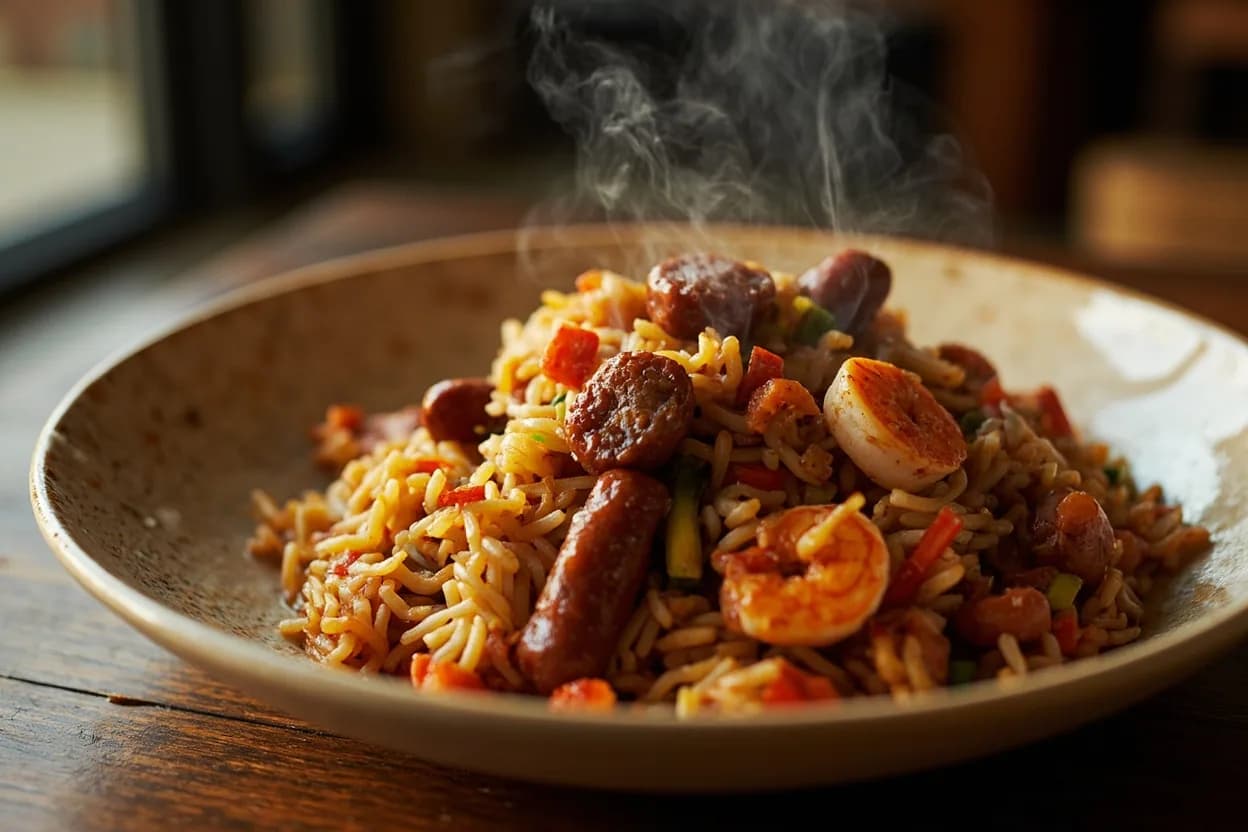
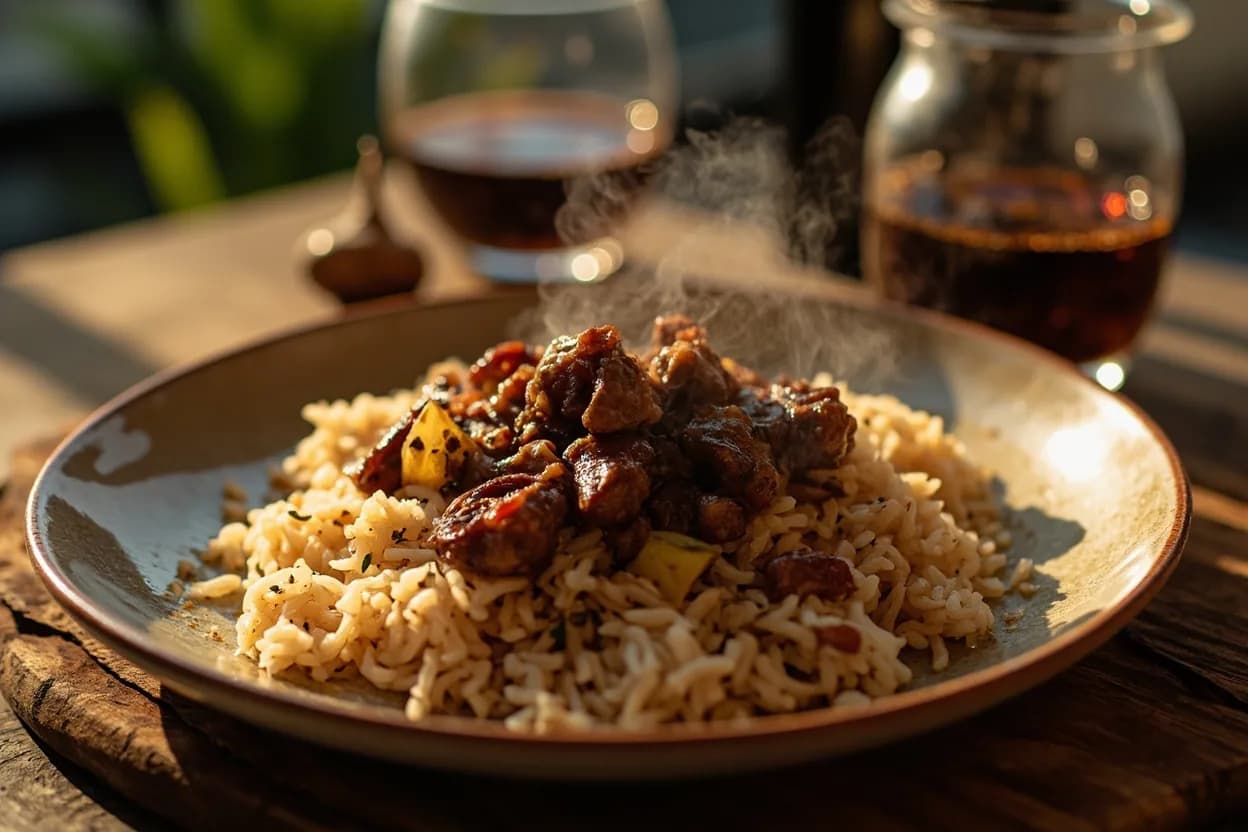
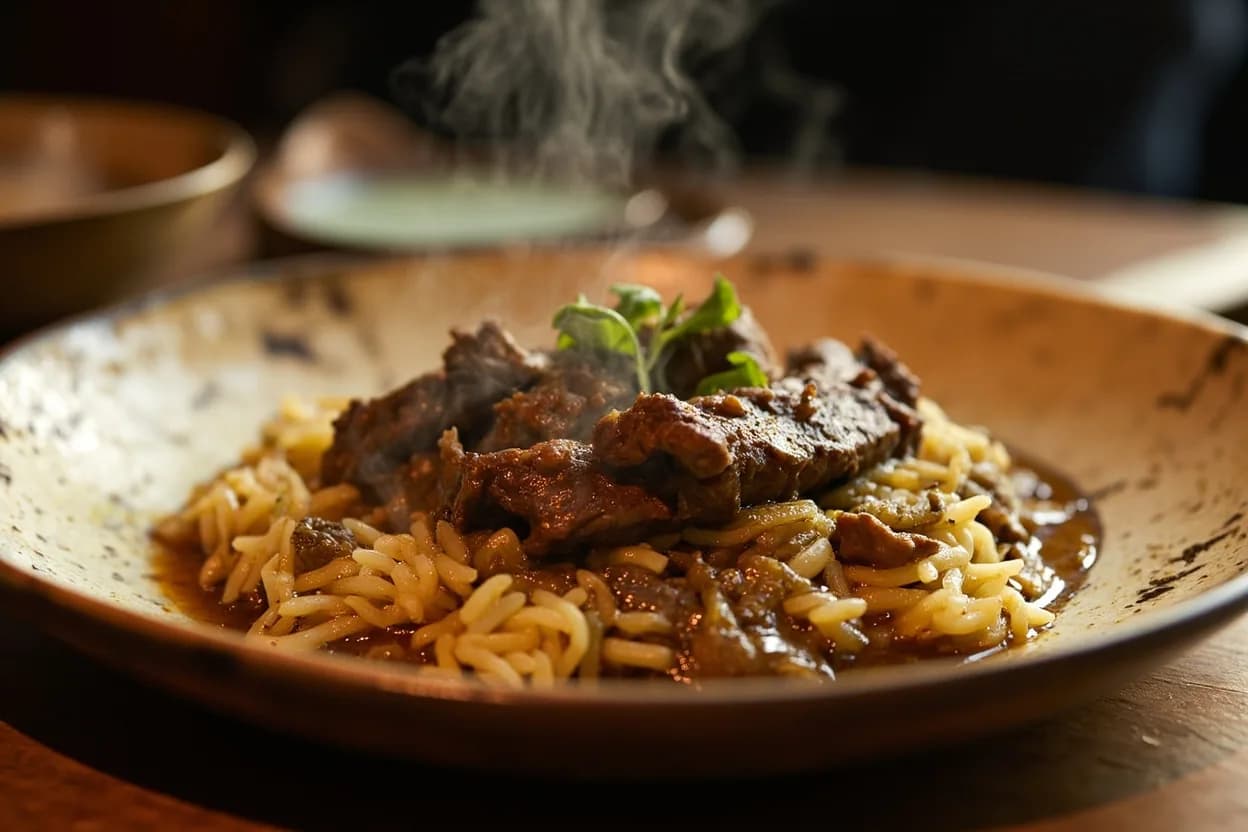
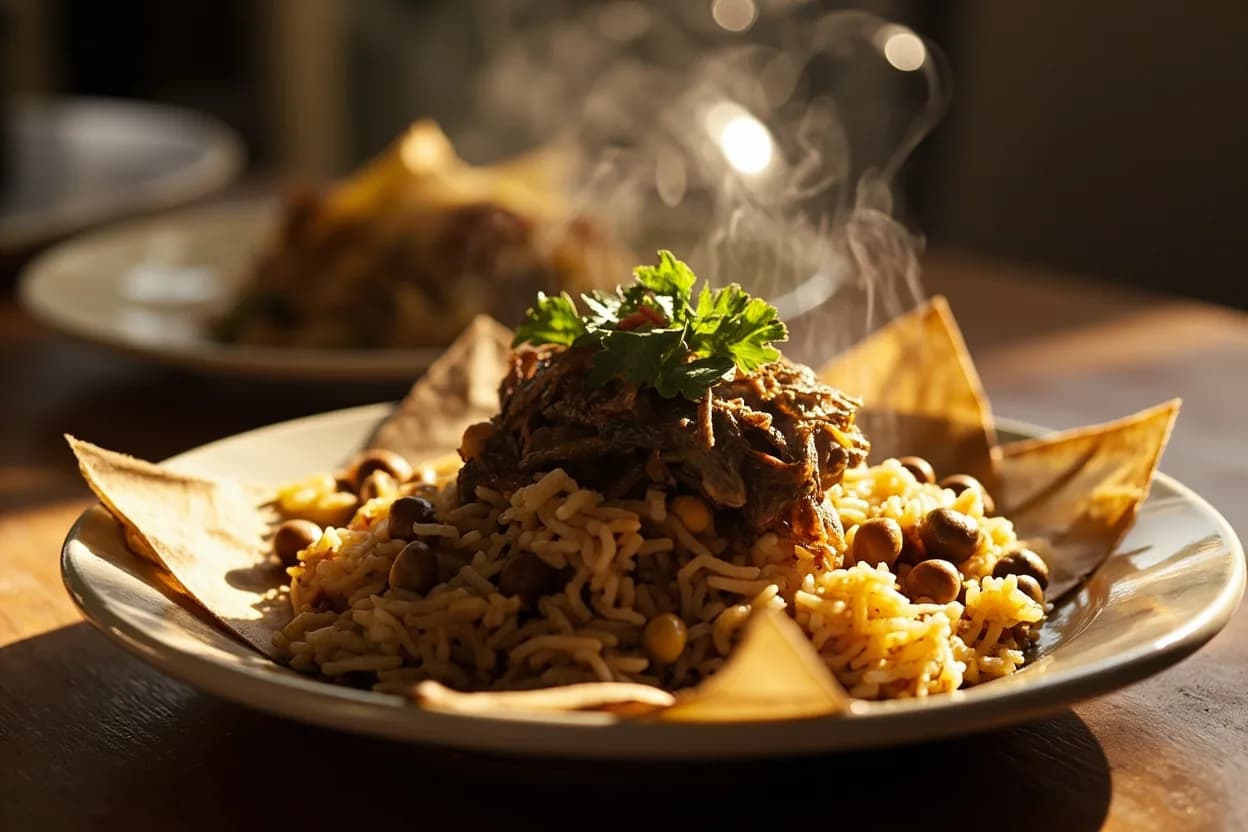
One-Pot Rice · Jollof Cooking · Pelau
Dishes that rely on it
Related

Boil
Cook in vigorously bubbling liquid at full rolling heat

Simmer
Hold liquid at a gentle shimmer for tender, unhurried cooking

Poach
Cook gently in barely-trembling liquid for silky, tender results

Steam
Cook in rising vapor to keep color, nutrients, and shape intact

Blanch
Plunge briefly in boiling water, then shock cold to lock color

Braise
Sear, then cook slow in a little liquid until fall-apart tender

Stew
Simmer bite-sized pieces fully submerged into a rich, unified pot

Sous-Vide
Seal and cook in precise warm water for edge-to-edge doneness