Heat & Fire
Pan-Frying Jeon (Buchim)
Coating ingredients in flour and egg and shallow-frying them into thin Korean savory pancakes.
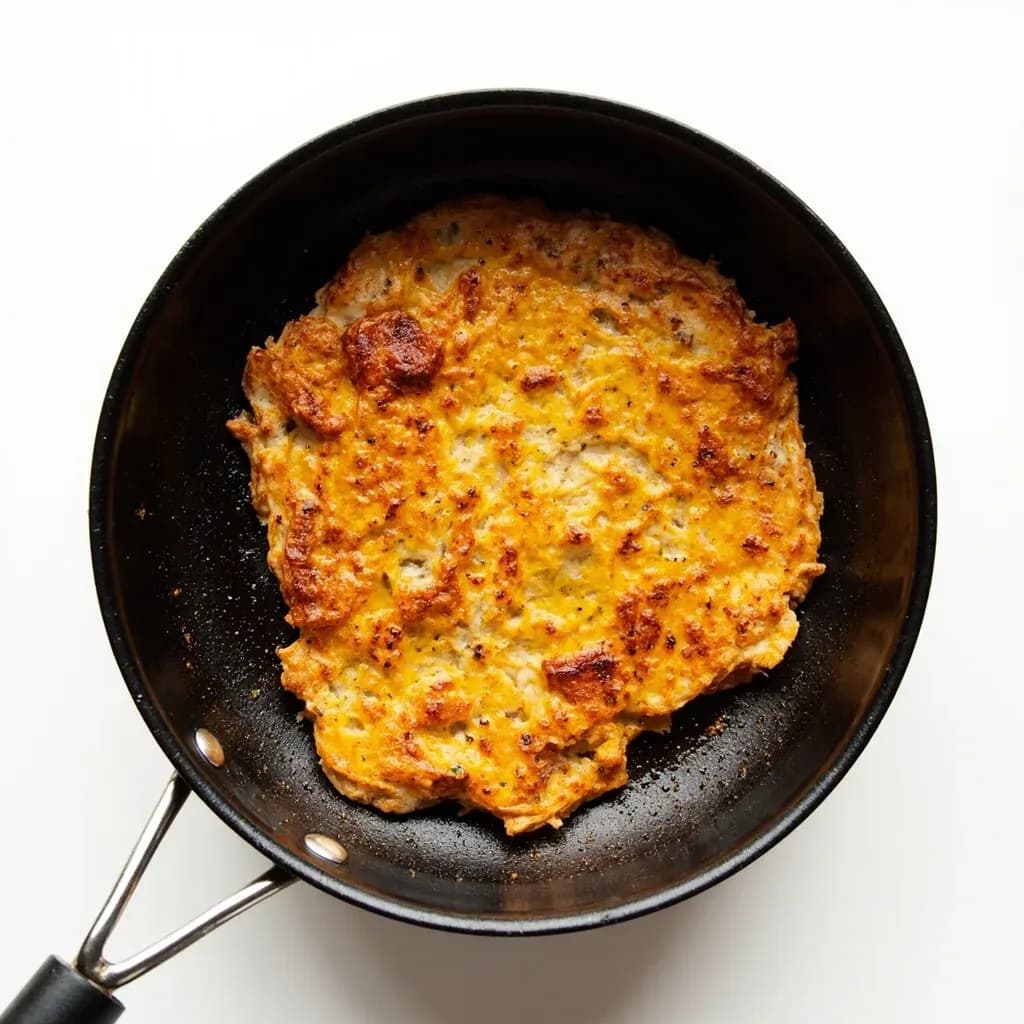
Pan-frying jeon dredges vegetables, seafood or meat in flour and beaten egg, then shallow-fries them in oil until golden and crisp at the edges. This Korean technique produces a wide family of savory pancakes and fritters, from pajeon to small bite-sized pieces, served with a soy-vinegar dip. The egg-and-flour coating seals the ingredient and gives the signature tender-crisp surface.
Pan-frying jeon (also called buchim or buchimgae) is the Korean technique of coating an ingredient in wheat flour, dipping it in beaten egg, and shallow-frying it in a thin film of oil until the crust turns lacy and golden. The method produces the savory pancakes that appear on virtually every Korean table — scallion, kimchi, seafood, fish, tofu, pounded beef — and is the foundation for one of the country's most versatile home-cooking moves. The flour-then-egg coat is what defines it: dry flour first to grip the surface and absorb surface moisture, then a thin film of egg to bind the crust and crisp under heat.
Jeon occupies a specific place in Korean meals. Served as banchan (side dish), it is also the classic anju (food-with-drink) for soju and makgeolli, and a standard offering on the jesa table for ancestral rites. The technique appears in nineteenth-century royal cookbooks such as the Eumsikdimibang and Siuijeonseo, but it is at root a thrifty, forgiving home method: it makes the most of slightly wilted vegetables, leftover kimchi, or thin cuts of fish that need a little crust to feel like a meal. Because the fry is short and the coating is forgiving, jeon is the kind of thing a Korean cook throws together on a weeknight as readily as a French cook reaches for an omelet.
Mechanically, the technique is shallow-frying, not deep-frying: oil is added to a depth of just 3–5 mm, the food is laid in a single layer, and it cooks through contact with hot fat at medium heat (around 170–180°C). The crust forms from two distinct events — the flour crisping in the oil and the egg setting into a thin, savory film — and that is the line that separates jeon from its Korean cousins. Twigim (deep-frying in a wet batter) and the looser batter-pour pancakes, where a flour-and-water slurry is ladled directly into the oil, are related but cook by different rules, and a cook who keeps them straight will know instinctively which one to reach for.
- Difficulty
- Easy
Types & varieties
Scallion (daepa or green onion) pancake, often with seafood added to make haemul pajeon
Pan-fried aged napa kimchi battered in flour and egg; one of the most common home versions
Mixed seafood (squid, shrimp, mussel, scallop) pancake
Thin slices of Korean zucchini or squash, dredged and pan-fried; lighter, almost vegetable-crêpe style
Potato pancake; sometimes grated potato is mixed into the batter (also called gamjabokkeum)
Frozen pollack fillet slices, dredged and pan-fried — a winter specialty
Generic fish fillet jeon, often white fish like sea bass or cod
Beef (sometimes chicken) pounded thin, marinated in soy and sugar, then egg- and flour-coated and pan-fried; a higher-end banch'an
Garlic chive pancake, often with shrimp or kimchi folded in
Made with soaked-and-ground mung bean batter rather than a flour-egg coat, but cooked by the same shallow-fry method
Sliced tofu pan-fried in flour and egg
Whole or sliced fresh or dried red peppers dipped in flour and egg and pan-fried
How to do it
- 1
Prep the ingredient
Cut the main ingredient to an even thickness (about 5–8 mm for vegetables, 1 cm for fish or meat). Pat thoroughly dry with a kitchen towel. Season lightly with salt and pepper and let sit 3–5 minutes. Marinated meats (yukjeon) should be patted dry of excess marinade.
- 2
Set up the coating station
Place all-purpose flour in a wide shallow bowl. Beat eggs (1–2 eggs per batch) in a second bowl with a pinch of salt and, for a thinner crust, 1 teaspoon of water per egg. Have the dry ingredient, flour, and egg within reach in a line.
- 3
Heat the pan with oil
Pour neutral oil into a heavy skillet to a depth of about 3–5 mm. Heat over medium until a drop of egg sizzles gently on contact — about 170–180°C. The oil should shimmer but not smoke.
- 4
Coat in flour, then egg
Lay the ingredient in the flour, turn to coat, and shake off every bit of excess. Submerge it in the beaten egg and turn until fully covered, letting the extra drip back into the bowl. The egg should be a thin, even film, not a thick clumpy layer.
- 5
Lay in the pan without crowding
Lower the coated piece into the oil away from you. Lay pieces in a single layer with at least 1 cm of space between them. The egg should immediately set around the edges with a steady, gentle sizzle.
- 6
Fry the first side
Cook undisturbed for 2–4 minutes, adjusting the heat to keep the sizzle steady (not aggressive). The bottom is ready when the edges turn deep golden and the piece slides freely when you nudge the pan.
- 7
Flip once
Use a thin spatula and, if available, a second spatula or tongs to flip in one motion. Don't press down. Fry the second side another 2–3 minutes until evenly golden and the inside is cooked through.
- 8
Drain and keep warm
Transfer to a wire rack (or a paper-towel-lined plate in a pinch). Sprinkle a few drops of toasted sesame oil over the top if you like, and a pinch of salt. Cook remaining batches, adding a teaspoon of fresh oil between them.
- 9
Serve with cho-ganjang
Plate immediately and serve with cho-ganjang (soy sauce + rice vinegar + gochugaru + sesame seeds + sliced scallion) on the side. Jeon is best eaten hot, while the crust is still crisp.
Jeon and its Korean cousins
The flour-then-egg coating described in this entry is the classic jeon technique, but Korean cooking uses the verb buchida (to pan-fry) for a wider family of preparations. Three are often confused and worth keeping straight, because each one cooks by a different set of rules.
- Batter-pour pancakes use a loose flour-and-water slurry ladled directly into the oil. The batter itself becomes the crust, and the result reads more like a savory crêpe than a coated cutlet. The same name (kimchijeon, haemuljeon, pajeon) can refer to either style; the flour-and-egg coat described above is the cutlet-style preparation.
- Bindaetteok / nokdujeon is built from soaked-and-ground mung beans, not wheat flour. The batter is heavier, almost paste-like, and is ladled into the oil. It is cooked by the same shallow-fry method but tastes and behaves differently.
- Twigim (튀김) is deep-frying. The food is dipped in a wet batter and submerged in several centimeters of hot oil. The crust puffs and the inside steams; it is a different technique with different timing and oil temperature.
Common uses
Tips & pitfalls
- Pat ingredients very dry before coating — surface moisture is the main cause of a soggy crust and oil splatter.
- Hold medium heat, not high: too hot scorches the egg before the interior cooks; too cool lets the crust soak up oil and turn greasy.
- Keep the oil layer thin but confident (3–5 mm), and add a fresh splash between batches so each piece fries in clean fat.
- Season the flour itself with salt (and a pinch of pepper) so the crust carries flavor, not just the food beneath it.
- Shake off every bit of excess flour — a heavy floury layer turns gummy the moment it meets the egg.
- Flip once, and only when the first side releases on its own. Pressing or peeking tears the crust and squeezes out moisture.
- Never crowd the pan. Crowding drops the oil temperature and steams the pieces, giving a pale, oily crust instead of a golden one.
- Hold finished jeon on a wire rack, not a stacked plate — stacking traps steam and softens the crust within minutes.
Good to know
- Technique family
- Shallow-frying in a thin layer of oil, the foundation of Korean savory pancakes and fritters
- Korean names
- Jeon (전) or jeon-gwa (전과); also called buchim (부침) or buchimgae (부침개)
- Coating method
- Ingredient dredged in seasoned wheat flour, then dipped in beaten egg, then pan-fried
- Oil depth
- About 3–5 mm (1/8–1/4 inch) — just enough to come roughly halfway up the food
- Heat level
- Medium, around 170–180°C / 340–355°F
- Cook time
- 2–4 minutes per side, depending on thickness and moisture of the ingredient
- Pan
- Heavy skillet; traditionally a Korean ttukbaegi (earthenware pot) or jeon-gui (shallow flat griddle)
- Oil type
- Neutral vegetable oil (rice bran, canola, soybean); toasted sesame oil sometimes brushed on at the end for aroma
- Dipping sauce
- Cho-ganjang: soy sauce, rice vinegar, gochugaru, sesame seeds, sliced scallion, optional sugar
- Origin
- Documented in 19th-century royal cookbooks (Eumsikdimibang, Siuijeonseo); an everyday home technique for centuries
- Role in meal
- Banchan (side dish), anju (food eaten with alcohol), or jesa (ancestral rite) offering
- Difficulty
- Easy; the technique is forgiving and the pan-fry is short
Also called
jeon · buchim · Korean savory pancake
Dishes that rely on it
Related

Sear
Blast the surface hot for a deep-browned, savory crust

Sauté
Cook quickly in a little fat over lively heat, tossing as you go

Stir-Fry
Toss bite-sized pieces over roaring heat for fast, smoky cooking

Pan-Fry
Crisp food in a shallow layer of hot fat, turning once or twice

Deep-Fry
Submerge in hot oil for an all-over crackling crust

Roast
Cook uncovered in dry oven heat for browned edges and tender centers

Bake
Cook with steady, surrounding oven heat — the soul of bread and pastry

Broil
Hit food from directly above with fierce overhead heat