Water & Steam
Par-Roasting Potatoes
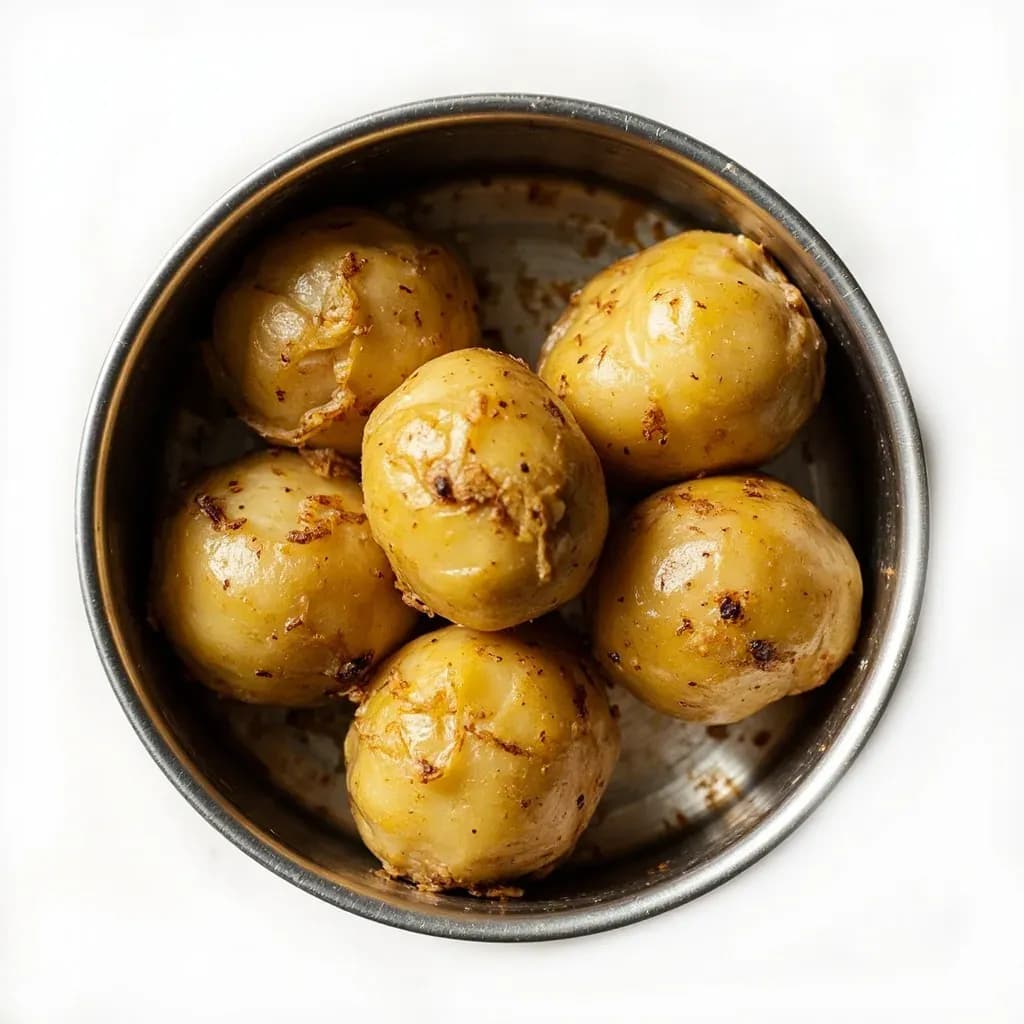
Parboiling potatoes and roughing their edges before roasting them extra crisp and fluffy.
Par-roasting potatoes first parboils them until just tender, then drains and shakes them to roughen the surfaces before roasting in hot fat. The ragged, starchy exterior crisps into a craggy golden crust while the inside stays fluffy, the secret to classic roast potatoes. A light dusting of flour or semolina and very hot fat further boosts the crunch.
Par-roasting is the two-stage method behind the great British roast potato: potatoes are first parboiled in salted water, then roughed up and finished in very hot fat until the outside shatters and the inside turns to pale, steamy fluff. The genius of the technique is that it does two jobs boiling alone cannot — it cooks the dense interior all the way through without drying it out, and it roughs the surface into a ragged, starch-furred landscape that fries into a glassy, golden crust far crunchier than a raw potato could ever manage in the oven. The signature 'crackle' you hear when you bite one is the sound of that ruffled starch layer shattering; the soft, almost powdery centre underneath is the work of the parboil softening the cell walls while leaving the starch granules swollen with water, ready to release their moisture as the potato is bitten.
The technique is forgiving on timing but unforgiving on a few details: floury potatoes, properly salted water, fat that is genuinely smoking hot, and — above all — the moment of violence when the drained potatoes are shaken hard enough to fray their edges. Skip that step and you have a perfectly pleasant roast potato. Do it and you have the Sunday-roast kind. Par-roasting also shortens oven time compared with starting raw, which means a joint of meat and a tray of potatoes can finish within minutes of each other rather than an hour apart, and it scales cleanly from a small family lunch to a tin of feed-a-crowd spuds for the holidays.
- Difficulty
- Easy
Types & varieties
The traditional British Sunday-roast version: goose or duck fat for a rich, savory flavor and pale-gold crust.
Lighter, Mediterranean-leaning; yields a darker, more bronzed crust with a faintly peppery note.
After roughing, the potatoes are gently pressed flat with the base of a glass or a spatula before roasting, maximising crisp area and creating crackly shards.
Tossed with lemon zest, rosemary, thyme, or sage — herbs added in the last 5–10 minutes so they crisp, not burn.
Whole unpeeled garlic cloves and/or a few anchovy fillets melted into the hot fat before the potatoes go in, for deep umami.
Old-school Northern English style: intensely beefy, very deeply browned, traditional alongside rare roast beef.
Parboil and rough as usual, then cook in a single layer in the air fryer at about 200 °C for 20–30 minutes, shaking once or twice.
How to do it
- 1
Pick and prep the potatoes
Use floury potatoes such as Maris Piper, King Edward, or Russet. Peel them, or scrub well and leave the skin on for a jacket-style finish. Cut into even 5–6 cm chunks so they parboil and roast in the same time. Larger pieces give a softer, almost mashed centre; smaller pieces go crunchier but can dry out at the edges.
- 2
Parboil in salted water
Place the potatoes in a saucepan, cover with cold water, and salt it well — about 1 tablespoon per litre, enough to taste of the sea. Bring to a boil, then simmer for 7–10 minutes. Test at 7 minutes: a paring knife or skewer should slide in with a little resistance at the centre. The potatoes should NOT be fully soft; if they are, they will fall apart when shaken.
- 3
Drain and steam-dry
Drain immediately in a colander. Return the potatoes to the empty pot and set it over very low heat for 30–60 seconds, shaking gently, so the surface moisture evaporates. Wet potatoes will not crisp in the fat — this short drying step is non-negotiable.
- 4
Rough up the edges
Put the lid on the pot (or drape a clean tea towel under the lid to vent steam) and shake it vigorously for 5–10 seconds. The edges should look frayed, scuffed, and fuzzy, with little floury shards clinging to the surface. This ruffled starch is what crisps and crackles in the fat.
- 5
Heat the fat in the oven
Pour 4–6 tablespoons of your chosen fat — goose fat, duck fat, beef dripping, or a blend of oil and a knob of butter — into a sturdy metal roasting tin. Slide it into a 220 °C / 425 °F (fan 200 °C) oven for 5–10 minutes until the fat is shimmering and just starting to smoke.
- 6
Add potatoes and coat
Carefully tip the roughed-up potatoes into the smoking fat — it should sizzle aggressively on contact. Turn with a fish slice or tongs so every surface is coated. Spread them in a single, uncrowded layer, cut sides down where possible. Use two tins rather than cramming one.
- 7
Roast, turning twice
Roast for 45–60 minutes, turning with a spatula every 15–20 minutes so all sides brown evenly — aim for 2–3 turns in total, since each turn disrupts the forming crust. The potatoes are done when deeply golden, the edges audibly crisp when tapped, and a skewer glides through the centre with little resistance.
- 8
Season and serve
Lift the potatoes out of the fat onto warmed serving plates or a rack — not paper towels, which will steam them soft underneath. Season with flaky sea salt and freshly ground black pepper. If using rosemary, thyme, sage, or whole garlic cloves, toss them in for the last 5–10 minutes of roasting so they crisp rather than burn. Serve within 10 minutes for peak crunch.
Why the rough-up matters
The shaking step is the whole point of the technique, and it is what distinguishes a par-roast from any other roast potato. When floury potatoes boil, the starch granules inside their cells swell and the cell walls soften, so the chunks become pliable rather than rigid. Shaking the drained pot — with the lid on, or in a colander — scuffs the corners and releases wet starch that smears across the surface. Two things happen as a result. First, the surface area of the potato increases substantially: every ruffle, every frayed edge is a new surface for the hot fat to brown and crisp. Second, that released starch dries onto the surface during roasting and fries into a thin, glassy shell — the source of the audible crackle when you bite in. Skip the shake and you are simply roasting boiled potatoes, which taste fine but lack both the texture and the crunch that define the method.
- Rough only after draining and steam-drying — wet potatoes smear rather than ruffle.
- 5–10 seconds of firm shaking is enough; longer and the chunks begin to disintegrate.
- Waxy potatoes will not ruffle properly because their cells stay bonded; the shake leaves them smooth.
Choosing the right potato
Potato variety is the single biggest predictor of success. Floury, high-dry-matter varieties — Maris Piper and King Edward in the UK, Russet in North America, Désirée on the Continent, and Yukon Gold as a slightly waxier compromise — have cells that separate cleanly when boiled and shaken, producing the ragged edges the technique depends on. Waxy varieties (Charlotte, new potatoes, most red-skinned types) hold their shape too well: their cells stay bonded, the shake does almost nothing, and the result is a dense, often greasy potato with a thin crust. As a rule of thumb, the flourier the raw potato feels when you cut it — drier, more crumbly, less waxy on the knife — the better it will par-roast.
Fat, salt, and timing
Fat choice is mostly about flavor. Goose and duck fat give a savory richness and a paler, almost biscuit-colored crust; beef dripping produces a deeper, more robust brown; olive or sunflower oil yield a lighter result with a bronzed finish. What matters more than the type is the temperature: the fat must be smoking hot in the tin before the potatoes go in, so the surface sears and crisps on contact rather than slowly absorbing oil and going soggy. Salt the parboil water generously (it should taste like sea water) but only finish with flaky sea salt after roasting — salting the surface too early draws out moisture and softens the crust. Aim to pull the potatoes from the parboil about 5 minutes before the meat comes out to rest; the roast and the rest will land on the table together.
Common uses
Tips & pitfalls
- Choose floury potatoes (Maris Piper, King Edward, Russet, Désirée, or Yukon Gold). Waxy varieties stay dense and greasy and will not ruffle properly when shaken.
- Start the parboil in cold, generously salted water so the potatoes cook evenly from the outside in, and cut chunks to a uniform 5–6 cm so they finish together.
- Pull the potatoes the moment a knife slides in with slight resistance — overcooking makes them disintegrate when shaken and turns the interior gluey rather than fluffy.
- Drain, return to the empty pot over low heat for 30–60 seconds to drive off surface moisture, THEN shake hard with the lid on. This roughing-up is the whole point of the technique.
- Get the fat truly smoking hot in the roasting tin before the potatoes go in. Cold or merely warm fat = a soggy, oil-soaked crust.
- Spread the potatoes in a single layer, cut side down, and do not crowd the pan — steam is the enemy of crispness. Use two tins if needed.
- Turn them only every 15–20 minutes, 2–3 times in total; each turn disrupts the crust that is building up. Patience makes a crunchier potato than fussing does.
- Season with flaky salt only at the end. Salting the surface earlier draws out moisture and softens the crust.
- Save the starchy cooking water for bread, soup, or gravy — it carries real flavour.
Good to know
- Category
- Hybrid water-then-dry-heat technique
- Also known as
- Parboiled roast potatoes, par-cooked roast potatoes, fluffy roast potatoes
- Best potato type
- Floury (starchy) potatoes with high dry matter, such as Maris Piper, King Edward, or Russet
- Parboil time
- 7–10 minutes from boiling, until just fork-tender at the centre
- Roast temperature
- 200–220 °C / 400–425 °F (fan 190–200 °C)
- Roast time
- 45–60 minutes, turning every 15–20 minutes
- Fat options
- Goose fat, duck fat, beef dripping, lard, olive oil, sunflower oil, or a blend
- Yield note
- Roughing the edges roughly doubles perceived crispiness compared with smooth-edged boiled-then-roasted potatoes
- Tradition
- Central to the British Sunday roast; popularized in 1980s–90s home cooking by Delia Smith and Nigella Lawson
- Storability
- Best served immediately; parboiled and roughed potatoes can be held 1–2 hours before roasting, but should not be refrigerated once dried
Also called
parboiling potatoes for roasting · roast potato parcook
Related

Boil
Cook in vigorously bubbling liquid at full rolling heat

Simmer
Hold liquid at a gentle shimmer for tender, unhurried cooking

Poach
Cook gently in barely-trembling liquid for silky, tender results

Steam
Cook in rising vapor to keep color, nutrients, and shape intact

Blanch
Plunge briefly in boiling water, then shock cold to lock color

Braise
Sear, then cook slow in a little liquid until fall-apart tender

Stew
Simmer bite-sized pieces fully submerged into a rich, unified pot

Sous-Vide
Seal and cook in precise warm water for edge-to-edge doneness