Water & Steam
Parboiling Rice
Partly boiling rice then draining and steaming it for separate, fluffy grains.
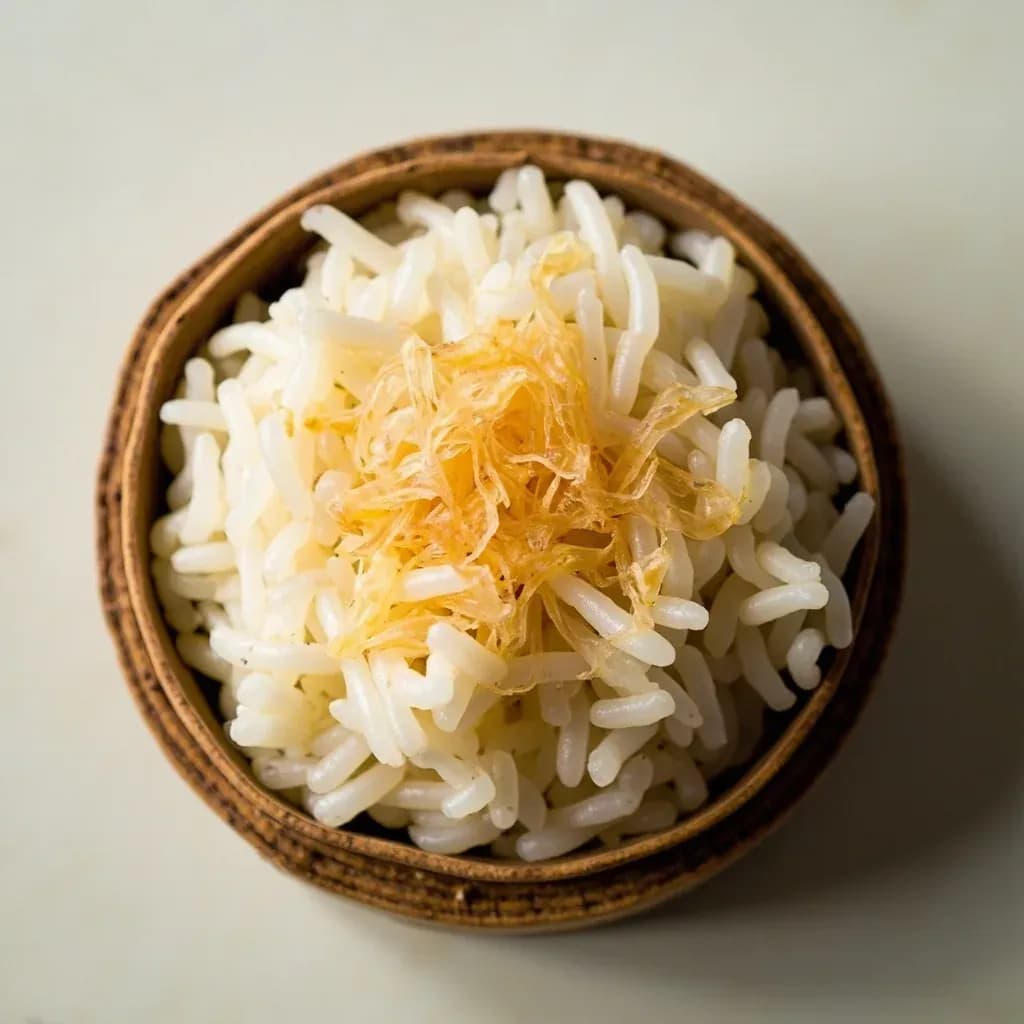
Parboiling rice boils the grains until just partly cooked, then drains and steams them to finish, producing distinct, fluffy grains rather than a sticky mass. It is the basis of Persian chelow and polow and Iraqi timman, where draining (phen gala) sets up the steamed dam stage. The two-stage method also lets cooks layer a crisp golden crust, the tahdig, at the bottom of the pot.
Parboiling rice is a two-stage technique in which grains are first cooked partway in a large pot of generously salted, boiling water, drained, and then finished by gentle steaming. It is the workhorse method behind some of the world's most refined rice dishes — Hyderabad's biryani, Lucknow's polao, and Tehran's chelo kabab — and it is the same logic used for cooking dried pasta: the cook controls doneness by feel in excess water, then finishes the grain with a dry, even heat that sets its structure.
The result is rice with notably separate, elongated grains and a drier surface than absorption-cooked rice, which makes it the preferred base for stir-fried rice, for layered biryanis where the grains must not bleed starch into a curry, and for dishes crowned with delicate toppings like saffron threads, barberries, or fried onions. The drained grains also tolerate longer holding under heat lamps and steam tables, which is why the technique is standard in South Asian and Persian catering.
The single most important skill is timing the parboil. The grains are pulled when the outside is soft and translucent but a small chalky core remains — roughly 70 to 80 percent of the way to done. From there the steam stage is forgiving; the cook simply trades time for texture, and the resting period evens out the moisture between grains.
- Difficulty
- Hard
Types & varieties
Rice parboiled in heavily salted water with whole spices, drained, layered with curry, and slow-steamed (dum) for biryani.
Drained rice is returned to the pot with a little oil or butter, mounded, and steamed under a cloth-sealed lid to form the crisp golden tahdig at the base.
Rice parboiled with whole garam masala (cinnamon, cardamom, clove, bay), drained, briefly steamed with ghee, then layered.
Used in some South Indian and Sri Lankan preparations where a softer, slightly sticky finish is acceptable; parboil time shortens to about 4 minutes.
Parboil to roughly 70% doneness, rinse, drain, and chill; the drier surface lets grains stay firm and separate when later stir-fried over high heat.
How to do it
- 1
Measure and rinse
Measure 1–2 cups of rice for a side dish. Rinse in cool water, swishing by hand and changing the water 3–4 times until it runs almost clear. Drain well. Rinsing washes off surface starch that would otherwise glue the grains together.
- 2
Optional soak
For aged basmati, soak the rinsed rice in cool water for 20–30 minutes (up to 1 hour), then drain. Soaking hydrates the grains, shortens parboil time, and gives noticeably longer, less broken finished rice.
- 3
Bring a large pot of water to a rolling boil
Fill a wide, heavy pot with about 8–10 cups of water per 1 cup of rice. Add salt generously — roughly 1 teaspoon per litre — and any whole spices you want infused (bay leaf, green cardamom, cinnamon stick). Bring to a full rolling boil.
- 4
Add the rice and parboil
Tip the drained rice into the boiling water in a thin stream so it does not clump at the bottom. Stir once, return to a boil, and cook 5–7 minutes for long-grain basmati (4–5 minutes for medium or short grain). The rice should feel firm in the center when pinched — about 70 to 80 percent cooked.
- 5
Drain promptly
Pour the rice into a large fine-mesh sieve or china cap set over the sink. Shake gently to release as much water as possible. Optionally rinse briefly with lukewarm water to halt the cooking and wash off any remaining surface starch.
- 6
Steam to finish
Return the drained rice to the rinsed pot (or set it in a steamer basket over simmering water). Add 2–3 tablespoons of ghee, butter, or oil and a pinch of salt if you like; fold through gently. Cover with a tight lid — for Persian chelo, drape a clean tea towel under the lid to absorb condensation. Steam 10–15 minutes over very low heat, or hold covered off the heat for 5–10 minutes if the rice still feels wet. See the tahdig note for the pyramid-and-holes variation.
- 7
Rest and fluff
Remove from the heat, keep the lid on, and let stand 5 minutes to even out moisture between grains. Uncover and fluff with a fork, lifting gently from the bottom. Serve, or scrape up the golden tahdig from the base if you have built one.
Parboiling rice versus commercial 'parboiled' rice
The English word is identical and the underlying idea overlaps, but a packet of converted rice and a pot of parboiled-then-steamed basmati are not the same product. Commercial parboiled rice is made in a mill: rough paddy rice is soaked, pressure-steamed to gelatinize the starch inside the husk, then dried and milled. The result is a long-keeping, firm-grained rice that cooks by straight absorption. The kitchen technique described here is a cook's method, performed minutes before serving, on already-milled rice. Knowing the difference matters at the shop: do not buy 'parboiled long grain' expecting basmati behaviour, and do not substitute plain long-grain for an aged basmati when a recipe calls for the parboil-and-steam method.
The pinch test
Most home cooks rely on the clock, but the pinch test is what experienced rice cooks use. Fish a single grain from the boiling water, run it under cold tap for a second, and press it between thumb and forefinger. You want the outer layer soft and translucent, the interior still showing a thin white line or pinhead of chalk. If the grain squashes flat with no resistance, it is overcooked and the steamed finish will be gummy; if the core is still fully opaque, give it another minute or two. Because residual heat keeps cooking the grains in the sieve, it is better to err a touch underdone at this stage than a touch over.
Building a tahdig
Persian chelo turns the steam step into a one-pan technique that also produces the prized crispy rice crust. After draining, return the rice to the rinsed pot with 2–3 tablespoons of oil, ghee, or melted butter, mound it into a pyramid, poke a few steam holes down through the mound with the handle of a wooden spoon, drape a clean tea towel under the lid to catch condensation, and steam 12–15 minutes over the lowest possible heat. The mounding channels steam up through the rice; the oil and gentle heat form a golden crust on the base. Rest covered for 5 minutes off the heat, then unmold by inverting onto a platter, or scoop the rice off the tahdig and serve the crust on a separate plate.
Common uses
Tips & pitfalls
- Rinse the raw rice in several changes of water until the runoff is nearly clear — surface starch left in place is the single biggest cause of sticky, glued-together grains.
- Use at least 8 cups of water per 1 cup of rice. Skimpy water is the most common mistake; the rice should swirl freely, like pasta.
- Test doneness with the pinch test rather than the clock: the outside should be soft and translucent but a small chalky white core must remain. If the core is gone, the rice is overcooked.
- Drain the moment the grain hits the right doneness — residual heat in the sieve continues to cook the rice, fast.
- Do not stir the rice during the steam stage. It crushes the grains and releases starch. If you must check moisture, lift gently from the bottom with a slotted spatula.
- Steaming time depends on how much water the grains retained at drain: wetter grains need the full 12–15 minutes; well-drained grains may be done in 8–10.
- Rest the rice covered, off the heat, for 5 minutes before fluffing. This evens out moisture between the outer and inner grains and is what gives a finished pot its uniform texture.
- Aged basmati (two years or older) responds best to this method — its dry endosperm stays firm during parboil and then elongates dramatically during steaming. Fresh basmati tends to break.
Good to know
- Technique type
- Two-stage: partial boiling in excess water, draining, then covered steaming
- Best rice types
- Long-grain aged basmati, sella/golden basmati, American long-grain, patna; medium-grain in some South Indian dishes
- Water ratio (parboil)
- About 8–10 parts water to 1 part rice, so grains move freely and do not stick
- Parboil time (basmati)
- 5–7 minutes once the water returns to a rolling boil
- Steam time (basmati)
- 10–15 minutes covered, over very low heat or off the heat
- Optional soak
- 20–30 minutes (up to 1 hour) in cool water for aged basmati; reduces parboil time and helps grains elongate without breaking
- Difficulty
- Intermediate — the parboil stage is the critical timing; the steam stage is forgiving
- Not to be confused with
- Commercially 'parboiled' or 'converted' rice, which is a factory soak-and-pressure-steam process on paddy rice before milling
Also called
Parboiling Rice · Par-Boil and Steam Rice · Dampukht · Chelow
Dishes that rely on it

Related

Boil
Cook in vigorously bubbling liquid at full rolling heat

Simmer
Hold liquid at a gentle shimmer for tender, unhurried cooking

Poach
Cook gently in barely-trembling liquid for silky, tender results

Steam
Cook in rising vapor to keep color, nutrients, and shape intact

Blanch
Plunge briefly in boiling water, then shock cold to lock color

Braise
Sear, then cook slow in a little liquid until fall-apart tender

Stew
Simmer bite-sized pieces fully submerged into a rich, unified pot

Sous-Vide
Seal and cook in precise warm water for edge-to-edge doneness