Heat & Fire
Shui Zhu (Water-Boiling in Chili)
Sichuan method of poaching thin meat or fish in a fiery chili broth then dousing it in hot oil.
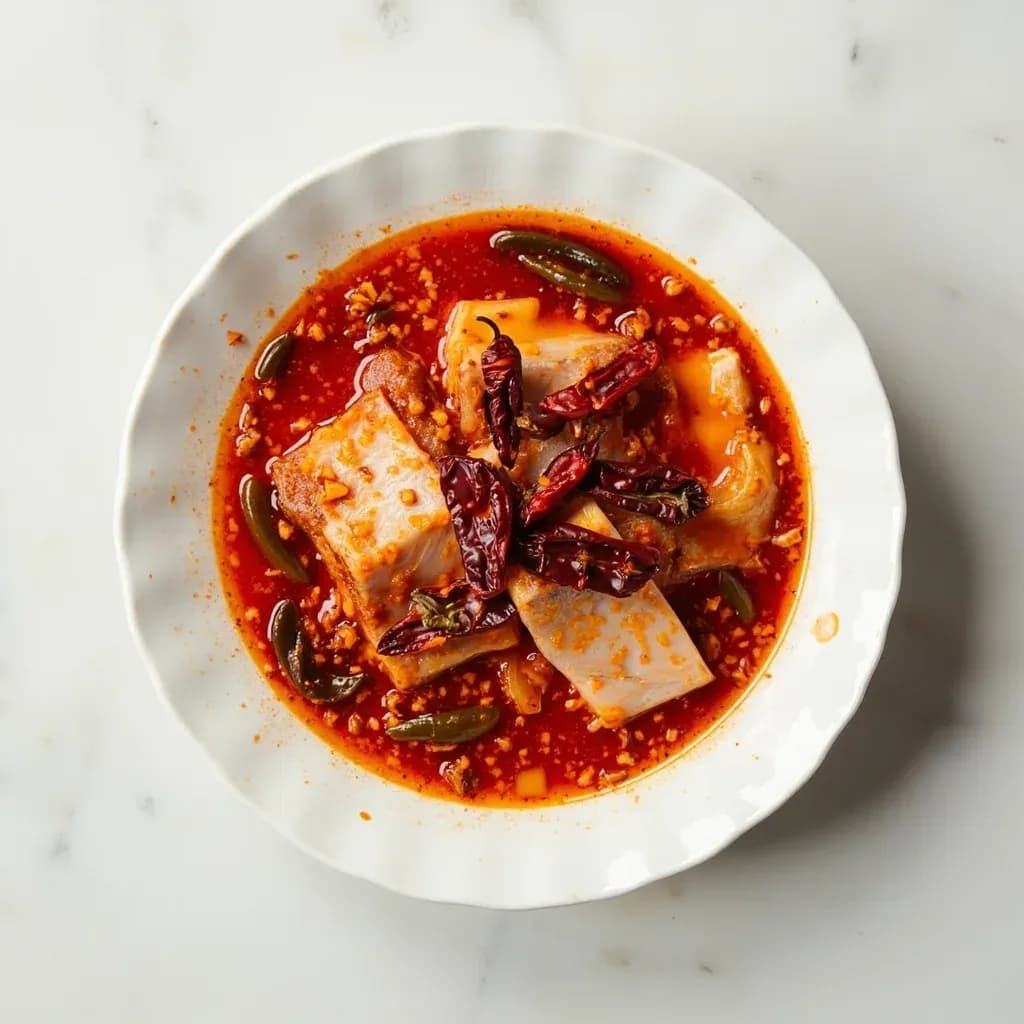
Shui zhu ('water-boiled') is a Sichuan technique that gently poaches velveted slices of meat or fish in a numbing-spicy broth, then finishes the dish by pouring sizzling oil over a top layer of dried chiles and Sichuan peppercorns. The hot-oil pour blooms the aromatics instantly, releasing their fragrance over the surface. Despite the name, the poach is gentle to keep the protein tender.
Shui Zhu — literally "water-boiled," though the name is a sly misdirection — is the Sichuan family of dishes built around velvety thin-sliced protein poached in a fiery, brothy chili sauce, then crowned with a sizzle of smoking-hot oil poured over a heap of dried chilies and Sichuan peppercorns. Despite its translation, the defining element is not water at all but mala: the signature Sichuan marriage of searing chili heat and the tongue-tingling, citrusy numbness of freshly toasted Sichuan peppercorns.
What makes the technique distinctive is its structural contrast — slick, just-opaque meat resting on a bed of crisp blanched vegetables, soaked in a thin, brick-red broth, then woken up at the last second by a pour of oil so hot it crackles against the dry spices. There is no stir-frying, no deep-frying, and no long braise to muddy the flavor; everything happens quickly in liquid and fat, which keeps the protein tender and lets the chili-peppercorn aromatics stay vivid instead of dulled by long cooking. Once you understand the rhythm — slice, velvet, simmer, sizzle — the same method comfortably handles beef, fish, pork, chicken, tofu, or even cauliflower, which is why cooks treat shui zhu as a template rather than a single recipe.
- Difficulty
- Hard
Types & varieties
The archetype; beef sirloin or flank sliced thin across the grain. Origin dish attributed to salt-well workers in Zigong.
Usually grass carp, catfish, or tilapia fillets velveted in egg white; often served in a deep plate pooled with red oil.
Lean pork loin sliced thin; lighter than the beef version but uses the same mala base.
Boneless thighs preferred; velveting is essential since breast meat dries out quickly in the broth.
Firm or medium-firm tofu in thick slabs; vegetarian when the broth is built without meat stock.
Less common; duck's fattiness balances the chili oil and rounds the broth.
Vegetarian Sichuan home-cooking favorite; florets poached in the mala broth and finished with the same sizzling oil pour.
How to do it
- 1
Prepare and velvet the protein
Slice 400 g (about 14 oz) of beef sirloin or fish fillet against the grain into 2–3 mm slices. In a bowl combine the slices with 1 tsp salt, 1 Tbsp Shaoxing wine, 1 egg white, and 1.5 Tbsp cornstarch; mix in one direction until the slices feel sticky and coated. Rest 20–30 minutes at room temperature (or refrigerate up to 2 hours).
- 2
Blanch the vegetable bed
Bring a pot of water to a boil and briefly blanch 300 g of bean sprouts, or ½ head napa cabbage cut into chunks, for 30–60 seconds until just wilted. Drain, squeeze out excess water, and spread in the bottom of a deep serving bowl.
- 3
Build the mala broth base
Heat 3 Tbsp neutral oil in a wok over medium-low. Add 2 Tbsp Pixian doubanjiang and stir until the oil turns red and fragrant, 1–2 minutes. Add 6–8 whole dried chilies, 1 tsp Sichuan peppercorns, 1 Tbsp minced ginger, and 1 Tbsp minced garlic; stir 20 seconds. Pour in 600 ml chicken or pork stock (or water) and bring to a simmer. Season with 1 Tbsp light soy sauce and a pinch of salt; taste — it should be assertive and salty.
- 4
Poach the protein
Reduce heat so the broth is at a bare simmer. Slide the velveted slices in one by one, spreading them so they don't clump. Do not stir. Let them cook undisturbed for 2–3 minutes until just opaque and set, then gently push them under the surface once to finish.
- 5
Assemble in the serving bowl
Carefully lift the meat out with a spider and arrange over the blanched vegetables. Ladle the broth over just to cover (you want some vegetables still peeking through). Discard the spent whole chilies and peppercorns from the broth.
- 6
Add the dry topping
Heap over the surface: 2 Tbsp coarse dried chili flakes, 8–10 whole facing-heaven or erjingtiao dried chilies, 1 tsp whole Sichuan peppercorns, 1 Tbsp minced garlic, and 2 sliced scallions. The taller and looser the pile, the better the oil will penetrate.
- 7
Pour the smoking-hot oil
In a small heavy pot or wok, heat 80–100 ml neutral oil to roughly 200°C (just shimmering to the edge of smoking). Pour steadily and evenly over the topping in a single confident motion — it should crackle, sizzle, and darken the dried chilies within seconds. Serve immediately with steamed rice.
Why the name is a lie (in the best way)
Translating shui zhu as "water-boiled" sets the wrong expectation. The protein is poached in liquid, yes, but only briefly, and the liquid itself is heavily seasoned with fermented broad bean paste, soy, and aromatics. What the dish is really named for is the calm, gentle cooking that lets the meat stay tender while the broth takes all the heat. The drama arrives at the end, when a small ladle of nearly smoking oil is poured over dried chilies and peppercorns piled on top. That sizzle — not the simmering — is the moment the dish announces itself.
The finishing oil is the dish
Almost every mistake cooks make with shui zhu comes down to the final pour. If the oil is under-heated, it pools on the spices without blooming them, the dish smells dusty, and the chilies stay leathery. If it is over-heated, the garlic and scallion burn and the whole bowl turns acrid. The sweet spot is oil that has just reached the first wisp of smoke — about 200°C — poured in a single confident stream so every part of the topping gets a brief, even sear. Use enough oil to actually crackle against the dry spices (around 80–100 ml for four servings), not a polite drizzle.
- Aim for 200°C — oil that shimmers at the edge of smoking but has not thickened or darkened.
- Pour in one steady motion; a hesitant stream cools the oil before it reaches the chili pile.
- If you see heavy smoke before you pour, the oil is past its peak; pull it off the heat for 15–20 seconds.
- Whole dried chilies darken dramatically on contact — that color change is your cue the oil was hot enough.
Velveting, briefly explained
Velveting is the technique that keeps paper-thin slices of lean protein from seizing into rubber when they hit hot liquid. The slices are tossed with egg white, cornstarch, a splash of wine, and salt, then rested so the coating hydrates and clings. In shui zhu, velveting is what gives the meat its characteristic slick, almost custardy surface and lets it cook in under three minutes without toughening. Skipping it, or under-resting the coating, is the single most common reason homemade shui zhu disappoints.
- Slice partially frozen (20–30 minutes in the freezer) for even 2–3 mm slices.
- Mix the velvet in one direction only — this keeps the coating intact and the protein from being torn or overworked.
- Rest at least 20 minutes so the cornstarch fully hydrates.
- Slide slices into the broth one by one so they set as separate pieces rather than a single clump.
Common uses
Tips & pitfalls
- Slice the protein partially frozen (20–30 minutes in the freezer) for paper-thin, even 2–3 mm slices — this is the single biggest factor in tender results.
- Velvet every time: egg white, cornstarch, a splash of Shaoxing wine, and a pinch of salt; rest 20–30 minutes so the coating sets.
- Use Pixian doubanjiang — its aged, deep flavor is the soul of the broth; substitutes fall flat.
- Bloom the doubanjiang in oil over low heat until the red oil separates and the raw soybean smell disappears; rushing this leaves a flat, raw taste.
- Do not stir the meat once it goes into the simmering broth — let it gently set, then nudge once at the end. Agitation breaks the cornstarch coating and clouds the broth.
- Keep the broth volume modest; the dish is technically 'poached,' not stewed or braised, so the meat shouldn't swim in liquid.
- Heat the finishing oil until it just begins to smoke; under-heated oil fails to bloom the dried chilies and peppercorns and the dish lacks aroma.
- Use whole dried chilies plus a handful of coarse chili flakes on top — flakes bloom quickly in the oil, while whole chilies add visual drama and a slower-released heat.
- Toast Sichuan peppercorns in a dry pan before using (whole or freshly ground) for a brighter, citrusy numbing note; pre-ground peppercorns lose aroma fast.
- Common mistake: serving the dish too late. The contrast between sizzling oil and tender meat fades within minutes — bring it straight from wok to table.
Good to know
- Origin
- Sichuan province; the water-boiled beef archetype is traditionally traced to salt-well workers in Zigong in the early 20th century
- Chinese name
- 水煮 (shui zhu), literally 'water-boiled/poached'
- Flavor profile
- Mala — chili heat and Sichuan-peppercorn numbness, with savory depth from aged doubanjiang and a slightly sweet-salty backbone
- Heat level
- Hot to very hot; defined by mala intensity, not subtlety
- Core ingredients
- Pixian doubanjiang, dried chilies (facing-heaven or erjingtiao), Hanyuan or other fresh Sichuan peppercorns, garlic, ginger, scallion, Shaoxing wine, neutral oil, stock or water
- Protein style
- Thinly sliced (2–3 mm) and velveted with egg white and cornstarch so it stays tender through poaching
- Finishing oil
- Heated to roughly 190–210°C (375–410°F); should shimmer at the edge of smoking so it blooms the dry spices on contact
- Active time
- 30–45 minutes, plus an optional 20–30 minute velvet rest
- Difficulty
- Intermediate — straightforward sequence, but demands confident slicing, broth judgment, and a properly hot finishing oil
- Serves
- 4 as a main
- Storage
- Best eaten immediately; leftover broth keeps 1–2 days refrigerated but loses textural contrast on reheating
Also called
Shui Zhu · Water-Boiled · Poaching in Chili Oil
Related

Sear
Blast the surface hot for a deep-browned, savory crust

Sauté
Cook quickly in a little fat over lively heat, tossing as you go

Stir-Fry
Toss bite-sized pieces over roaring heat for fast, smoky cooking

Pan-Fry
Crisp food in a shallow layer of hot fat, turning once or twice

Deep-Fry
Submerge in hot oil for an all-over crackling crust

Roast
Cook uncovered in dry oven heat for browned edges and tender centers

Bake
Cook with steady, surrounding oven heat — the soul of bread and pastry

Broil
Hit food from directly above with fierce overhead heat