Knife Skills
Raw Meat Preparation (Tere Siga)
Trimming and finely cutting fresh raw meat for dishes served uncooked.
Raw meat preparation covers the careful trimming, sinew removal, and precise cutting of very fresh meat for dishes eaten uncooked, such as Ethiopian tere siga, steak tartare, or kitfo. Sharp knives and impeccable freshness are critical, with the meat often hand-cut rather than ground to preserve texture and reduce surface area for bacteria. Cold handling and clean tools are non-negotiable, since there is no cooking step to make it safe.
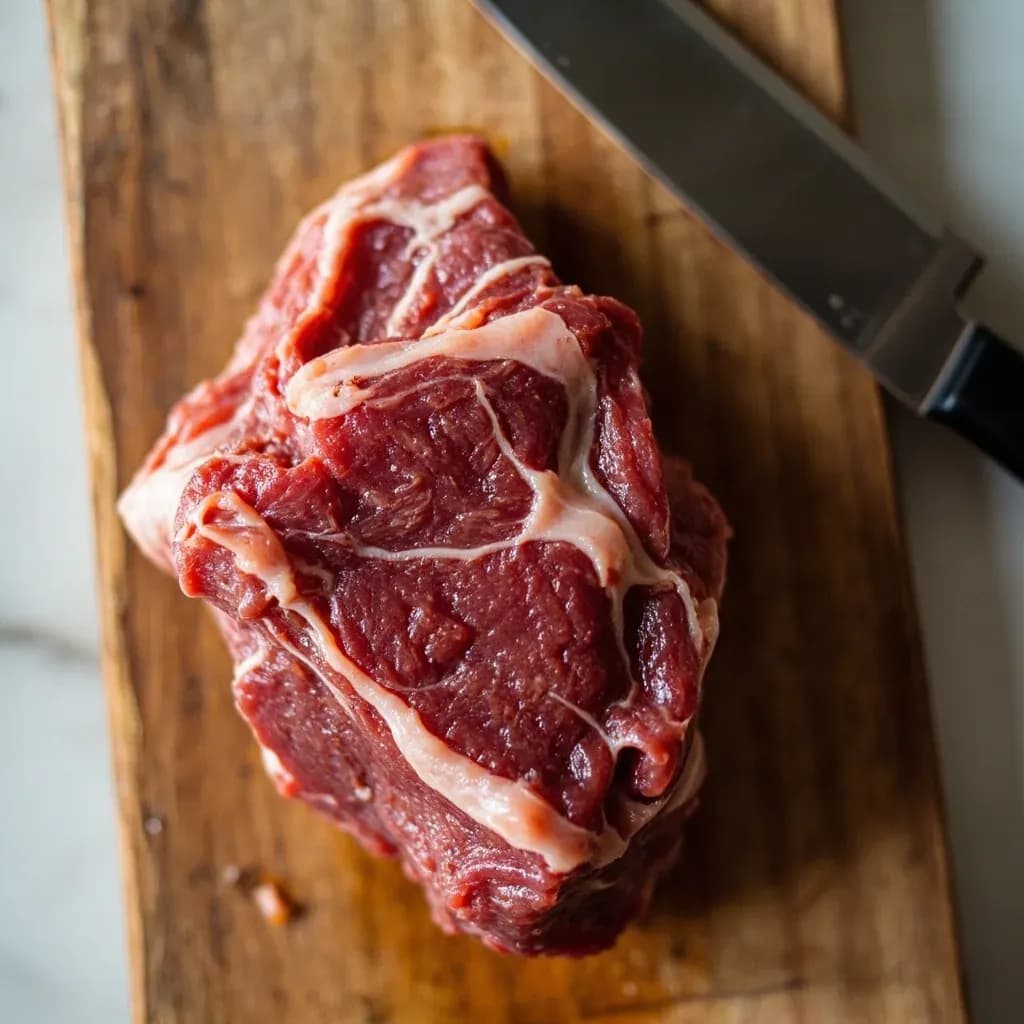
Tere siga (ጥሬ ሥጋ) is the Amharic term for raw meat, and in Ethiopian and Eritrean cooking it names both a category of dish and a technique of meticulous trimming and fine cutting with little parallel in most other cuisines. Because the meat will not be cooked, every gram of fat, silver skin, and gristle that would normally melt into a sauce or soften under heat must instead be removed by hand before the dish reaches the plate. The defining skill is therefore not seasoning — the same mitmita-and-niter-kibbeh profile dresses most raw preparations — but the discipline of the knife: identifying the grain, stripping connective tissue along its natural seams, and producing either clean uniform cubes or a loose, hand-chopped mince.
The cultural roots are pastoral. Long cattle-keeping traditions in the Ethiopian highlands made same-day slaughter a normal part of hospitality, and serving raw beef remains a gesture of honor at weddings, holidays such as Timkat and Meskel, and meals for distinguished guests. Outside the Horn of Africa, tere siga is now a flagship of the diaspora restaurant scene, where kitfo is typically the first preparation a kitchen learns to trim for. The food-safety stakes are real: the dish depends entirely on a trusted cold chain and very fresh meat, and is not appropriate where those conditions cannot be guaranteed.
- Difficulty
- Hard
Types & varieties
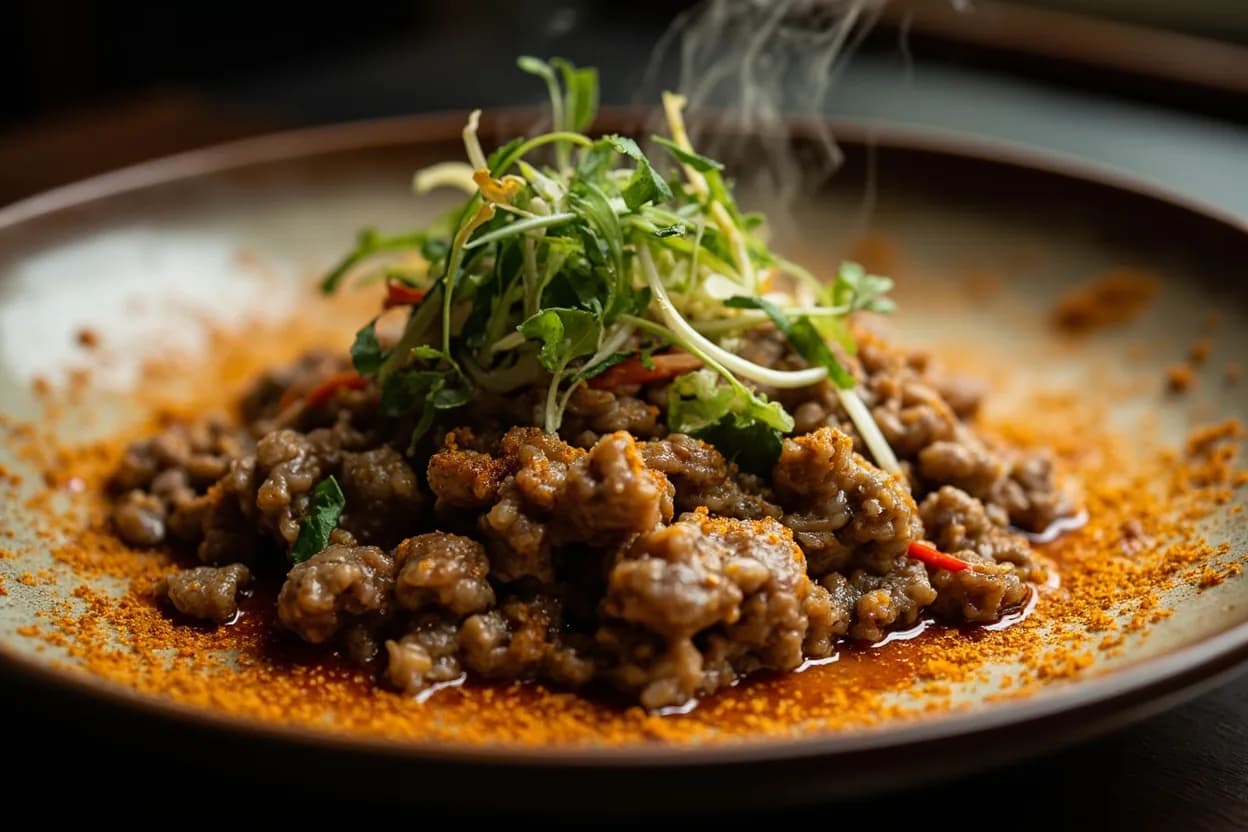
Finely hand-minced lean beef seasoned with mitmita and niter kibbeh. Served raw (leb leb), lightly warmed rare (yebeshal), or fully cooked (yetsom).
Lean beef cut into uniform small cubes rather than minced; dressed with the same seasonings and accompaniments as kitfo.
Umbrella term for any raw meat preparation, including simple sliced or cubed beef served at home or during celebrations such as Timkat and Meskel.
How to do it
- 1
Select very fresh, lean beef
Choose a lean muscle such as top round, eye of round, or whole leg. The beef should come from an animal slaughtered within hours; ask the butcher for the freshest piece and avoid anything vacuum-sealed and aged.
- 2
Chill to firm the muscle
Place the trimmed section of beef in the freezer for 15–30 minutes until the exterior is firm but not frozen through. Firm fibers cut cleanly and resist smearing under the knife.
- 3
Lay out the muscle and identify the grain
Set the meat on a cold, sanitized board with the grain running in one direction. Note where the major seams of fat and connective tissue lie so you can work around them rather than through them.
- 4
Strip the meat of all non-lean tissue
With a sharp knife held flat, peel away silver skin and fascia. Pick out every bit of gristle, the larger veins, and any pockets of fat. Work in long strokes along the natural seams; do not saw through connective tissue, or fragments will end up embedded in the lean.
- 5
Square off the meat for uniform cuts
Trim the dry outer edges and shape the cut into a neat block. This makes downstream slicing cleaner and more uniform, which matters for both gored gored and kitfo.
- 6
For gored gored: slice, then cube
Slice across the grain into even 1–1.5 cm thick steaks, cut those steaks into strips of the same width, then cross-cut into cubes. Aim for pieces that bite cleanly with no strings of fiber hanging off.
- 7
For kitfo: hand-mince to a loose mince
Slice the lean into thin slabs, then into strips, then cross-cut into small dice. Gather the dice and chop through them repeatedly, rocking and turning the knife, until the texture is a uniform, loose mince with no recognizable chunks. Do not grind — the hand-chopped texture stays airy and tender.
- 8
Hold cold; season only at service
Return the cut meat to the refrigerator on a chilled tray, loosely covered, until plating. Mix with mitmita and warm niter kibbeh only when the dish is set in front of the diner; seasoned raw meat should not sit.
- 9
Plate and serve immediately
Spread the seasoned meat in a thin layer on a warmed platter, ringed with portions of ayib, gomen, and senafitch, with rolled injera alongside. Serve at once — raw preparations do not improve with waiting.
Why the trim is everything
Most raw-meat dishes elsewhere in the world — carpaccio, yukhoe, kitfo's own cousins — get away with a quick pass of trimming because either the cut is naturally lean and tender (eye of round, tenderloin) or the portion is so thin that any remaining connective tissue reads as flavor rather than chew. Tere siga makes neither compromise. The cubes or mince are bite-sized and substantial, so any piece of silverskin left in the batch will announce itself as an inedible thread between the teeth; any pocket of fat will sit on the tongue as a cold, waxy film because no rendering will occur. This is why experienced preparers strip the muscle in long strokes with the knife held almost flat, following the natural seams between lean and connective tissue rather than sawing through it. The discipline is closer to butchery than to sauté prep, and it is the single thing that separates acceptable raw beef from a plate of kitfo you would happily eat again.
Hand-mincing versus grinding
Recipes occasionally call for passing kitfo through a meat grinder, and a coarse plate will produce an edible result, but the hand-chopped texture is meaningfully different. A knife leaves the muscle fibers ragged and loosely packed, so the finished mince feels airy and almost fluffy on the tongue and takes the niter kibbeh as a light coating rather than a paste. A grinder shears the fibers cleanly and packs them tight, which can read as dense and liver-like when the meat is served raw. If you do use a grinder, chill the parts and work quickly so the fat in the niter kibbeh does not smear the texture; for the lightest result, the traditional hand mince remains the standard.
Common uses
Tips & pitfalls
- Source the meat the same day you serve it; raw preparation offers no margin for older beef.
- Firm the meat in the freezer for 15–30 minutes before cutting — this firms the fibers for cleaner slices without freezing the interior.
- Use a honed, sharp knife; dull blades tear muscle fibers and leave ragged edges on raw meat.
- Trim aggressively: every vein of silver skin, every scrap of gristle, and most visible fat must go. Fat reads as waxy when raw, and connective tissue will not soften.
- Cut against the grain to maximize tenderness in each bite, even though the meat will not be cooked.
- For kitfo, hand-mince with a sharp knife rather than passing through a grinder — the hand-cut texture is lighter and more open.
- Salt and season only at the moment of service; salt draws moisture and dulls flavor on standing raw meat.
- Common mistake: assuming any tender cut works. Fatty cuts like ribeye taste greasy raw; lean muscles such as top round are correct.
- Common mistake: seasoning the meat ahead and letting it sit. Raw beef weeps and loses its bright, clean flavor within minutes of salting.
Good to know
- Name origin
- Amharic ጥሬ ሥጋ (tere siga), literally 'raw meat'
- Cuisine
- Ethiopian and Eritrean
- Primary protein
- Lean beef; lamb, mutton, and goat are also used traditionally
- Ideal cut
- Top round, eye of round, or whole leg, trimmed of every trace of fat, silver skin, and gristle
- Traditional knife
- Curved blade such as the gebre or santa; modern cooks use a very sharp chef's knife
- Target cube (gored gored)
- Approximately 1–1.5 cm, uniform, cut against the grain
- Target mince (kitfo)
- Hand-minced to a loose, hand-torn texture — not machine-ground
- Core seasonings
- Mitmita (spice blend) and niter kibbeh (spiced clarified butter)
- Food safety
- Only suitable with same-day meat from a trusted source; there is no kill step
Also called
Tere Siga · Raw Meat Preparation · Raw Meat Cutting
Dishes that rely on it
Related

Chop
Cut into rough, irregular pieces — the everyday workhorse cut

Dice
Cut into uniform cubes for even cooking and a tidy look

Mince
Cut as fine as possible so flavor melts evenly into the dish

Slice
Cut into even, flat pieces for consistent cooking and presentation

Julienne
Cut into thin matchsticks for fast cooking and elegant garnish

Brunoise
Cut into tiny, precise cubes — the finest dice in the kitchen

Chiffonade
Roll and slice leafy greens into delicate ribbons

Batonnet
Cut into tidy sticks, thicker than julienne — think classic fries