Transform & Preserve
Raw Pack
Filling canning jars with uncooked food before processing, rather than pre-heating it.
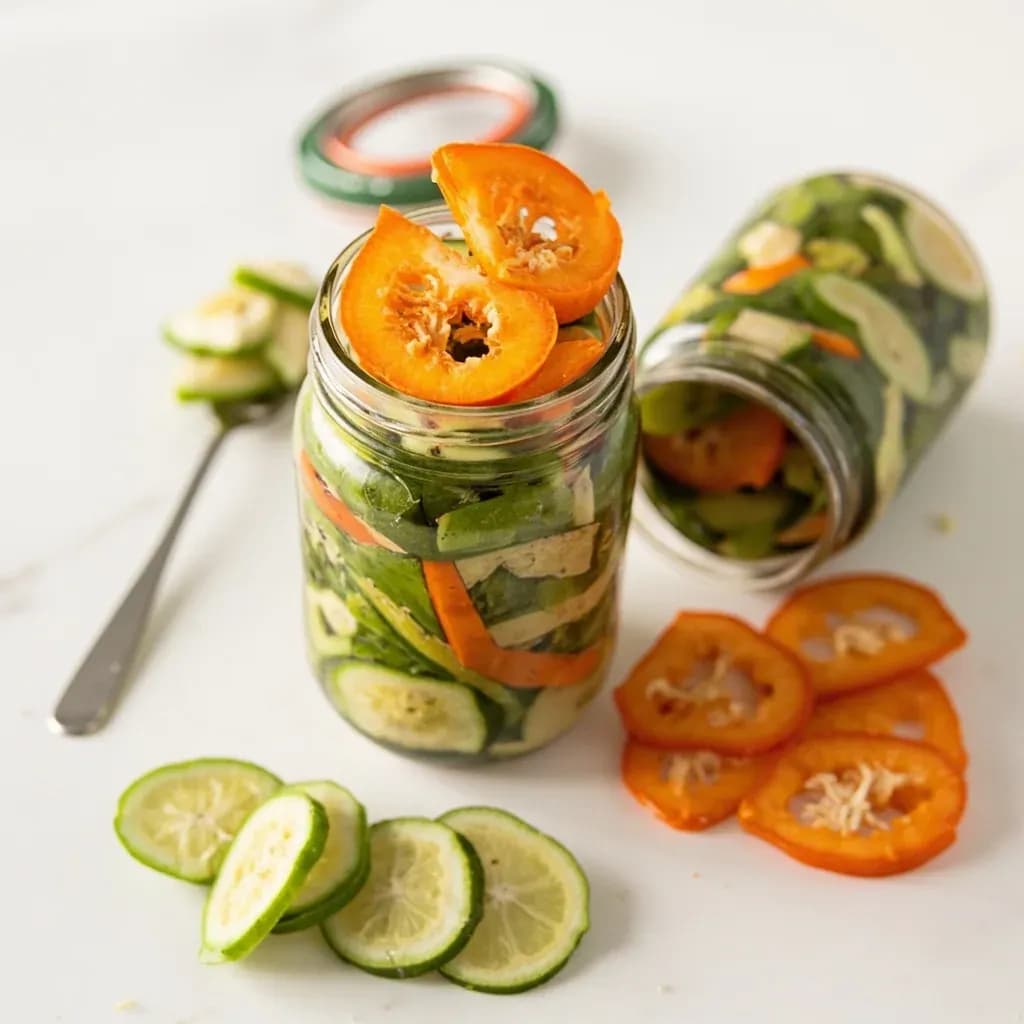
Raw pack, also called cold pack, is a home-canning method where uncooked fruits or vegetables are packed tightly into jars and then covered with hot liquid before processing in a boiling-water or pressure canner. It contrasts with hot pack, where food is heated first; raw pack is faster up front but the food may float or shrink and air pockets are more likely. It works best for delicate items that would break down if precooked.
Raw pack — also called cold pack — is the home-canning method of filling jars with uncooked food and covering it with hot liquid before sealing and processing. Where hot pack requires simmering or cooking the food first, raw pack skips that step entirely: the produce goes into the jar in its raw, prepared state, the syrup or brine is poured over it, and the heat of the canner does all the work from there.
The method matters because it preserves the freshest possible flavor and texture in delicate fruits. Berries, sliced peaches, and pears keep their color and shape far better when they are not pre-cooked, and the cook saves a real chunk of active time on big batches. The trade-off is that cold food heats slowly inside the jar, traps more air, and finishes with a looser pack and a higher risk of siphoning during processing. USDA guidance therefore prefers hot pack in most cases, but accepts raw pack for any food covered by a tested, recipe-specific processing time — high-acid fruits and tomatoes in a water-bath canner, and low-acid vegetables or meats only under pressure-canning conditions. Used within those rules, raw pack is one of the two foundational filling methods in home canning.
- Difficulty
- Medium
Types & varieties
The most common form; fruit is layered into jars and covered with hot light, medium, or heavy sugar syrup.
Used when the fruit releases enough of its own juice or is naturally sweet, such as very ripe berries or stone fruit in peak season.
Apple, white grape, or pineapple juice stands in for sugar syrup when canning reduced-sugar fruit.
Salt is added directly to the raw-filled jar before processing; used for some vegetables and tomato products canned under tested recipes.
The older term still used in many university-extension publications; refers to the same raw-fill technique.
How to do it
- 1
Gather and sanitize equipment
Wash jars, lids, and bands in hot soapy water and keep the jars hot in a pot of simmering water or a warm oven until needed. Set up the water-bath or pressure canner with the rack in place and bring the water up to temperature for the recipe's processing method.
- 2
Prepare the raw food
Wash, peel, pit, core, or slice the produce as the recipe directs. For fruits that brown quickly — apples, pears, peaches, apricots — hold the cut pieces in a bowl of water treated with lemon juice or ascorbic acid until you are ready to pack.
- 3
Fill the jars with raw food
Pack the prepared raw food into the hot jars in the orientation called for — whole berries, halved peaches, sliced pears, wedged tomatoes. Pack firmly but without crushing; raw food will shrink during processing and needs room to expand.
- 4
Add the liquid, sugar, or salt
Pour hot syrup, boiling water, hot juice, or pickling brine over the raw food until it is covered, leaving the headspace the recipe specifies — usually 1/2 inch for fruits in pints and quarts, 1 inch for low-acid vegetables.
- 5
Release trapped air
Slide a bubble remover or a thin plastic knife down the inside of the jar in two or three places to free air pockets. Top up with more liquid to restore the correct headspace if the level has dropped.
- 6
Wipe rims and apply lids
Wipe the jar rim with a clean, damp cloth to remove any syrup, juice, or seed that could break the seal. Center a new lid on the jar and screw the band on until fingertip-tight — just resisting, not forced.
- 7
Process in water bath or pressure canner
Lower the jars onto the canner rack, bring the water to a full rolling boil, and process for the full time stated in the tested recipe. Adjust pressure and time for your altitude as the recipe directs.
- 8
Cool, test seals, and store
Lift the jars out and set them on a towel-lined surface undisturbed for 12 to 24 hours. Confirm each lid is concave and does not flex when pressed, then remove the bands, wipe the jars, label them with contents, date, and method, and store in a cool, dark place.
Raw pack vs. hot pack
The choice between the two is rarely aesthetic and almost always practical. Hot pack gives a denser jar, clearer syrup, and less floating fruit because the food has already shed water and shrunk before it goes in; it also processes faster because the canner is not trying to heat a cold mass from room temperature. Raw pack gives a fresher, brighter flavor and a more whole-looking piece of fruit in the jar, at the cost of longer come-up time, more siphoning, and a finished pack that looks looser on the shelf. Reach for raw pack with berries, soft stone fruit, and anything that turns to sauce when simmered. Reach for hot pack with firmer fruits and vegetables, and any batch where jar space and shelf appearance matter more than a just-picked flavor.
- Hot pack is preferred for denser packs and faster, safer processing in a water bath.
- Raw pack is preferred for delicate fruits whose texture and color suffer from pre-cooking.
- Both methods require a tested recipe with a specific time for the specific pack style — times are not interchangeable.
Safety and processing notes
Raw pack is only as safe as the recipe it is paired with. Because the food enters the canner cold, the heating lag at the center of the jar is real, and only a tested time-and-temperature combination brings the slowest-heating point up to a safe pH or sterility. Adjusting time on the fly to compensate for the cold fill is one of the most common and dangerous errors in home canning. Low-acid foods — green beans, carrots, corn, meat, soup stocks — must be processed in a pressure canner even when raw packed, because boiling water never reaches the temperatures needed to kill Clostridium botulinum spores inside a cold-filled jar. Within those constraints, raw pack has been a standard method in USDA and extension-service guides since the early 20th century and remains recommended in modern Ball, Kerr, and land-grant university publications for the foods it suits.
- Never extend or shorten processing time to compensate for a raw fill; trust the tested recipe as written.
- Low-acid raw-packed foods must go in a pressure canner, not a water bath.
- Always prewarm jars so cold glass does not crack on contact with hot liquid or processing water.
- Altitude adjustments for pressure and time still apply and must be made for the recipe as written.
Common uses
Tips & pitfalls
- Raw pack is only safe with a tested, recipe-specific processing time — never lengthen or shorten the time to compensate for the cold fill.
- Expect fruit to float in the finished jar; this is normal and is why hot pack is the better choice when a dense, attractive pack matters.
- Tap each filled jar firmly on a folded towel and run a bubble-freer down the sides to release trapped air that causes siphoning and lost headspace.
- Wipe the rim with a damp paper towel before applying the lid; raw-pack residue is one of the leading causes of seal failure.
- Do not pack so tightly that you crush the fruit — liquid must be able to circulate and the food needs room to expand as it heats.
- Raw-packed foods often release starch into the liquid, making the syrup cloudy; cloudiness alone is not a sign of spoilage.
- For best flavor, let raw-packed fruit rest 2 to 4 weeks in the pantry before opening so the syrup fully penetrates the fruit.
- Label jars with the pack method as well as the date; rotate older stock to the front and use raw-packed fruit before hot-packed fruit of the same age.
Good to know
- Also known as
- Cold pack
- Category
- Water-bath or pressure canning preparation method
- Best for
- High-acid fruits, tomatoes, and some pickles
- Headspace (fruits)
- Typically 1/2 inch for pints and quarts
- Typical jar size
- Half-pint, pint, and quart
- Yield per quart
- Roughly 2.5–3 lb of raw fruit before topping with liquid
- Active time vs hot pack
- Roughly 30–50% less, since pre-cooking is skipped
- Shelf life of finished jar
- 12–18 months in a cool, dark pantry when properly sealed
Also called
Cold Pack
Dishes that rely on it
Related

Confit
Cook slowly submerged in fat for silky tenderness and keeping

Cure
Draw out moisture with salt and time to preserve and concentrate

Pickle
Steep in acidic brine for bright, tangy, crunchy preservation

Ferment
Let friendly microbes transform food into tangy, complex flavor

Marinate
Soak in a seasoned mix to flavor and tenderize before cooking

Brine
Soak in salt water so meat stays juicy and seasoned throughout

Dehydrate
Slowly dry out moisture to concentrate flavor and extend shelf life

Cold-Smoke
Perfume cured food with smoke without cooking it through