Transform & Preserve
Rind Brushing
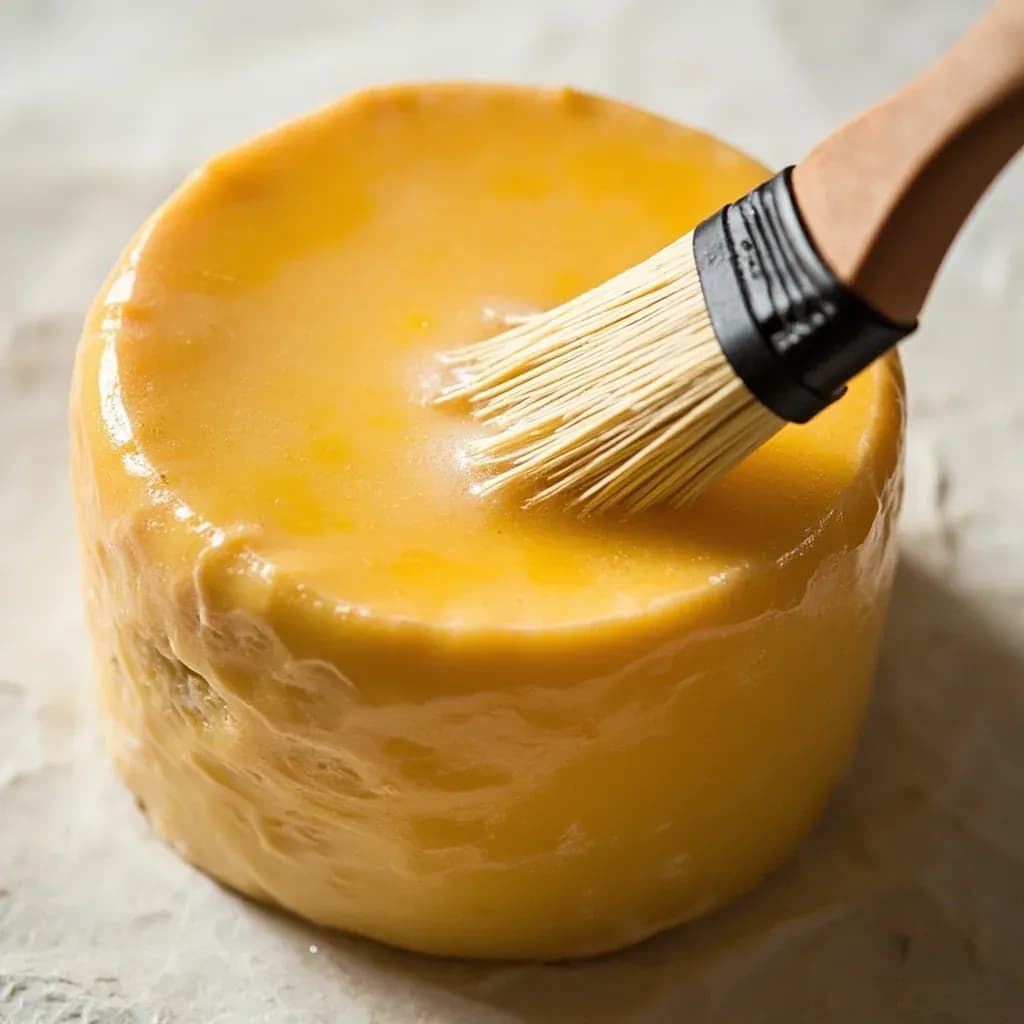
Brushing aging cheese rinds with brine or culture to manage their surface ripening.
Rind brushing maintains the surface of an aging cheese by sweeping or washing the rind with brine, culture, wine, or beer to encourage beneficial bacteria and discourage unwanted molds. Regular brushing is what gives washed-rind cheeses their tacky orange surface and pungent aroma, and it keeps the rind even and protective during affinage. It is a recurring step throughout a cheese's maturation in the cellar.
Rind brushing is the daily-to-weekly ritual of wiping or scrubbing the surface of an aging cheese with a salt brine, alcoholic beverage, or culture slurry, feeding and directing the smear-ripening microflora — chiefly Brevibacterium linens — that defines washed-rind styles. Where bloomy-rind cheeses like Camembert develop a soft white coat on their own and natural-rind wheels are left to dry undisturbed, washed-rind cheeses require an active affineur to keep the rind moist, slightly acidic, and salty enough to favor the right bacteria over wild molds. The reward is the sticky, glossy, deeply aromatic rind found on Munster, Époisses, Taleggio, and Limburger, and the supple, savory paste that develops beneath it.
The technique is essentially a controlled microbial inoculation delivered through a wet, salty vehicle. The wash sets surface pH, controls moisture loss, suppresses competing molds, and — when the liquid is wine, beer, or marc — layers in regional character that becomes part of the cheese's signature. Done well, rind brushing converts an ordinary young wheel into something pungent, complex, and visually striking. Done poorly — too dry, too wet, too cool, or too infrequent — it produces a cracked rind, rind slippage, blue-green mold blooms, or a cheese that simply never ripens on schedule.
Practically, rind brushing sits at the heart of affinage, the French craft of maturing cheese. It rewards patience, consistency, and a properly humidified cave (roughly 50–57°F and 90–95% relative humidity), and it is one of the few cheesemaking skills that a serious home cook or small-scale affineur can practice on a single wheel with nothing more than a boar-bristle brush, a jar of brine, and a converted wine fridge.
- Difficulty
- Medium
Types & varieties
Dry-salting the rind with coarse cheese salt early in affinage to draw moisture and begin rind set.
The foundational method — light salt brine wiped on the wheel; classic for Munster and Taleggio.
Used for Trappist and Belgian-style washed rinds such as Chimay; adds malt character.
Red or white wine brushed on; traditional in eastern France, used for Époisses (Burgundy) and Langres (Haute-Marne).
Grape pomace brandy or fruit spirits; regional in France and Switzerland. Marc de Bourgogne is the signature wash for Époisses.
Acid whey brushed on to lower surface pH and favor B. linens over competing molds.
Direct application of a B. linens / Geotrichum slurry to standardize and accelerate rind development.
Traditional in some English and Breton washed-rind styles, including the English cheese Stinking Bishop, which is washed with perry (pear cider).
How to do it
- 1
Prepare the wash
Mix the chosen liquid — typically 3–5% salt brine, or brine cut with beer, wine, perry, or marc — and bring it to cave temperature so it does not shock the rind. If using a culture inoculation, prepare a slurry of B. linens and/or Geotrichum in sterile brine just before use.
- 2
Inspect and trim the cheese
Pull the cheese from the cave, brush off any heavy mold growth or dried whey crust, and check that the rind is intact — no cracks, slides, or soft spots. Discard or isolate any wheel showing late-blowing or unwanted surface contamination.
- 3
Apply the wash evenly
Dip a natural-bristle brush or cheesecloth in the wash, wring it lightly, and rub a thin, even film over every face of the cheese, including the edges. Coat the sides and faces but avoid puddling on the top and bottom shelves of the stack. The rind should glisten with moisture, not drip.
- 4
Return to the cave and flip
Place the cheese on a clean, dry board or rack in the cave at 50–57°F and 90–95% RH. Flip it onto the opposite face the next day so moisture does not pool on one side and produce asymmetric rind growth.
- 5
Wait for rind response
Allow 2–5 days for the surface microflora to bloom. You should see a tacky patina shifting from white (Geotrichum) toward orange-pink (Brevibacterium), accompanied by a deepening aroma.
- 6
Repeat on schedule
Re-wash every 2–7 days depending on style and speed of rind development. Smaller soft cheeses may need washing two to three times per week; larger alpine wheels, once a week.
- 7
Taper and dry down
In the final weeks of aging, lengthen the interval between washes and lower cave humidity slightly so the rind dries, firms, and locks in the flavor profile before the cheese is wrapped and chilled for sale.
The biology behind the brush
Rind brushing is fundamentally a microbiology job. The first colonist on a fresh, moist cheese surface is usually Geotrichum candidum, a yeast that produces a white, velvety bloom. As the wash lowers surface pH and adds salt, Brevibacterium linens — the workhorse of washed-rind cheeses — takes over, metabolizing amino acids into sulfur compounds and amines that give the rind its famously pungent aroma. Debaryomyces hansenii and various Penicillium strains ride along, contributing fruity, yeasty, or earthy notes. The affineur's brush is the delivery system: it inoculates the surface, holds moisture for the bacteria to multiply, and selects — through salinity and pH — which organisms win.
Choosing a wash liquid
The wash is where regional identity enters the cheese. Salt brine is the universal baseline; everything else is a flavor choice layered on top. The alcohol and sugar in wine, beer, cider, perry, or marc feed the yeasts and contribute esters and tannins that show up in the finished rind. Whey is the traditional acidifier, used when the affineur wants to suppress molds and push the rind toward a clean, B. linens–driven character. Some makers rotate liquids over the life of the cheese — a beer wash early, a wine or marc wash late — to build complexity in stages.
Cave conditions that make or break the rind
Even a perfect wash will fail in a dry cave. Washed-rind affinage demands 90–95% relative humidity during the active rind-building phase, with temperatures held in the low 50s°F. Below 90% RH, the surface cracks and the culture cannot colonize evenly; above 95%, the rind softens and sluffs off. Once the rind is fully developed, humidity is allowed to drop so the surface dries, firms, and locks in the flavor profile before the cheese is wrapped or sold.
Common uses
Tips & pitfalls
- Use non-chlorinated or low-chlorine water in the wash — chlorine suppresses the very bacteria you want to grow.
- Keep the brush dedicated to one cheese family to avoid cross-contaminating strains between wheels.
- Wash lightly and often rather than heavily and rarely; over-wetting softens the rind and causes rind slippage.
- Maintain 90%+ humidity in the cave; if the rind cracks, the culture cannot colonize evenly.
- Flip the cheese after each wash to prevent pooling and asymmetric rind growth.
- Watch for blue-green or black mold blooms — trim the affected area and re-wash with a slightly saltier brine to bring the rind back into balance.
- Wear food-safe gloves, since B. linens smells strongly and transfers easily to skin and clothing.
- Expect the cave itself to take on the characteristic pungent aroma — this is normal and signals an active rind.
- Stop washing and drop humidity in the final phase so the rind can dry, set, and stabilize before packaging.
Good to know
- Also called
- Washed-rind treatment, smear-rubbing, affinage wash
- Primary purpose
- Inoculate and feed the surface microflora that defines washed-rind cheeses
- Key organism encouraged
- Brevibacterium linens, which produces the orange-to-pink rind color
- Other common cultures
- Geotrichum candidum, Debaryomyces hansenii, Penicillium spp.
- Typical wash solutions
- Salt brine, beer, white or red wine, marc/eau-de-vie, cider, whey, or a blend
- Typical brine strength
- 2–6% salt, stronger than table brine
- Aging environment
- Cool, very humid cave at roughly 50–57°F and 90–95% relative humidity
- Wash frequency
- Every 2–7 days during active rind development
- Traditional tool
- Natural-bristle brush (boar or horsehair) or a coarse cheesecloth
- Origin
- Documented in French and Swiss monastic cheesemaking from the Middle Ages; refined as affinage in 19th–20th century France
- Notable cheeses
- Munster, Époisses, Taleggio, Limburger, Reblochon, Langres, Maroilles, Grayson, Stinking Bishop, Chimay-style abbey cheeses
- Time from start of rind work to finished rind
- Roughly 2 weeks to 3+ months depending on cheese size and style
- Difficulty
- Moderate — sensitive to humidity, temperature, and sanitation
- Rind edibility
- Edible on washed-rind cheeses (intentional flavor element)
Also called
Washing the Rind · Smear Brushing
Related

Confit
Cook slowly submerged in fat for silky tenderness and keeping

Cure
Draw out moisture with salt and time to preserve and concentrate

Pickle
Steep in acidic brine for bright, tangy, crunchy preservation

Ferment
Let friendly microbes transform food into tangy, complex flavor

Marinate
Soak in a seasoned mix to flavor and tenderize before cooking

Brine
Soak in salt water so meat stays juicy and seasoned throughout

Dehydrate
Slowly dry out moisture to concentrate flavor and extend shelf life

Cold-Smoke
Perfume cured food with smoke without cooking it through