Heat & Fire
Roasting Bones for Brown Stock
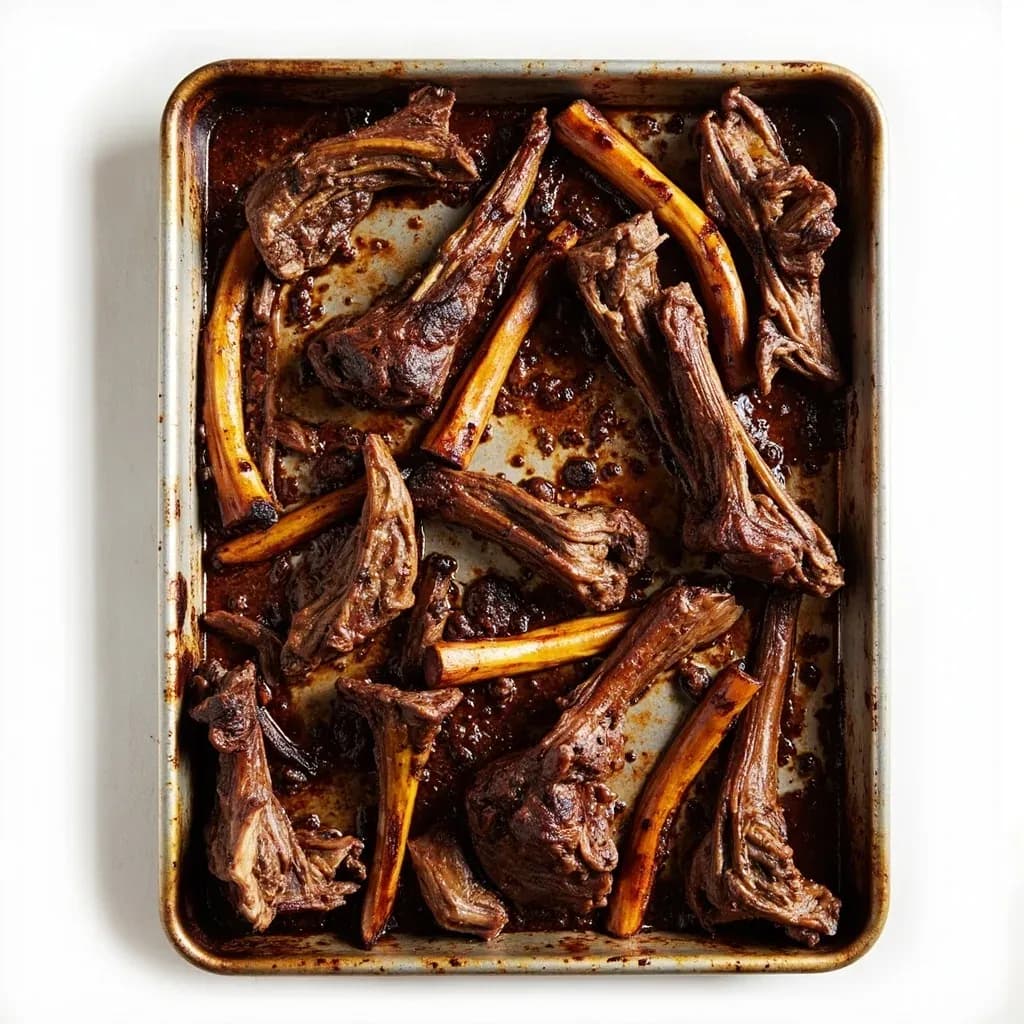
Browning bones in a hot oven to build deep color and flavor for brown stock.
Roasting bones means caramelizing beef, veal, or poultry bones, often with mirepoix, in a hot oven until deeply browned before they go into the stockpot. The Maillard browning is what gives brown stock its color, body, and roasted depth, unlike a pale white stock made from raw bones. The browned fond left in the roasting pan is deglazed and added so none of that flavor is lost.
Roasting bones is the single transformative step that turns an unremarkable simmered stock into a richly colored, deeply flavored brown stock — the foundation of demi-glace, espagnole, French onion soup, and the dark braising liquids of classical French cooking. The bones themselves contribute little color; what you are building is a layer of Maillard browning and caramelization on their surface, a crust of browned proteins, sugars, and rendered fat that will leach hundreds of aromatic compounds into the pot during the long simmer. The reward is a stock with a mahogany hue, a savory roasted-meat character, and the kind of backbone that bottled stocks simply cannot imitate.
The technique is forgiving but precise about its targets. Too pale, and the stock reads thin and washed-out, indistinguishable from a blond simmer. Too dark, and the exterior has crossed into carbonization, leaving a bitter, ashy note that no amount of skimming will rescue. The window you are aiming for is a deep, even chocolate-brown — the color of a well-baked pretzel or a roasted cocoa nib. Pulling bones at that exact moment, then deglazing the pan and capturing every fleck of fond, is the entire game. Done well, roasted bones also give you a bonus: a pan of clear, golden tallow worth saving for sautéing vegetables or roasting potatoes.
- Difficulty
- Easy
Types & varieties
The standard for brown beef stock, demi-glace, and French onion soup. Beef tolerates the highest heat and the longest roast, developing the deepest, almost smoky flavor.
Lighter and more delicate. Roast at a lower 375°F to avoid bitterness; ideal for refined brown sauces, glazes, and the base for espagnole and demi-glace.
Strong and gamy, suited to Mediterranean and North African braises. Roast carefully — lamb fat scorches easily and turns acrid.
Used for richer pork stocks. Watch closely because the higher fat content scorches faster than beef.
Darker chicken or turkey stock. Use a shorter roast (25–40 minutes) — poultry bones are small and the line between brown and burnt is narrow.
Venison, boar, and duck carcasses roast into intensely flavored stock. Often blended with beef bones to soften the wild, iron-heavy character.
How to do it
- 1
Select and prep the bones
Choose raw, meaty bones — beef shank, knuckle, neck, short rib, oxtail, or veal breast and shank are ideal. Avoid bones that have already been simmered or roasted; their surface collagen is spent and they will not brown well. If using large femurs or shanks, ask the butcher to saw them into 2–3 inch pieces so the marrow is exposed and surface area roughly doubles. Pat the bones thoroughly dry with a clean towel — surface moisture is the enemy of browning, since it must evaporate before the surface temperature can climb high enough for Maillard reactions.
- 2
Heat the oven and prep the pan
Set the oven to 400–450°F (375°F for veal, up to 475°F for very dense beef bones). Place a wire rack inside a heavy rimmed sheet pan or roasting pan so hot air circulates beneath the bones and the rendered fat can drip away cleanly. A light brush of neutral oil on the rack prevents sticking without pooling.
- 3
Toss and arrange in a single layer
Toss the bones with a thin film of neutral oil — about 1 tablespoon per 4 pounds is plenty. Spread them in a single, uncrowded layer with space between each piece. If the bones touch, the contact points steam rather than brown, and you will end up with patchy color. Use two pans rather than cramming one.
- 4
Roast until deeply and evenly browned
Roast for 30–60 minutes total, turning the bones once at the halfway mark with tongs or a spatula. Target a rich, even mahogany — darker than caramel, lighter than espresso. If some pieces look pale in spots, give them more time at the same temperature rather than cranking the heat, which will char the exposed edges before the recessed areas catch up.
- 5
Add aromatics and tomato paste (optional but recommended)
In the last 15–20 minutes, scatter 1–2 cups of diced mirepoix (onion, carrot, celery) onto the pan so they caramelize alongside the bones without burning. For deeper color and a savory umami lift, stir 1–2 tablespoons of tomato paste directly into the bones for the final 10 minutes; the paste browns rapidly and contributes glutamates that round out the finished stock.
- 6
Drain and reserve the rendered fat
Pull the pan from the oven and carefully pour off the liquid tallow into a heatproof container. This fat is gold — use it to roast potatoes, sauté vegetables, or enrich a pan sauce. Leaving it in the stockpot will make the final stock greasy and force you to skim for hours.
- 7
Deglaze the pan and capture the fond
Set the hot roasting pan over medium heat on the stovetop. Pour in a cup of cold water, dry red wine, or cold stock and scrape every bit of fond from the bottom with a wooden spoon or flat spatula. The fond is concentrated flavor — there should be no dark crust left behind. Add this liquid to the stockpot along with the roasted bones and aromatics.
- 8
Build the stock and simmer gently
Place the bones and aromatics in a clean stockpot and cover with cold water by 1–2 inches. Add a bay leaf, a few black peppercorns, a small bouquet garni, and any remaining wine. Bring just to a bare tremor on the surface, then drop to a low, steady simmer at 180–190°F — never a rolling boil, which emulsifies fat into a cloudy stock. Skim gray foam and surface fat aggressively in the first hour, partially cover, and simmer 4–8 hours for beef and veal (2–4 for poultry). Strain, cool rapidly in an ice bath, and defat before refrigerating.
Why roasting matters — the chemistry of color
A pale, simmered stock is mostly water, dissolved collagen, and a handful of amino acids. It tastes of meat essence but not of meat itself. Roasting changes that by triggering two reactions on the surface of the bone: the Maillard reaction, where amino acids and reducing sugars rearrange into hundreds of new compounds (pyrazines, furans, thiophenes), and caramelization, where natural sugars brown into bitter-edged sweetness. Together they produce the roasted, almost coffee-like depth that defines brown stock.
Many of these flavor compounds leach steadily into the simmering liquid, which is why a long simmer of properly roasted bones gives you flavor that builds hour by hour. The compounds also begin to break down at extreme surface temperatures, which is why an over-roasted bone tastes burnt rather than deeper. The practical takeaway: time at moderate oven heat beats a blast of high heat.
- Maillard compounds form rapidly once the bone surface climbs above roughly 300°F — pat bones dry so surface moisture evaporates and the temperature can reach browning range
- Pyrazines give the roasted, nutty backbone; furans add the caramelized edge
- Browned aromatics (onion, carrot, tomato paste) layered in the last 15 minutes add a parallel layer of flavor
Common uses
Tips & pitfalls
- Use raw, meaty bones — previously cooked or simmered bones will not brown properly and have already given up their collagen.
- Cut or crack large bones into 2–3 inch pieces so the marrow is exposed and you have more surface area to brown.
- Spread bones in a single uncrowded layer; two pans are always better than one packed pan.
- Toss bones with a thin film of neutral oil, or smear a tablespoon of tomato paste over them, to jump-start browning.
- Add diced onion, carrot, and celery to the pan only in the last 15–20 minutes — earlier and they will scorch to carbon.
- Stop at deep chocolate-brown; black equals bitter, and any charred fragments should be discarded.
- Pour off and save the rendered tallow before transferring bones to the stockpot — it is too valuable to leave behind and too much fat will overwhelm the stock.
- Deglaze the roasting pan with water, wine, or stock and add every drop of fond to the pot — that crust is concentrated flavor, not waste.
- Skim aggressively during the simmer; roasted bones release substantially more fat than unroasted ones.
- Never rinse the roasted bones before adding them to the stockpot — the clinging caramelized bits are exactly what you want in the finished stock.
Good to know
- Oven temperature
- 400–450°F (200–230°C) for most bones; 375°F (190°C) for veal; up to 475°F (245°C) for very dense beef bones
- Roasting time
- 30–60 minutes, until bones are an even deep mahogany
- Best bone choices
- Beef shank, knuckle, neck, short rib, oxtail; veal breast and shank; lamb neck and shank; chicken backs, necks, and wings
- Yield boost
- Roasting does not increase gelatin or body — it builds color and roasted flavor
- Color source
- Maillard browning and caramelization of surface proteins, fats, and sugars, not pigment in the bone itself
- Rendered fat
- Roughly 20–30% of a bone's weight can render as tallow at roasting temperature
- Pan options
- Heavy rimmed sheet pan, roasting pan, or broiler pan; a wire rack improves air circulation underneath
- Classic aromatics added at the end of the roast
- Mirepoix, tomato paste, bouquet garni, black peppercorns, bay leaves, dry red wine for deglazing
Also called
Roasting Bones · Browning Bones
Related

Sear
Blast the surface hot for a deep-browned, savory crust

Sauté
Cook quickly in a little fat over lively heat, tossing as you go

Stir-Fry
Toss bite-sized pieces over roaring heat for fast, smoky cooking

Pan-Fry
Crisp food in a shallow layer of hot fat, turning once or twice

Deep-Fry
Submerge in hot oil for an all-over crackling crust

Roast
Cook uncovered in dry oven heat for browned edges and tender centers

Bake
Cook with steady, surrounding oven heat — the soul of bread and pastry

Broil
Hit food from directly above with fierce overhead heat