Water & Steam
Bringing to Nappe
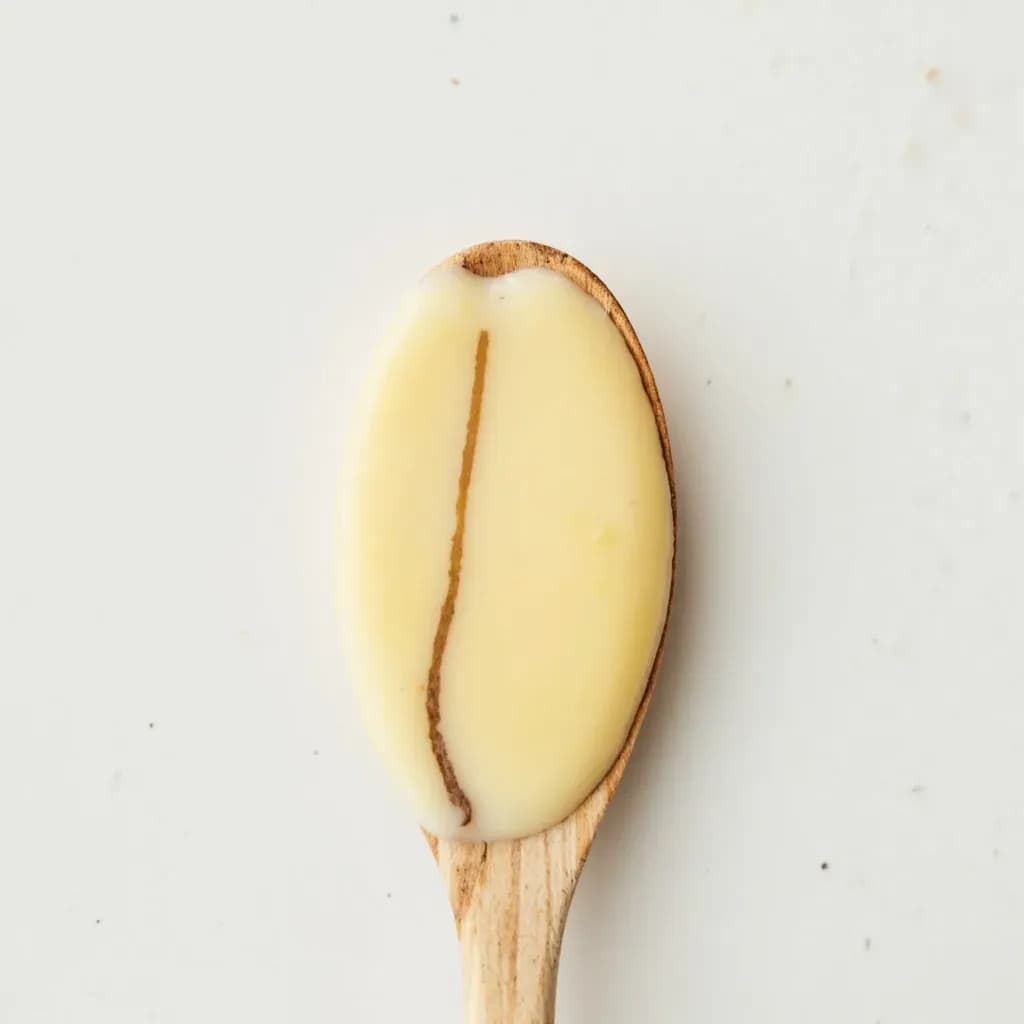
Reducing or thickening a sauce until it lightly coats the back of a spoon.
Nappe (French for 'to coat') is the point at which a sauce or custard thickens just enough to cling to a spoon in a thin, even film. Cooks test it by drawing a finger across the spoon's back; a clean line that holds means the sauce has reached nappe. It's the classic doneness cue for crème anglaise, pan sauces, and reductions.
Nappe is the French term for the moment a sauce has reduced or thickened enough to lightly coat the back of a spoon in a smooth, even layer that holds its shape when parted. The word means "tablecloth," and the image is right: the sauce drapes over food or utensil the way a cloth lies flat on a table, no gaps, no runs. It is the universal doneness test taught in classical kitchens for everything from a milk-thickened béchamel to a wine-glazed demi-glace, and it is the most reliable way a cook has to judge whether a sauce is ready.
Why it matters: most cooked sauces do not arrive at their final body the way a steak arrives at medium-rare. They thicken by evaporation, starch gelatinization, and protein coagulation, all of which keep working after the pan comes off the heat. Hitting nappe at the right moment is what separates a glossy gravy from a gluey one, a silken crème anglaise from a custard that seizes in the ramekin. A recipe gives you timing; the spoon gives you truth.
How it behaves: starch-thickened sauces reach nappe as their granules fully swell and the liquid concentrates, typically around 180–185°F (82–85°C). Egg-thickened sauces (hollandaise, sabayon, liaison) reach it just below coagulation. Reduction sauces (demi-glace, wine glazes, pan jus) hit it when enough water has evaporated that dissolved proteins, sugars, and gelatin can suspend a thin film. In every case the sauce tightens further as it cools, so the working rule is to pull the pan one shade looser than you want it served.
- Difficulty
- Medium
Types & varieties
Thinnest end of the range; the sauce barely clings to the spoon. Used for delicate cream sauces and light veloutés where you want a whisper of coating, not a blanket.
The benchmark most kitchens mean when they say 'nappe.' Coats the spoon evenly; the finger-track holds. Standard for béchamel, pan gravy, crème anglaise, and most reduction sauces.
Bordering on couteau. A heavier, glossy coating used for demi-glace, espagnole-based compound sauces, and reduction glazes meant to cling firmly to roasted meat.
A cream-based sauce that has reduced to its coating point without breaking. Describes a finished cream or suprême-style sauce where the cream has done the thickening, not a roux.
How to do it
- 1
Prepare the sauce base
Build your sauce — a roux-thickened milk or stock for béchamel or velouté, a reduced stock for demi-glace, an egg-yolk liaison for hollandaise or sabayon, or a cream reduction for a cream sauce. Hold it at a gentle simmer, not a rolling boil, so it reduces evenly without scorching the bottom or breaking the emulsion.
- 2
Stir and skim
Whisk or stir frequently with a wooden spoon, skimming any foam or surface fat. Constant motion keeps starch granules suspended and prevents a skin from forming on top, which would give a false thickening read the moment you dip your spoon.
- 3
Begin the spoon test early
Before you think it is ready, dip a clean metal spoon, draw your finger down the back, and note the baseline. This trains your eye on how the sauce moves from too thin toward nappe, so you learn the rate of change rather than guessing at the end.
- 4
Test at the cool-down moment
Lift the spoon out, turn it back-side up, and count to two. The sauce should coat the bowl and back of the spoon in a smooth, even film, and a finger drawn through should leave a clean track that does not fill back in. If the track floods shut, keep simmering; if it holds crisp, you are at nappe.
- 5
Adjust before or after
If still thin, simmer another minute and retest. If it has gone past nappe toward couteau, whisk in a tablespoon of the cooking liquid — milk, stock, or cream depending on the sauce — and retest. Small adjustments are easier than large ones; do not flood the pan.
- 6
Pull and finish
Once at nappe, take the pan off the heat. Sauces continue to thicken from carryover and cooling, so finish with butter, seasoning, or a final pass through a fine-mesh strainer only after the consistency is where you want it. A sauce that looks perfect in the pan will often be slightly too thick on the plate.
- 7
Hold and recheck
If holding for service, keep on low heat and recheck every few minutes. Evaporation will push a sauce past nappe surprisingly fast, especially under a wide pan or a restaurant heat lamp. Loosen with a splash of warm stock as needed and stir back to nappe before each plate goes out.
The science behind the cling
A sauce holds at nappe when its liquid phase has lost enough water — or its starch and protein molecules have swollen enough — to raise viscosity past a working threshold. In a roux-thickened sauce, amylose and amylopectin leach from the starch granules during simmering and form a loose gel network; as the gel tightens with continued heat and evaporation, the sauce first coats, then ropes, then sets. In a reduction sauce, the same thing happens without starch: dissolved gelatin (from bones), proteins, and sugars concentrate until the liquid can suspend a film on a cool surface. In an egg-thickened sauce, the yolks' lecithin and proteins emulsify fat into water and partially coagulate; nappe is the narrow window before the proteins fully set and the sauce breaks or scrambles. In every case, the consistency you see on the spoon at room temperature is roughly the consistency the sauce will have on the plate.
Nappe in the family of consistencies
French cooks describe sauce thickness along a sliding scale, and nappe is the middle anchor. Knowing where it sits helps you read recipes and communicate with other cooks.
- Au filet — the thinnest; a syrup or light jus that pours in a continuous thread (literally 'in a thread'). Used for dessert syrups and some glazes.
- Nappe légère, moyenne, and épaisse — the coating range, from barely-there to heavy cling.
- Couteau — a knife-holding consistency where the sauce is thick enough to take and hold the imprint of a knife drawn through it; used for some stuffings and compound butters.
- Crème / purée — pastes and purées thick enough to hold a peak, well beyond any pourable sauce.
- The same word 'napper' is also used at the pass in the plating sense: to coat a finished dish with a glossy sauce or aspic layer.
Common uses
Tips & pitfalls
- Dip the spoon, turn it over, and wait two to three seconds — the sauce should cling without dripping in a steady stream. Counting beats guessing.
- Draw the back of a clean finger straight down the coated spoon; if the track stays open and the edges do not run together, you have nappe.
- Sauces thicken as they cool, so pull the pan off the heat one shade looser than your target. Carryover and the trip to the table will finish the job.
- For egg-thickened sauces such as hollandaise and sabayon, judge quickly at the working temperature — they will set further as they cool, and the window between nappe and scramble is narrow.
- If you overshoot, whisk in cold stock, cream, or milk a tablespoon at a time to loosen back to nappe rather than starting over.
- Stir constantly with a wooden spoon or whisk to prevent a skin or scorch on the bottom, both of which will throw off the test and ruin the texture.
- A metal spoon conducts heat away faster and gives a more honest read on the final cooled consistency than a wooden spoon, which insulates and lets the sauce keep moving on the surface.
- Do not confuse nappe with a sauce that only thickens when cold. Many starch-thickened sauces gel at room temperature; the warm spoon test is the working one, not the cold one in the pan.
Good to know
- French term
- Nappe (literally 'tablecloth'); the sauce clings to food or spoon in a smooth, even layer
- Origin
- Classical French cuisine, codified by Escoffier and the brigade system in the 19th and 20th centuries as a standard doneness test
- Consistency family
- Sits between 'au filet' (a thread, for syrups and light jus) and 'couteau' (knife-coating, thicker)
- Temperature cue
- Most starch-thickened sauces reach nappe between 180–185°F (82–85°C); the test is judged as the sauce cools on the spoon
- Visual test
- Coats the back of a spoon cleanly; a finger or knife drawn through leaves a clean track that does not run back together
- Test utensil
- Traditionally a metal or wooden spoon; the back of a chef's knife or a clean fingertip works as well
- Related verb
- Napper — to coat; 'napper un mets de sauce' means to coat a finished dish with sauce
- Difficulty
- Beginner-friendly to test, but easy to overshoot in a minute or two of inattentive simmering
Also called
nappe · coating the back of a spoon
Dishes that rely on it

Related

Boil
Cook in vigorously bubbling liquid at full rolling heat

Simmer
Hold liquid at a gentle shimmer for tender, unhurried cooking

Poach
Cook gently in barely-trembling liquid for silky, tender results

Steam
Cook in rising vapor to keep color, nutrients, and shape intact

Blanch
Plunge briefly in boiling water, then shock cold to lock color

Braise
Sear, then cook slow in a little liquid until fall-apart tender

Stew
Simmer bite-sized pieces fully submerged into a rich, unified pot

Sous-Vide
Seal and cook in precise warm water for edge-to-edge doneness