Prep & Assembly
Rolling Stuffed Leaves
Wrapping filling in cabbage, grape, or lettuce leaves into neat parcels or wraps.
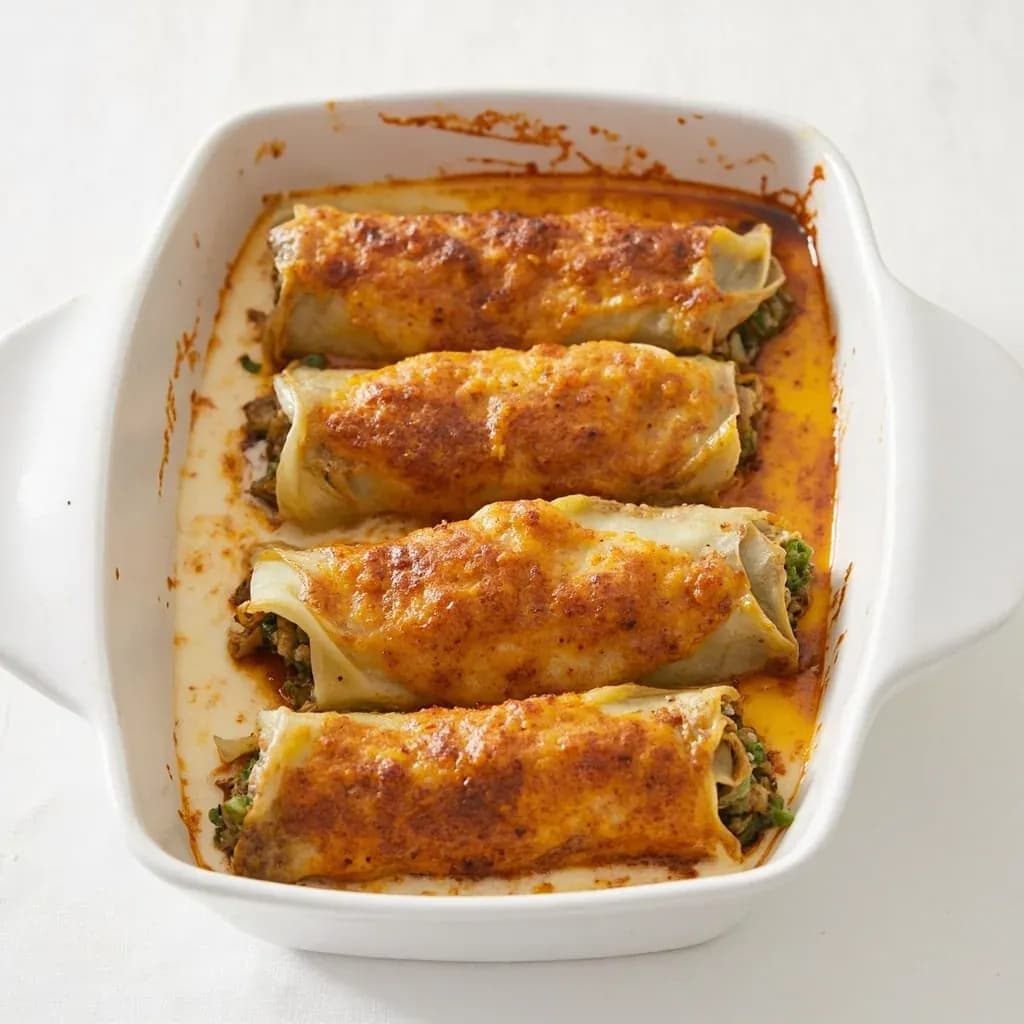
Rolling stuffed leaves encloses a savory filling in pliable leaves, folding the sides and rolling into tight parcels. It produces cabbage and grape-leaf sarma and dolma, as well as Korean ssam lettuce wraps eaten by hand. Blanching firmer leaves first makes them flexible enough to roll without tearing. Snug, even rolls hold together through steaming or braising.
Rolling stuffed leaves is the assembly technique behind an unusually broad family of dishes — from Eastern European golabki and Romanian sarmale to Greek dolmadakia, Lebanese waraq enab, Korean ssam, and the san choy bow of a Cantonese stir-fry. At its core, the method is simple: tenderize a sturdy leaf, enclose a seasoned filling, roll it tight, and finish in moist heat (or serve raw if the leaf is meant to stay crisp). The genius of the technique is that a single structural idea — the leaf as both wrapper and flavor vehicle — produces everything from a one-bite mezze to a fork-and-knife Sunday dinner.
What makes the technique worth learning as a single skill is that the craft variables are consistent across cuisines: how the leaf is prepared (blanch time, rib removal, shocking), how tightly the parcel is rolled, and what liquid or sauce it finishes in. Master those, and the specifics of each cuisine become flavor swaps rather than new techniques. The leaf itself dictates almost everything else — its size, pliability, and flavor determine the filling's seasoning, the cooking time, and even whether the roll is eaten from the hand or plated with a sauce.
The most common pitfalls are structural, not flavorful: rolls that unspool in the pot, leaves that split at the midrib, fillings that burst through the seam. All of these come down to three things — leaf prep, portioning, and rolling tension. Get those right and the technique is forgiving; the cook's attention can move to seasoning, sauce, and the cultural personality of the dish.
- Difficulty
- Medium
Types & varieties
Eastern European golabki, holubtsi, and Romanian sarmale; blanched cabbage wrapped around meat-and-rice filling, braised in tomato or sauerkraut juice. Jewish holishkes often add prunes or brown sugar. Swedish kåldolmar is the Scandinavian cousin, served with lingonberry.
Levantine, Greek, Turkish, and Caucasian; brined or fresh grape leaves around rice, herbs, and sometimes lamb. Served warm or cold with yogurt or avgolemono. Azerbaijani versions often include pomegranate.
Chinese san choy bow, Korean ssam, and Vietnamese; raw or briefly wilted lettuce cups holding minced meat, mushrooms, or noodles. Typically assembled and eaten immediately.
Northern Chinese, Taiwanese, and Korean cuisines; whole blanched napa leaves around glass noodles, pork, or tofu. Cooked by steaming or braising in a soy-based broth.
Mediterranean and Middle Eastern; blanched chard leaves around bulgur, rice, or cheese fillings, often baked in tomato sauce.
Southern US and Caribbean; long blanched collard leaves used as a low-carb wrap or stuffed with rice, beans, or meat. Stand in readily for tortillas or cabbage.
Vietnamese (lá lốt) and Thai; small, aromatic betel leaves wrapped around seasoned beef, pork, or shrimp paste and grilled. Snacked on whole.
How to do it
- 1
Select and separate the leaves
Choose leaves that are flexible, unblemished, and large enough to hold the filling with a 1-inch border. For whole cabbages, cut out the core with a paring knife or score a deep cross into the base so the boiling water can penetrate and loosen the leaves from the outside in.
- 2
Blanch until pliable
Dip the cabbage, chard, or collard leaves in a large pot of generously salted boiling water for 30–90 seconds, until they bend without snapping. Grape leaves usually need only 10–20 seconds if fresh, or a quick warm-water rinse if jarred. Napa leaves need just 15–20 seconds.
- 3
Shock and trim
Transfer leaves immediately to an ice bath to halt cooking and set the color. Pat dry, then lay each leaf flat. Slice off the thick bottom of the midrib flush with the leaf, or shave it down with a knife, so the leaf lies flat and rolls evenly. Trim any torn edges.
- 4
Season and portion the filling
Mix the filling just before assembly so it stays moist. If the mix includes raw rice or grains, par-cook them so they finish in the cooking liquid rather than turning mushy. Portion into 1–3 tablespoon scoops depending on leaf size; overfilling is the most common cause of splits.
- 5
Place the filling
Lay the leaf vein-side up (or smooth-side up for grape leaves) with the stem end toward you. Place the filling just past the base of the leaf, leaving a 1–1.5 inch border on the sides and bottom. A neat, compact mound rolls more cleanly than a spread-out one.
- 6
Fold the sides
Fold the left and right sides of the leaf inward over the filling, like folding a letter. This creates the enclosed ends so the filling cannot escape as you roll forward.
- 7
Roll forward
Lift the bottom edge up and over the filling, tucking it under, then roll forward in one firm motion into a tight cigar or parcel. Pull the leaf taut as you go; a snug roll holds its shape without toothpicks.
- 8
Pack the cooking vessel
Line the base of a wide heavy pot or baking dish with torn or imperfect leaves, or a layer of sauerkraut, bacon, or sliced tomato. Arrange the rolls seam-side down in tight concentric layers, nestling them so they prop each other up.
- 9
Add liquid and weigh down
Pour in broth, tomato sauce, sauerkraut juice, or lemon-oil broth until it reaches about two-thirds up the sides of the rolls. Place an inverted heatproof plate directly on top to keep the rolls submerged and compact.
- 10
Cook gently
Bring to a simmer, cover, and braise 45–75 minutes for cabbage rolls (until a fork passes easily into the filling) or 30–45 minutes for grape leaves. Steam napa or lettuce rolls 10–20 minutes. Rest 10 minutes before serving so they firm up and absorb the sauce.
Leaf selection and preparation
Every other decision in the recipe flows from the leaf. Cabbage needs full blanching to bend without cracking; napa needs only a brief dip because its ribs cook faster; grape leaves often need nothing more than a warm rinse if jarred. The thick midrib is the enemy of a tight roll — it resists folding and pushes the filling out — so shaving it flush with the leaf or cutting a shallow V into the base is essential for cabbage and chard. Ice-bath shocking after blanching locks in color, halts cooking, and firms the leaf just enough to roll without tearing.
The physics of a tight roll
A well-rolled parcel is a small piece of architecture: the bottom edge tucks under, the side folds contain the filling, and the forward roll compresses everything into a snug cylinder. Too loose and the parcel unspools in liquid; too tight and it bursts at the seam. The right tension is roughly that of a firmly rolled burrito — the leaf should look taut but not stretched. Packing the rolls seam-side down in a tight, single layer, then weighting them with an inverted plate, lets neighboring rolls prop each other up so the structure holds without toothpicks.
Cooking liquids and finishes
The braising liquid is doing as much flavor work as the filling. Tomato sauce gives Eastern European rolls sweetness and acidity; sauerkraut juice adds tang and salt; chicken or beef broth keeps the parcel savory without competing with the filling; lemon-and-olive-oil broth is the classic finish for grape leaves. As a rule, the liquid should reach about two-thirds up the sides of the rolls — enough to steam and braise simultaneously, not enough to wash out the filling's seasoning. A short rest after cooking lets the rolls firm up and absorb the sauce before serving.
Common uses
Tips & pitfalls
- Score a deep X in the cabbage core before blanching so whole leaves peel off cleanly instead of tearing at the ribs.
- Shock blanched leaves in an ice bath the instant they bend without cracking; this locks in color and prevents tearing during assembly.
- Cut a shallow V into the base of each cabbage leaf to remove the thick midrib that would otherwise prevent a tight, even roll.
- Place a torn or imperfect leaf on the bottom of the braising pot to keep the rolls from scorching on direct heat.
- Pack rolls seam-side down and very tightly together so they support one another and don't unroll during cooking.
- Weight the rolls with a heatproof plate during braising to keep them submerged and compact — loose rolls will float and unspool.
- For grape leaves, rinse brined leaves briefly and pat dry; oiling them lightly helps prevent sticking and cracking on the plate.
- Don't overfill — about 1 to 1.5 tablespoons of filling for a grape leaf, 2–3 tablespoons for cabbage — or the leaf will burst at the seam.
- Cook rice or grains only halfway before assembling if they'll be braised further; fully cooked grains turn mushy in the finished dish.
Good to know
- Type
- Assembly technique / wrapping method
- Common leaves
- Cabbage (green, savoy, napa), grape, lettuce (butter, romaine, little gem, iceberg), Swiss chard, collard
- Difficulty
- Moderate; requires patience more than skill
- Active time
- 30–45 minutes for a batch of 12–20 rolls
- Cook time
- 45–90 minutes once assembled, depending on cooking method
- Yield
- 12–24 rolls per medium head of cabbage or per jar of grape leaves
- Primary cuisines
- Eastern European, Levantine, Greek, Balkan, Turkish, Caucasian, Chinese, Vietnamese, Korean
- Origin
- Ancient; stuffed vine leaves described in medieval Arabic cookbooks and earlier Greek texts
Also called
Cabbage Leaf Rolling (Sarma) · Wrapping Ssam (Lettuce Wraps)
Related

Whisk
Beat ingredients smooth and aerated with a looping wire motion

Sift
Pass dry ingredients through mesh to aerate and remove lumps

Strain
Pour through mesh to separate solids from liquid for a smooth result

Filter
Pass liquid through fine material to clarify out the smallest particles

Rice
Press cooked potatoes through small holes for fluffy, lump-free texture

Mash
Crush soft cooked food into a rustic, creamy purée

Grind
Crush food into a coarse to fine texture, from spices to meat

Grate
Shred food into fine bits against a sharp-toothed surface