Prep & Assembly
Root-Vegetable Grating (Masa for Pasteles)
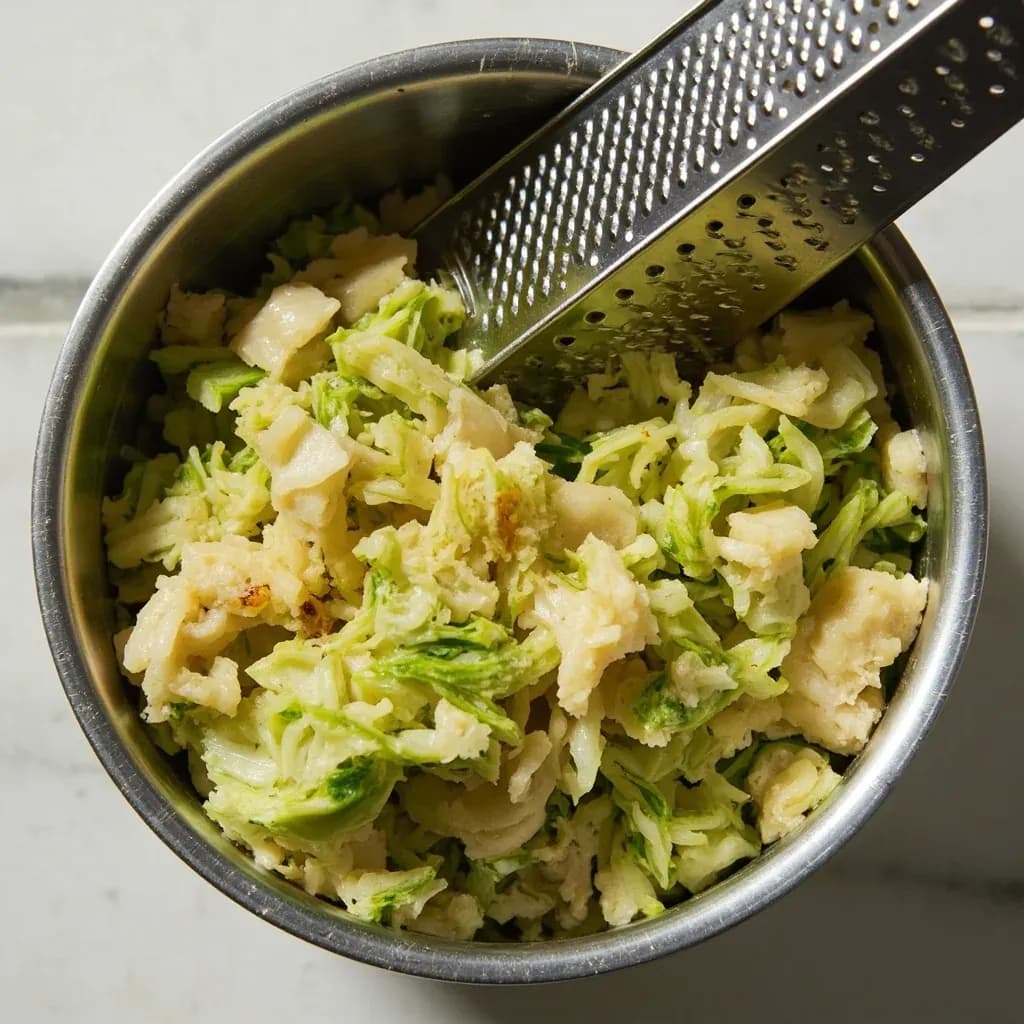
Hand-grating green bananas and root vegetables into a wet masa for pasteles.
Root-vegetable grating finely shreds green bananas, plantains, yautia, and other tubers into a moist, dense masa, the dough base for Puerto Rican pasteles. The roots are grated to a fine pulp and bound with broth and seasonings so the masa spreads smoothly onto banana leaves. It is labor-intensive hand work, traditionally a communal task, that produces a starchier, more tender masa than processing alone.
Root-vegetable grating for pasteles is the foundation of Puerto Rico's iconic holiday dish, a labor-intensive technique in which raw starchy roots and green bananas are reduced to a wet, pliable masa that is later spread onto banana leaves, filled, wrapped, and boiled. Unlike a dough that is kneaded or cooked, this masa is built entirely from raw grated vegetables — the starches and natural moisture of the roots doing the binding work without any flour or heat-set structure. The result is a paste coarse enough to hold its shape yet damp and pliable enough to spread thinly with the back of a spoon.
The technique matters because the texture of the finished pasteles — whether they hold together during a long simmer, how they slice open, and how they balance the savory filling — is decided at the grating stage. A masa that has been over-processed turns gummy and rubbery; one that has been squeezed dry cracks and falls apart when boiled. The cook's job is to control the coarseness and the moisture of the shreds, not to cook anything.
Traditionally the work is done on a pilón, a wooden board studded with sharpened metal teeth across which the cook scrapes each root by hand. Most home cooks today reach for the smallest holes of a sturdy box grater or the grating disc of a food processor, but the principle is identical: shred the raw roots finely without pulverizing them, retain enough of the milky starchy liquid to bind the mass, and season it with annatto-tinted fat just before assembly.
- Difficulty
- Medium
Types & varieties
Traditional method on a wooden board studded with sharpened metal; produces a coarse, slightly fibrous masa favored for its rustic chew.
Home method using the smallest holes of a box grater; yields a smoother, more uniform masa than the pilón.
Modern shortcut using the grating disc; consistent but risks over-pulsing, which releases excess starch and turns the masa gummy.
Roughly equal parts green banana, yautía, and yuca with a smaller portion of ñame, bound with annatto-larded fat.
Heavier on yuca and yautía, often including calabaza; tends toward a softer, more uniform paste.
Similar to Puerto Rican; leans on yuca for elasticity and often incorporates a small amount of malanga.
How to do it
- 1
Select and assemble the vegetables
Choose firm, fully green bananas; firm, waxy yautía; fresh yuca with no dark streaks; and a smaller portion of ñame. Plan roughly equal weights of banana, yautía, and yuca, with about one-quarter as much ñame.
- 2
Peel under water
Peel all root vegetables and bananas with a sharp knife, working under cool running water or in a bowl of water. Keep peeled pieces submerged to prevent oxidation and to dilute the irritating saps of yuca and yautía.
- 3
Grate into a wet masa
Working in batches, grate each vegetable on a pilón or the finest holes of a box grater directly into a large bowl. If using a food processor, fit the grating disc and pulse — do not run continuously — to keep the texture coarse and moist rather than pureed.
- 4
Manage the liquid
Let the grated vegetables sit 5 minutes; a milky starchy liquid will pool. Pour off about two-thirds, reserve the rest, and gently fold the reserved liquid back in. Do not press the masa dry.
- 5
Season and bind
Stir in warm melted lard (or olive oil) tinted with achiote or saffron, a generous pinch of salt, and if desired a small amount of crushed garlic and oregano. Mix just until uniform — overworking releases more starch and turns the masa gummy.
- 6
Rest the masa
Cover and refrigerate 30–60 minutes. Chilled masa spreads more cleanly on the banana leaf and holds together during boiling.
- 7
Portion for assembly
Scoop into roughly 3–4 tablespoon balls (about 60–80 g) on parchment or waxed paper. The masa is now ready to be flattened, filled with seasoned meat, wrapped, and tied for boiling.
The pilón and the case for coarse grating
The pilón is a wooden plank with sharpened bits of metal hammered through its surface in rows, sometimes also studded with rough coral or nail heads; the cook straddles it and scrapes each root back and forth across the teeth. The result is a mass of short shreds and broken fibers — visibly textured, never smooth — that cooks insist gives pasteles their characteristic chew. A box grater's finest holes approximate this on a small scale; a food processor's grating disc comes close if you pulse sparingly, but it can also lean toward a puree if the cook lets it run. The principle is the same across all three: short, irregular shreds that interlock, not a uniform paste that releases all its starch.
Why the masa stays wet
Starchy roots grated raw release a milky liquid loaded with free starch. That liquid is the masa's primary binder; without it, the paste would crumble the moment it hit hot water. The cook's task is to keep enough of it — typically about a third of what pools in the bowl — folded back into the solids, then to bind the whole thing with warm fat so the starches swell and cling. Squeezing the masa dry or draining every drop defeats the structure before assembly even begins.
Common uses
Tips & pitfalls
- Peel and grate green bananas last — they oxidize and turn gray within minutes once exposed.
- Submerge peeled yuca and yautía in water while you work; this reduces skin irritation and prevents darkening.
- Reserve the grating liquid (especially from yuca) and stir a portion back into the masa — the natural starches are the primary binder.
- Do not squeeze the masa completely dry; a damp, pliable mass is essential for spreading and folding without cracking.
- Stir in melted achiote-tinted fat while the grated vegetables are still warm so the color absorbs evenly.
- Rest the seasoned masa 30–60 minutes in the refrigerator before assembling; it firms up and becomes much easier to spread.
- Avoid food-processor over-pulsing — it pulverizes the fibers and releases so much starch the masa turns gummy.
- Wear food-safe gloves: yuca sap and yautía can cause intense itching, especially on sensitive skin.
- Keep proportions roughly equal across the starchy vegetables; too much yuca makes a sticky masa, and too much ñame can turn gluey if overworked.
Good to know
- Origin
- Puerto Rico; close relatives in the Dominican Republic and Cuba
- Season
- Holiday season (Dec–Jan in Puerto Rico), though made year-round
- Difficulty
- High — labor-intensive and requires consistent texture
- Primary tools
- Pilón (wooden grater-board), fine box grater, or food processor with grating disc
- Vegetables typically grated
- Green bananas, yautía (taro/cocoyam), yuca (cassava), and ñame (white yam); calabaza sometimes added
- Target texture
- Finely grated, wet masa resembling a thick damp paste — never a dry dough
- Active prep time
- 1.5–3 hours for a full batch
- Yield
- Roughly 6–8 lb of raw roots yield masa for 30–40 pasteles
- Binding fat
- Traditionally lard (manteca), often annatto-tinted; olive oil as a modern alternative
- Safety
- Yuca and yautía sap irritate skin and cause itching; wear gloves and keep peeled roots submerged in water
Also called
Masa Grating · Pasteles Masa Grating
Related

Whisk
Beat ingredients smooth and aerated with a looping wire motion

Sift
Pass dry ingredients through mesh to aerate and remove lumps

Strain
Pour through mesh to separate solids from liquid for a smooth result

Filter
Pass liquid through fine material to clarify out the smallest particles

Rice
Press cooked potatoes through small holes for fluffy, lump-free texture

Mash
Crush soft cooked food into a rustic, creamy purée

Grind
Crush food into a coarse to fine texture, from spices to meat

Grate
Shred food into fine bits against a sharp-toothed surface