Transform & Preserve
Sago Starch Leaching
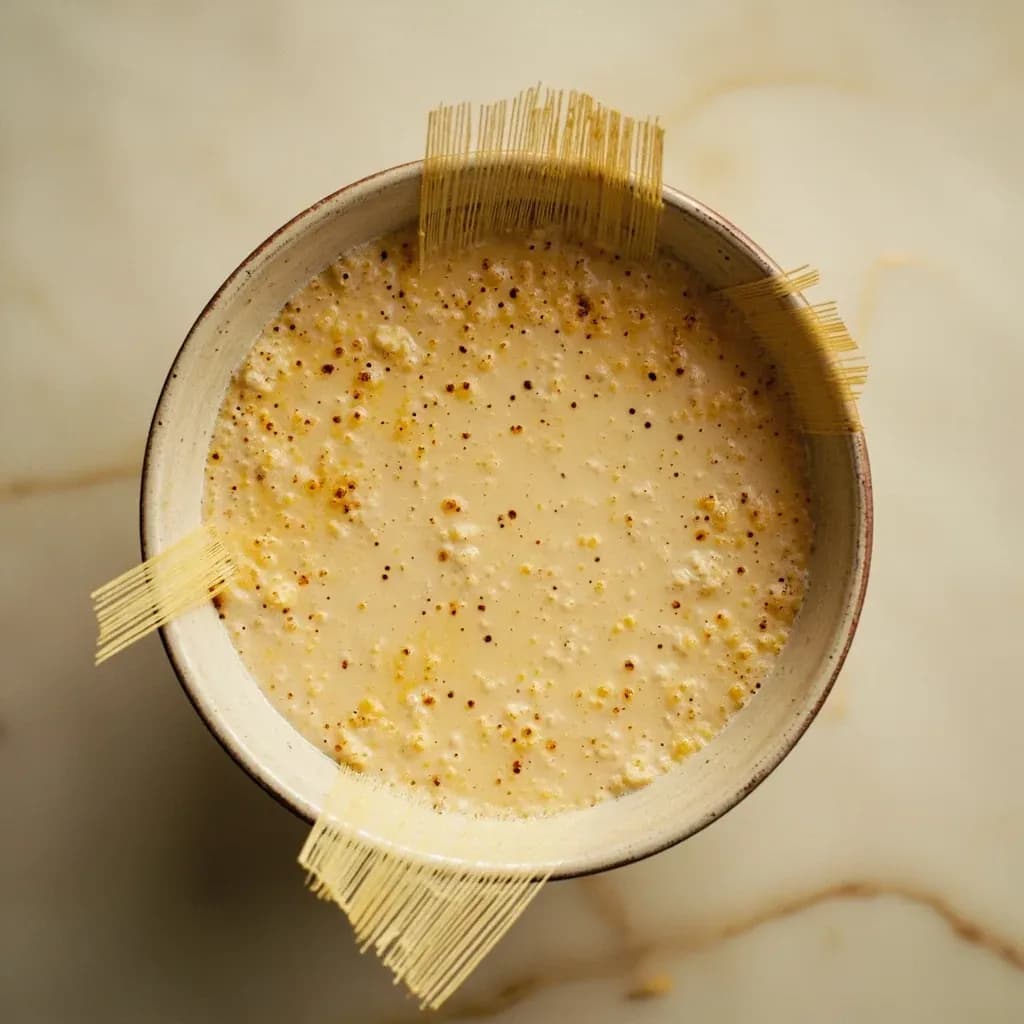
Washing crushed sago palm pith with water to extract and settle out its edible starch.
Sago starch leaching extracts edible starch from the pith of the sago palm by crushing the pith and repeatedly rinsing it with water, which carries the starch through a strainer while the fibrous residue stays behind. The starchy water is left to settle so the dense starch sinks and can be collected, dried, and used for flour, pearls, or porridge. It is a labor-intensive staple-food process across Southeast Asia and the Pacific.
Sago starch leaching is the wet-milling technique that turns the soft inner pith of a sago palm into pure, edible starch. A mature trunk — usually Metroxylon sagu, felled at 8 to 15 years just as it begins to flower — is split open and its chalky pith scraped out, pounded into a fibrous pulp, and washed repeatedly with water. The water carries the free starch grains away from the cellulose fiber; that milky suspension is strained, allowed to settle, and the resulting white cake is dried into sago flour, the raw material for papeda, sago pearls, biscuits, and a long list of tropical staples and sweets.
The principle is identical to the wet-milling of cassava into tapioca starch or the washing of rice flour for certain Asian noodles: water liberates the starch granules, screens or cloth separate them from the fiber, and gravity does the rest. What makes sago distinctive is the source — a single trunk can yield 150–300 kg of dry starch — and the speed the pith demands of the processor. Fresh pith begins to oxidize and ferment within hours, so leaching has to be done in a day, with cool, clean water and at least two or three successive washes to keep the cake bright and the flavor neutral.
The product of leaching is plain starch, not pearls. Pearl-shaped sago is a separate downstream step in which the dry flour is rehydrated, pushed through sieves to form beads, and dried again. Anything described as sago starch leaching is really about producing the raw starch that papeda, crackers, and ceremonial foods across Borneo, Maluku, and lowland New Guinea are built on.
- Difficulty
- Hard
Types & varieties
The thorny commercial palm of Borneo, Maluku, and PNG; the dominant world source.
Thornless relative whose starch is leached the same way; sometimes grown as an ornamental.
Indian and Sri Lankan fishtail palm; pith is leached into starch while the sap is tapped for jaggery and toddy.
Indonesian sugar palm processed by the same leaching tradition, often alongside true sago.
Tall fan palm of eastern Indonesia and PNG, leached into starch the same way as true sago.
Freshly settled, still-moist starch cake sold at market in Borneo and Maluku for immediate use in papeda or pan-fried cakes.
Sun- or oven-dried leached starch, milled to a fine white powder; the usual store-bought form.
Dry starch rewetted and sieved into 1–2 mm or 3–5 mm beads; a downstream step from the leached flour.
How to do it
- 1
Fell and split the trunk
Cut down a mature sago palm (8–15 years old, ideally at the first sign of flowering, when the trunk is heaviest with starch). Split the trunk lengthwise with axes or a chainsaw into halves or quarters so the soft inner pith is exposed.
- 2
Extract the pith
Pry or chisel the chalky-white pith away from the hard outer rind. The pith comes out in fibrous, waterlogged chunks. Keep it shaded and wet, and move to the next step within hours — it spoils quickly once the trunk is down.
- 3
Crush or grate the pith
In traditional Sarawak and Moluccan practice the chunks are pounded underfoot in a hollowed-log trough (the tangkong) or beaten with a heavy wooden mallet while water is added, until the pith becomes a wet fibrous pulp. Modern equivalents: a hand grater, a meat mincer, or a small hammer mill.
- 4
First leach with water
Add clean, cool water to the pulp and work it with hands or a beater so the starch grains wash free of the fiber. The liquid turns milky-white; this is the starch suspension you will keep.
- 5
Strain through a sieve or cloth
Pour the milky suspension through a fine palm-fiber sieve, a muslin- or cheesecloth-lined colander, or a woven pandanus bag, pressing the pulp to extract as much starchy water as possible. The dry fibrous residue (hampas in Malay) is discarded or composted.
- 6
Re-wash the pulp
Return the damp fiber to the trough, add fresh water, beat briefly, and strain again. Two or three washes are normal; the first wash is the cleanest starch, the later washes are more dilute and are often used for animal feed rather than best-grade flour.
- 7
Settle the starch
Pour the combined washings into a wide, shallow basin (the baling in Sarawak). Let it stand undisturbed for several hours, usually overnight, until a firm white cake of starch has settled and the supernatant water on top is clear.
- 8
Decant and clean the cake
Carefully tip or ladle off the clear water. Scrape off the thin, grayish or pinkish top layer of the cake and discard it; that layer carries fine fiber and impurities. The bright white starch underneath is the edible yield.
- 9
Dry the starch
Cut the wet cake into thin slabs or crumble it through a coarse sieve, then sun-dry on mats, in a solar dryer, or in a low oven (about 50–60 °C / 120–140 °F) until bone-dry and powdery. This is sago flour, ready to store or to process into pearls.
From leached starch to sago pearls
Leaching ends with a damp cake or a dry flour. The little glassy beads sold as sago pearls are made afterward, and it helps to know the difference if you are buying or substituting. To make pearls, the dry leached starch is sprinkled with just enough water to clump, then rubbed through a sieve or shaken through a perforated pan so the damp crumbs round into beads. The beads are dried once, sifted by size, and dried again until hard. The shape, then, is not a property of the palm — it is a property of how the starch is handled after leaching. Small tapioca pearls (the kind used in bubble tea) are made by the same principle from cassava starch and behave very similarly in the pot, which is why the two are so often swapped.
- Leaching produces starch; pearl formation is a separate, later step.
- Small pearls are about 1–2 mm; large pearls about 3–5 mm.
- Dry pearls need soaking or simmering to cook through; they do not hydrate as fast as tapioca.
Working with the wet cake at home
If you can source fresh wet sago starch from a market in the sago belt, treat it the way the villages do. The wet cake is perishable — a few hours at room temperature is enough for it to sour — so use it the same day, or press out excess water, crumble it thin, and dry it in a low oven. The wet cake is the easiest form for papeda: it dissolves into the boil with very little lumping, and the gluey translucency is closer to what you would get from a fresh trunk than anything made from a bag of dry flour.
- Use wet sago the same day it is bought; refrigerate if you must hold it overnight.
- Wet cake rehydrates almost instantly in boiling water — useful for papeda and quick puddings.
- Drying a wet cake the right way (thin slabs, low heat, good airflow) turns it into the same flour you would buy in a bag.
Common uses
Tips & pitfalls
- Work fast after the palm is down — fresh pith starts to oxidize and ferment within hours, and a sour off-flavor in the finished starch almost always traces back to a slow start.
- Use cool, clean water for every wash. Warm water speeds fermentation and turns the finished cake grayish; river or rain water is fine if it is clear and unfermented.
- Do at least two or three successive washes, decanting and keeping only the milky supernatant each time. The first wash is the cleanest starch; later washes are useful but more dilute.
- Settle in wide, shallow basins rather than deep buckets. The starch packs down more evenly and you can see and scrape off the colored top layer that holds the impurities.
- Discard the thin, darker crust that forms on the top of the settled cake. That layer is where fine fiber and oxidation products collect, and leaving it in will cloud the flour's flavor.
- Dry the wet cake the same day you decant it. Cut it into thin slabs or crumb it through a coarse sieve to speed drying and prevent mold — surface crusting on thick pieces traps moisture inside and spoils the cake.
- In humid climates, finish drying in a low oven (around 50–60 °C / 120–140 °F) or a gentle smoker. Direct midday sun is fine for a few hours, but prolonged sun-baking can yellow the starch and bake in moisture.
- Don't confuse leached sago starch with industrially made tapioca pearls. Pearl shape is a downstream step from the flour, and the two starches cook to slightly different textures even when formed into similar beads.
Good to know
- Primary palm
- Metroxylon sagu (true sago palm); M. rumphii, Caryota urens, Arenga pinnata, and Corypha utan yield similar starch
- Tree age at harvest
- 8–15 years, felled at first flowering when trunk starch reserves peak
- Yield per palm
- Roughly 150–300 kg of dry starch from one mature trunk
- Pith composition
- Inner trunk pith is about 60–70% starch by wet weight
- Time from felling to dry starch
- 1–3 days in traditional village work; hours in modern mills
- Shelf life
- 6–12 months sealed and dry; wet starch spoils within hours at room temperature
- Flavor of pure starch
- Neutral with a faint clean sweetness; sour or earthy notes signal poor washing or fermentation
- Key tools
- Split-bamboo trough (tangkong), wooden beater, palm-fiber or cloth sieve, shallow settling basin (baling)
Also called
Sago Starch Leaching · Sago Washing · Sago Extraction
Related

Confit
Cook slowly submerged in fat for silky tenderness and keeping

Cure
Draw out moisture with salt and time to preserve and concentrate

Pickle
Steep in acidic brine for bright, tangy, crunchy preservation

Ferment
Let friendly microbes transform food into tangy, complex flavor

Marinate
Soak in a seasoned mix to flavor and tenderize before cooking

Brine
Soak in salt water so meat stays juicy and seasoned throughout

Dehydrate
Slowly dry out moisture to concentrate flavor and extend shelf life

Cold-Smoke
Perfume cured food with smoke without cooking it through