Knife Skills
Slicing Against the Grain
Cutting meat across its muscle fibers to shorten them and keep it tender.
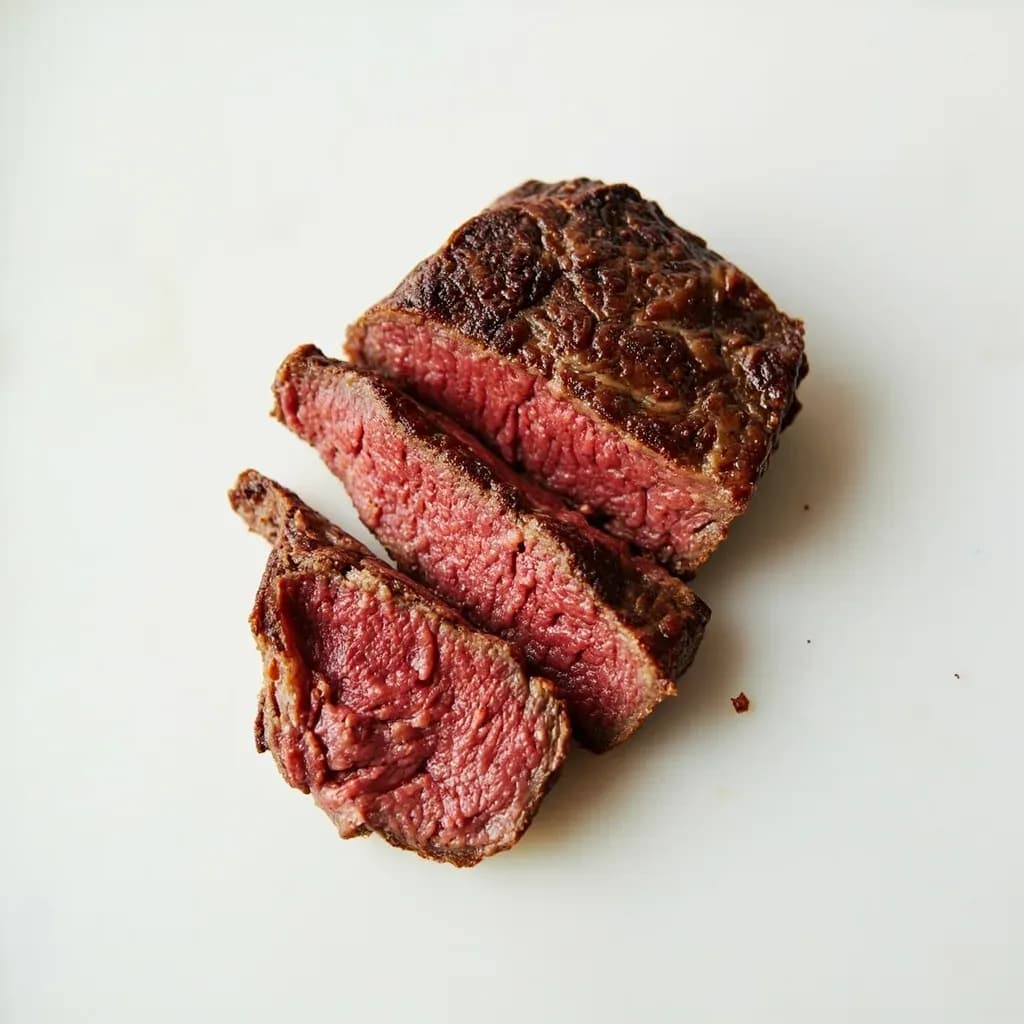
Slicing against the grain means cutting perpendicular to the direction of a meat's muscle fibers rather than along them. Shortening the fibers means there's less for your teeth to work through, so even tougher cuts like flank or brisket eat tender. You read the grain by the lines running across the surface, then turn the meat so your knife crosses them.
Slicing against the grain means cutting perpendicular to the long, parallel muscle fibers that run through a piece of meat, so each slice contains many short fiber segments rather than a few long ones. Because tenderness is largely a function of how much work your teeth have to do to break those fibers apart, shortening them mechanically does what a marinade or a long braise cannot: it changes the geometry of the bite. A flank steak sliced along the grain feels rubbery even when perfectly cooked rare; the same steak sliced across the grain, in thin coins, melts on the tongue. It is one of the few knife techniques that meaningfully alters the eating quality of a finished dish without changing its seasoning, doneness, or cooking method.
The technique matters most on whole-muscle cuts with a visible, directional grain: brisket, flank, skirt, hanger, tri-tip, top round, pork loin, leg of lamb, and roasted turkey breast. It is meaningless on ground, minced, tenderized, or already-cubed meat, because the fibers have been severed or scrambled out of alignment. It also cannot rescue an overcooked or poor-quality cut, and it will not disguise a missed internal temperature. What it does, reliably and at no cost, is turn a chewier cut into a pleasant one when the cook has done the rest of the job right.
The principle is not unique to red meat or poultry. Sashimi and crudo are cut across the myomeres of fish for exactly the same reason, and a raw tuna loin sliced along the grain will shred into floss while the same loin cut across the grain holds its shape on the chopstick. Recognizing the grain, and committing to crossing it on every slice, is the difference between a dish that tastes carefully prepared and one that tastes like the cook didn't think about the bite.
- Difficulty
- Easy
Types & varieties
The strict definition: cuts cross the grain at a 90° angle, producing the shortest possible fibers and the most tender bite
Cut at roughly 45° across the grain; combines grain-crossing with an angled presentation cut for wider, thinner pieces, the standard for stir-fried flank, Carpaccio, and most sashimi
Slices are laid overlapping without separating, the classic deli presentation for brisket, roast beef, and porchetta so the grain direction stays visible to the carver
How to do it
- 1
Identify the grain
Place the meat on a cutting board and look for the long, parallel lines of muscle fiber running across its surface. On cooked meats these striations are often more visible, sometimes raised slightly, and easier to follow than on raw flesh. Decide which direction the fibers run; that is the line your knife must cross, not follow.
- 2
Position the meat perpendicular to your knife hand
Rotate the meat (not your body) so the fibers run left-to-right from the perspective of your dominant hand. The blade will then travel across the fibers on each stroke. If the cut is long enough to extend off the board, slice it in half crosswise first so the remaining piece sits flat and the grain stays in view.
- 3
Stabilize and level
Curl the fingers of your non-knife hand into a claw, knuckles forward to guide the blade. If the meat rocks, shave a thin slice off the bottom to create a flat face, then set it back down. A stable piece lets you pull the knife through in one stroke instead of fighting gravity.
- 4
Choose the right knife
Use a 10–12 inch slicing knife or granton-edged blade for large roasts and whole brisket; an 8–10 inch chef's knife is the right size for steaks and smaller pieces. The edge should be sharp enough to glide through the meat under its own weight; a dull blade tears fibers instead of severing them cleanly and leaves a ragged, tougher bite.
- 5
Cut across the fibers
Slice perpendicular (90°) to the visible grain for the strictest, most tender result. If you want wider, thinner pieces for stir-fries, fajitas, or Carpaccio, angle the blade about 45° to the board while still crossing the grain—the combination gives you surface area and tenderness at once. Never slice parallel to the fibers, even at an angle; you will be cutting with the grain, not across it.
- 6
Maintain even thickness
Draw the knife through the meat in one smooth stroke, using the full length of the blade and letting it do the work. Avoid sawing. For tougher cuts like flank, skirt, and brisket, aim for 1/8 to 1/4 inch (3–6 mm); for naturally tender cuts like tenderloin, 1/4 to 1/2 inch is appropriate. Uniform thickness means every bite in the dish has the same texture.
- 7
Re-orient when the grain changes
On irregular cuts such as brisket flat or tri-tip, stop partway through and inspect the exposed face of the remaining piece. If the fibers are now running a different way, rotate the meat so the new grain lies across your knife path, then resume slicing. This single check is what separates a fully tender platter from one with a chewy section in the middle.
Reading the grain on irregular cuts
Most steaks and roasts are straightforward because the muscle runs in a single direction from end to end. A few sub-primals, though, are notorious for changing direction partway through, and treating them as uniform will leave half the slices tender and half noticeably chewier. The two cases worth memorizing are the brisket flat and the tri-tip. The brisket flat's fibers run lengthwise along most of the cut, then curve sharply as the muscle approaches the point; the tri-tip runs along one axis on the fat-cap side and a different axis on the opposite face, because the muscle tapers and twists through the roast. The remedy is the same in both: stop halfway through slicing, look at the exposed face of the remaining piece, and rotate it so the new grain runs across your knife before continuing. Silver skin and heavy fat caps should be trimmed first, since they obscure the striations and can be mistaken for the grain itself.
- Brisket flat: fibers run lengthwise, then curve toward the point end—rotate the meat when the direction changes.
- Tri-tip: the grain runs along the longest axis on one side and a different axis on the other; identify and slice each section separately to its own grain rather than treating the cut as uniform.
- Cooked meat often shows the grain more clearly than raw, because the fibers contract and the striations become slightly raised; trim before carving, but use the cooked surface for orientation.
Common uses
Tips & pitfalls
- Always locate the grain before the first cut—look for the parallel striations on the surface, which are often easier to see after cooking than on raw meat.
- If the grain changes direction within a cut, as it does in tri-tip and brisket flat, stop and rotate the meat rather than forcing your knife to follow the new angle.
- Trim silver skin and thick fat caps first; they obscure the grain and are easy to mistake for it, which leads to misaligned slices.
- Use a fully sharpened slicing or chef's knife—a dull edge tears fibers raggedly and produces a tougher bite than a clean cut would.
- Slice thinner than you think you need on tough cuts; 1/8 inch is the working benchmark for flank and skirt, especially for fajitas and stir-fries.
- Do not saw back and forth—use one long, smooth draw with the full length of the blade and let the edge do the work.
- If slices still feel chewy after cooking, you almost certainly cut parallel to the grain rather than across it; reposition the meat and re-slice, it is never too late to fix it on the board.
- Cut long roasts in half crosswise first so the remaining piece fits comfortably on the board with the grain clearly visible from end to end.
Good to know
- Purpose
- Shortens muscle fibers to improve tenderness and perceived mouthfeel of cooked meat
- Best for
- Whole-muscle cuts with visible grain: brisket, flank, skirt, hanger, tri-tip, top round, roasts, pork loin, leg of lamb, turkey breast
- Not applicable to
- Ground, minced, tenderized, or already-cubed meat, where the grain is no longer intact
- Grain direction
- Set by the orientation of the muscle in the live animal; can change direction within a single sub-primal, especially in brisket and tri-tip
- Typical slice thickness
- 1/8 to 1/4 inch (3–6 mm) for tougher cuts like flank or skirt; up to 1/2 inch for naturally tender cuts like tenderloin
- Knife choice
- Long, thin-bladed slicer (10–12 inch) for large roasts; an 8–10 inch chef's knife for steaks and smaller pieces
- Difficulty
- Beginner-friendly; success depends almost entirely on reading the grain correctly before the first cut
- Related misnomer
- Often confused with bias slicing, which is a separate technique for increasing surface area and presentation, though the two are frequently combined
Also called
Slicing Against the Grain · Cutting Against the Grain · Cross-Grain Slicing
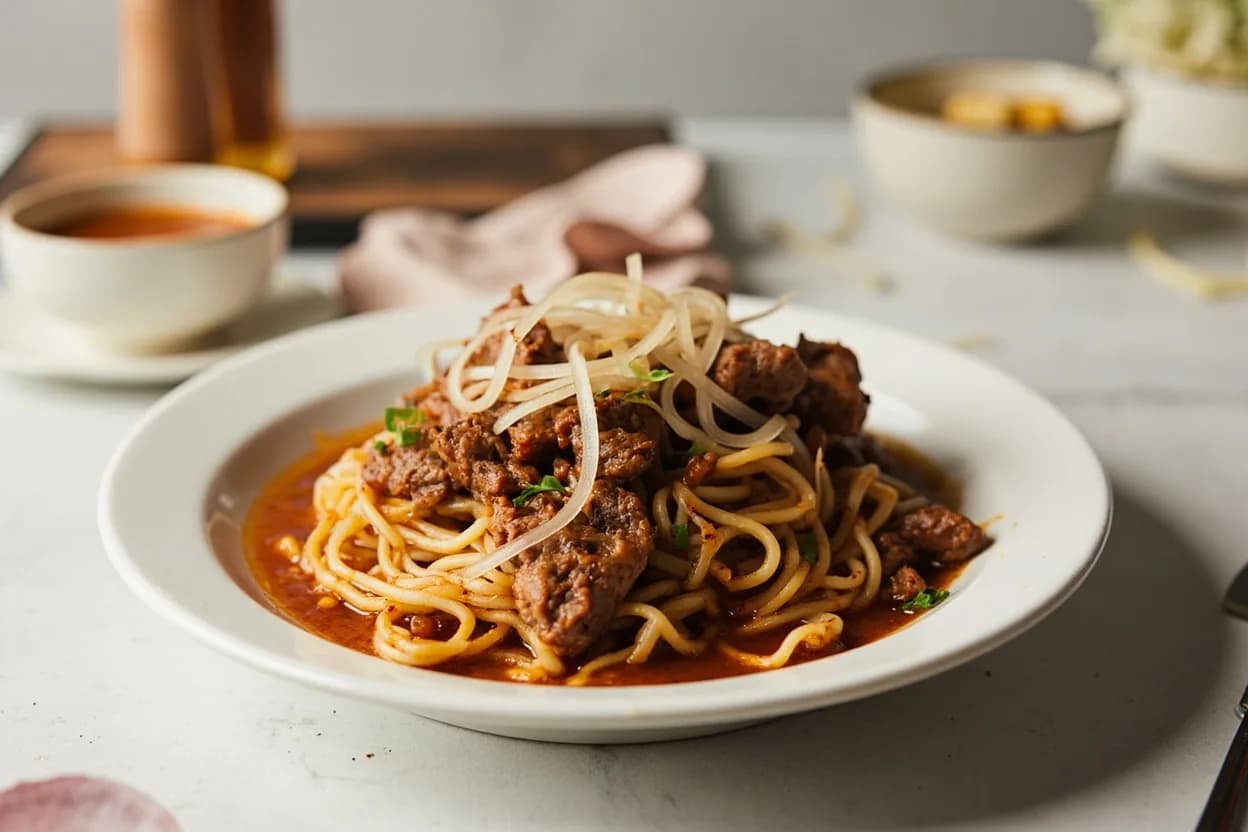
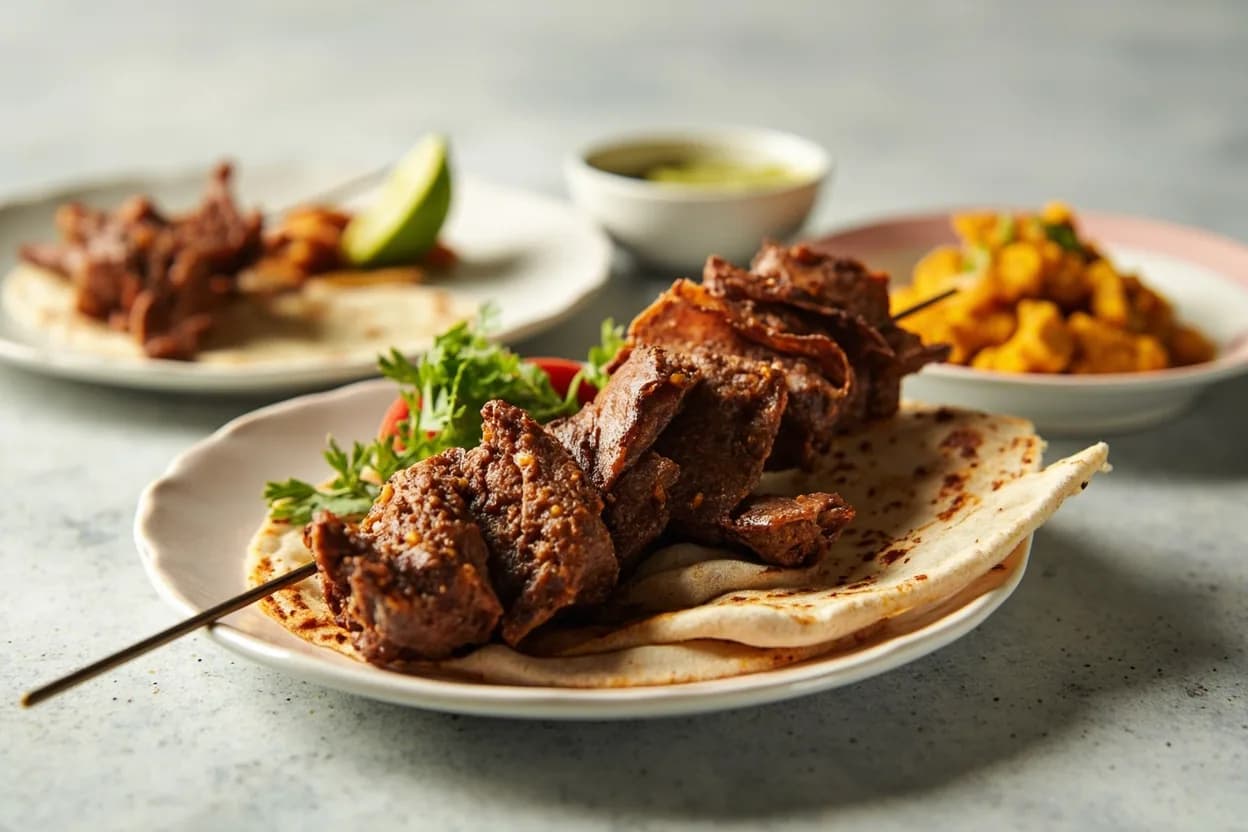
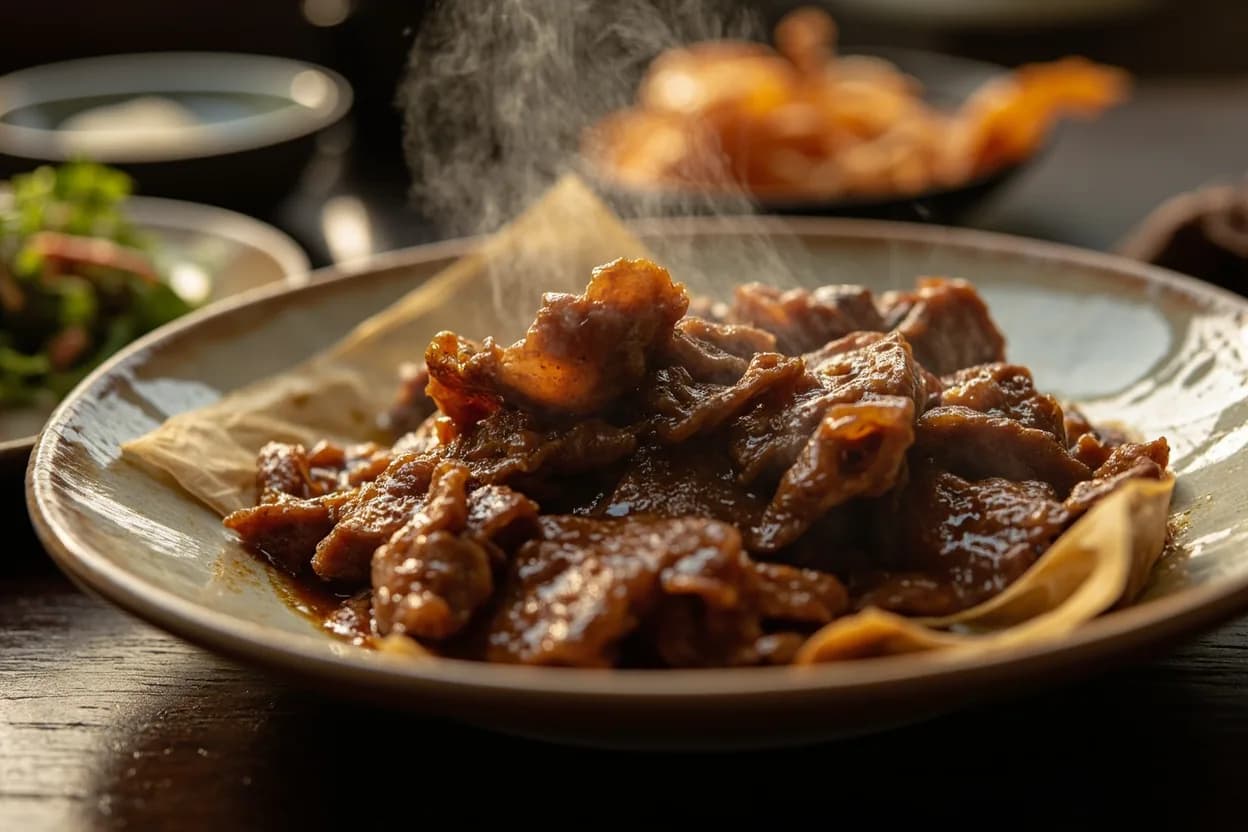
Dishes that rely on it
Related

Chop
Cut into rough, irregular pieces — the everyday workhorse cut

Dice
Cut into uniform cubes for even cooking and a tidy look

Mince
Cut as fine as possible so flavor melts evenly into the dish

Slice
Cut into even, flat pieces for consistent cooking and presentation

Julienne
Cut into thin matchsticks for fast cooking and elegant garnish

Brunoise
Cut into tiny, precise cubes — the finest dice in the kitchen

Chiffonade
Roll and slice leafy greens into delicate ribbons

Batonnet
Cut into tidy sticks, thicker than julienne — think classic fries