Water & Steam
Smothering
Browning meat or vegetables, then cooking them covered in a small amount of seasoned liquid and onions until very tender in a thick gravy.
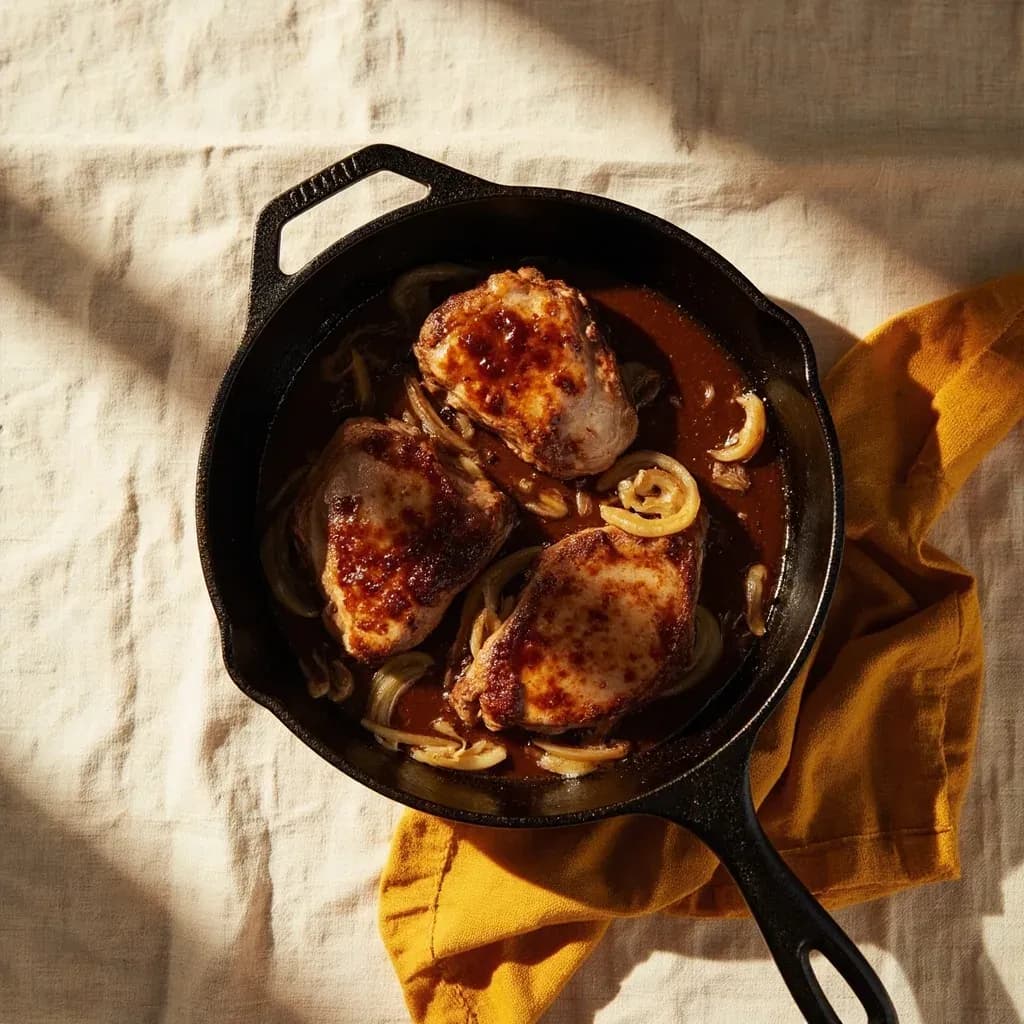
Smothering is a Southern wet-heat technique that belongs to the braising family but runs by its own rules. A seasoned piece of meat — sometimes a vegetable — is seared hard in fat, set onto a bed of softened onions, and then covered and cooked in a small amount of liquid, just enough to climb roughly a third of the way up the food, until fork-tender and sitting in a dark, glossy gravy. The defining feature is the tight, steamy environment: condensation cycles off the lid and rains back down on the food, basting it while the shallow pool of liquid reduces underneath. Where a French braise often finishes in a separately thickened sauce, a smothered dish makes its sauce in the same pan, out of fond, juices, and a generous quantity of onion.
Three elements make the technique work. First, a real sear that leaves the browned crust — the fond — on the pan bottom; that fond is the flavor spine of the finished gravy. Second, a heavy hand with onion, sweated to silkiness before any liquid goes in; raw-onion flavor will not cook out under a tight lid, and a smothered dish that skimps on onion tastes thin. Third, a heavy pan with a lid that actually fits, held over the lowest heat that still keeps a bare tremble on the surface. A rolling boil tightens muscle fibers and the meat turns stringy, so patience at the burner matters more than any special equipment.
Practically, smothering is the home cook's best answer for turning a pack of bone-in chicken thighs, a couple of pork shoulder chops, or a tubed cube steak into something that tastes deliberate. It is forgiving, lives in one pan, and produces its own sauce as it goes. The method also absorbs vegetable dishes — cabbage, okra, peppers — and travels well across cuisines, showing up in German sauerbraten, Italian osso buco, and Swiss Geschnetzeltes, all built on the same sear-aromatic bed-tight lid-low heat logic.
- Difficulty
- Easy
Types & varieties
Bone-in, skin-on thighs are traditional; finished under a tight lid and spooned with the pan gravy over rice or buttermilk biscuits.
Bone-in shoulder or rib chops, often brined briefly, then cooked down with a heavy hand of onions; classic Sunday supper over grits or mashed potatoes.
Tenderized round steak dredged in seasoned flour, seared, and cooked down with onions; the diner-counter classic.
Thin-cut beef braised low with onions until falling apart; Southern comfort staple over egg noodles or rice.
Okra cooked with tomato, onion, and aromatics in its own mucilage; a Cajun and Southern side.
Green cabbage wedges or shreds cooked down with onion, bacon, and a splash of vinegar or stock until silky and savory.
Traditional backwoods application; the same method tames lean, tough proteins from squirrel to venison.
How to do it
- 1
Choose and prep the protein
Pick a cut built for low-and-slow cooking: bone-in chicken thighs, pork shoulder chops, chuck, round, or cube steak. Pat the meat completely dry with paper towels, then season generously on both sides with salt, black pepper, and any dry spice in play (paprika, thyme, cayenne, Creole seasoning). A dredge in seasoned flour is optional but adds body to the finished gravy.
- 2
Heat the pan and sear
Set a heavy skillet or Dutch oven over medium-high heat and add a tablespoon or two of fat — oil, bacon drippings, or clarified butter. When the fat shimmers, lay the protein in without crowding. Sear undisturbed until a deep brown crust forms, then flip and brown the second side. Transfer to a plate; do not pour off the fat.
- 3
Sweat the aromatics
Lower the heat to medium. Add a generous amount of sliced or chopped onion first, scraping up the fond as it hits the fat. Cook until the onion is soft, translucent, and just starting to turn golden at the edges, 5 to 8 minutes. Add bell pepper and celery if using the Cajun holy trinity, and garlic in the last minute. The aromatics should be silky, not browned hard.
- 4
Deglaze
Pour in the cooking liquid — stock, water, wine, or a combination — starting with about 1/2 to 1 cup. Stir and scrape the pan bottom with a wooden spoon until every browned bit is dissolved and the liquid looks richly colored.
- 5
Return the protein and cover
Nestle the seared meat (and any juices on the plate) back into the pan. The liquid should come roughly one-third of the way up the food; top up with stock or water if needed. Bring to a bare simmer, then clamp on a tight-fitting lid.
- 6
Smother low and slow
Drop the heat to the lowest setting that holds a gentle simmer. Cook undisturbed: 30 to 45 minutes for thin cutlets and cube steak, 1 to 1.5 hours for bone-in pork chops, 1.5 to 2.5 hours for chicken thighs or larger beef pieces. Peek once near the end to check tenderness rather than lifting the lid repeatedly, since every peek releases steam and lengthens the cook.
- 7
Adjust the gravy
Uncover, tilt the pan, and check the gravy. It should coat the back of a spoon. If thin, simmer uncovered for a few minutes to reduce; if too thick, splash in more stock. Taste and correct with salt, black pepper, a small spoon of vinegar or hot sauce, and — for Cajun versions — a pinch of filé powder or an extra spoonful of roux whisked in off the heat.
- 8
Rest and serve
Transfer the meat to a warm platter or directly onto rice, grits, or mashed potatoes. Spoon the onions and gravy over the top. Let the dish rest off the heat for 5 minutes so the juices settle back into the meat before serving.
Smothering and its cousins
Smothering is the everyday Southern name for what the French would call a partial or shallow braise. A few contrasts help place it. A classic French braise typically uses enough liquid to half-cover the food and often finishes with a separately thickened sauce; smothering keeps the liquid lower (around a third of the way up) and the gravy forms in the same pan from fond, juices, and softened onion. Étouffée, also Louisiana, starts with a roux and cooks in a thinner sauce with no sear of the protein; smothering insists on the sear and the tight-lid steam cycle. A fricassee typically cooks the protein more gently — without the hard sear that defines smothering — and finishes with a cream or egg-yolk liaison. A pot roast is smothering's bulk cousin — same method, larger piece, longer time, often finished in the oven rather than on the stovetop.
Building the gravy in the pan
The gravy is not an afterthought. It builds from three sources working in sequence: the fond loosened during deglazing, the collagen and juices that leach from the meat over a long simmer, and the onion, which softens into the sauce and helps thicken it with its own pectin. A flour dredge on the protein adds body without any extra step. If the gravy is still thin at the end, the right moves are to reduce it uncovered for a few minutes, mash some of the cooked onion into it, or whisk in a beurre manié (equal parts soft butter and flour kneaded together). A slurry of cornstarch and water works in a pinch but gives a glossier, less silky result.
- Sear first to build fond; the gravy cannot recover flavor that was never made.
- Deglaze thoroughly with the cooking liquid — every brown bit on the pan bottom is gravy in waiting.
- Mash a quarter of the cooked onion into the finished sauce for instant body and sweetness.
- Adjust seasoning last: salt, then a small splash of vinegar or hot sauce, then a pinch of sugar if needed.
Common uses
Tips & pitfalls
- Pat the protein completely dry before searing; surface moisture is the enemy of browning and a dry sear is what builds the fond the gravy depends on.
- Crowding the pan steams the food and forfeits fond — sear in batches if the cut will not lie flat with breathing room around it.
- Sweat the onions until they are truly soft and lightly caramelized before adding liquid; raw-onion flavor will not cook out under a tight lid and the gravy will taste harsh.
- Keep the simmer gentle. A hard boil tightens muscle fibers, drives out juices, and turns even a well-chosen cut stringy and dry.
- If the gravy tastes flat at the end, it almost always needs salt, a splash of vinegar or hot sauce, or a pinch of sugar — not more liquid, which dilutes what is there.
- For a thicker gravy without lumps, mash some of the cooked onions into the sauce or whisk in a beurre manié (equal parts soft butter and flour) a little at a time.
- Rest the meat 5 to 10 minutes off the heat before serving so the juices redistribute instead of running out onto the plate.
- A drop of the pan liquid on a cold spoon should coat the back of the spoon; if it runs like water, simmer uncovered for a few more minutes.
- Save the fond — deglaze thoroughly so every browned bit lifts into the gravy rather than burning onto the pan.
Good to know
- Origin
- Southern United States, with deepest roots in Louisiana Cajun and Creole cooking; the term also turns up in broader soul-food and country-cooking traditions.
- Category
- Moist-heat braise variant, classified under Water & Steam because the food finishes under a tight lid in a low-liquid, steam-driven environment.
- Liquid level
- Just enough to come about one-third of the way up the food — stock, pan drippings thinned with water, wine, or seasoned water alone.
- Heat level
- After the sear, a bare tremble on the surface, never a rolling boil; higher heat toughens the protein and breaks the gravy.
- Time range
- 30–45 minutes for thin cutlets and cube steak; 1 to 1.5 hours for bone-in pork chops; 1.5 to 2.5 hours for chicken thighs or larger beef pieces.
- Key aromatic
- Onion is non-negotiable; the Cajun/Creole holy trinity (onion, bell pepper, celery) is the classic base, often finished with garlic.
- Equipment
- A heavy pan with a tight-fitting lid — cast-iron skillet, Dutch oven, braiser, or deep sauté pan — because lighter pans lose heat and dry out the gravy.
- Difficulty
- Low to moderate; forgiving overall, but easy to overcook lean cuts or under-season the finished gravy.
Also called
smothered · etouffer · Cajun smothering
