Water & Steam
Jjim (Braised-Steam)
Korean hybrid method of braising and steaming ingredients in a small amount of seasoned liquid.
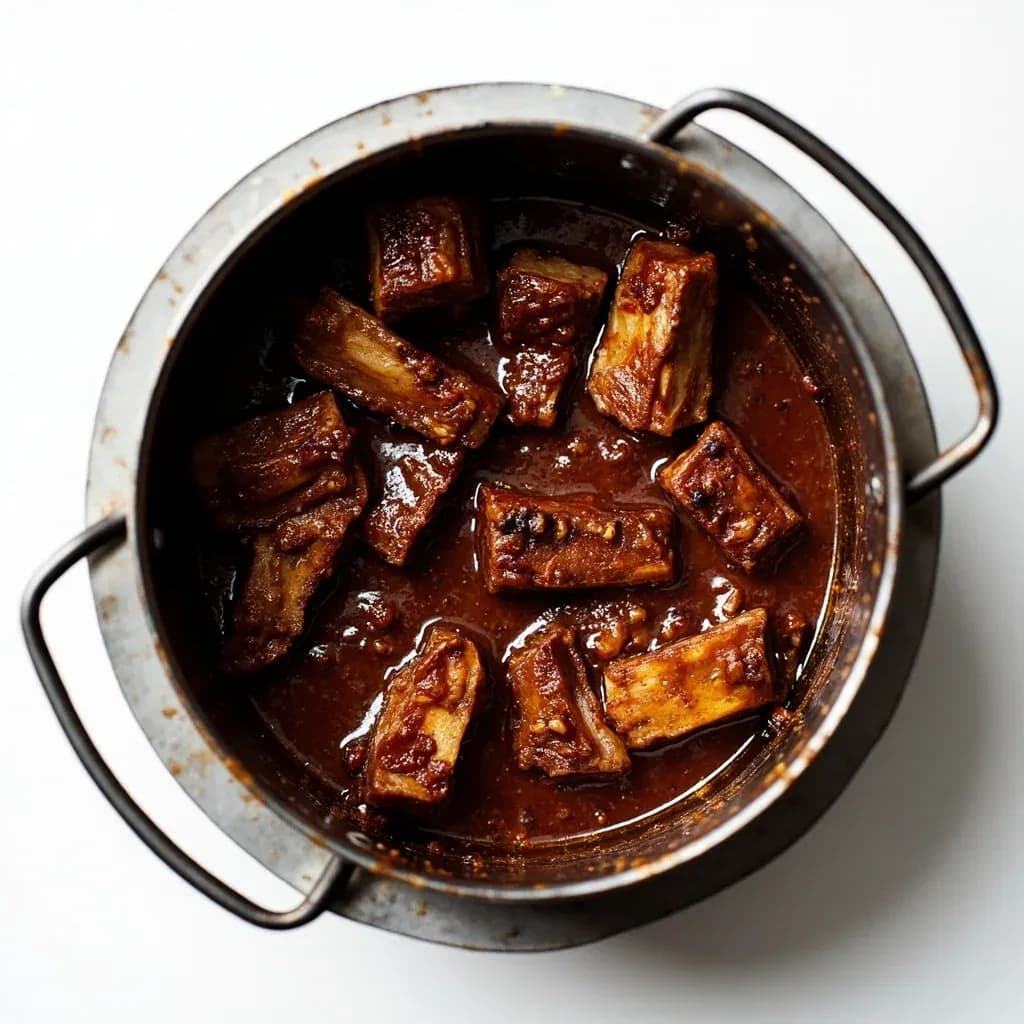
Jjim is a Korean technique that sits between braising and steaming: ingredients like short ribs, chicken, or seafood are cooked covered in a modest amount of seasoned liquid until tender and the sauce reduces to a glaze. The trapped steam and simmering broth work together, keeping the food moist while concentrating flavor. Galbijjim (braised short ribs) is the classic example.
Jjim is the Korean technique of cooking food in a small amount of seasoned liquid inside a tightly sealed pot, so that trapped steam finishes the ingredients above the liquid line. The pot is doing two jobs at once: the lower third of the food braises directly in the sauce while the upper two-thirds cook in rising steam, which keeps delicate proteins (tofu, egg, fish, abalone) tender and lets tougher cuts (short rib, chicken thigh) break down without drying out.
The defining habit is restraint with liquid. A jjim is never submerged the way a jjigae (stew) is; the sauce is meant to reduce to a glossy glaze that clings to each piece rather than be eaten as a broth. That single distinction — sauce as coating, not soup — separates a properly built jjim from a jjigae cooked in a small pot, and it is also the line between jjim and Chinese red-braised (hongshao) dishes, which submerge their ingredients in a full pot of liquid.
It is a low-and-slow method even when the cook time is short: even a 15-minute dubu jjim is cooked in a sealed pot, and a classic galbijjim can run 90 minutes. The reward is concentrated flavor and a presentation that arrives at the table still in its cooking vessel, sauce shimmering and ingredients glossy.
- Difficulty
- Medium
Types & varieties
Braised short ribs (often beef) with chestnuts, jujubes, ginkgo nuts, and vegetables; classic festive dish
Andong specialty — chicken braised with potato, carrot, and dangmyeon glass noodles in a soy-based sauce
Spicy seafood medley of clams, shrimp, and squid in a chili-broth, served on a platter
Aged napa kimchi layered with pork belly or canned tuna and slowly braised-steamed
Soft tofu gently steamed with vegetables, often crowned with a raw or barely set egg
Savory steamed egg custard beaten with water or broth, cooked in a shallow pot
Korean zucchini steamed with ground beef and gochugaru
Whole abalone steamed with rice, ginseng, and medicinal herbs — high-end banquet dish
Sweet steamed red bean cake (tteok branch) made with glutinous rice flour; dessert branch of the same technique
How to do it
- 1
Choose the right pot
Use a heavy vessel with a tight-fitting lid: a Korean ttukbaegi, an onggi, or a Dutch oven. The lid seal matters more than for an open braise because trapped steam is doing half the cooking.
- 2
Sear the protein (if using meat)
Pat the protein dry and sear in a thin film of neutral oil over medium-high heat until both sides have a brown crust. This fond on the pot bottom is the backbone of the final sauce.
- 3
Bloom the aromatics
Lower the heat. Add minced garlic, ginger, and the white parts of scallion to the fat left in the pot and stir for 30–60 seconds. For jjimdak or galbijjim, also toast a little gochugaru or gochujang here to deepen its flavor.
- 4
Add seasoning and a small amount of liquid
Add the main seasoning — soy sauce (gukganjang), doenjang, gochujang, sugar, a splash of sake or mirin — and stir into the aromatics. Pour in water, broth, or anchovy stock until it reaches roughly 1/4 to 1/3 up the ingredients. Resist the urge to add more; steam will do the rest.
- 5
Bring to a boil, then seal
Bring to a full boil uncovered, skimming any scum that rises. Once boiling, clamp the lid down firmly and drop the heat to the lowest setting that keeps a gentle simmer.
- 6
Cook low and slow, layering by cook time
Add the densest vegetables (potato, radish, carrot) at the start; mid-density items (chestnuts, jujubes, shiitake) partway through; quick-cooking items (zucchini, leafy greens, dangmyeon noodles, scallion tops) in the last 5–10 minutes. Do not lift the lid during this phase.
- 7
Uncover and reduce the sauce
When the protein is fully tender, remove the lid, raise the heat to medium, and simmer the sauce for 3–5 minutes until it thickens into a glossy glaze that coats a spoon.
- 8
Finish and rest
Off heat, stir in a small spoon of toasted sesame oil and a pinch of toasted sesame seeds. Cover again and rest 5 minutes so the residual steam carries the sesame oil into the meat, then serve in the same pot.
The lid and the liquid line
Jjim is a hybrid method, and understanding why starts with the lid. A tight lid traps vapor rising from the simmering liquid, and that vapor circulates back down around the food, transferring heat to anything sitting above the sauce. So the pot is doing two things at once: a shallow braise for the lower ingredients, and a covered steam cook for the rest. If the lid leaks, the steam escapes and the upper layer of food stays raw or tough while the lower layer overcooks. Foil pressed under a loose lid is a legitimate fix, not a cheat.
- Aim for liquid that climbs 1/4 to 1/3 up the ingredients — enough to braise the base, not enough to submerge.
- A heavy pot with a flat lid (ttukbaegi, Dutch oven, deep braiser) holds steam; thin pots lose it fast.
- Never lift the lid to 'check' — every opening drops the pot's temperature and stalls the steam cook.
- Uncover only at the end, to reduce the sauce to a glaze that clings to the food.
Jjim vs. jjigae vs. Chinese red-braise
Korean kitchens draw a sharp line between jjim and jjigae, and it is defined by liquid, not by the ingredients. The same chicken, kimchi, or tofu can anchor either dish; what changes is how much water goes in. Chinese hong-braised dishes (hongshao) sit at the far end of the spectrum, submerging their protein in a full pot of soy-sugar liquid and reducing slowly. Jjim is the middle path: just enough liquid to braise, the lid doing the rest.
Common uses
Tips & pitfalls
- The lid is the engine: if steam escapes, the food above the liquid line stays raw or tough. Foil pressed under a loose lid is a real fix, not a compromise.
- Use toasted sesame oil only at the very end — it scorches and turns bitter over long cooking.
- Layer by cook time: potatoes, radish, and carrots go in first; zucchini, mushrooms, and scallion greens join in the last 5–10 minutes.
- Sear proteins (galbi, chicken thighs) before adding liquid to build fond on the pot bottom — this is what gives jjim its deep color and body.
- Doenjang and gochujang are not interchangeable: doenjang gives savory depth, gochujang gives sweet heat. Some jjim use both for balance.
- Skim the first boil before clamping the lid, especially with galbi, to keep the final sauce clear and glossy.
- Don't lift the lid 'to check' — every opening drops the pot temperature and slows the steam cook.
- Rest the pot off heat for 5 minutes before serving; the residual steam finishes carryover cooking and the sauce thickens slightly.
Good to know
- Korean name
- 찜 (jjim), literally 'steamed'
- Origin
- Korea; documented in Joseon-era culinary texts including Siui Jeonseo (late 19th c.)
- Liquid level
- 1/4 to 1/3 up the ingredients; never fully submerged
- Vessel
- Traditionally ttukbaegi (earthenware) or onggi; a heavy Dutch oven or deep braiser works
- Heat level
- Low to medium-low gentle simmer; high heat scorches the small amount of liquid
- Typical time
- 10–15 min for tofu, 35–45 min for chicken, 60–90 min for galbi
- Distinguishing line
- Less liquid than jjigae; drier final texture; more focused sauce than Chinese red-braise
- Course role
- Main-dish centerpiece, not a soupy banchan
Also called
Jjim · Braised Steam · Korean Braise-Steam
Related

Boil
Cook in vigorously bubbling liquid at full rolling heat

Simmer
Hold liquid at a gentle shimmer for tender, unhurried cooking

Poach
Cook gently in barely-trembling liquid for silky, tender results

Steam
Cook in rising vapor to keep color, nutrients, and shape intact

Blanch
Plunge briefly in boiling water, then shock cold to lock color

Braise
Sear, then cook slow in a little liquid until fall-apart tender

Stew
Simmer bite-sized pieces fully submerged into a rich, unified pot

Sous-Vide
Seal and cook in precise warm water for edge-to-edge doneness